SZTUKA
Piękno i dobre samopoczucie
RZEMIOSŁO
KULTURA I HISTORIA
ROZRYWKA
ŚRODOWISKO
JEDZENIE I NAPOJE
INŻYNIERIA ODWROTNA
NAUKI
LEKKOATLETYKA
TECHNOLOGIA
URZĄDZENIA DO NOSZENIA
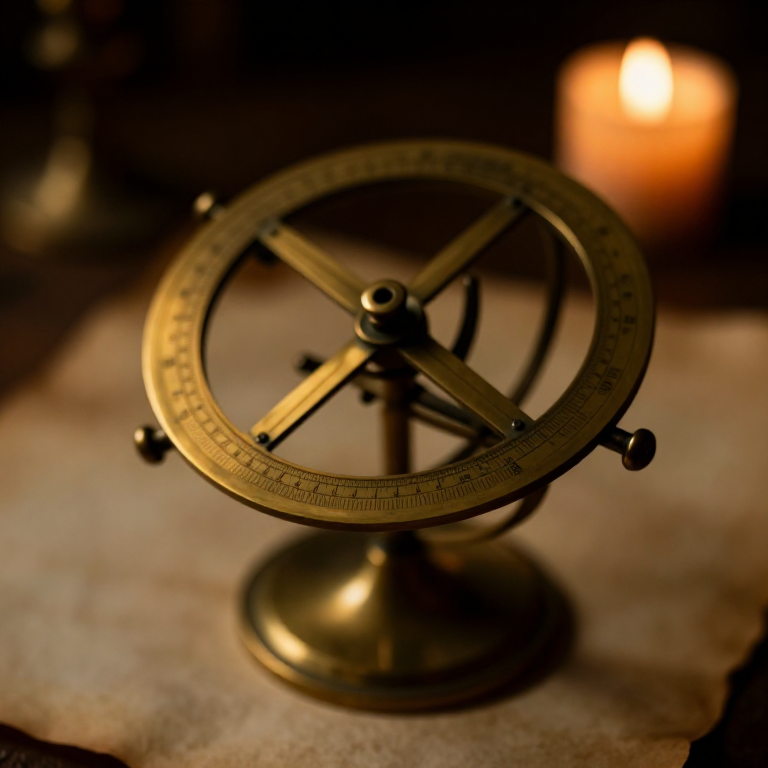


Trigonometry — Build a Clinometer and Measure a Tree's Height
A hands-on maths project: make a simple clinometer from a protractor, a straw and a weighted string, use it to measure the angle to the top of a tree or building, and then calculate the height you cannot reach. A Python cell does the trigonometry, and a compendium shows why sine waves run through all of science.
Początkujący
30 minutes
Instrukcje
1
1
Turning an angle into a height
Turning an angle into a height
Ancient astronomers invented trigonometry to turn the ANGLES they measured into the LENGTHS of triangles. You will use it to measure the height of something too tall to reach.
2
2
Build a clinometer
Build a clinometer
Tape a drinking straw along the straight edge of a protractor to sight through. Tie a short string to the centre of the protractor with a small weight on the end, so it hangs down and shows the angle. That is a clinometer -- it measures how steeply you are looking up.
Materiały do tego kroku:
 Cardstock Assorted Pack (50 sheets)1 sztuka
 Cotton Kitchen String1 sztuka
 Stainless Steel Straw Set (8-Pack)1 sztuka
Potrzebne narzędzia:
 Protractor/Angle Finder
3
3
Sight the treetop and measure
Sight the treetop and measure
Stand back from a tree or building and look through the straw at its very top. Read the angle the hanging string marks on the protractor (this tells you the angle above horizontal). Then measure your distance from the base with a tape measure. Write down the angle and the distance.
Potrzebne narzędzia:
 Measuring Tape 3m
4
4
Calculate the height
Calculate the height
Wczytywanie notatnika Jupyter…
Potrzebne narzędzia:
 Desktop Computer
 Calculator
5
5
Compendium: the mathematics of waves
Compendium: the mathematics of waves
What your clinometer teaches. (1) In a right triangle the sine, cosine and tangent are ratios of the sides that depend ONLY on the angle, so a single table of them works for every triangle -- Ptolemy tabulated them around 150 AD, and Indian mathematicians shaped them into the 'sine' we use (the word comes from Sanskrit jya). (2) The tangent turns an angle you can see into a length you cannot reach -- the everyday tool of surveyors and sailors. (3) As an angle turns full circle, sine and cosine trace smooth repeating WAVES. (4) Those sine waves describe sound, light, radio, tides and alternating current, and underlie GPS, music synthesis and the Fourier analysis that compresses every image and song on your phone.
Materiały
4- 1 sztukaZastępnik
- 1 sztukaZastępnik
- 1 sztukaZastępnik
- 1 arkuszZastępnik
Wymagane narzędzia
5- Zastępnik
- Zastępnik
- Zastępnik
- Zastępnik
- Zastępnik
Powiązane blueprinty
Te blueprinty dzielą się wiedzą — technikami, materiałami lub zasadami

CC0 Domena publiczna
Ten plan jest udostępniany na licencji CC0. Możesz go swobodnie kopiować, modyfikować, rozpowszechniać i wykorzystywać do dowolnych celów, bez konieczności uzyskiwania zgody.
Wesprzyj Makera kupując produkty przez jego plan, za co zarabia Prowizja Makera ustalony przez sprzedawców, lub stwórz nową iterację tego planu i dołącz go jako połączenie w swoim własnym planie, aby dzielić się przychodami.