SZTUKA
Piękno i dobre samopoczucie
RZEMIOSŁO
KULTURA I HISTORIA
ROZRYWKA
ŚRODOWISKO
JEDZENIE I NAPOJE
INŻYNIERIA ODWROTNA
NAUKI
LEKKOATLETYKA
TECHNOLOGIA
URZĄDZENIA DO NOSZENIA
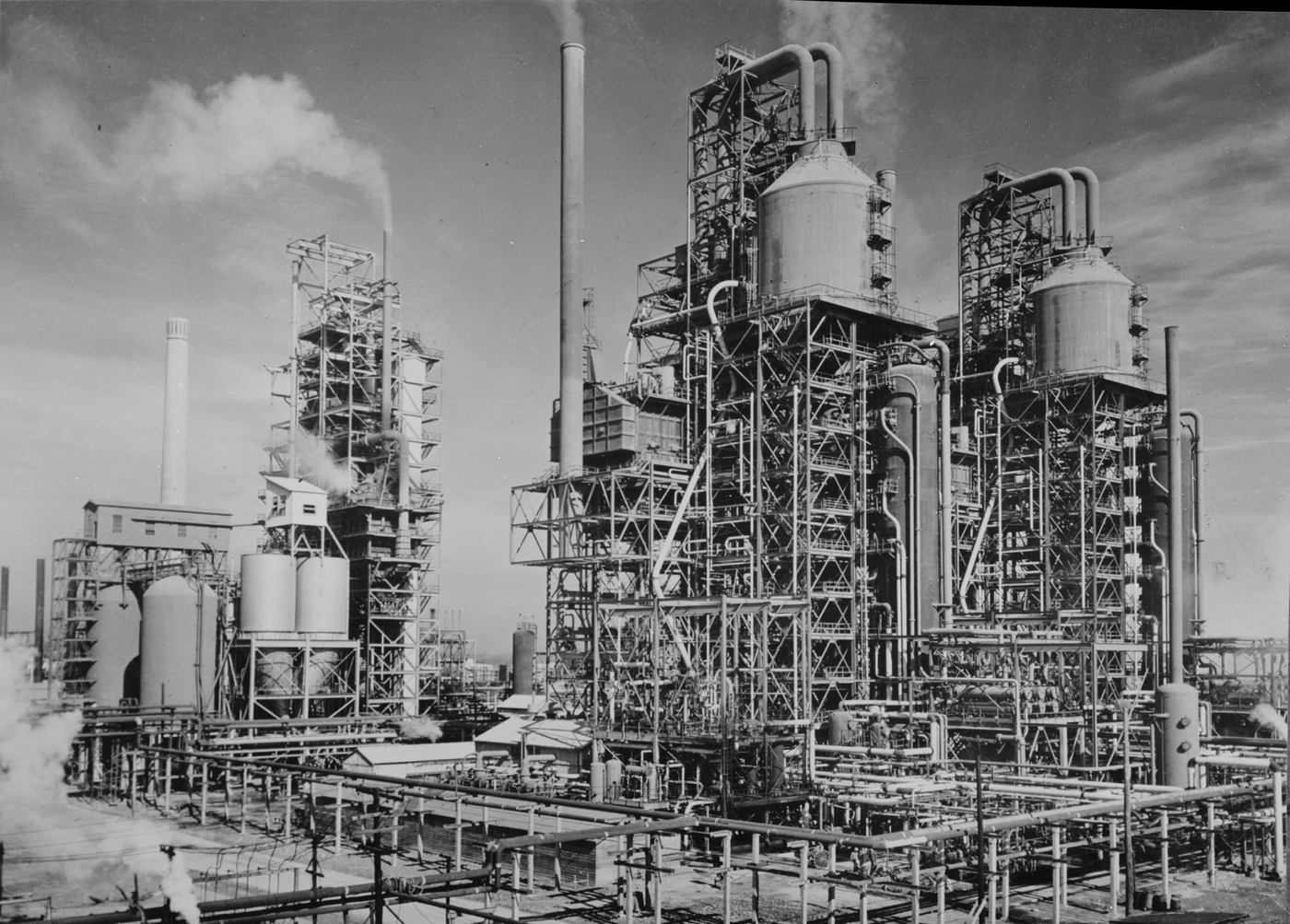


Aviation Gasoline by Catalytic Cracking over Silica-Alumina Gel at 750 °F (Voorhies, US 2,230,552)
Oil vapour passed over a hot silica-alumina gel cracks into gasoline of relatively high octane number. Voorhies (Standard Oil Development, 1941) showed that a light feed cracked at a low temperature, about 750 °F, gives aviation gasoline that needs little or no further refining.
Best result in the patent (Ex. 1, a light crude cut boiling 336-540 °F): 25.9 % of the feed as aviation gasoline (the table says 25.0 %), ASTM octane 81.0 clear and 91.7 with 3 cc of tetraethyl lead per gallon.
Variables: the feed, the temperature and the feed rate. Hotter and faster gives less gasoline and more unsaturates. Source: A. Voorhies Jr., US 2,230,552 (1941). Not given: reactor design, how the catalyst is regenerated, catalyst amounts. Highly flammable vapours. Picture: catalytic cracking units in Louisiana, about 1944 (FSA, public domain).
Ekspert
1 day
Instrukcje
1
1
Fill the reactor with silica-alumina gel
Fill the reactor with silica-alumina gel
Pack the reaction zone with a synthetic gel of silica and alumina. Voorhies's gel was silica hydrogel soaked in aluminium nitrate solution, dried, and heated to break down the nitrate and activate it, with a silica to alumina molar ratio of about 12 to 1.
Potrzebne narzędzia:
 Reaktor rurowy ze złożem stałym
 Katalizator żelowy krzemionkowo-glinowy
2
2
Choose a light feed
Choose a light feed
The feed should have a mid-boiling point below 600 °F and an aniline point below 155 °F, better below 150 °F; the heavier the feed, the lower its aniline point must be. Kerosene of aniline point 145 °F (Ex. 6) qualifies. A gas oil of aniline point 173 °F (Ex. 5) gave a gasoline of acid heat 34 °F, against 12.5 °F in Ex. 1.
Materiały do tego kroku:
 Nafta0.6 volume per volume of catalyst per hour
Potrzebne narzędzia:
 Zbiornik na ropę
3
3
Crack at 750 °F in half-hour runs
Crack at 750 °F in half-hour runs
Hold the reaction zone at 750 °F (range 700-800 °F). Pass 0.6 volume of liquid feed per volume of catalyst per hour, in half-hour cracking periods with a regeneration of the catalyst between them. Voorhies does not say how he regenerated it.
Potrzebne narzędzia:
Reaktor rurowy ze złożem stałymKatalizator żelowy krzemionkowo-glinowy Termometr
4
4
Fractionate the cracked product
Fractionate the cracked product
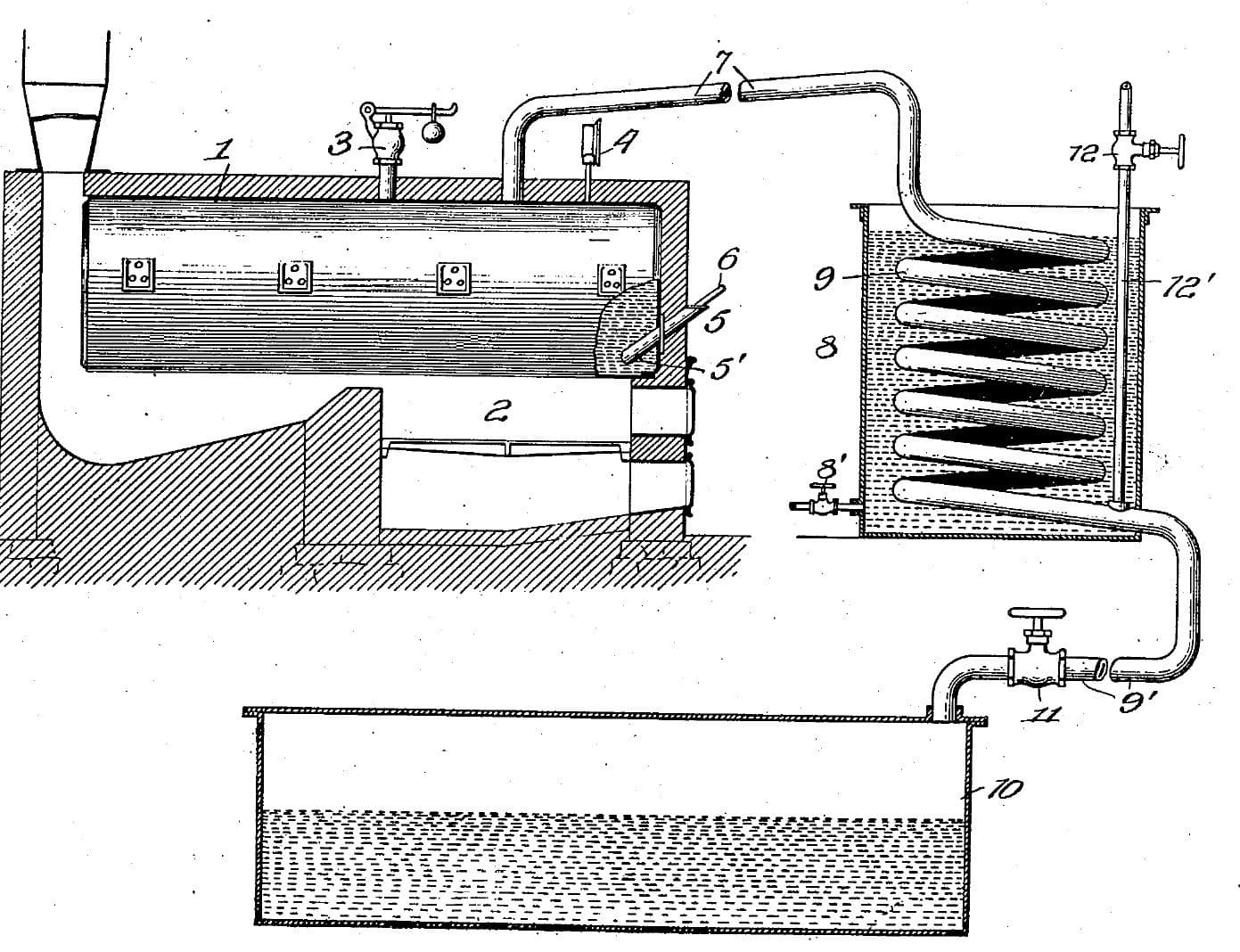
Condense and fractionate the cracked products. Take aviation gasoline up to an end point of about 290 to 310 °F. In Ex. 2 the rest split into 8.7 % gas, 37.5 % heavy naphtha boiling 300-400 °F (octane 75.8 clear, usable as a blending agent or solvent) and 25 % gas oil.
Potrzebne narzędzia:
 Alembik do frakcjonowania
 Wężownica skraplacza
 WodaZbiornik na ropę
5
5
Variables: feed, temperature, rate
Variables: feed, temperature, rate
Ex. 1 (336-540 °F crude cut, 750 °F, 0.6): 25.9 %, octane 81.0 clear. Ex. 2 (244-507 °F cut, 725 °F, 0.3): 30.8 %, 79.2 clear, 89.5 with 3 cc lead. Ex. 6 (kerosene, 750 °F, 0.6): 20.1 %, acid heat 16 °F. Ex. 7 (gas oil, 850 °F, 1.2): 20.6 %, acid heat 70 °F against 20+ °F at 750 °F (Ex. 4).
Potrzebne narzędzia:
Reaktor rurowy ze złożem stałymWedług tego planu powstaje
Powiązane blueprinty
Te blueprinty dzielą się wiedzą — technikami, materiałami lub zasadami
CC0 Domena publiczna
Ten plan jest udostępniany na licencji CC0. Możesz go swobodnie kopiować, modyfikować, rozpowszechniać i wykorzystywać do dowolnych celów, bez konieczności uzyskiwania zgody.
Wesprzyj Makera kupując produkty przez jego plan, za co zarabia Prowizja Makera ustalony przez sprzedawców, lub stwórz nową iterację tego planu i dołącz go jako połączenie w swoim własnym planie, aby dzielić się przychodami.