SZTUKA
Piękno i dobre samopoczucie
RZEMIOSŁO
KULTURA I HISTORIA
ROZRYWKA
ŚRODOWISKO
JEDZENIE I NAPOJE
INŻYNIERIA ODWROTNA
NAUKI
LEKKOATLETYKA
TECHNOLOGIA
URZĄDZENIA DO NOSZENIA
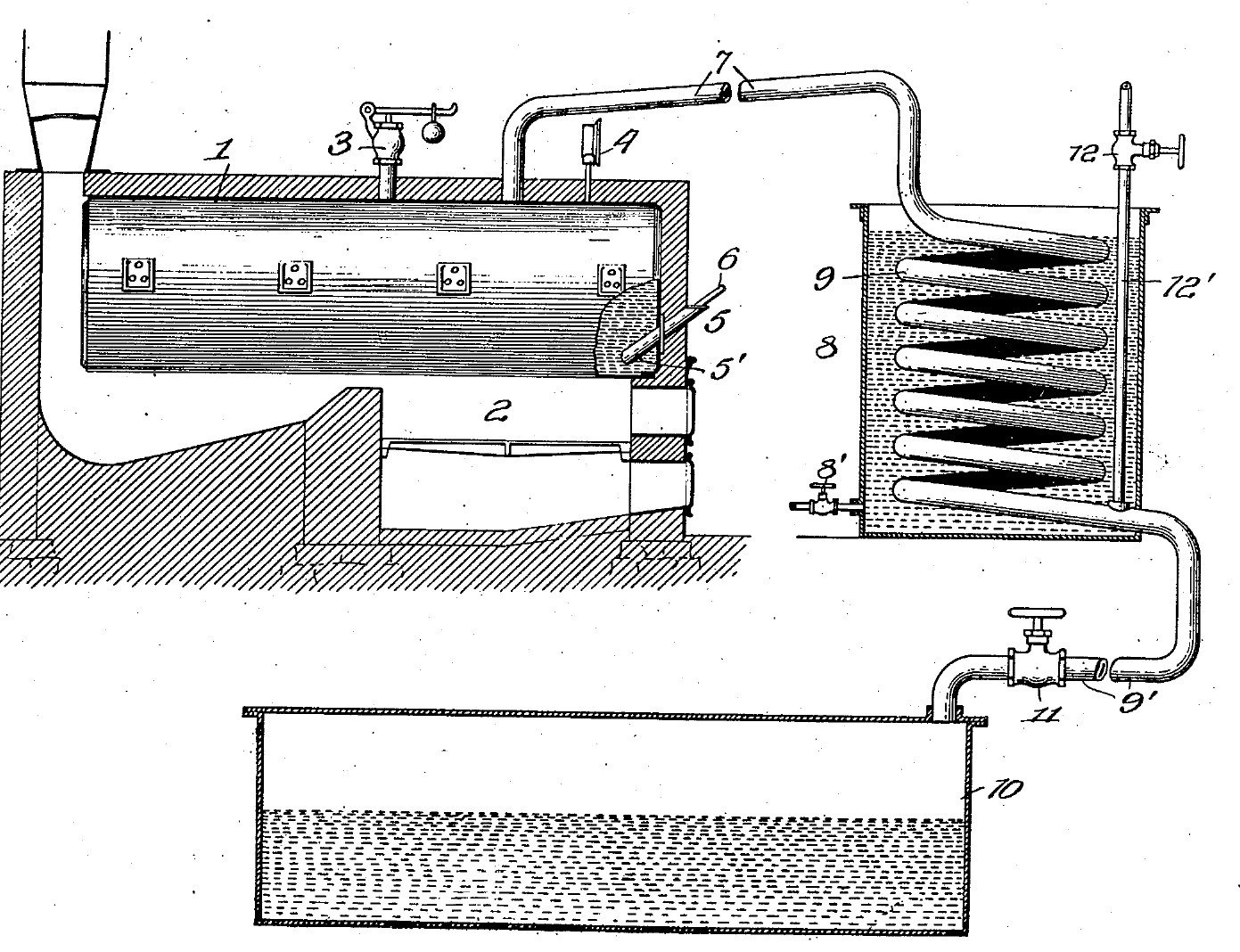


Gasoline by Pressure Cracking: Heavy Residue Distilled at 650-850 °F under 4-5 Atmospheres (Burton, US 1,049,667)
Straight distillation leaves most of a barrel of crude as heavy oil. Burton's 1913 patent turns that residue into gasoline: distil it hot while its own vapour is held at 4 to 5 atmospheres, all the way through the condenser. The heat and pressure break the heavy oil into light oil. Cracked gasoline is the first rung toward high-octane fuel.
Feed: the fuel-oil and gas-oil residue left after the light cuts, boiling at about 600 to 700 °F (claim: above 500 °F).
Source: W. M. Burton, US 1,049,667 (1913), assigned to Standard Oil (Indiana). Not given: charge size, run time, yield. Burton claims the gasoline stays in the paraffin series; that is his claim. A fired still under pressure needs a working safety valve. Picture: the patent drawing.
Ekspert
2 days
Instrukcje
1
1
Fill the pressure still with residue
Fill the pressure still with residue
The still is a closed, boiler-like holder over a fire chamber, with a safety valve, a pressure gauge, and a thermometer in an oil-filled tube slanting into it. Fill it with the heavy residue left after the gasoline and illuminating oils have been distilled off.
Materiały do tego kroku:
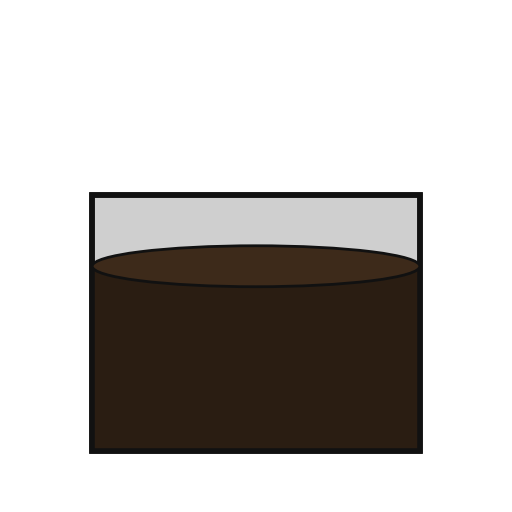 Pozostałość naftowa1 still charge
Potrzebne narzędzia:
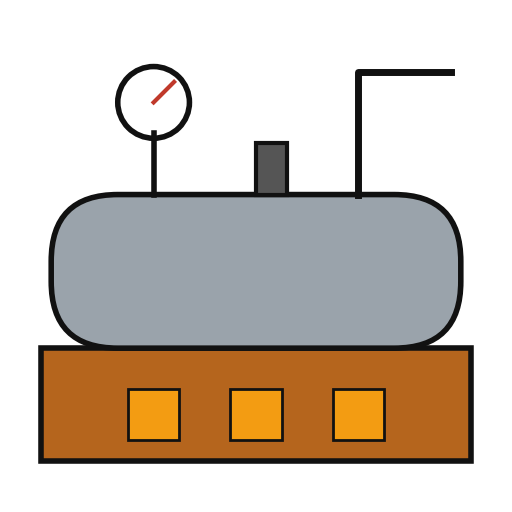 Kocioł destylacyjny ciśnieniowy
 Manometr
 Termometr
2
2
Close the outlet and fire it
Close the outlet and fire it
A pipe rises from the top of the still to a water-cooled condenser coil, then runs to a receiver tank. Keep the shut-off valve after the coil closed and fire the still. The vapours build up 4 to 5 atmospheres on the liquid, and its boiling point rises from 500-600 °F to 750-800 °F.
Potrzebne narzędzia:
Kocioł destylacyjny ciśnieniowy Wężownica skraplacza
 WodaManometr
3
3
Distil at 650 to 850 °F under pressure
Distil at 650 to 850 °F under pressure
Distil at about 650 to 850 °F. Keep the pressure on the vapours the whole way, in the still and while they condense in the coil. The heat and pressure turn the heavy oil into low-boiling oil.
Potrzebne narzędzia:
Kocioł destylacyjny ciśnieniowyTermometrManometr4
4
Draw off the gasoline from time to time
Draw off the gasoline from time to time
Open the shut-off valve now and then to run the condensed gasoline into the receiver. Do it often enough that the coil never fills with liquid.
Potrzebne narzędzia:
Wężownica skraplacza Zbiornik na ropę
5
5
Let off the gas
Let off the gas
Gas that will not condense collects in the coil and blocks it. Release it from time to time through the relief valve on the pipe rising from the lower end of the coil.
Potrzebne narzędzia:
Wężownica skraplaczaMateriały
1- 1 still chargeZastępnik
Według tego planu powstaje
Powiązane blueprinty
Te blueprinty dzielą się wiedzą — technikami, materiałami lub zasadami
CC0 Domena publiczna
Ten plan jest udostępniany na licencji CC0. Możesz go swobodnie kopiować, modyfikować, rozpowszechniać i wykorzystywać do dowolnych celów, bez konieczności uzyskiwania zgody.
Wesprzyj Makera kupując produkty przez jego plan, za co zarabia Prowizja Makera ustalony przez sprzedawców, lub stwórz nową iterację tego planu i dołącz go jako połączenie w swoim własnym planie, aby dzielić się przychodami.