SZTUKA
Piękno i dobre samopoczucie
RZEMIOSŁO
KULTURA I HISTORIA
ROZRYWKA
ŚRODOWISKO
JEDZENIE I NAPOJE
INŻYNIERIA ODWROTNA
NAUKI
LEKKOATLETYKA
TECHNOLOGIA
URZĄDZENIA DO NOSZENIA
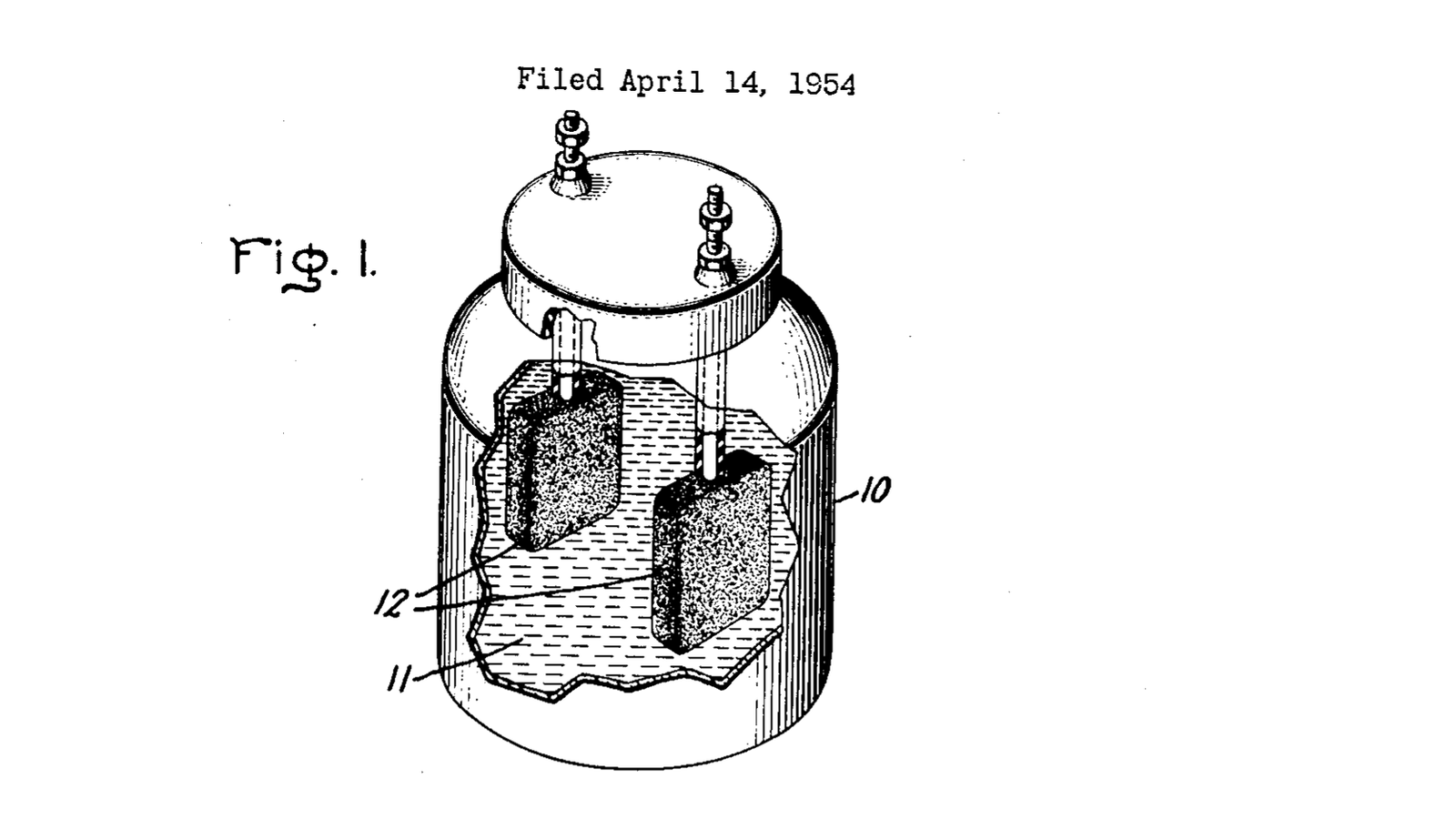


Becker Double-Layer Capacitor
Every cell in this chain so far stores charge by changing something. Lead becomes lead sulphate, cadmium becomes cadmium hydroxide, zinc becomes zinc oxide. The energy is real and so is the wear: anything that changes eventually stops changing back.
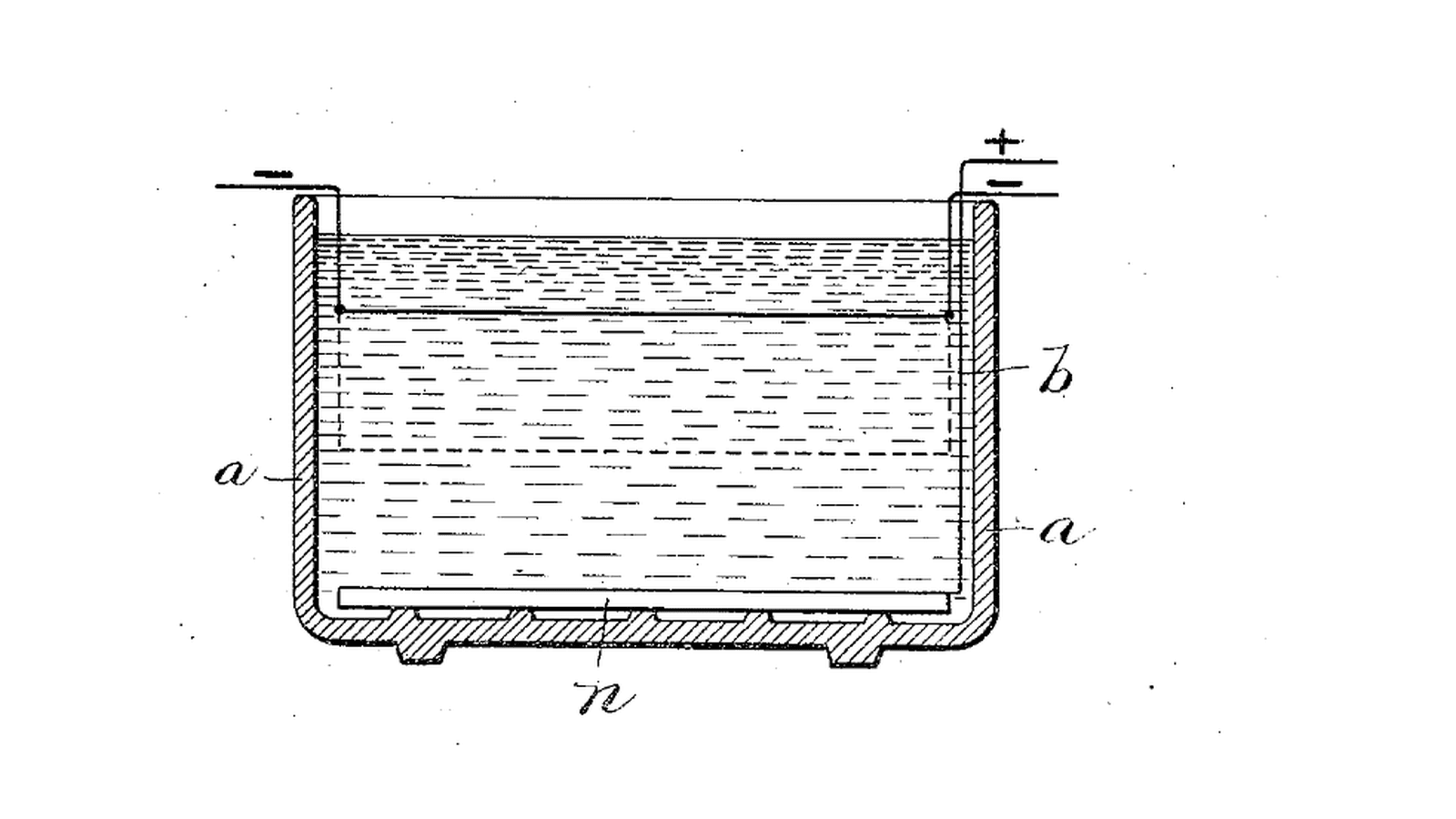
Howard Becker's capacitor changes nothing. Charge is held as ions lined up against the surface of a porous carbon block, one molecule away from the electrons they are attracted to, and released again when you connect a load. No reaction, no products, nothing consumed - so where a battery gives you hundreds of cycles, this gives hundreds of thousands.
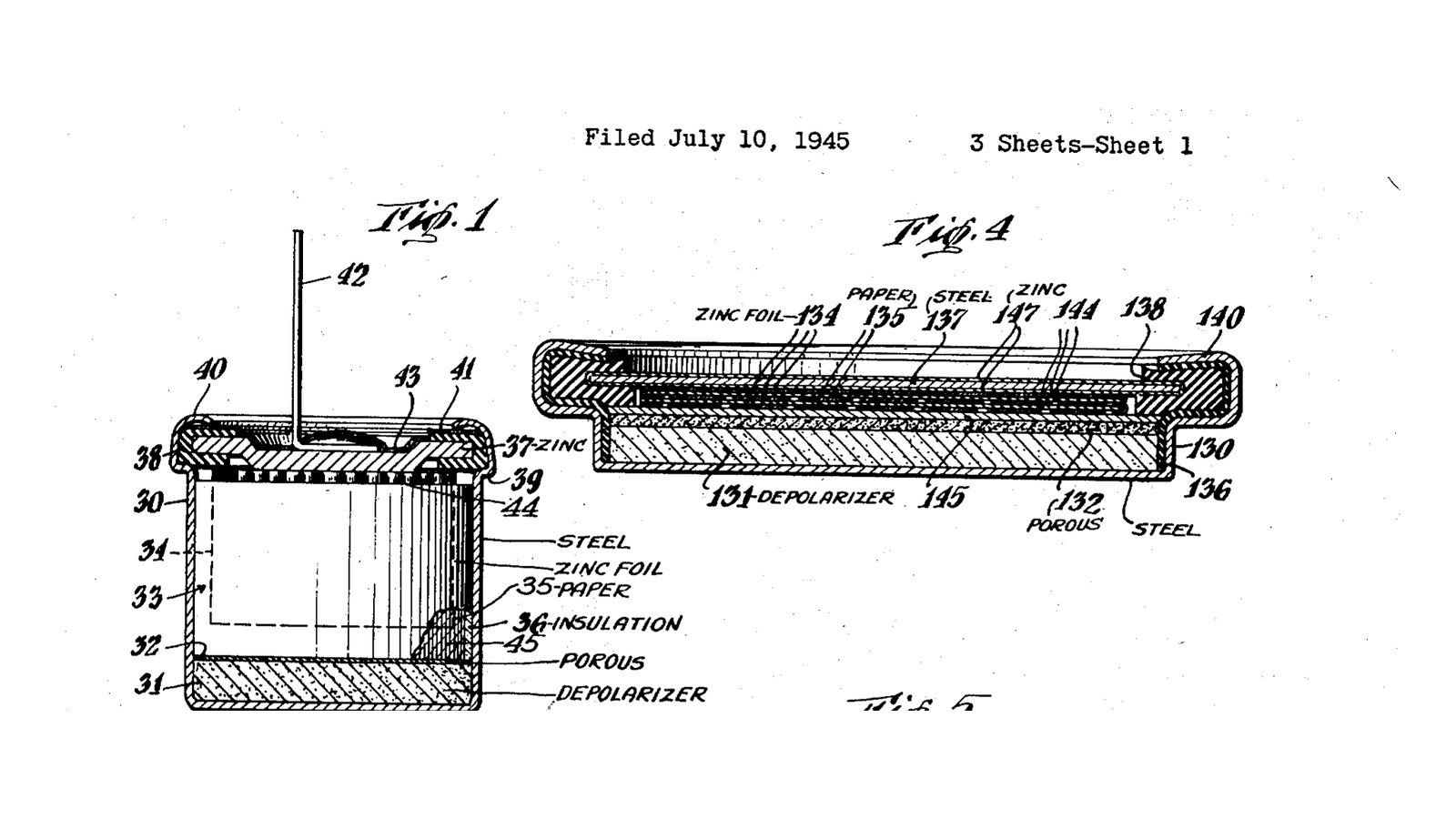
**US 2,800,616** "Low voltage electrolytic capacitor", Howard I. Becker, assigned to General Electric, filed 14. April 1954 and granted 23. July 1957. The device is "at least two porous carbon electrodes" in an electrolyte, and the patent is plain that energy is "stored on the surface of and in the pores of the porous carbon electrodes". A cell two inches long and one inch across measured **over 800,000 microfarads** - at a time when a large electrolytic capacitor was a few thousand.
The best thing in the patent is Becker's honesty about not knowing why: *"It is not known exactly what is taking place... but it leads to an extremely high capacity."* The explanation was already forty years old and sitting in someone else's field - Hermann von Helmholtz had described the electrical double layer at an interface in the 1850s - and it took another decade for the two halves to be put together. The phrase "double-layer capacitor" is ours, not his.
This one is safe, cheap and genuinely quick: activated charcoal, salt water, a jar and an afternoon. You will measure its capacitance with nothing but a resistor and a stopwatch, and get a number in farads from a device you assembled by hand.
Początkujący
45 minutes, plus an overnight soak
Instrukcje
1
1
Wet the carbon first, and be patient about it
Wet the carbon first, and be patient about it
Everything in this device happens on surfaces that are inside the carbon, and a pore full of air has no surface at all as far as the electrolyte is concerned. Wetting is therefore the whole build, and skipping it is why most first attempts measure microfarads instead of farads.
Dissolve 30 g of salt in 100 ml of warm distilled water - a strong brine, roughly as salty as it will go. Stir 6 g of activated charcoal powder into about 40 ml of it and keep stirring until the floating layer is gone and you have a black slurry with no dry lumps.
Then leave it. Overnight is right; an hour is not. If you have a syringe you can speed it up: draw the slurry into a syringe, block the nozzle with a finger, pull the plunger back hard, and watch the air come out of the pores as bubbles. Release and repeat five or six times.
Distilled water and pure salt matter more than they look. Tap water brings calcium and magnesium that will slowly clog exactly the pores you are trying to open.
Materiały do tego kroku:
 Activated Charcoal Powder6 g
 Salt30 g
 Distilled Water100 ml
Potrzebne narzędzia:
 Glass Beaker
 Borosilicate Glass Rod
 Digital Kitchen Scale
 Syringe
 Nitrile Rubber Gloves
2
2
Two electrodes, one separator, nothing touching
Two electrodes, one separator, nothing touching
Cut two 30 x 30 mm squares of graphite foil as current collectors, each with a 20 mm tab left on for the connection. Graphite rather than metal: this is salt water with a voltage across it, and steel or copper will corrode into it and ruin the measurement within minutes.
Spread half the wet carbon slurry onto each square as an even layer 2-3 mm thick, out to about 25 mm and no further - leave a dry margin so the two layers cannot meet at the edges.
Wet a piece of filter paper in the brine and lay it over one electrode, then press the second electrode face-down onto it so the sandwich reads: foil, carbon, paper, carbon, foil, with the tabs sticking out on opposite sides.
That paper is the only thing standing between you and a short circuit, and it is one sheet thick. Two sheets is a perfectly reasonable choice for a first build; it costs you a little capacitance and removes the most common failure.
Materiały do tego kroku:
 Graphite Foil2 arkuszy
 Filter Paper2 sztuk
Potrzebne narzędzia:
 Craft Knife
 Digital Caliper 6-InchNitrile Rubber Gloves
3
3
Clamp it, and keep it wet
Clamp it, and keep it wet
Sandwich the stack between two rigid plastic plates and clamp it just tight enough to hold everything in contact - firm hand pressure, not a vice. Squeezing hard drives the electrolyte out of the carbon and undoes step 1.
Stand the whole clamped assembly in a shallow dish with a few millimetres of brine in the bottom so the edges stay wet. A double-layer cell that dries out does not fail dramatically; it simply loses capacitance, quietly, and you will blame your measurement.
Check with a multimeter on resistance across the two tabs before charging: you want a reading in the tens of ohms, not near zero. Near zero means the two carbon layers have found each other and the separator has to be redone.
Materiały do tego kroku:
 Acrylic Sheet2 sztukSalt10 gDistilled Water50 ml
Potrzebne narzędzia:
 Digital Multimeter - Lab Grade
 Spring ClampGlass Beaker
4
4
Measure farads with a resistor and a stopwatch
Measure farads with a resistor and a stopwatch
This is the measurement, and it needs no instrument more exotic than a watch.
Charge the cell to 0.9 V from a bench supply, current-limited to 50 mA, and stop there. **Do not go above about 1.2 V** - water splits at 1.23 V, and gas generated inside the pores blocks the surface you spent last night wetting.
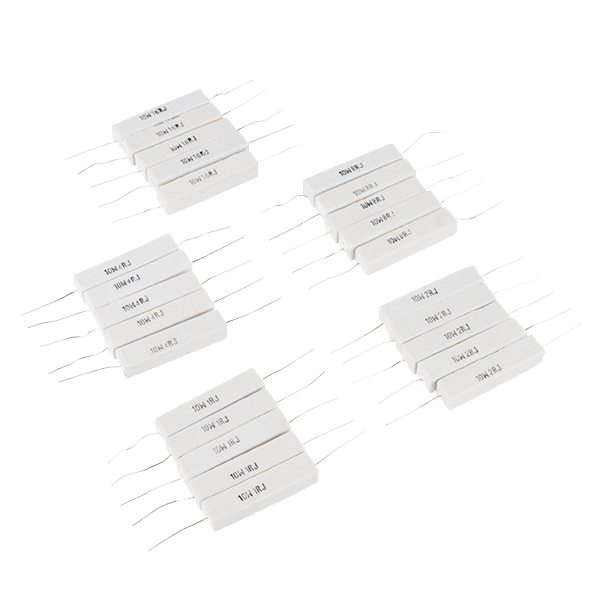
Disconnect the supply, connect a known resistor - 100 ohms is a good start - across the tabs, start the stopwatch, and write down the voltage every ten seconds until it has fallen to about a third of where it began.
A capacitor discharging through a resistor reaches 36.8 per cent of its starting voltage after exactly one time constant, and that time constant is R times C. So if 0.9 V falls to 0.33 V in 300 seconds through 100 ohms, then C = 300 / 100 = **3 farads**. From six grams of charcoal, a jam jar of brine and a piece of paper.
Do it twice with different resistors. If the two answers agree you have measured a capacitance; if they do not, something is leaking and the flow step will tell you what.
Potrzebne narzędzia:
Digital Multimeter - Lab Grade Stopwatch
 Power Resistor Kit - 10W (25 pack)
 Adjustable Bench Power Supply
 Alligator Clip Test Leads
5
5
Where the farads come from
Where the farads come from
Wczytywanie notatnika Jupyter…
6
6
When the number is disappointing
When the number is disappointing
Three faults account for nearly every low reading, and the first one accounts for most of them.
Flow
Loading...
Potrzebne narzędzia:
Digital Multimeter - Lab Grade7
7
Compendium: what a double layer is, and what it is not
Compendium: what a double layer is, and what it is not
**Where the "double" comes from.** Put a voltage on the carbon and two sheets of charge form facing each other: electrons in the carbon surface, and solvated ions in the liquid drawn up against it. Between them sits a single layer of solvent molecules. That is the separation - a few tenths of a nanometre - and since capacitance goes as 1 over the separation, it is where the absurd numbers come from.
**Why the surface area is a lie, usefully.** A gram of activated carbon has 1,000 to 3,000 square metres of surface by gas adsorption, which should give hundreds of farads. Measured electrodes give about 100 F/g. The difference is that a nitrogen molecule fits into pores that a solvated ion dragging its water shell cannot enter. Both numbers are correct; they are answers to different questions.
**Why it is not a battery.** Energy is one half C V squared, so this cell holds tens of joules where an AA holds thousands. What it has instead is power and endurance: it will take that charge in and give it back in seconds, and do it hundreds of thousands of times, which is why supercapacitors sit in regenerative brakes, camera flashes and memory backup rather than in phones.
**Why yours is worse than a bought one, and that is fine.** Commercial cells use an organic electrolyte at 2.5-2.7 V instead of water at under 1, and energy goes as voltage squared - a factor of seven before any other difference. They also use carbon with a pore-size distribution matched to the ion, not the general-purpose powder sold for fish tanks. Your device is the real mechanism at a fifth of the performance, which is exactly what a demonstration should be.
**The historical footnote worth keeping.** Becker patented an effect he could not explain, and said so in the specification. The explanation existed and had for a century, in electrochemistry rather than electronics. Nothing about the device needed inventing after 1957; what it needed was somebody reading both literatures.
Materiały
6- Zastępnik
- 40 gZastępnik
- 150 mlZastępnik
- 2 arkuszyZastępnik
- 2 sztukZastępnik
- 2 sztukZastępnik
Wymagane narzędzia
13- Zastępnik
- Zastępnik
- Zastępnik
- Zastępnik
- Zastępnik
- Zastępnik
- Zastępnik
- Zastępnik
- Zastępnik
- Zastępnik
- Power Resistor Kit - 10W (25 pack)10% prowizji$5.80
- Zastępnik
- Zastępnik
Powiązane blueprinty
Te blueprinty dzielą się wiedzą — technikami, materiałami lub zasadami



CC0 Domena publiczna
Ten plan jest udostępniany na licencji CC0. Możesz go swobodnie kopiować, modyfikować, rozpowszechniać i wykorzystywać do dowolnych celów, bez konieczności uzyskiwania zgody.
Wesprzyj Makera kupując produkty przez jego plan, za co zarabia Prowizja Makera ustalony przez sprzedawców, lub stwórz nową iterację tego planu i dołącz go jako połączenie w swoim własnym planie, aby dzielić się przychodami.