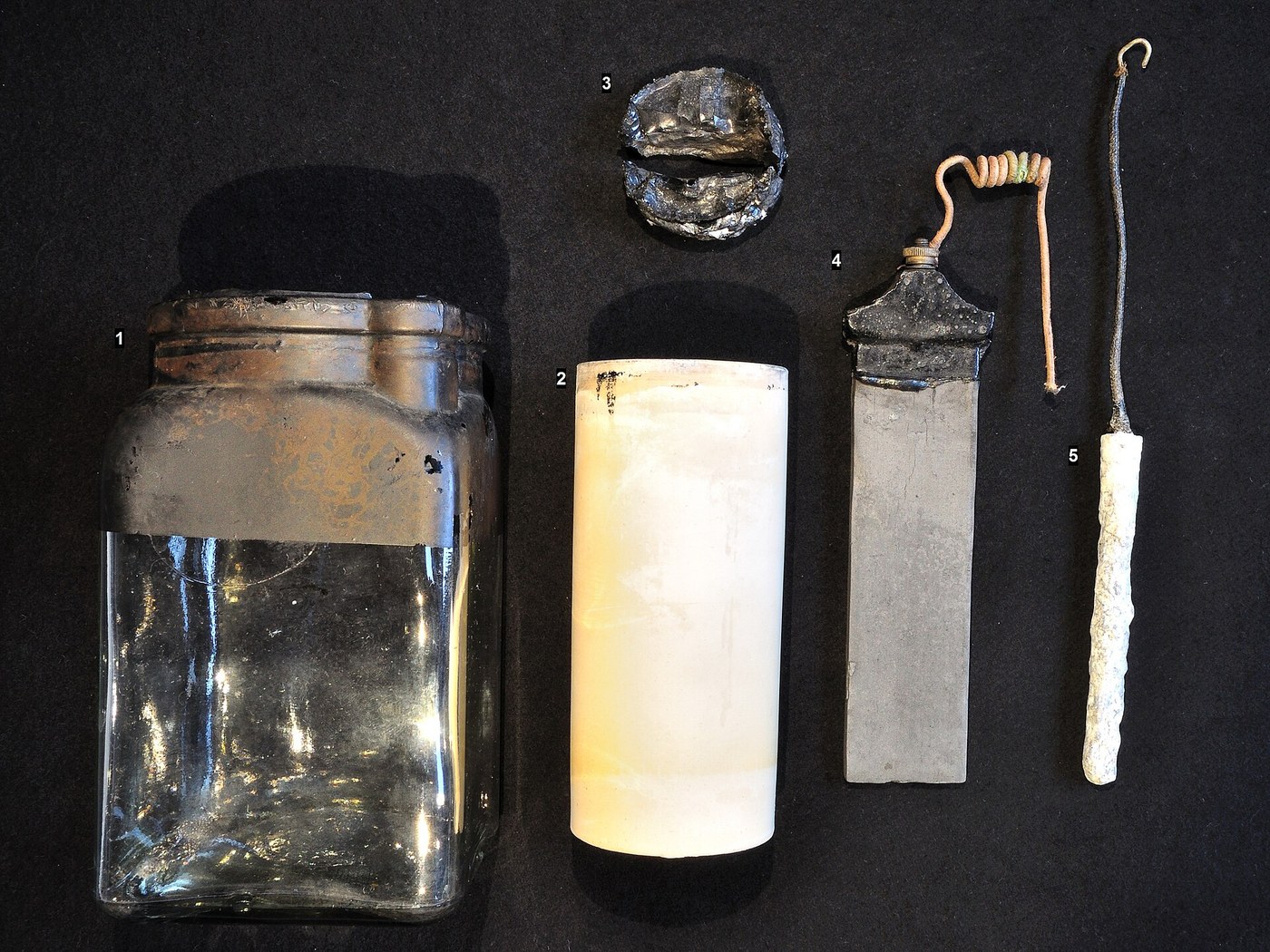


Leclanché Cell
Instrukcje
Mix the electrolyte
Mix the electrolyte
Dissolve ammonium chloride in warm water until saturated, then let it cool.
Ammonium chloride is far kinder to work with than the acids in earlier cells, and that was a large part of why this design spread. It still irritates eyes and skin — wash off splashes.Materiały do tego kroku:
 Chlorek amonu (NH₄Cl)1 container
Pack the carbon cathode
Pack the carbon cathode
The carbon rod carries the current; the manganese dioxide around it does the chemical work.
- Mix manganese dioxide with a little powdered graphite to improve conductivity.
- Pack the mixture tightly around the graphite electrode inside a porous bag or perforated tube.
- Keep the top of the rod clean and dry for the connection.
Materiały do tego kroku:
 Ditlenek manganu (piroluzyt)1 container
 Elektroda grafitowa1 sztuka
 Proszek grafitowy1 container
Assemble the cell
Assemble the cell
Stand the packed carbon assembly and a zinc rod in the jar of electrolyte, not touching each other.
- Zinc is the negative terminal.
- Carbon is the positive terminal.
- Both must stand clear of the bottom so debris cannot bridge them.
Materiały do tego kroku:
 Sztabka cynku 99,9 % o masie 1 lb1 sztuka
Measure it, then load it hard
Measure it, then load it hard
Read the open-circuit voltage, then watch what a heavy load does.
- Expect about 1.5 V unloaded.
- Connect a low-value resistor and watch the voltage sag within a minute or two.
- Disconnect, wait ten minutes, and read again — it will have largely recovered.
Materiały do tego kroku:
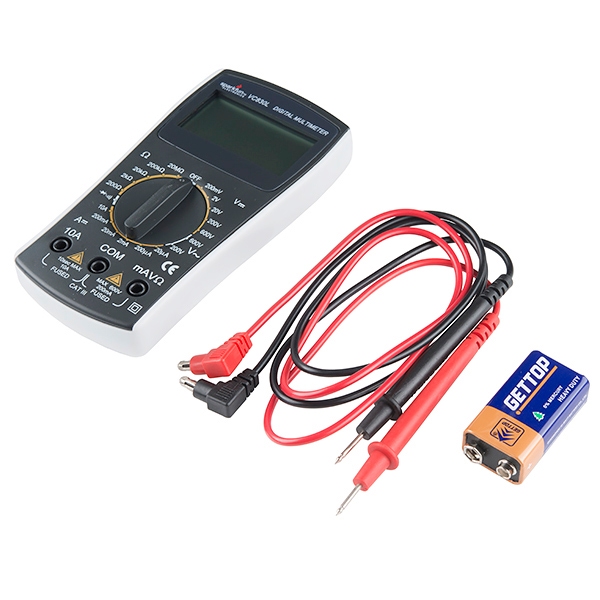 Digital Multimeter - Basic1 sztuka
 Zestaw oporników 1/4 W1 zestaw
History and context
History and context
Georges Leclanché, a French engineer, patented this cell in 1866, and the Belgian telegraph service adopted it soon after. Its combination of cheap materials, no acid to spill and no porous pot to maintain beat the Daniell cell for anything that did not need a continuous draw.
Its real descendant arrived when the liquid was replaced by a paste and the zinc became the container itself. That is the dry cell — Carl Gassner patented a version in 1886 — and the ordinary zinc-carbon battery on sale today is still recognisably Leclanché's chemistry: zinc, manganese dioxide, carbon, ammonium chloride.
Being careful with the claim: the modern alkaline cell is not a Leclanché cell. It shares the zinc and manganese dioxide but uses potassium hydroxide, which is what lets it sustain the heavy continuous currents this one cannot.
Materiały
7- 1 containerZastępnik
- 1 containerZastępnik
- 1 sztukaZastępnik
- 1 containerZastępnik
- Zastępnik
- Digital Multimeter - Basic10% prowizji1 sztuka$14.00
- 1 zestawZastępnik
Materiały z połączonych planów


Powiązane blueprinty
Te blueprinty dzielą się wiedzą — technikami, materiałami lub zasadami

CC0 Domena publiczna
Ten plan jest udostępniany na licencji CC0. Możesz go swobodnie kopiować, modyfikować, rozpowszechniać i wykorzystywać do dowolnych celów, bez konieczności uzyskiwania zgody.
Wesprzyj Makera kupując produkty przez jego plan, za co zarabia Prowizja Makera ustalony przez sprzedawców, lub stwórz nową iterację tego planu i dołącz go jako połączenie w swoim własnym planie, aby dzielić się przychodami.