Współpraca
SZTUKA
Piękno i dobre samopoczucie
RZEMIOSŁO
KULTURA I HISTORIA
ROZRYWKA
ŚRODOWISKO
JEDZENIE I NAPOJE
INŻYNIERIA ODWROTNA
NAUKI
LEKKOATLETYKA
TECHNOLOGIA
URZĄDZENIA DO NOSZENIA

Blackfoot Sinew Thread: Dried Leg and Neck Sinew Shredded, Softened and Rolled Between the Palms (Wissler, 1910)
Blackfoot (Niitsitapi) sewing thread as Clark Wissler recorded it: broad bands of sinew from an animal's legs and neck dried and stored, shreds pulled off as needed, softened in water and smoothed with the fingers, then twisted into thread by rolling between the palms, one end held fast; twisted threads braided together make heavy cord.
Początkujący
A few days drying; minutes per thread
Instrukcje
1
1
Read Wissler
Read Wissler
"Then placing one end in the mouth, the shreds are twisted by rolling between the palms."
2
2
Dry the sinew
Dry the sinew
Take the broad bands of sinew from the legs and neck, clean off any flesh, and dry and store them (ours: on a rack in dry air until hard).
Materiały do tego kroku:
 Ścięgna nóg zwierzęcych1 sztuka
Potrzebne narzędzia:
 Nóż
 Suszarka (regał)
3
3
Shred, soften and roll
Shred, soften and roll
When thread is needed, pull shreds off the dried sinew (the Blackfoot used their teeth; ours: an awl point), soften them in water and smooth them out with the fingers. Hold one end fast (Wissler: in the mouth, or under the foot) and roll the shreds between the palms to twist them into thread. Twist or braid several threads together for heavy cord.
Materiały do tego kroku:
 Woda1 sztuka
Potrzebne narzędzia:
 Szydło kościane
4
4
Sew with it
Sew with it
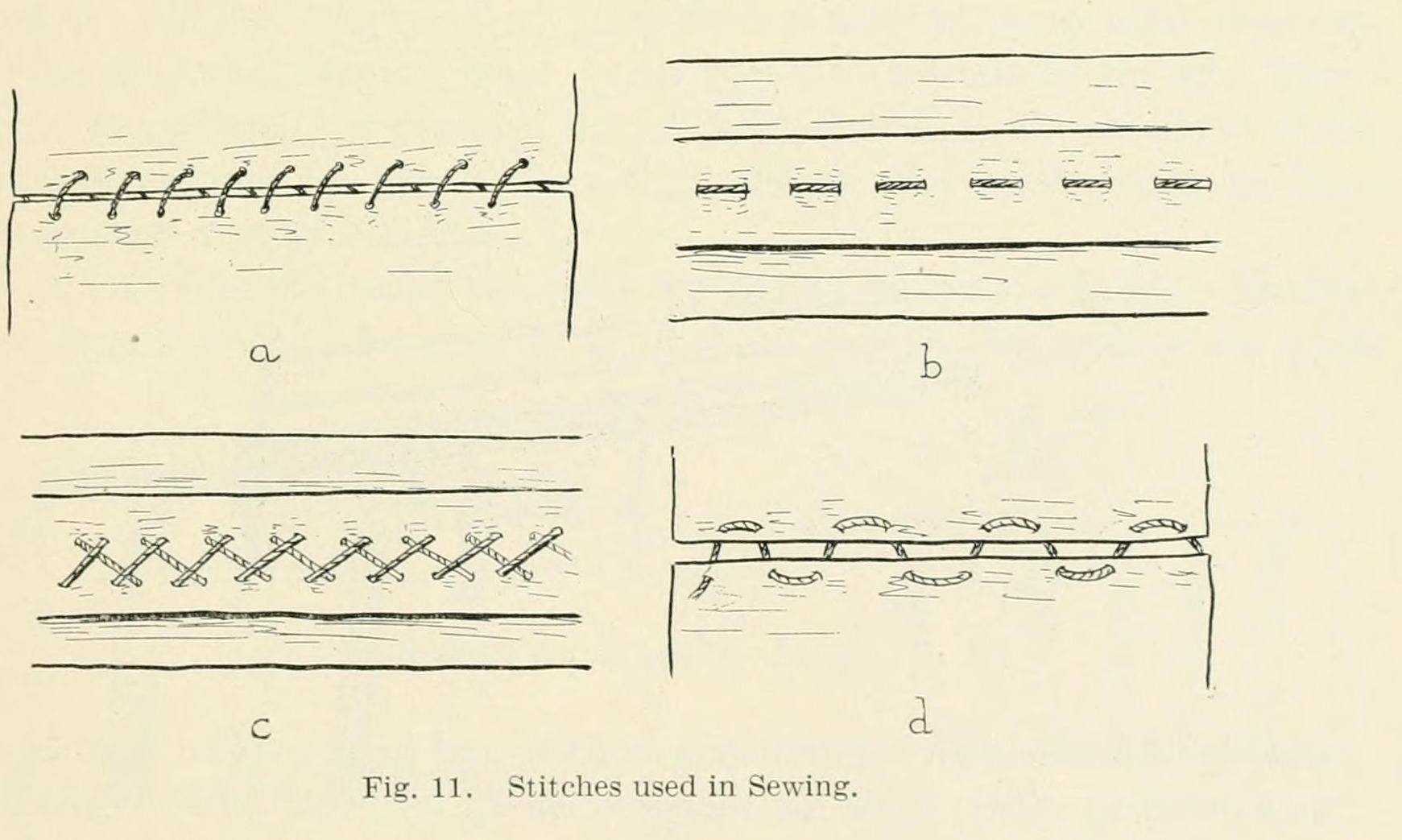
Sew with a bone or metal bodkin. The Blackfoot used an over-and-over stitch for seams and moccasin soles, a running stitch for borders, a mending stitch and an ornamental one (Fig. 11), always with a single thread.
Potrzebne narzędzia:
Szydło kościane5
5
Troubleshooting
Troubleshooting
Sinew thread troubleshooting.
Flow
Loading...
6
6
History and honest limits
History and honest limits
From Clark Wissler, *Material Culture of the Blackfoot Indians*, **Anthropological Papers of the American Museum of Natural History** vol. V (1910), pp. 53-54 and Fig. 11 (checked on the archive.org scan materialcultureo00wiss). In 1910 the sinew came from steers; buffalo before. Sewing with two threads, as in European shoemaking, was unknown to them. Drying details are ours.
Według tego planu powstaje

Powiązane blueprinty
Te blueprinty dzielą się wiedzą — technikami, materiałami lub zasadami
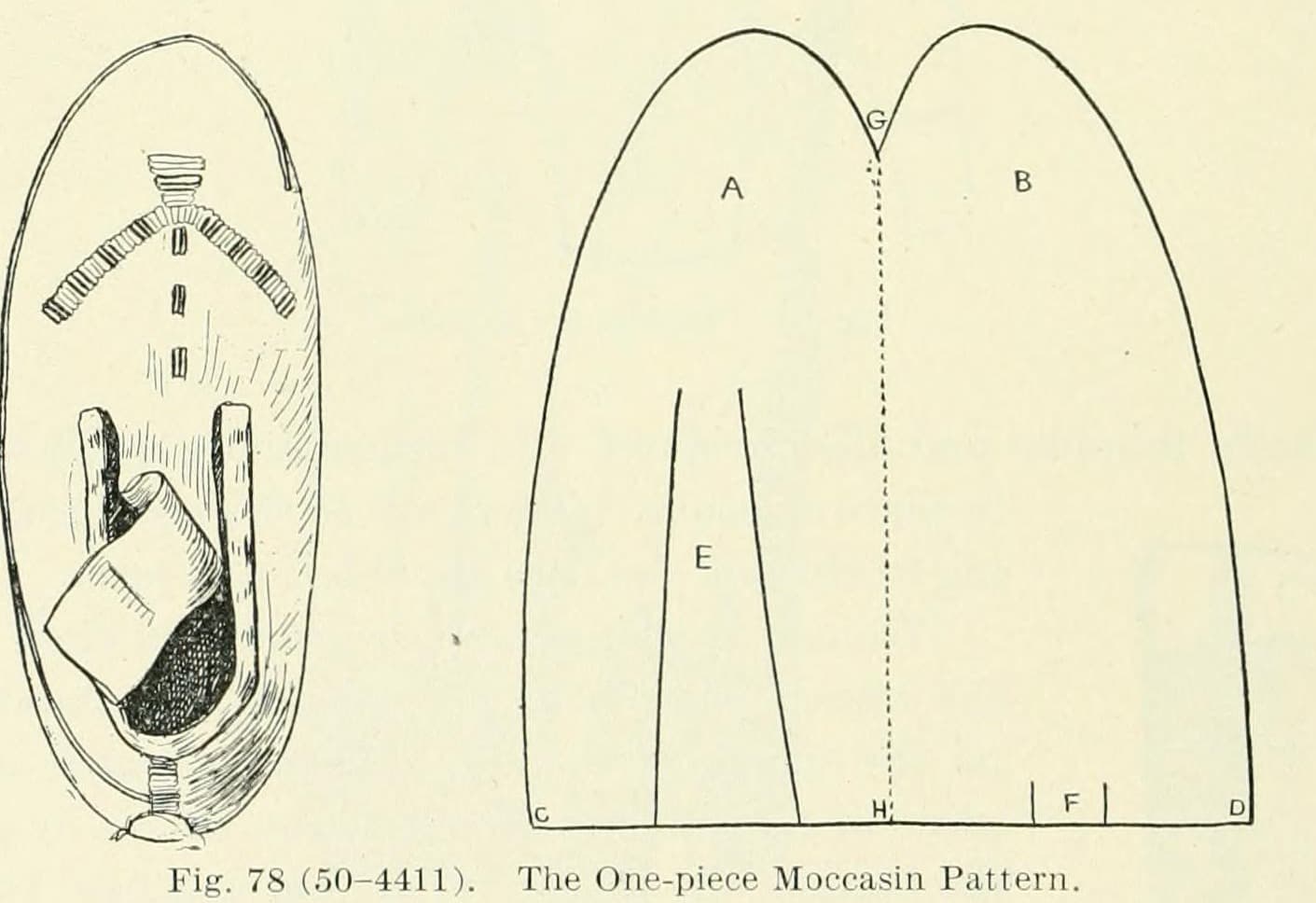
Blackfoot One-Piece Moccasin: One Skin Folded Lengthwise, Seamed Round the Toes, Heel Seam with Trailer, Ankle Flap (Wissler, 1910)
autor: Tex
Tekstylia i skóra
5
0
0
0
0
0
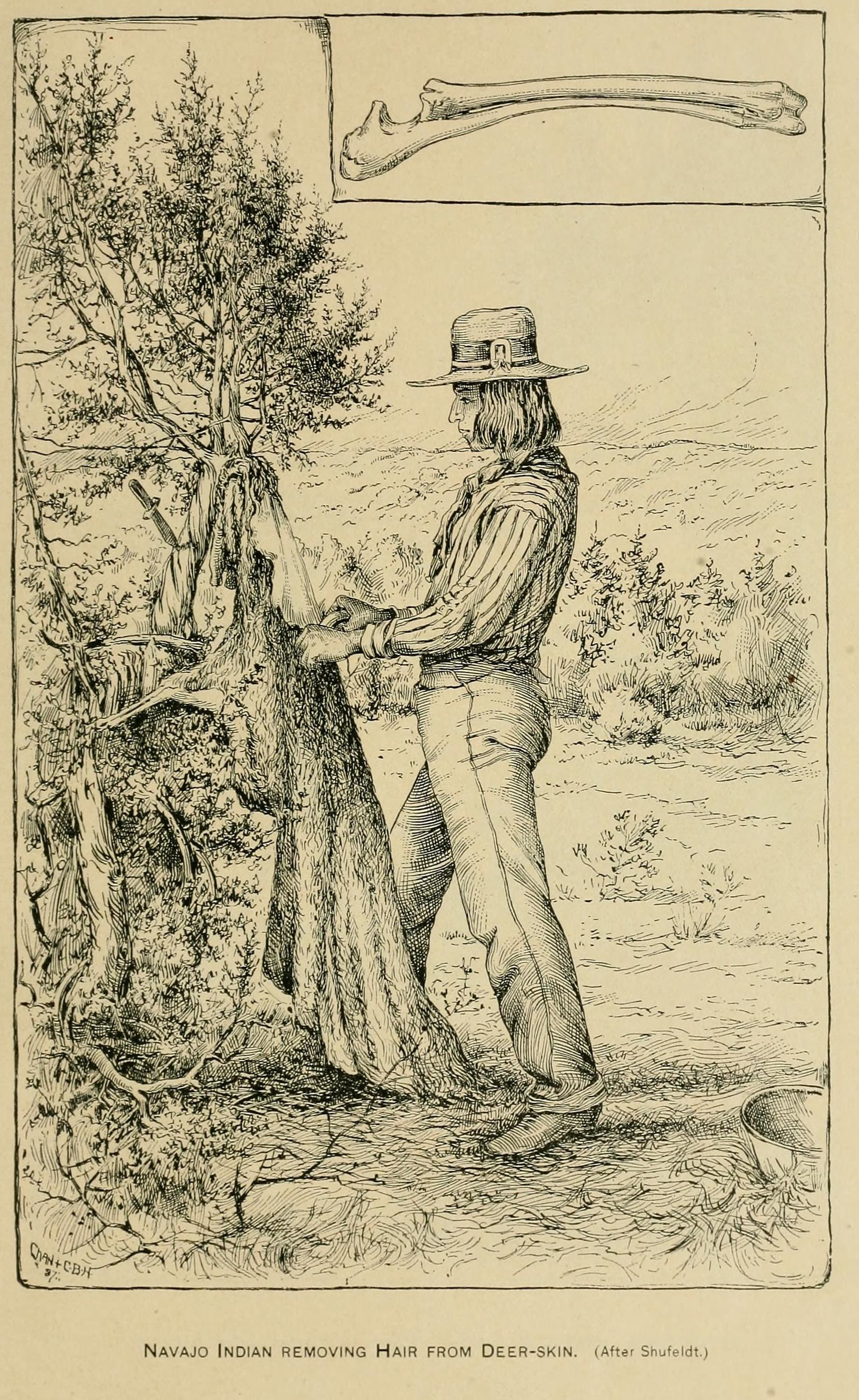
Navajo Buckskin: Hair Shaved with the Deer's Own Foreleg Bone, Brains Rubbed In, Wrung on a Tree, Worked Dry over the Feet (Shufeldt, 1888)
autor: Tex
Tekstylia i skóra
4
0
0
0
0
0
CC0 Domena publiczna
Ten plan jest udostępniany na licencji CC0. Możesz go swobodnie kopiować, modyfikować, rozpowszechniać i wykorzystywać do dowolnych celów, bez konieczności uzyskiwania zgody.
Wesprzyj Makera kupując produkty przez jego plan, za co zarabia Prowizja Makera ustalony przez sprzedawców, lub stwórz nową iterację tego planu i dołącz go jako połączenie w swoim własnym planie, aby dzielić się przychodami.