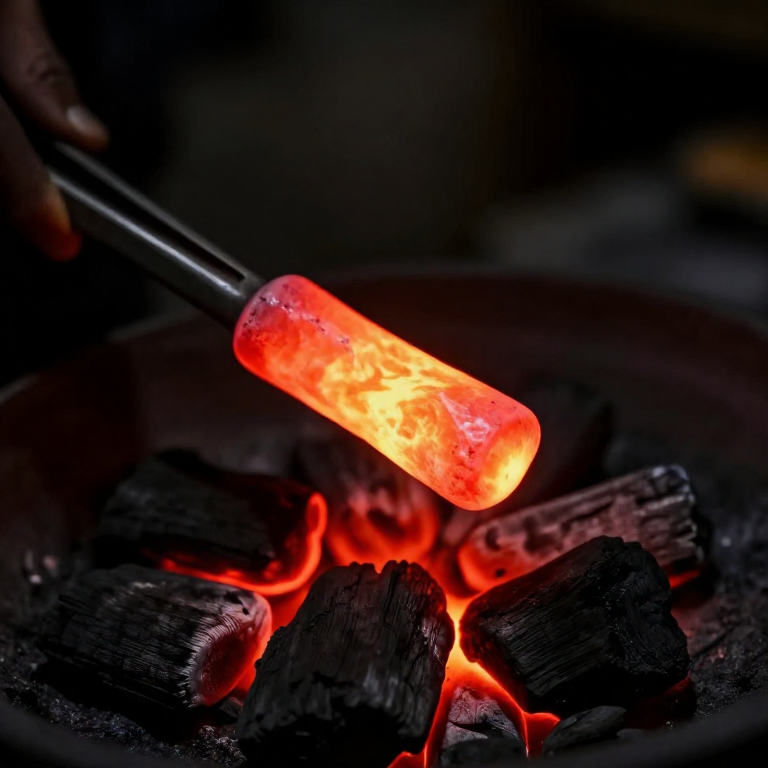


Annealing and Cold-Working Bronze — Hardening Without a Forge
Annealing and cold-working are the two inseparable halves of Bronze Age metallurgy. Every bronze tool, weapon, and ornament was shaped and strengthened by this cycle — hammer to harden, heat to soften, hammer again. Understanding these two processes is the foundation of all pre-industrial metalwork.
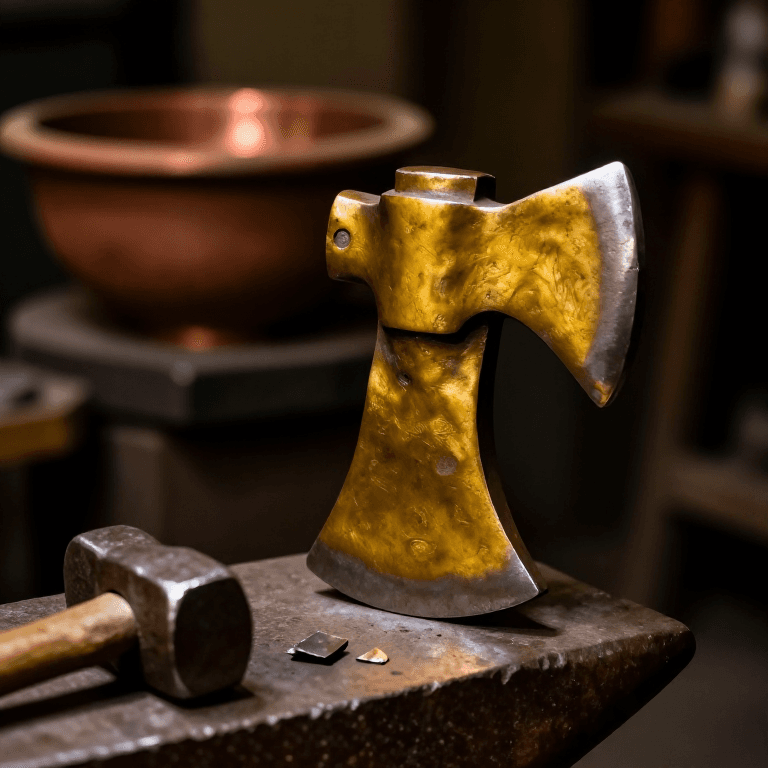
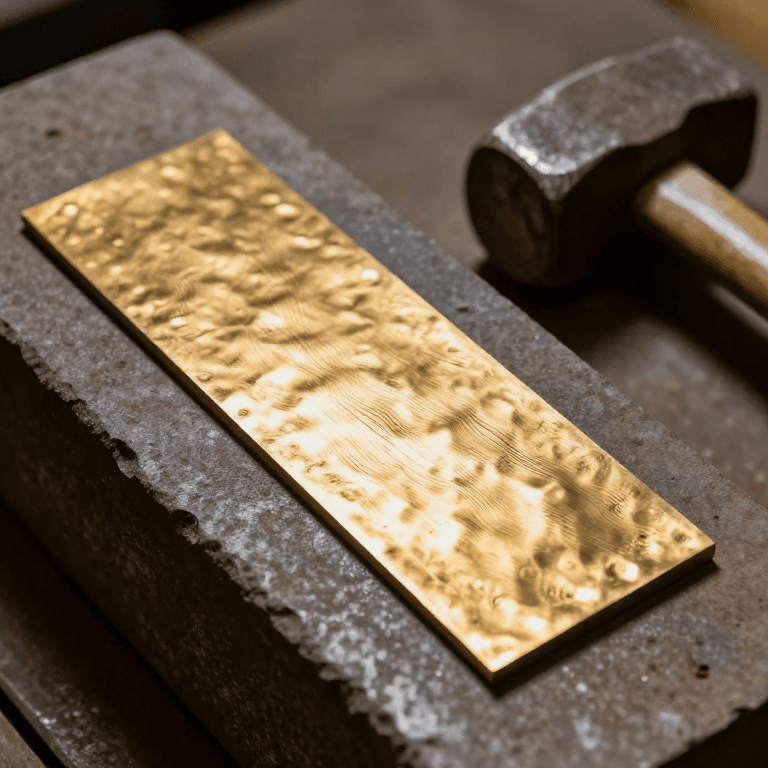
Cold-working means deforming metal at room temperature. Each hammer blow compresses the crystal grains, creating dislocations that resist further movement — the metal becomes harder and stiffer. This is called work-hardening. A freshly cast bronze axe at 80 HV (Vickers hardness) can be cold-worked to 200+ HV, rivalling mild steel.
But work-hardening has a limit. Continue hammering past it and the bronze cracks. Annealing resets the process: heating to 500-600 °C causes the distorted grains to recrystallise into new, strain-free grains. The metal is soft again and ready for the next cycle. A Bronze Age smith might anneal the same piece 15 times during a single project.
Instrukcje
Prepare a test piece
Prepare a test piece
Materiały do tego kroku:
 Blacha miedziana100 g
Test as-cast hardness
Test as-cast hardness
Cold-work one half
Cold-work one half
Potrzebne narzędzia:
 Tłuk kamienny
 Płyta kamienna
Compare hardness
Compare hardness
Anneal the cold-worked section
Anneal the cold-worked section
Materiały do tego kroku:
 Węgiel drzewny500 g
Potrzebne narzędzia:
 Kleszcze z długimi rękojeściami
Test annealed hardness
Test annealed hardness
Demonstrate the full cycle on a cutting edge
Demonstrate the full cycle on a cutting edge
Understand the critical differences from steel
Understand the critical differences from steel
Materiały
2- 100 gZastępnik
- 500 gZastępnik
Wymagane narzędzia
3- Zastępnik
- Zastępnik
- Zastępnik
Materiały z połączonych planów
Powiązane blueprinty
Te blueprinty dzielą się wiedzą — technikami, materiałami lub zasadami
CC0 Domena publiczna
Ten plan jest udostępniany na licencji CC0. Możesz go swobodnie kopiować, modyfikować, rozpowszechniać i wykorzystywać do dowolnych celów, bez konieczności uzyskiwania zgody.
Wesprzyj Makera kupując produkty przez jego plan, za co zarabia Prowizja Makera ustalony przez sprzedawców, lub stwórz nową iterację tego planu i dołącz go jako połączenie w swoim własnym planie, aby dzielić się przychodami.