SZTUKA
Piękno i dobre samopoczucie
RZEMIOSŁO
KULTURA I HISTORIA
ROZRYWKA
ŚRODOWISKO
JEDZENIE I NAPOJE
INŻYNIERIA ODWROTNA
NAUKI
LEKKOATLETYKA
TECHNOLOGIA
URZĄDZENIA DO NOSZENIA

Cooke Triplet Lens
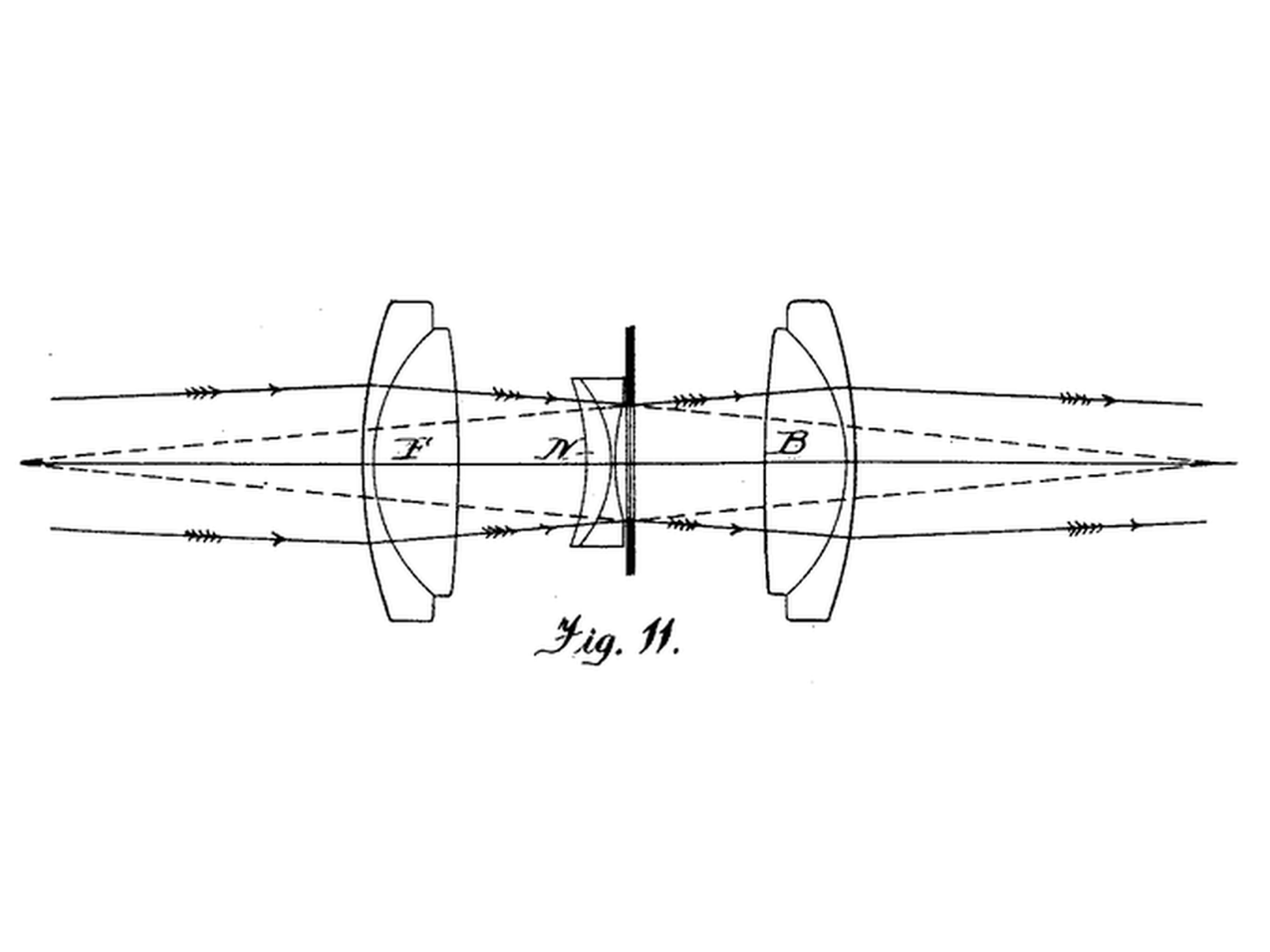
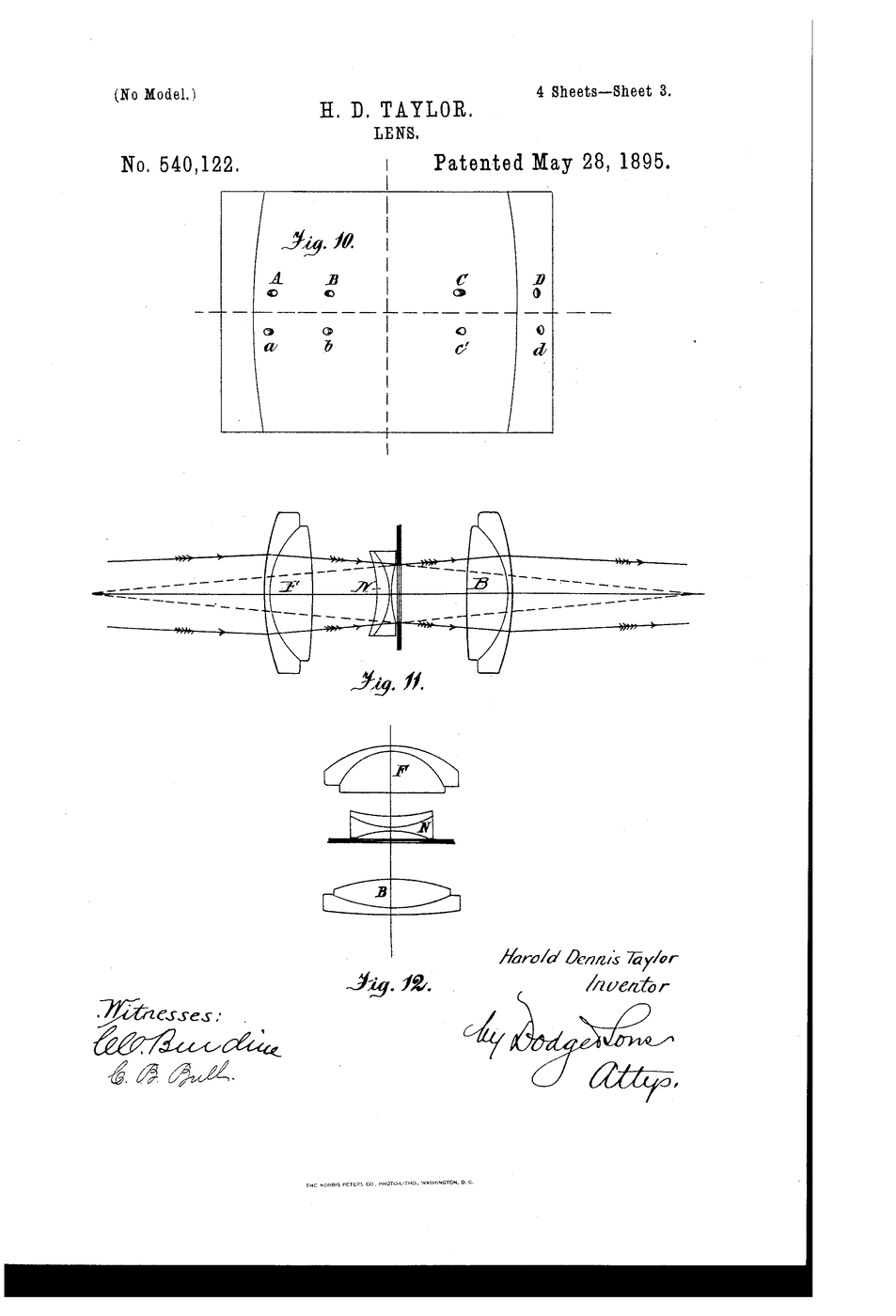
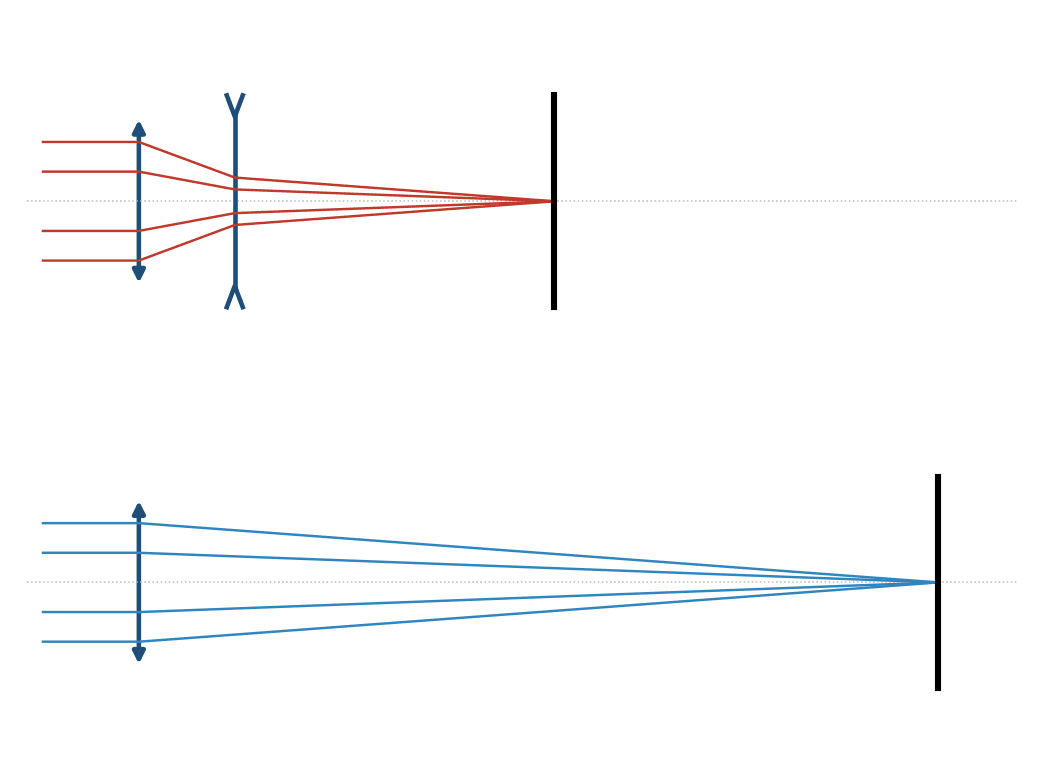
Nineteenth-century lens makers flattened the image with a stop placed in front of or behind the lens, at the cost of astigmatism at the edges. Harold Dennis Taylor, optical manager at T. Cooke & Sons of York, dropped that trick entirely. He showed that a negative lens images a flat object onto a surface curved exactly as much as a positive lens of equal power, but the other way - so one can cancel the other.
**US 540,122**, "Lens", Taylor, filed 5. February 1894, granted 28. May 1895, puts "a negative lens … between two positive lenses, the focal power of the negative lens being approximately equal to the combined focal powers of the two positive lenses". Three separated elements: the Cooke triplet, still the simplest well-corrected camera lens.
**You build one from stock lenses**, and compare how flat its image is with a single lens.
Średniozaawansowany
2 hours
Instrukcje
1
1
Choose three lenses
Choose three lenses
Two convex lenses of about 100 mm focal length (check each on a distant window) and one concave of about -50 mm. Powers: +10 and +10 dioptres against -20.
Materiały do tego kroku:
 Zestaw soczewek skupiających1 zestaw
 Soczewka wklęsła1 sztuka
Potrzebne narzędzia:
 Linijka stalowa
2
2
Mount the triplet
Mount the triplet
On the bench: convex, 20 mm gap, concave, 20 mm gap, convex. Centre all three on the same height.
Potrzebne narzędzia:
 Ława i szyna optyczna
 Zestaw uchwytów na soczewki
3
3
Light a grid
Light a grid
Tape graph paper to a window or light it from behind with a torch, 1.5 m from the lens. Put a tracing-paper screen behind the triplet and focus the centre of the grid sharply.
Materiały do tego kroku:
 Papier milimetrowy1 arkusz
 Rolka kalki krawieckiej1 arkusz
 Taśma malarska1 rolka
Potrzebne narzędzia:
 Latarka inspekcyjna LED
 Miara zwijana
4
4
Measure the edge refocus
Measure the edge refocus
Without touching the lenses, move the screen until the grid 15 mm from the image centre is sharpest. Note how far it moved. Replace the triplet with one convex lens, refocus the centre, and measure the refocus again at the same 15 mm image height.
Potrzebne narzędzia:
Linijka stalowa5
5
Petzval sum and design
Petzval sum and design
Wczytywanie notatnika Jupyter…
6
6
History & Context
History & Context
**What the patent specifies:** a negative lens between two positive lenses, its power about equal to theirs combined, each element free of diaphragm corrections, flattening the field and removing marginal astigmatism. **Modern build (derived):** three stock singlets on a bench.
Taylor's employer declined to make it; Taylor, Taylor & Hobson did, as the Cooke lens. Tessar and many later designs grew from it. Its limits: with only three elements the aperture and angle of view are modest before aberrations return.
Materiały
5- 1 zestawZastępnik
- 1 sztukaZastępnik
- 1 arkuszZastępnik
- 1 arkuszZastępnik
- 1 rolkaZastępnik
Wymagane narzędzia
5- Zastępnik
- Ława i szyna optyczna10% prowizjiZastępnik
- Zestaw uchwytów na soczewki10% prowizjiZastępnik
- Zastępnik
- 1 vendor sell this, none ship to you yetZastępnik
Powiązane blueprinty
Te blueprinty dzielą się wiedzą — technikami, materiałami lub zasadami

CC0 Domena publiczna
Ten plan jest udostępniany na licencji CC0. Możesz go swobodnie kopiować, modyfikować, rozpowszechniać i wykorzystywać do dowolnych celów, bez konieczności uzyskiwania zgody.
Wesprzyj Makera kupując produkty przez jego plan, za co zarabia Prowizja Makera ustalony przez sprzedawców, lub stwórz nową iterację tego planu i dołącz go jako połączenie w swoim własnym planie, aby dzielić się przychodami.