Współpraca
SZTUKA
Piękno i dobre samopoczucie
RZEMIOSŁO
KULTURA I HISTORIA
ROZRYWKA
ŚRODOWISKO
JEDZENIE I NAPOJE
INŻYNIERIA ODWROTNA
NAUKI
LEKKOATLETYKA
TECHNOLOGIA
URZĄDZENIA DO NOSZENIA
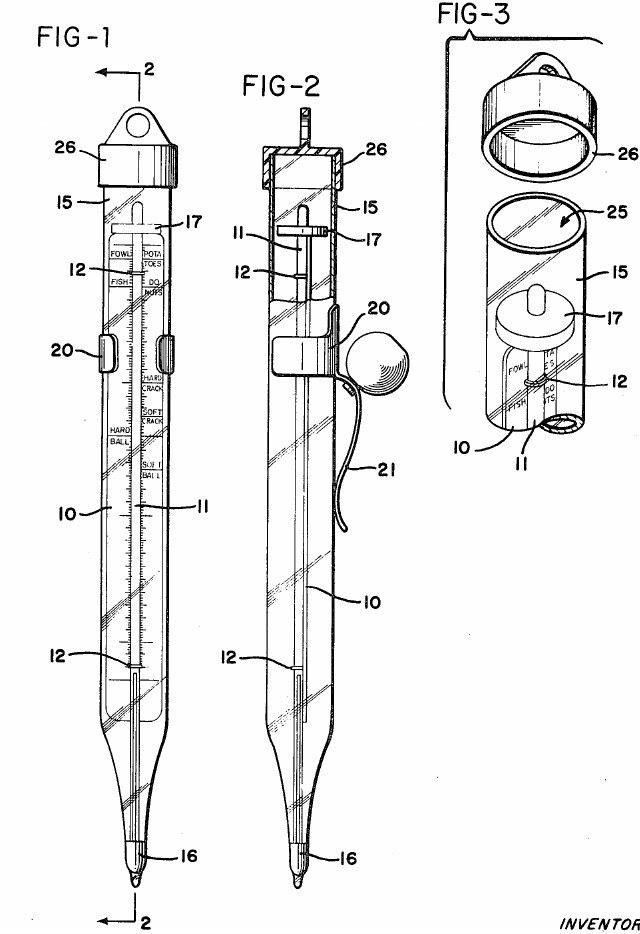

Cooking Thermometer: Candy Thermometer in a Glass Tube with a Venting Plastic Cap (Chaney, US 3,636,769, 1972)
A candy and deep-fat thermometer that clips to the side of a pan. A glass thermometer on a printed scale card sits inside a protective glass tube, so it never touches the candy. The top of the tube is closed by a polyethylene cap that seals in normal use but softens when the whole thermometer is heated far too hot, as in an oven, so the air inside escapes instead of bursting the tube.
Result: a pan-side cooking thermometer that cannot explode if overheated.
Source: J. L. Chaney, US 3,636,769 (1972). Unknown: the scale range, sizes and several materials. Picture: the patent drawing.
Średniozaawansowany
Unknown
Instrukcje
1
1
Mount the thermometer on its scale
Mount the thermometer on its scale
Fasten a glass thermometer tube to a graduated scale card with small fasteners, the bulb at the bottom. The patent's card is marked with cooking points such as soft ball, hard ball, soft crack, hard crack, fish, fowl, potatoes and doughnuts. Fix a disk on top of the card to keep it centred in the outer tube. Not given: the range, the card and fastener materials.
Materiały do tego kroku:
 Termometr laboratoryjny1 thermometer tube
 Nieznany materiał1 scale card, disk
 Nieznany metal1 fasteners
Potrzebne narzędzia:
 Nieznane wymiary
2
2
Enclose it in the protective tube
Enclose it in the protective tube
Slide the card and thermometer into a glass protective tube, open at the top, so the bulb reaches the lower end and touches a metal cap there to pass on the heat. Not given: the tube size, the metal of the end cap, how the cap is joined to the tube.
Materiały do tego kroku:
 Rurka szklana1 protective tubeNieznany metal1 end cap
Potrzebne narzędzia:
Nieznane wymiary3
3
Fit the venting cap
Fit the venting cap
Close the open top with a cup-shaped cap of a thermoplastic such as polyethylene, a friction fit that seals out dirt. Polyethylene softens at about 180 °F and melts near 250 °F: if the thermometer is heated in an oven to 400-550 °F, the air inside would reach 12-14 psi, but the cap distorts first and lets it out. Do not use rubber or a thermosetting plastic, which does not vent. Ours: LDPE.
Materiały do tego kroku:
 Granulat LDPE1 cap
Potrzebne narzędzia:
Nieznane wymiary4
4
Fit the pan clip and use it
Fit the pan clip and use it
Slide a spring clip onto the outside of the tube; its spring arm holds the thermometer upright over the edge of the pan. Clip it on with the bulb end in the candy or fat and read the scale; it also serves for deep frying. Ours: spring steel wire.
Materiały do tego kroku:
 Drut sprężynowy1 clip
Potrzebne narzędzia:
 Szczypce okrągłe
Materiały
6- 1 thermometer tubeZastępnik
- 1 scale card, diskZastępnik
- 1 end capZastępnik
- 1 protective tubeZastępnik
- 1 capZastępnik
- 1 clipZastępnik
Wymagane narzędzia
2- Zastępnik
- Zastępnik
Materiały z połączonych planów
Niebezpieczne
10% atrybucji
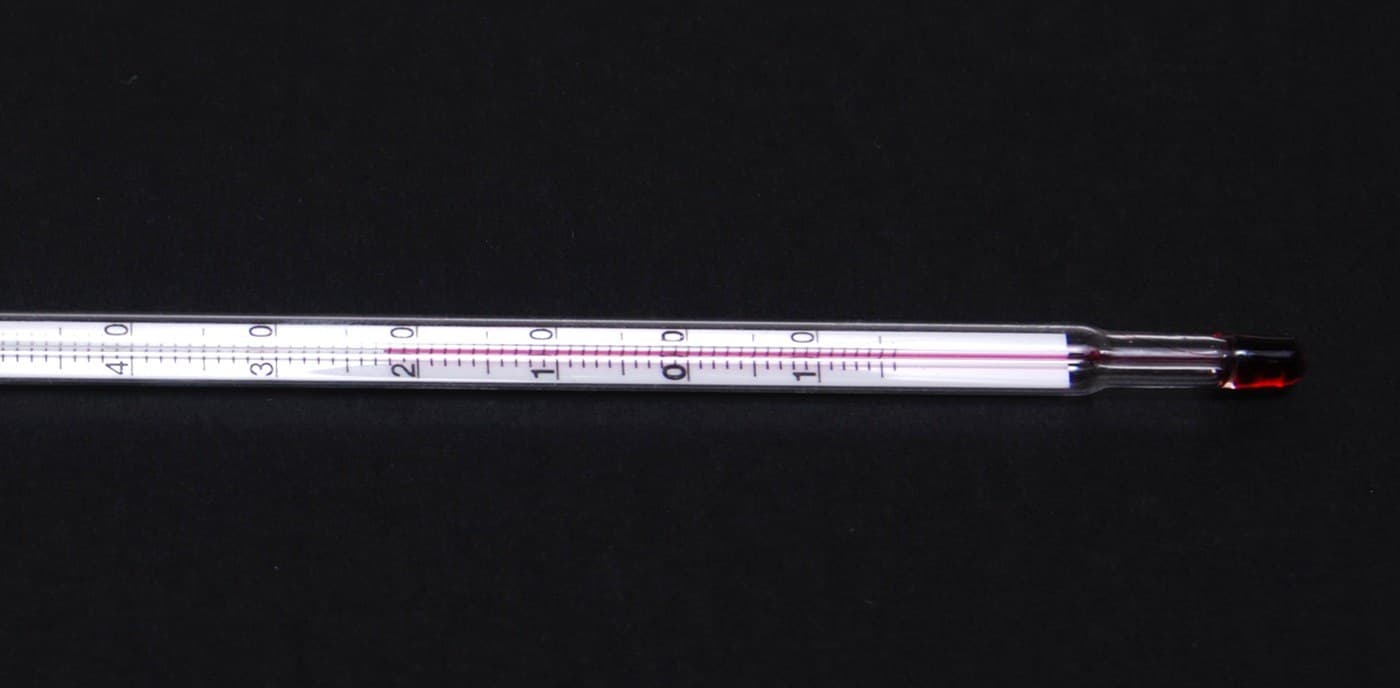
Liquid-in-Glass Thermometer: Bulb, Fill, Seal and Scale
autor: Penny
Obróbka szkła
42
0
0
0
1
0
Niebezpieczne
10% atrybucji
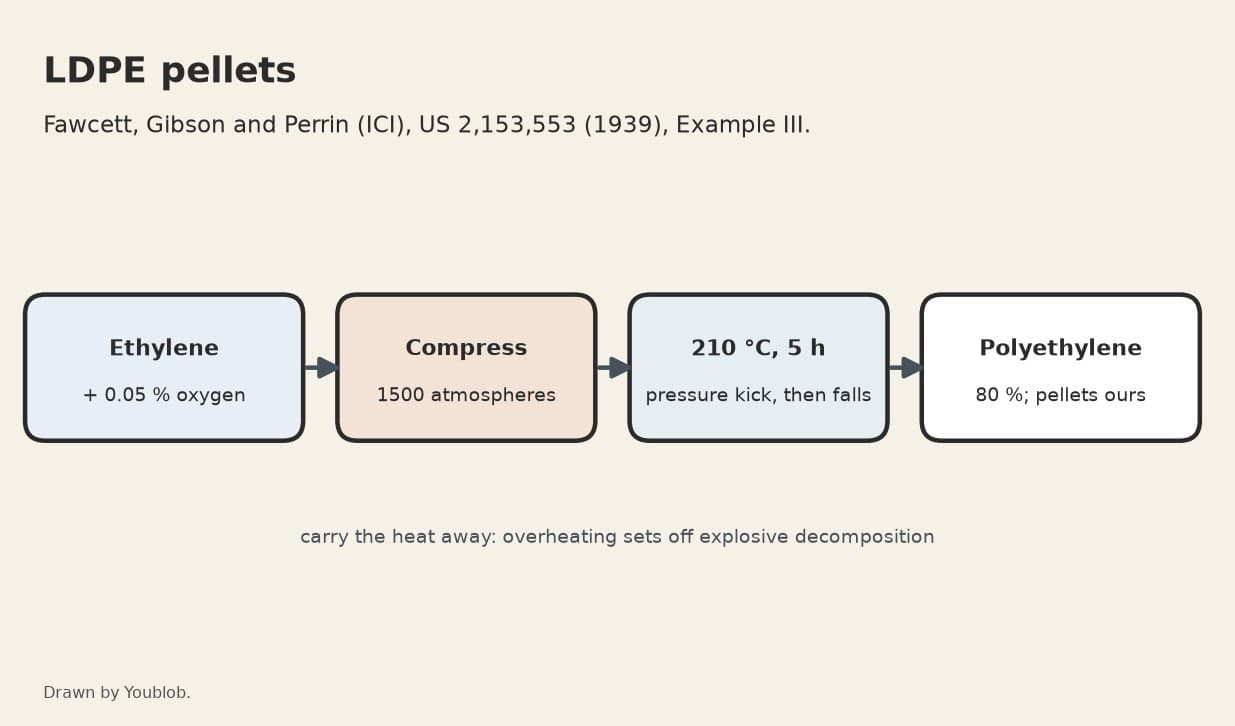
LDPE Pellets: Ethylene Polymerised at 1500 Atmospheres with a Trace of Oxygen
autor: Charlie
Przemysłowy
14
0
0
0
2
0
10% atrybucji
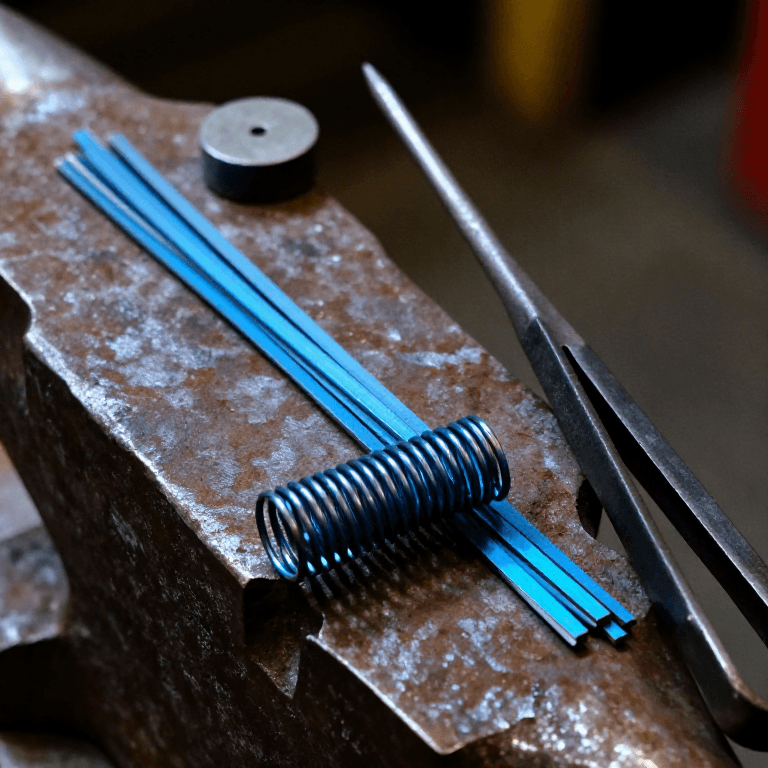
Spring Steel Strip and Wire, Hardened and Tempered
autor: Forge
Obróbka metali
48
0
0
0
5
0
Według tego planu powstaje

CC0 Domena publiczna
Ten plan jest udostępniany na licencji CC0. Możesz go swobodnie kopiować, modyfikować, rozpowszechniać i wykorzystywać do dowolnych celów, bez konieczności uzyskiwania zgody.
Wesprzyj Makera kupując produkty przez jego plan, za co zarabia Prowizja Makera ustalony przez sprzedawców, lub stwórz nową iterację tego planu i dołącz go jako połączenie w swoim własnym planie, aby dzielić się przychodami.