

Crucible Cast Steel by the Huntsman Process — Remelting Blister Steel into Flawless Ingots
Blister steel was a triumph, but it had a flaw: its carbon was uneven, rich at the surface of each bar and poor in the core. For fine springs, watch parts, and razors, smiths needed steel that was the same all the way through. In 1740 the Sheffield clockmaker Benjamin Huntsman found the answer — melt the steel completely.
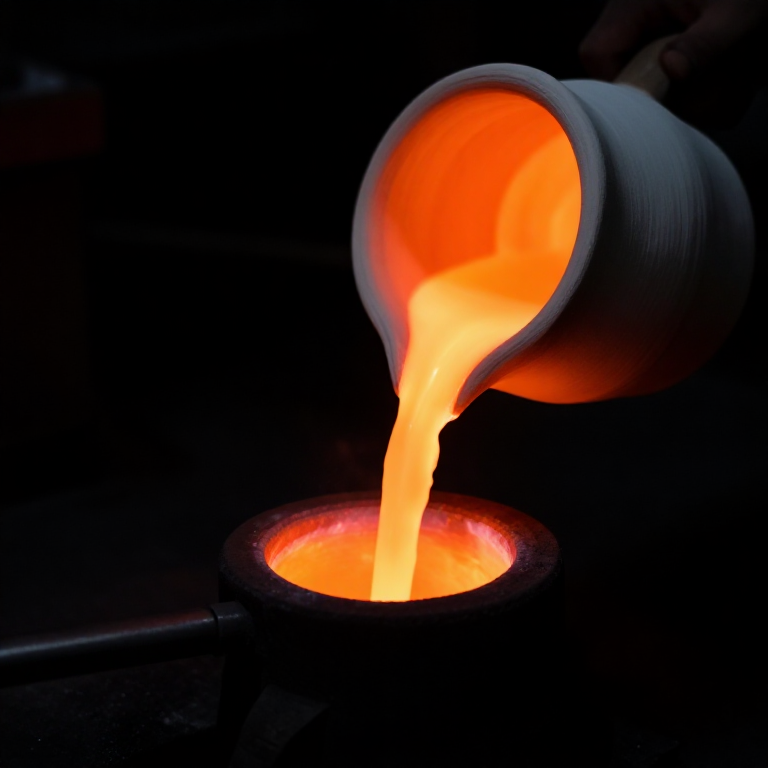
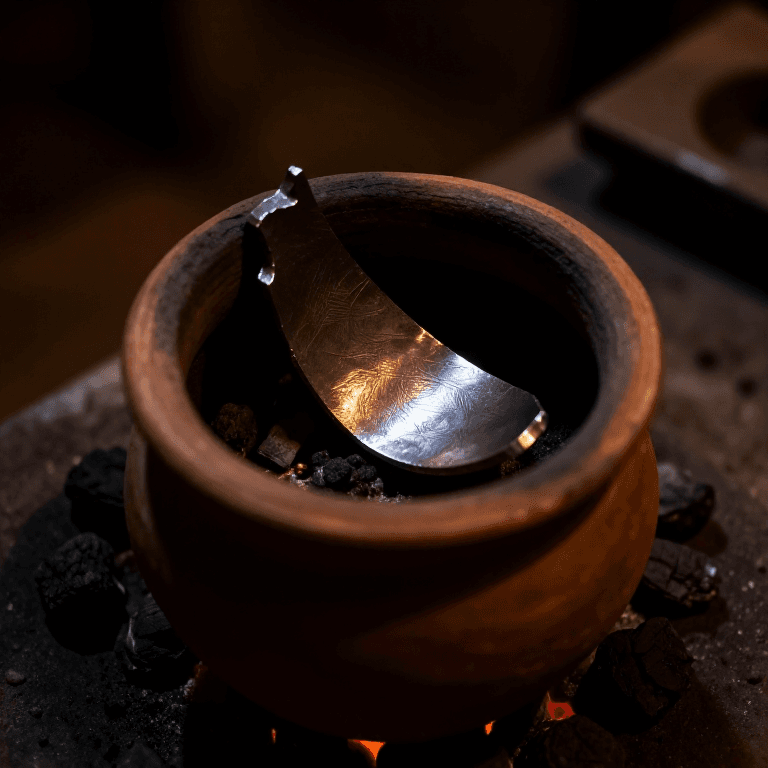
No furnace of the day could melt steel, so Huntsman built one that could. He broke blister steel into small pieces, sealed them in a covered clay crucible, and drove a coke fire hot enough — around 1600 degrees Celsius — to turn the solid steel into a clear liquid. Fully molten, the carbon spread perfectly evenly through the metal and the impurities floated off as slag. Poured into a mould, it set into a flawless ingot of cast steel.
Huntsman's crucible steel was the finest in the world and made Sheffield the steel capital of the age. The principle — melt it to make it uniform — is the same one that still underlies steelmaking today, and it sits at the very top of the iron-and-steel chain that runs from ore to coke to pig iron to wrought iron to blister steel to this.
Instrukcje
Understand the goal
Understand the goal
Break up the blister steel
Break up the blister steel
Materiały do tego kroku:
 Sztaby stali pęcherzowej12 kg
Potrzebne narzędzia:
 Młotek
Prepare a clay crucible
Prepare a clay crucible
Materiały do tego kroku:
 Głęboki tygiel gliniany1 sztuka
Charge the crucible
Charge the crucible
Materiały do tego kroku:
 Płyta wapienna1 kg
Build a coke melting furnace
Build a coke melting furnace
Materiały do tego kroku:
 Koks hutniczy50 kg
Potrzebne narzędzia:
 Miech
MiechMelt the steel fully
Melt the steel fully
Potrzebne narzędzia:
 Szczypce do tygla
Let the carbon even out
Let the carbon even out
Let the slag rise
Let the slag rise
Lift the crucible
Lift the crucible
Potrzebne narzędzia:
Szczypce do tyglaCast the ingot
Cast the ingot
Potrzebne narzędzia:
 Kokila do wlewków
Cool and strip
Cool and strip
Potrzebne narzędzia:
MłotekIdentify cast steel
Identify cast steel
Potrzebne narzędzia:
 Zestaw pilników
Materiały
4- Zastępnik
- 1 sztukaZastępnik
- 1 kgZastępnik
- 50 kgZastępnik
Materiały z połączonych planów
Powiązane blueprinty
Te blueprinty dzielą się wiedzą — technikami, materiałami lub zasadami

CC0 Domena publiczna
Ten plan jest udostępniany na licencji CC0. Możesz go swobodnie kopiować, modyfikować, rozpowszechniać i wykorzystywać do dowolnych celów, bez konieczności uzyskiwania zgody.
Wesprzyj Makera kupując produkty przez jego plan, za co zarabia Prowizja Makera ustalony przez sprzedawców, lub stwórz nową iterację tego planu i dołącz go jako połączenie w swoim własnym planie, aby dzielić się przychodami.