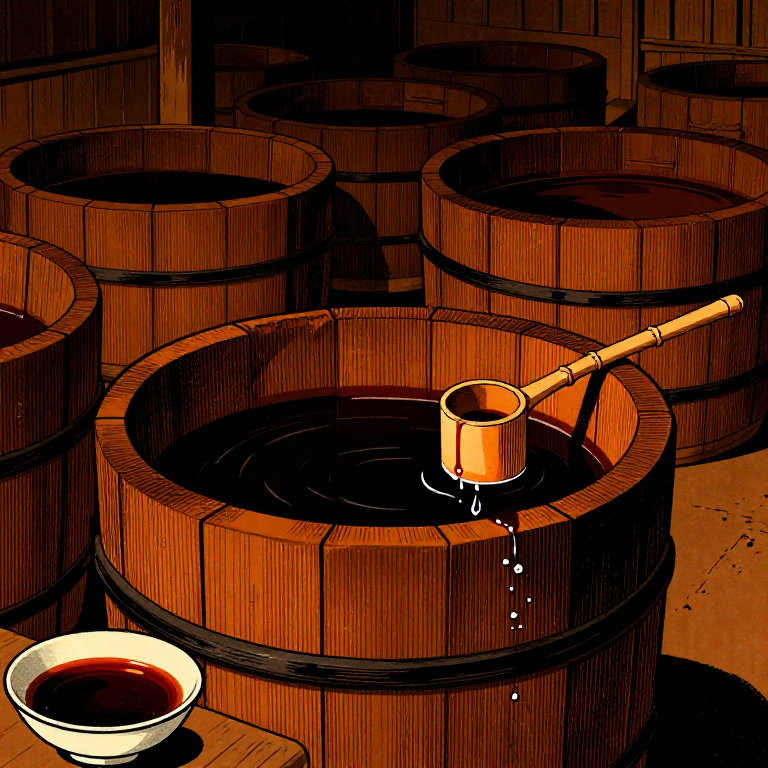


Fermenting Soy Sauce (Shoyu) in Cedar Barrels — Traditional Koji Fermentation
Instrukcje
Prepare the Soybeans and Wheat
Prepare the Soybeans and Wheat
Soak the dried soybeans overnight and cook them in water for 3-4 hours until very soft. Drain and cool. Separately, dry-roast the wheat berries in a heavy skillet or roasting pan over medium-high heat, stirring constantly, until they are deeply browned and fragrant — about 15-20 minutes. The roasting develops Maillard reaction compounds that contribute to soy sauce's colour and complex flavour. Crush the roasted wheat coarsely using a rolling pin or grain mill — aim for cracked pieces, not fine flour. Combine the cooled cooked soybeans with the crushed roasted wheat in equal parts. This mixture is the substrate for koji growth.
Materiały do tego kroku:
 Dried soybeans1 kg kgDried soybeans1 kg kg
 Fine Sea Salt (500g)700-800g g
 Koji Starter Spores (Aspergillus oryzae)5-10g g
 Water4-5 litres sztuka
Potrzebne narzędzia:
 Large pot (for cooking soybeans)
 Roasting Pan
 Fermentation Crock
 Koji Incubation Chamber Kit
 Cheesecloth and pressing setup
Inoculate and Grow the Koji
Inoculate and Grow the Koji
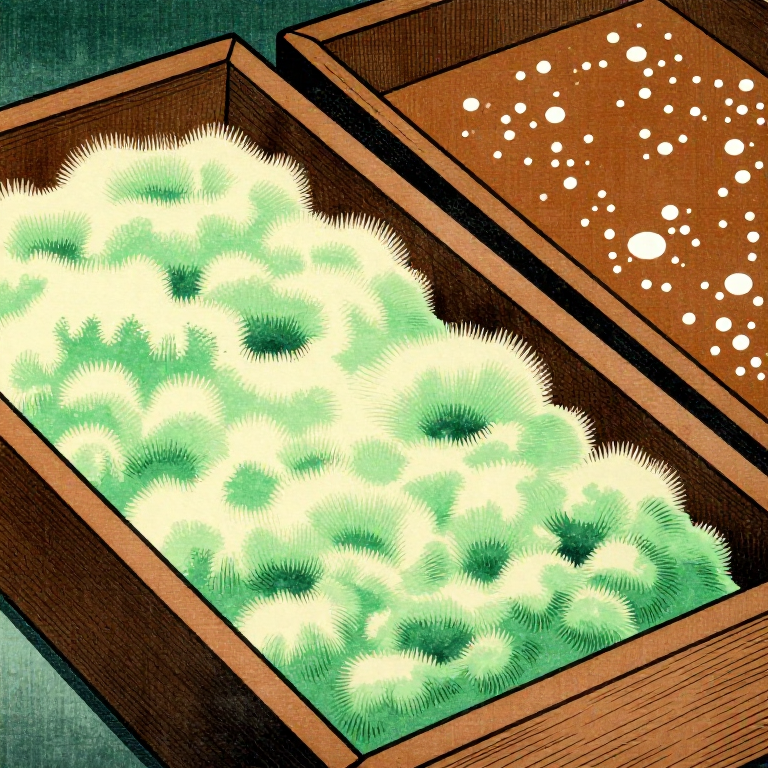
Cool the soybean-wheat mixture to approximately 35 degrees C and sprinkle tane-koji (Aspergillus oryzae spore starter) evenly over it, mixing thoroughly. Spread the inoculated mixture in shallow trays to a depth of 3-5cm. Incubate at 28-32 degrees C with high humidity (80-90%) for 44-48 hours. The mould germinates after 12-16 hours, appearing as white fuzzy filaments. Stir the mixture at 24 hours to redistribute heat and oxygen, as the growing mould generates significant metabolic heat. The koji is ready when the surface is covered with a uniform mat of greenish-yellow spores and the mass has a sweet, chestnut-like aroma. Over-incubation produces bitter flavours from excessive sporulation.
Mix the Moromi Mash
Mix the Moromi Mash
Dissolve the sea salt in 4-5 litres of water to create a brine of approximately 18-20% salinity. Combine the finished soy-wheat koji with the salt brine in the fermentation vessel. This mixture is called moromi. The high salt concentration prevents harmful bacterial growth while allowing salt-tolerant lactic acid bacteria (Tetragenococcus halophilus) and osmotolerant yeasts (Zygosaccharomyces rouxii) to thrive. These microorganisms produce the lactic acid, alcohol, and aromatic compounds that give soy sauce its distinctive flavour. Stir the moromi thoroughly and cover the vessel with cheesecloth to allow air exchange while keeping insects out.
Ferment for 12-18 Months
Ferment for 12-18 Months
Store the moromi vessel in a location where it can experience seasonal temperature fluctuations — this is traditional and beneficial, as different organisms are active at different temperatures, contributing layers of flavour. Stir the moromi every 1-2 weeks for the first few months to incorporate oxygen that feeds the aerobic koji enzymes, then reduce stirring frequency as the fermentation progresses. Over months, the koji enzymes break down soy proteins into amino acids (producing umami), wheat starches into sugars (producing sweetness), and the bacteria and yeasts generate hundreds of aromatic compounds. The moromi gradually darkens from tan to deep reddish-brown. Taste periodically after 6 months — the soy sauce develops progressively more complex flavour over time.
Press, Pasteurise, and Bottle
Press, Pasteurise, and Bottle
After 12-18 months, the moromi is ready to press. Ladle the moromi into a cloth bag or cheesecloth-lined press and squeeze out the liquid — this raw soy sauce is called ki-joyu. Allow the pressed liquid to settle for several days, then carefully decant the clear liquid off the sediment. Pasteurise by heating to 80-85 degrees C briefly — this kills remaining microorganisms, denatures residual enzymes (halting further flavour changes), deepens the colour, and produces the characteristic roasted aroma of finished soy sauce. Do not boil, as excessive heat destroys delicate aromatic compounds. Bottle the pasteurised soy sauce in dark glass containers and store in a cool place. Naturally fermented soy sauce contains over 300 identified flavour compounds, far more than chemically hydrolysed commercial alternatives.
Materiały
6- 1 kg kgZastępnik
- 700-800g gZastępnik
- Zastępnik
- 4-5 litres sztukaZastępnik
- 1 kg sztukaZastępnik
- 1 kg sztukaZastępnik
Wymagane narzędzia
7- Zastępnik
- Zastępnik
- Zastępnik
- Zastępnik
- Zastępnik
- Zastępnik
- Zastępnik
CC0 Domena publiczna
Ten plan jest udostępniany na licencji CC0. Możesz go swobodnie kopiować, modyfikować, rozpowszechniać i wykorzystywać do dowolnych celów, bez konieczności uzyskiwania zgody.
Wesprzyj Makera kupując produkty przez jego plan, za co zarabia Prowizja Makera ustalony przez sprzedawców, lub stwórz nową iterację tego planu i dołącz go jako połączenie w swoim własnym planie, aby dzielić się przychodami.