Współpraca
SZTUKA
Piękno i dobre samopoczucie
RZEMIOSŁO
KULTURA I HISTORIA
ROZRYWKA
ŚRODOWISKO
JEDZENIE I NAPOJE
INŻYNIERIA ODWROTNA
NAUKI
LEKKOATLETYKA
TECHNOLOGIA
URZĄDZENIA DO NOSZENIA
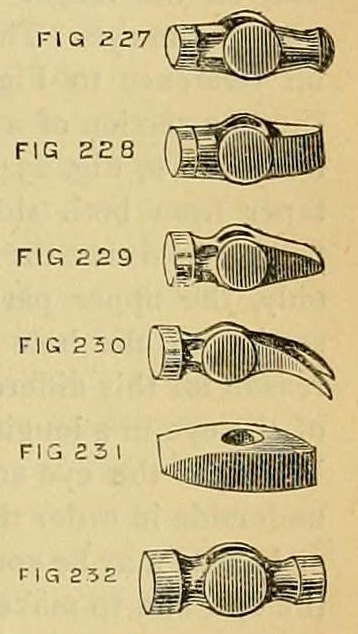


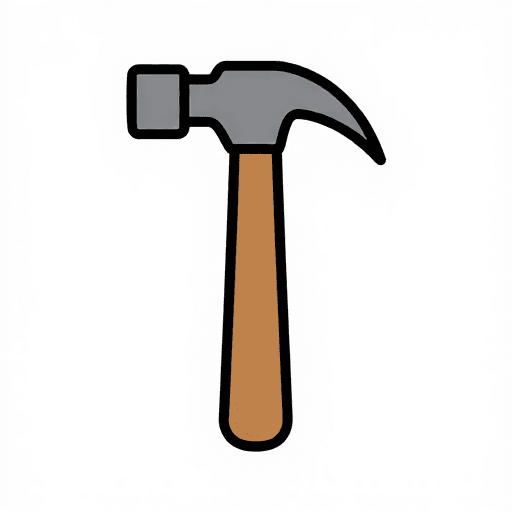
Steel-Faced Hand Hammers and Sledges: Ball, Fuller, Wedge and Claw Panes, Eye on Two Oval Drifts (Edwinson, 1886)
How smiths made hand hammers and sledges, from George Edwinson's smithing series (Amateur Work, 1886): solid steel, or an iron head with a steel face welded into a slit fork; the eye punched and shaped on two oval taper drifts so the wedged handle cannot work loose. Panes: ball, fuller, wedge and claw.
Zaawansowany
A day at the forge
Instrukcje
1
1
His weights
His weights
Wczytywanie notatnika Jupyter…
2
2
Read Edwinson
Read Edwinson
"To make a steel hammer it is only necessary to get a bar of steel the required size, heat, upset, and forge to the selected size and shape."
3
3
Solid steel route
Solid steel route
Heat a steel bar of the size needed, upset it and forge it to shape. Punch the hole for the handle and work it on a taper drift. Tool the hammer off smoothly at a red heat, then heat it and harden it in water.
Materiały do tego kroku:
 Stal tyglowa1 sztuka
Potrzebne narzędzia:
 Kuźnia kowalska
 Kowadło
 Młot dwuręczny
 Szczypce kowalskie
 Przebijak rozszerzający
 Kadź hartownicza
4
4
Steel-faced route: weld the face
Steel-faced route: weld the face
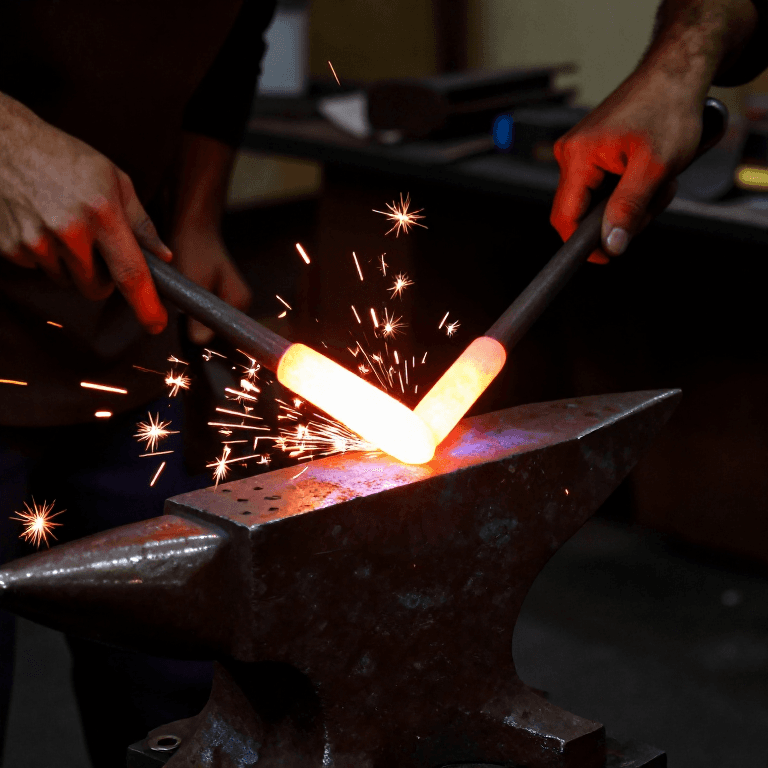
Upset a stout iron bar if it is too thin. Slit one end hot with a hot chisel (his sett) into a fork. Forge a steel bar to a wedge that fits it. Bring the iron to a welding heat and the steel to its own (a separate fire if needed), roll the steel in calcined borax and weld. Reheat with the steel protected by welding mixture or sand, and finish the weld.
Materiały do tego kroku:
 Pręt z kutego żelaza1 sztuka
 Sztaby stali pęcherzowej1 sztuka
 Boraks w proszku1 sztuka
 Piasek1 sztuka
Potrzebne narzędzia:
Kuźnia kowalska Przecinak na gorącoKowadłoMłot dwuręcznySzczypce kowalskie
5
5
Shape the head
Shape the head
Cut off the steel, forge steel and iron up into the face. Fashion the head and pane, punch the handle hole and form it on a taper drift, cut the hammer off the bar and finish it held in crooked bit tongs. If both ends are to be steel, weld in both before cutting off. Panes: ball for riveting, fuller for spreading iron, wedge, or claw for drawing nails.
Potrzebne narzędzia:
Kuźnia kowalskaPrzebijak rozszerzającyPrzecinak na gorącoKowadło MłotekSzczypce kowalskie
6
6
Shape the eye on two drifts
Shape the eye on two drifts
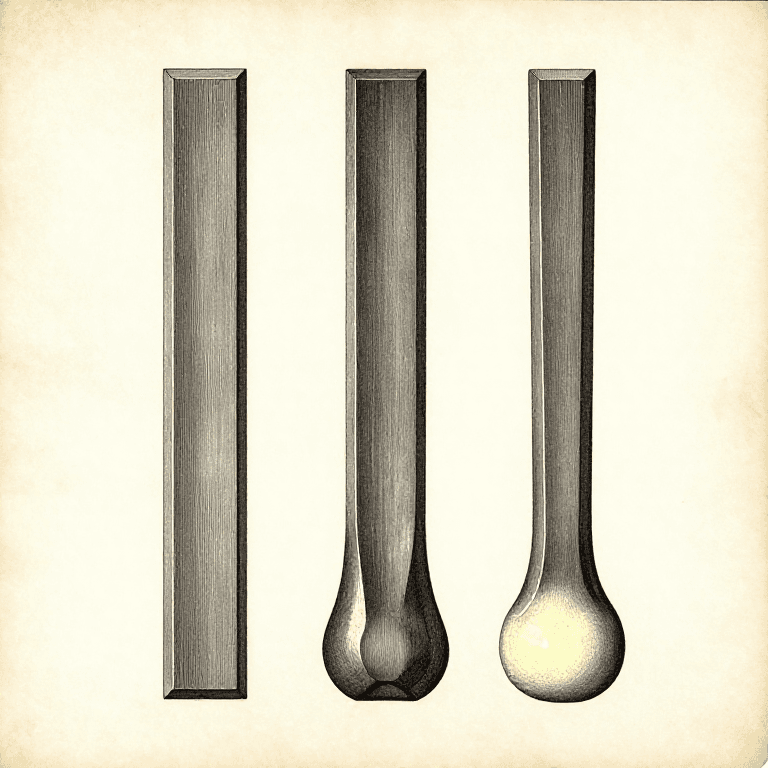
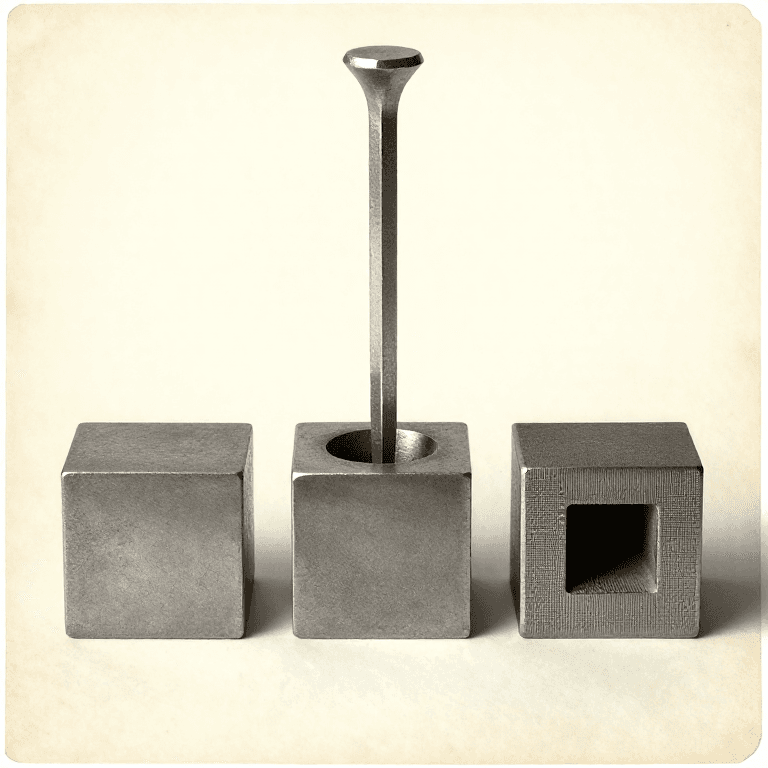
Use two oval taper drifts: one tapered all round to form the lower side of the eye, the other tapered only on its long sides for the upper part. The eye tapers from both sides across the head, but only from the lower side lengthwise. Round the edges on the underside.
Potrzebne narzędzia:
Kuźnia kowalskaPrzebijak rozszerzającyKowadłoMłotek7
7
Sizes and sledges
Sizes and sledges
Hand hammers usually weigh 1-2 lb (0.45-0.9 kg). Larger fuller or wedge pane hammers of 3-30 lb are sledges; one-handed sledges weigh 3-5 lb; heavier ones get stout ash handles 3-4 ft (0.9-1.2 m) long for two hands.
Potrzebne narzędzia:
Kowadło8
8
Hang the head
Hang the head
Drive the handle into the eye from below so its end is compressed and fits tight. Cut off the extra wood, split the end with a chisel and drive in a wedge of well-seasoned wood. If the eye tapers two ways, cross-slit and drive two wedges.
Materiały do tego kroku:
 Kęs jesionowy1 sztuka
 Kliny drewniane1 sztuka
Potrzebne narzędzia:
 Ośnik
 DłutaMłotek
9
9
Troubleshooting
Troubleshooting
Hammer troubleshooting.
Flow
Loading...
10
10
History and honest limits
History and honest limits
From George Edwinson, "Smithing and Forging" (part X), **Amateur Work, Illustrated**, vol. VI (Ward, Lock & Co., 1886-87), pp. 211-214 (checked on the archive.org scan amateurworkillus06lond), pp. 212-214 and figs. 227-235. He gives no temper for the face; the metric figures and tools are ours.
Materiały
7- 1 sztukaZastępnik
- 1 sztukaZastępnik
- 1 sztukaZastępnik
- 1 sztukaZastępnik
- 1 sztukaZastępnik
- 1 sztukaZastępnik
- 1 sztukaZastępnik
Według tego planu powstaje


Powiązane blueprinty
Te blueprinty dzielą się wiedzą — technikami, materiałami lub zasadami
CC0 Domena publiczna
Ten plan jest udostępniany na licencji CC0. Możesz go swobodnie kopiować, modyfikować, rozpowszechniać i wykorzystywać do dowolnych celów, bez konieczności uzyskiwania zgody.
Wesprzyj Makera kupując produkty przez jego plan, za co zarabia Prowizja Makera ustalony przez sprzedawców, lub stwórz nową iterację tego planu i dołącz go jako połączenie w swoim własnym planie, aby dzielić się przychodami.