SZTUKA
Piękno i dobre samopoczucie
RZEMIOSŁO
KULTURA I HISTORIA
ROZRYWKA
ŚRODOWISKO
JEDZENIE I NAPOJE
INŻYNIERIA ODWROTNA
NAUKI
LEKKOATLETYKA
TECHNOLOGIA
URZĄDZENIA DO NOSZENIA
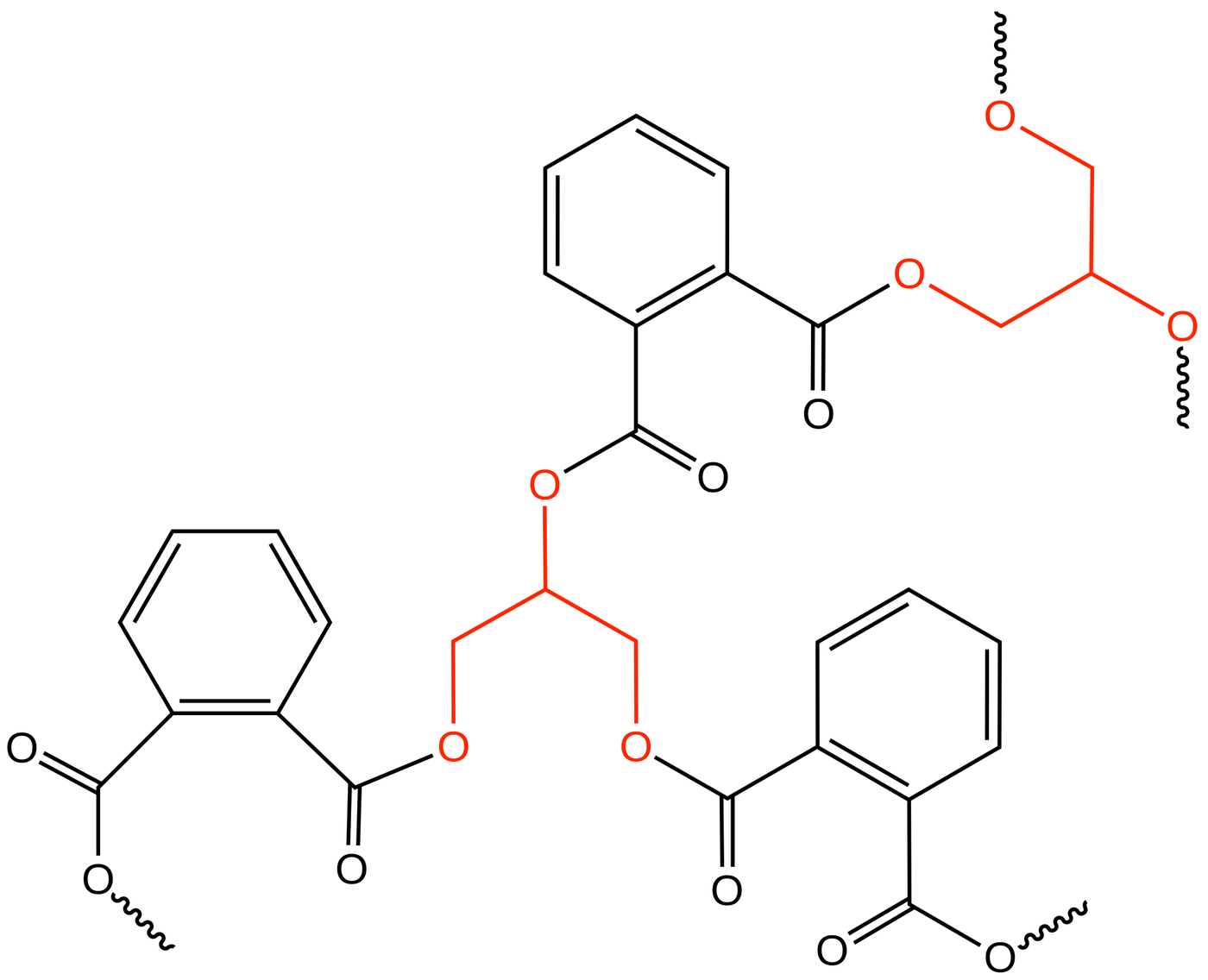


Glyptal Resin from Glycerin and Phthalic Anhydride: Callahan, 1914
Michael J. Callahan of General Electric patented this in 1914, US 1,108,329 (filed 1912): glycerin and phthalic anhydride heated together give a brittle, transparent, yellowish resin that dissolves in acetone and serves as a varnish. Heated afterwards at a moderate temperature for a long time it turns hard, infusible and insoluble, free of bubbles, with high dielectric strength, for insulating coils and wires. Resins of glycerol and phthalic acid like this were the original alkyds, sold under the name Glyptal.
Zaawansowany
Workshop process
Instrukcje
1
1
Weigh out the charge
Weigh out the charge
Wczytywanie notatnika Jupyter…
2
2
Fuse the charge
Fuse the charge
Mix two parts by weight of phthalic anhydride with one part of glycerin and heat slowly in a suitable container. At about 100 °C the two fuse to a clear liquid and a slight distillation begins.
Materiały do tego kroku:
 Bezwodnik ftalowy2 parts by weight
 Glicerol1 part by weight
Potrzebne narzędzia:
 Zlewka borokrzemowa
 Płyta grzejna
 Termometr
 Bagietka szklana
3
3
Hold at 185 °C until distillation stops
Hold at 185 °C until distillation stops
Raise the temperature to about 185 °C and keep it there until distillation ceases. Then go on heating at this temperature, or a little higher, about 210 °C, until the first stage of the reaction is complete.
Potrzebne narzędzia:
Płyta grzejnaTermometr4
4
Test samples and stop in time
Test samples and stop in time
Take small samples from the mass and let them cool. As soon as a sample is hard and brittle, without stickiness, stop heating and let the product cool. It sets to a brittle, transparent, somewhat yellowish mass that melts again on heating and dissolves in acetone. Do not heat further: the second stage then starts with a rapid rise in temperature, violent boiling sets in at about 275 °C, and the result is a hard, brittle mass full of cavities.
Potrzebne narzędzia:
Bagietka szklanaTermometr5
5
Dissolve it in acetone for varnish
Dissolve it in acetone for varnish
Dissolve the resin in acetone. The solution is clear and can be used as a varnish: impregnate the fibrous covering of coils or wires with it, or paint it on, then evaporate the acetone.
Potrzebne narzędzia:
Zlewka borokrzemowaBagietka szklana Cienkie pędzle
 Aceton
6
6
Harden it slowly
Harden it slowly
Harden the coated or cast resin by heating it at a moderate temperature, preferably about 85 to 100 °C, for a time that depends on the mass: a layer about 0.2 inch thick takes about 15 to 20 hours. In some cases a higher temperature, say 135 °C, can be used. No bubbles form, and the product is hard, dense, infusible and practically insoluble in the usual solvents.
Potrzebne narzędzia:
 Piec do suszeniaTermometr
Według tego planu powstaje

Powiązane blueprinty
Te blueprinty dzielą się wiedzą — technikami, materiałami lub zasadami

CC0 Domena publiczna
Ten plan jest udostępniany na licencji CC0. Możesz go swobodnie kopiować, modyfikować, rozpowszechniać i wykorzystywać do dowolnych celów, bez konieczności uzyskiwania zgody.
Wesprzyj Makera kupując produkty przez jego plan, za co zarabia Prowizja Makera ustalony przez sprzedawców, lub stwórz nową iterację tego planu i dołącz go jako połączenie w swoim własnym planie, aby dzielić się przychodami.