Współpraca
SZTUKA
Piękno i dobre samopoczucie
RZEMIOSŁO
KULTURA I HISTORIA
ROZRYWKA
ŚRODOWISKO
JEDZENIE I NAPOJE
INŻYNIERIA ODWROTNA
NAUKI
LEKKOATLETYKA
TECHNOLOGIA
URZĄDZENIA DO NOSZENIA
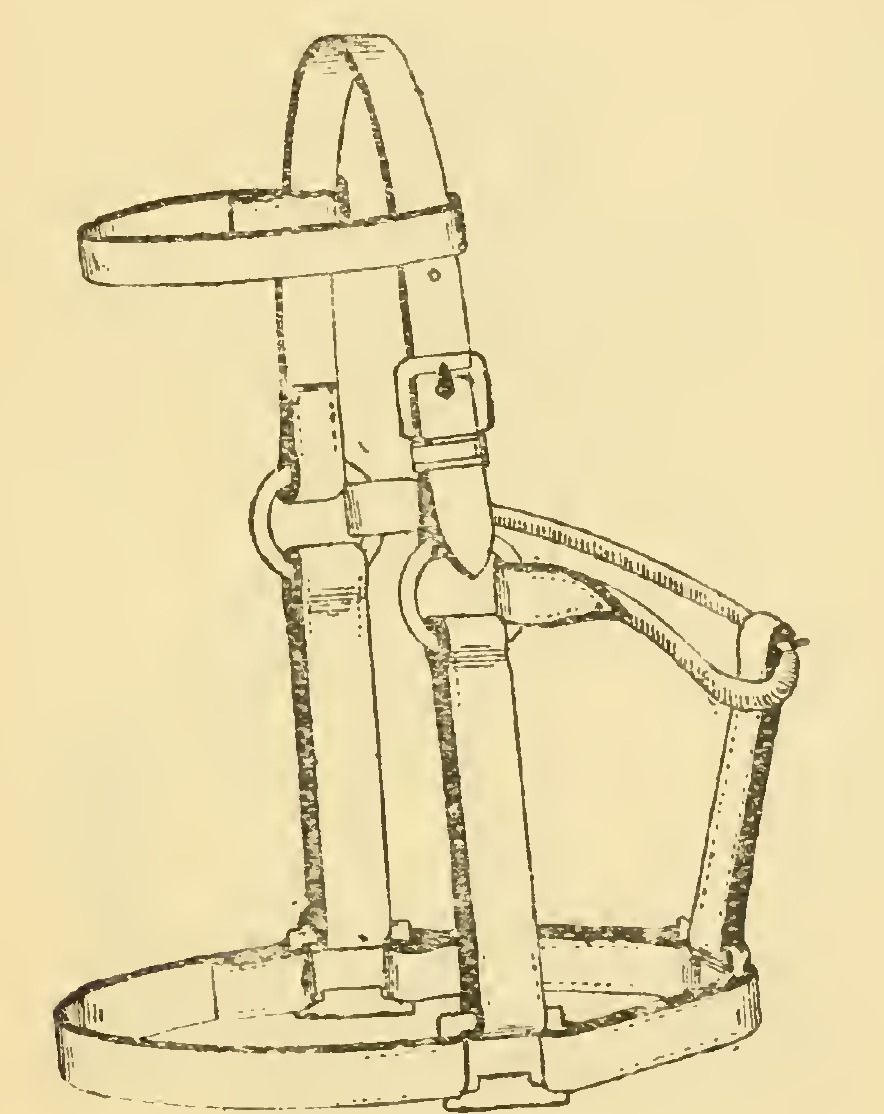


Newmarket Head Collar: Stable Halter With Squared Stays, Noseband, Cheeks and Throat Lash (Hasluck, Saddlery, 1904)
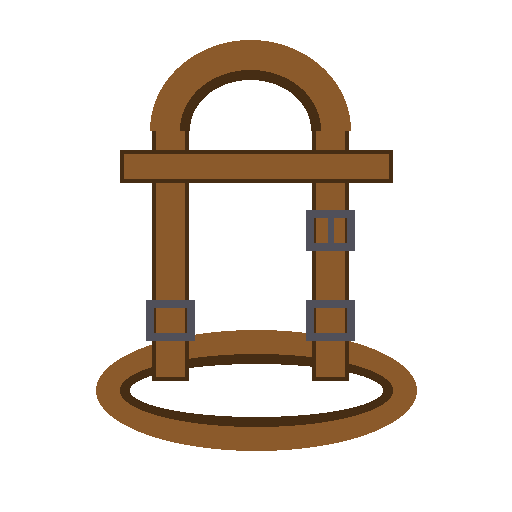
A head collar, also called a headstall or stable collar, ties a horse up in the stable. This is the Newmarket pattern from Paul N. Hasluck's Saddlery (1904): two short stays carrying three stop squares, a noseband, two cheeks, an upward stay, a forehead band, a top strap and a throat lash. Every size is his.
It has no bit; the rein is fastened to the centre square.
Średniozaawansowany
About 1 day
Instrukcje
1
1
Cutting list
Cutting list
Wczytywanie notatnika Jupyter…
2
2
Read Saddlery, ch. VIII
Read Saddlery, ch. VIII
"Head collars, also called headstalls and stable collars, are made in various ways, and one of the most useful styles will be described in this chapter."
3
3
Make the short stays
Make the short stays
Cut two short straps 1 ft by 1-1/4 in and turn them in to 5 in long, leaving 1 in or a little more for overlap. Shave the ends and prick them eight to the inch. Put one square in the centre between them and one in each end, with the stops on the same side. Lay a strip of leather along the centre of each to raise the stay, then stitch with beeswaxed three-cord hemp thread, with a strong cross-stitch at the end of each line.
Materiały do tego kroku:
 Skóra uprzężowa1 sztuka
 Kwadratowe kółko kantara3 sztuk
 Sznurek konopny1 sztuka
 Wosk pszczeli1 sztuka
Potrzebne narzędzia:
 Nóż do skóry
 Przecinak do szycia skóry
 Szydło
 Dwie igły rymarskie
 Kozioł rymarski
 Miara zwijana
4
4
Make the noseband
Make the noseband
Cut the noseband 1 ft 3 in long when turned down. Prepare it and put one end, forming a chape, in each of the end squares of the short stays. Stitch two rows along the edges of the turn-down and trim the ends neatly.
Materiały do tego kroku:
Skóra uprzężowa1 sztukaSznurek konopny1 sztukaWosk pszczeli1 sztukaPotrzebne narzędzia:
Nóż do skóryPrzecinak do szycia skórySzydłoDwie igły rymarskie5
5
Make the cheeks
Make the cheeks
Cut a pair of cheeks 1-1/4 in by 8 in when bent in both ends. Prepare one end of each for a buckle and shave the points of the other turn-down. Put a runner on each cheek and a loop and the 1-1/4 in roller buckle on one end, then stitch the opposite ends to the two outer squares.
Materiały do tego kroku:
Skóra uprzężowa1 sztuka Sprzączka z rolką1 sztukaSznurek konopny1 sztukaWosk pszczeli1 sztuka
Potrzebne narzędzia:
Nóż do skórySzydłoDwie igły rymarskie Wzornik do szlufek
6
6
Make the upward stay
Make the upward stay
Cut the short upward stay and stitch it behind in the centre square. Its length when doubled is about 4-1/2 in, with an opening left at the top for the throat lash to run through.
Materiały do tego kroku:
Skóra uprzężowa1 sztukaSznurek konopny1 sztukaWosk pszczeli1 sztukaPotrzebne narzędzia:
Nóż do skórySzydłoDwie igły rymarskie7
7
Make the forehead band, top strap and throat lash
Make the forehead band, top strap and throat lash
Make the forehead band like the snaffle bridle front. Cut the top strap 2 ft by 1-1/4 in and, when finished, punch about four holes on both sides. Make the throat lash 3 ft 6 in by 3/4 in, with the 3/4 in roller buckle, a loop and a runner, and about nine holes.
Materiały do tego kroku:
Skóra uprzężowa1 sztukaSprzączka z rolką1 sztukaSznurek konopny1 sztukaWosk pszczeli1 sztukaPotrzebne narzędzia:
Nóż do skóry Dziurkacz do skórySzydłoDwie igły rymarskieWzornik do szlufek
8
8
Put it together
Put it together
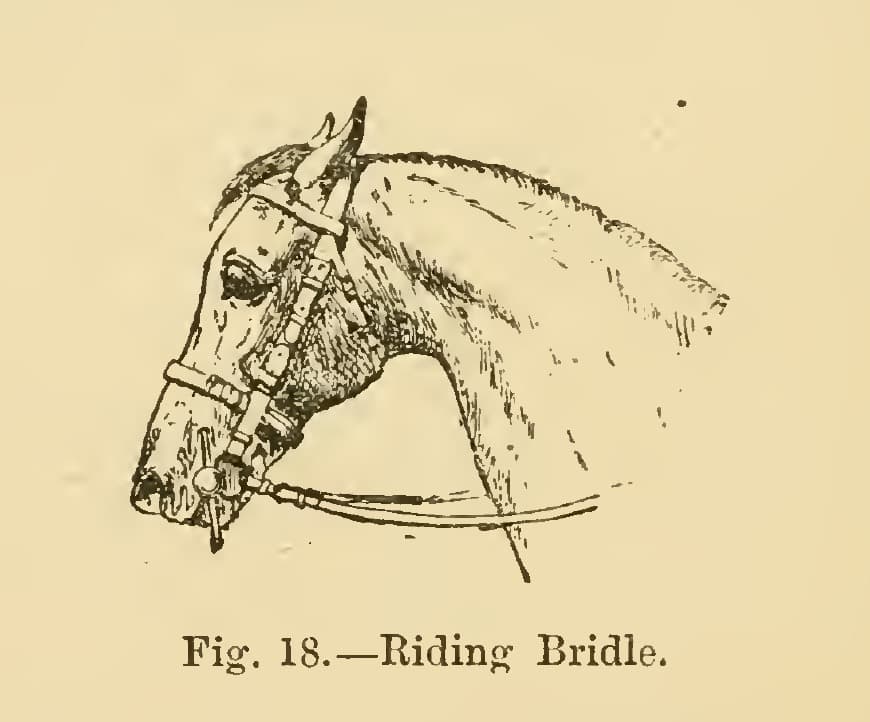
Put the forehead band on the head strap and buckle it on both sides in the cheeks. Run the throat lash from the near side through the opening in the upward stay and under the head strap, then through the opening in the forehead band on each side, and bring the point down to the buckle on the near side. If the collar has only one cheek, on the near side, make the strap on the other side 2 ft 9 in long.
9
9
Troubleshooting
Troubleshooting
Head collar troubleshooting.
Flow
Loading...
10
10
History and honest limits
History and honest limits
From **Saddlery**, edited by Paul N. Hasluck, David McKay, 1904 (archive.org saddlery00hasl), chapter VIII, "Head Collars", the Newmarket head collar, Fig. 23; every fraction was read on the scan. His list names one 1-1/4 in roller buckle and one 3/4 in buckle; the throat lash takes a roller buckle of its own width, and fitting the larger one to the cheek is our reading. Not made here: the Albert and Queen's pattern collars and the head collar reins. The metric figures are ours.
Materiały
5- 5 sztukZastępnik
- 3 sztukZastępnik
- 5 sztukZastępnik
- 5 sztukZastępnik
- 1 sztukaZastępnik
Wymagane narzędzia
8- Zastępnik
- Zastępnik
- Zastępnik
- Zastępnik
- Zastępnik
- 1 vendor sell this, none ship to you yetZastępnik
- Zastępnik
- Zastępnik
Według tego planu powstaje
Powiązane blueprinty
Te blueprinty dzielą się wiedzą — technikami, materiałami lub zasadami
CC0 Domena publiczna
Ten plan jest udostępniany na licencji CC0. Możesz go swobodnie kopiować, modyfikować, rozpowszechniać i wykorzystywać do dowolnych celów, bez konieczności uzyskiwania zgody.
Wesprzyj Makera kupując produkty przez jego plan, za co zarabia Prowizja Makera ustalony przez sprzedawców, lub stwórz nową iterację tego planu i dołącz go jako połączenie w swoim własnym planie, aby dzielić się przychodami.