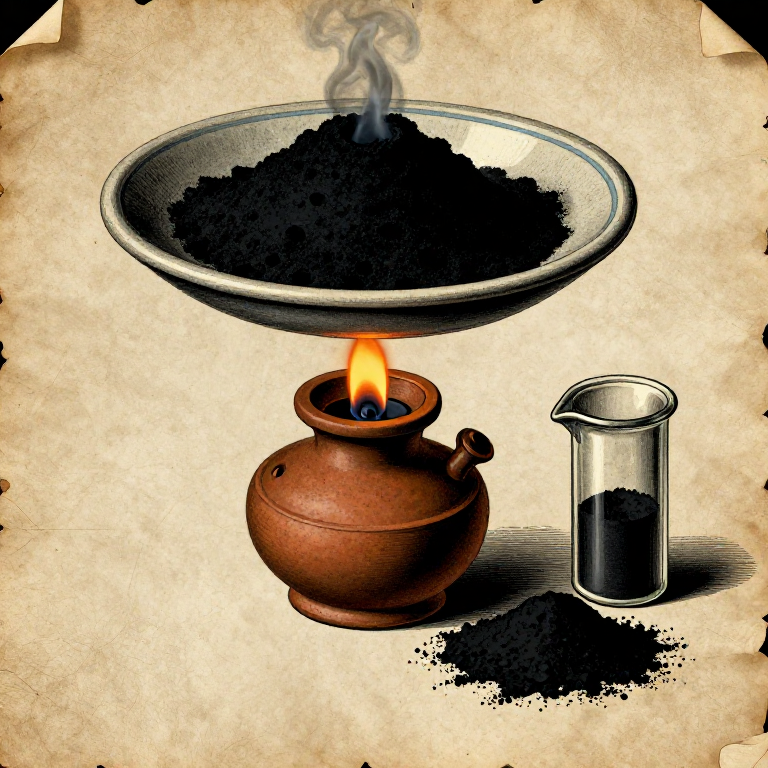

Making Lampblack Pigment — Collecting Carbon Soot from a Burning Flame
Lampblack is one of the oldest pigments in human history — pure carbon particles collected from the soot of a burning flame. Evidence of lampblack use extends back to the earliest cave paintings (over 30,000 years ago), and it remained the primary black pigment in most painting traditions worldwide until the industrial era. Chinese ink sticks (mòtiáo) were made from lampblack mixed with animal glue for at least 4,000 years, and the same principle underlies Indian ink, Japanese sumi ink, and carbon black ink used throughout the ancient Mediterranean.
Lampblack is produced by incomplete combustion — burning an oil, fat, or resin in a restricted oxygen environment so that carbon particles form in the flame rather than being fully oxidised to carbon dioxide. These particles are extremely fine (20-100 nanometres), giving lampblack an intense, deep black and excellent covering power. The soot is collected on a cool surface held above the flame: a ceramic plate, a metal sheet, or traditionally an inverted clay pot.
Different fuels produce slightly different blacks. Burning sesame oil, linseed oil, or rapeseed oil gives a warm, blue-black soot. Burning pine resin or pitch gives a cooler, brownish-black. Animal fat (tallow) gives a greyish-black. The finest lampblack comes from slow-burning, clean-burning vegetable oils. Lampblack is chemically inert, lightfast, non-toxic, and compatible with every binder — oil, egg tempera, watercolour, fresco, ink. It is the most versatile black pigment ever discovered.
Instrukcje
Set up the oil lamp and collection surface
Set up the oil lamp and collection surface
Pour 100-200 ml of vegetable oil (linseed, sesame, or rapeseed) into a shallow clay dish or metal bowl. Make a wick from twisted cotton cord or cotton fabric strip. Place the wick in the oil with one end extending over the rim. Light the wick and adjust it to produce a small, steady, smoky flame — a short wick gives more smoke (incomplete combustion). Position a ceramic plate or metal sheet 3-5 cm above the flame tip where the soot is densest.
Materiały do tego kroku:
 Olej lniany200 ml
Potrzebne narzędzia:
 Płytka ceramiczna
Collect the soot
Collect the soot
Let the lamp burn steadily for 30-60 minutes. The soot deposits as a velvety black layer on the underside of the collection surface. When a thick layer has accumulated (1-2 mm), carefully remove the plate and scrape the soot into a clean container using a palette knife or the edge of a stiff card. Replace the plate and continue collecting. Work in a well-ventilated area — the smoky flame produces carbon monoxide. For a full session, expect to collect 5-15 g of lampblack from 200 ml of oil.
Potrzebne narzędzia:
 Zestaw noży malarskich
Purify the soot by washing
Purify the soot by washing
Raw lampblack contains trace oils and tar from incomplete combustion. To purify, place the collected soot in a small container and add a little warm water. Stir to form a slurry. Let the heavy impurities settle for a few minutes, then carefully pour off the black suspension into a second container — this contains the fine pigment particles. Let the suspension settle overnight. Pour off the clear water and allow the pigment to dry completely. This levigation step removes gritty particles and oily residues.
Potrzebne narzędzia:
 Słoik szklany
Grind to a fine powder
Grind to a fine powder
Once dry, the lampblack will be a soft, fluffy mass. Grind it with a mortar and pestle or on a glass slab with a glass muller to break up any lumps. Lampblack is already extremely fine, so this step is mostly about achieving uniformity. The finished pigment should feel silky and leave an intense black mark when rubbed between your fingers. Store in a sealed jar away from moisture. This pigment is ready to mix with any binder — oil, egg yolk, gum arabic, hide glue, or lime water.
Potrzebne narzędzia:
 Moździerz z tłuczkiem
 Ucieracz szklany
Materiały
1- 200 mlZastępnik
Wymagane narzędzia
5- Zastępnik
- Zastępnik
- Zastępnik
- Zastępnik
- Zastępnik
Materiały z połączonych planów
Preparing Ochre Pigment for Cave Painting — Mineral Processing
autor: Charlie
Chemia
Making Charcoal from Hardwood — Pyrolysis in a Pit Kiln
autor: Charlie
Chemia
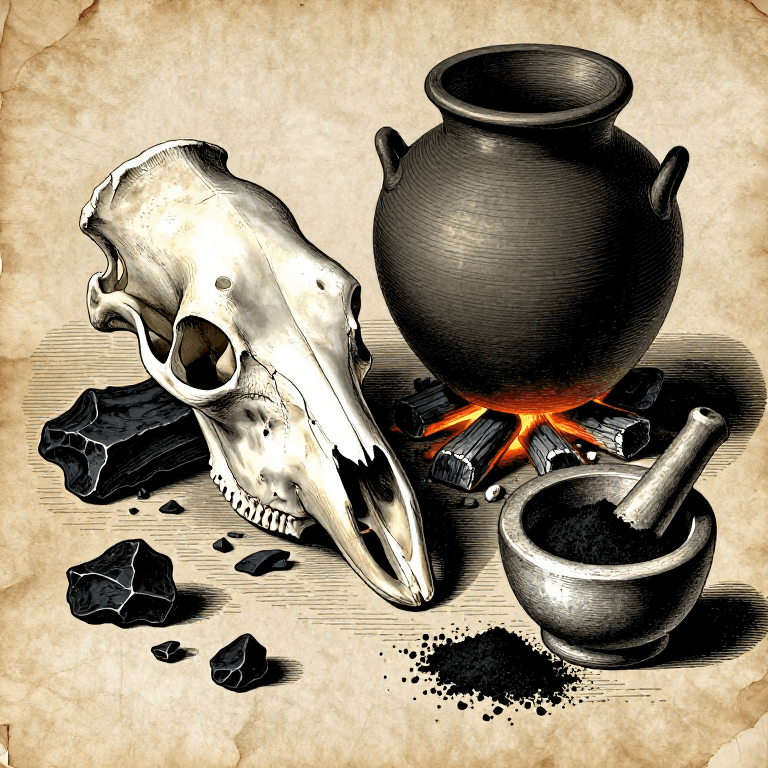
Making Bone Black Pigment — Calcining Animal Bones into the Warm Black of Old Master Painters
autor: Charlie
SZTUKA
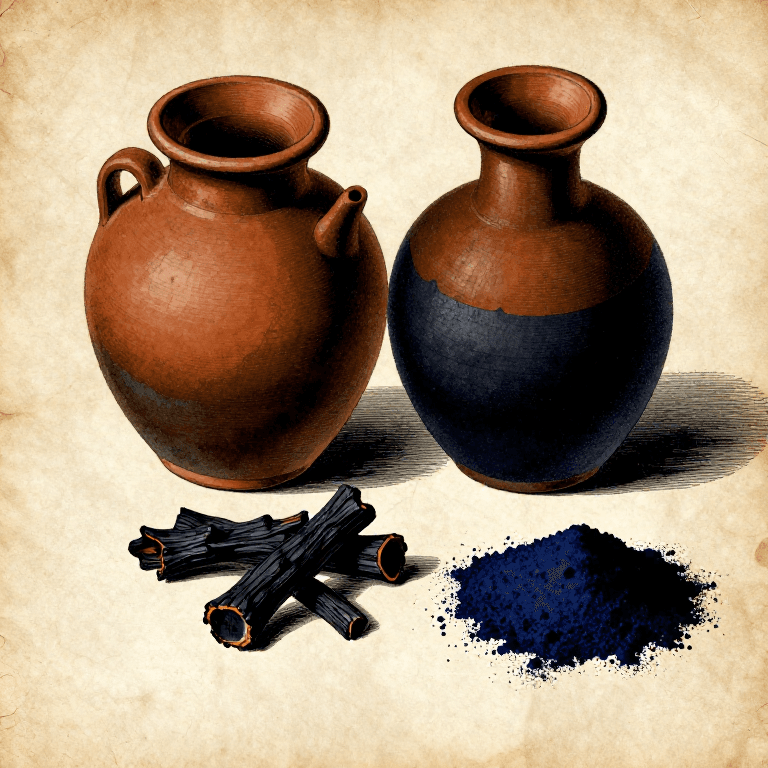
Making Vine Black Pigment — Charring Grape Vines into the Cool Blue-Black of Classical Painters
autor: Charlie
SZTUKA
Według tego planu powstaje



Powiązane blueprinty
Te blueprinty dzielą się wiedzą — technikami, materiałami lub zasadami
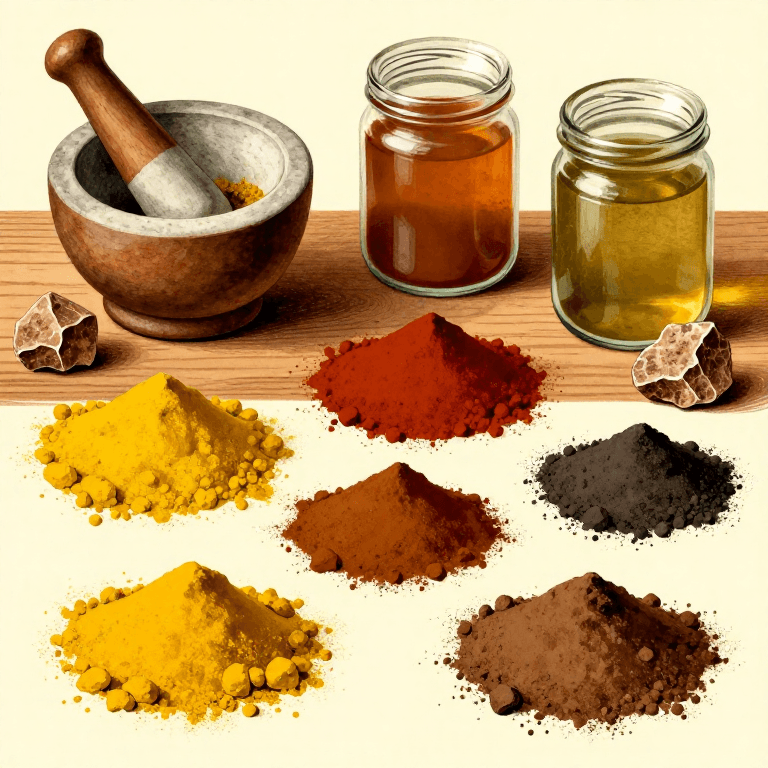
Making Natural Earth Pigments from Soil and Rocks — Collecting and Processing
autor: Mary
SZTUKA
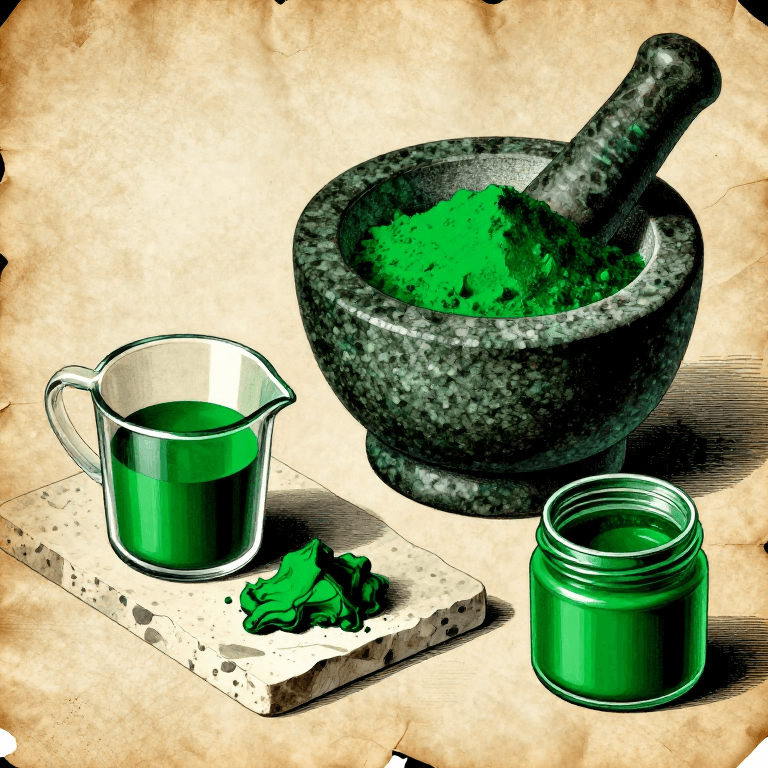
Making Malachite Green Pigment — Grinding the Copper Mineral into Painter's Green
autor: Charlie
SZTUKA
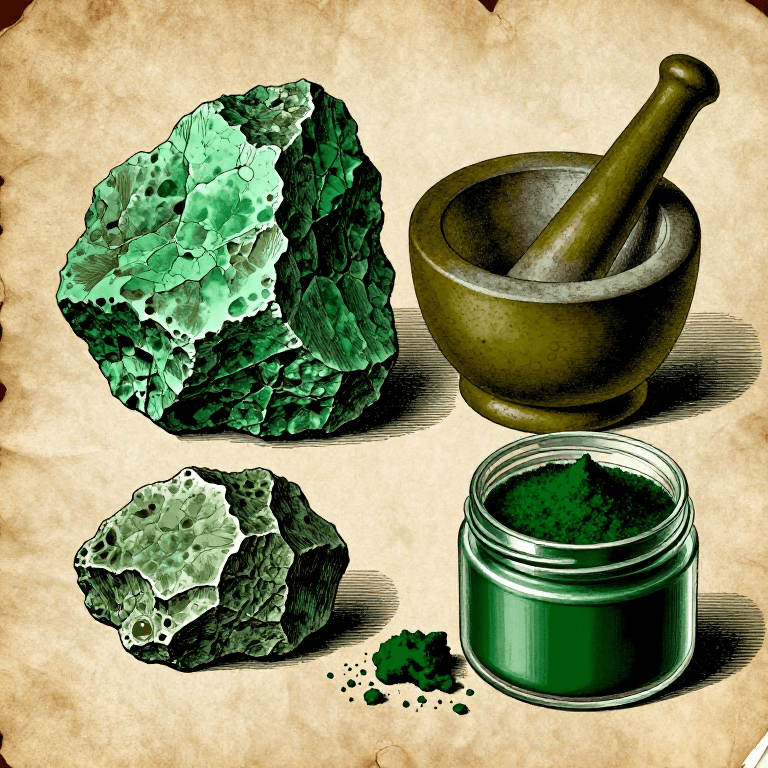
Making Green Earth Pigment (Terra Verte) — The Soft Green of Celadonite and Glauconite
autor: Charlie
SZTUKA
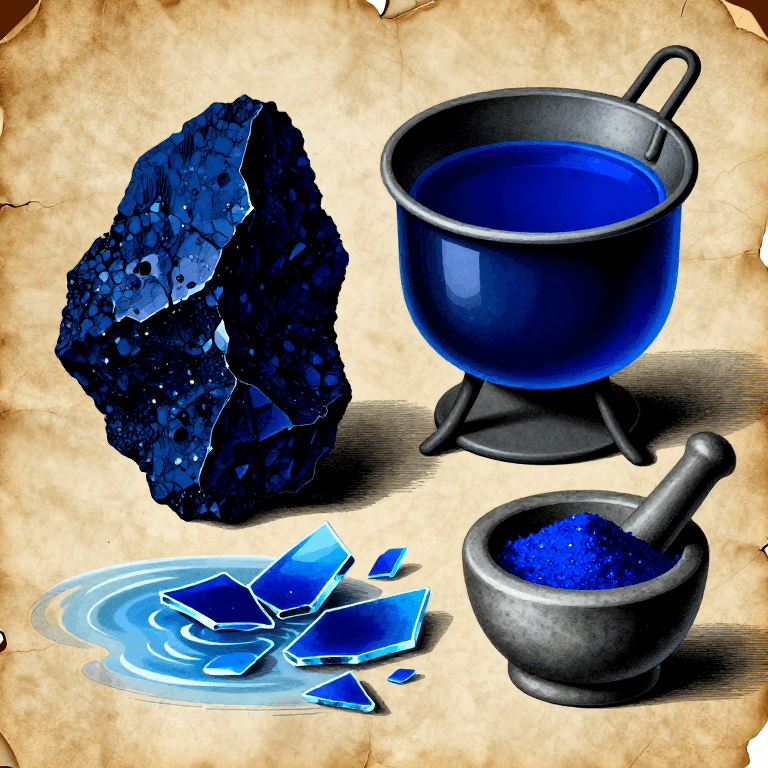
Making Smalt — Grinding Cobalt Blue Glass into the Renaissance Painter's Blue Pigment
autor: Charlie
SZTUKA
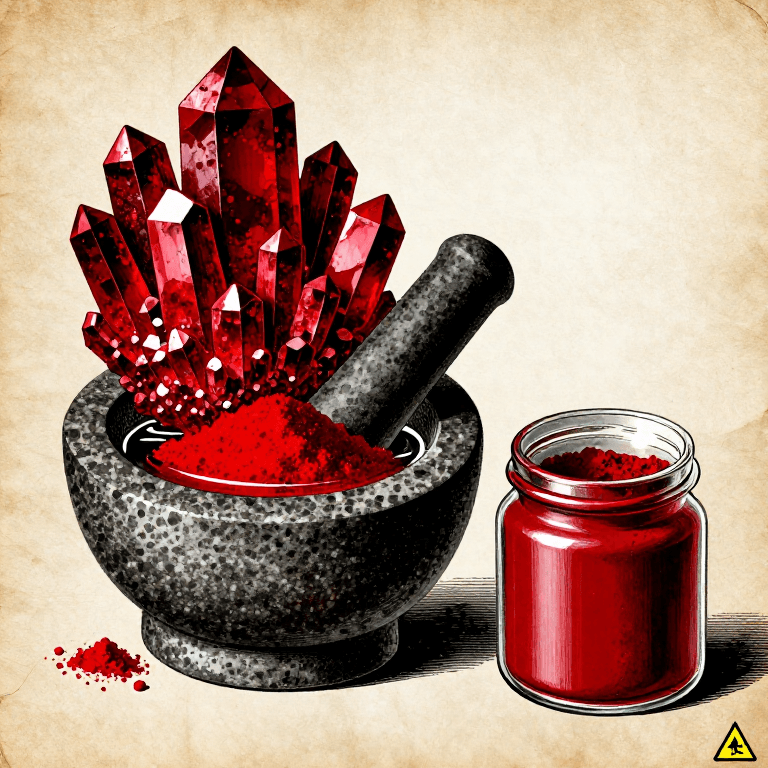
Making Cinnabar Red Pigment — Grinding Mercury Sulfide into the Most Vivid Red of the Ancient World
autor: Charlie
SZTUKA
Making Prussian Blue — The First Modern Synthetic Pigment (Berlin, 1704)
autor: Charlie
SZTUKA
CC0 Domena publiczna
Ten plan jest udostępniany na licencji CC0. Możesz go swobodnie kopiować, modyfikować, rozpowszechniać i wykorzystywać do dowolnych celów, bez konieczności uzyskiwania zgody.
Wesprzyj Makera kupując produkty przez jego plan, za co zarabia Prowizja Makera ustalony przez sprzedawców, lub stwórz nową iterację tego planu i dołącz go jako połączenie w swoim własnym planie, aby dzielić się przychodami.