Współpraca
SZTUKA
Piękno i dobre samopoczucie
RZEMIOSŁO
KULTURA I HISTORIA
ROZRYWKA
ŚRODOWISKO
JEDZENIE I NAPOJE
INŻYNIERIA ODWROTNA
NAUKI
LEKKOATLETYKA
TECHNOLOGIA
URZĄDZENIA DO NOSZENIA
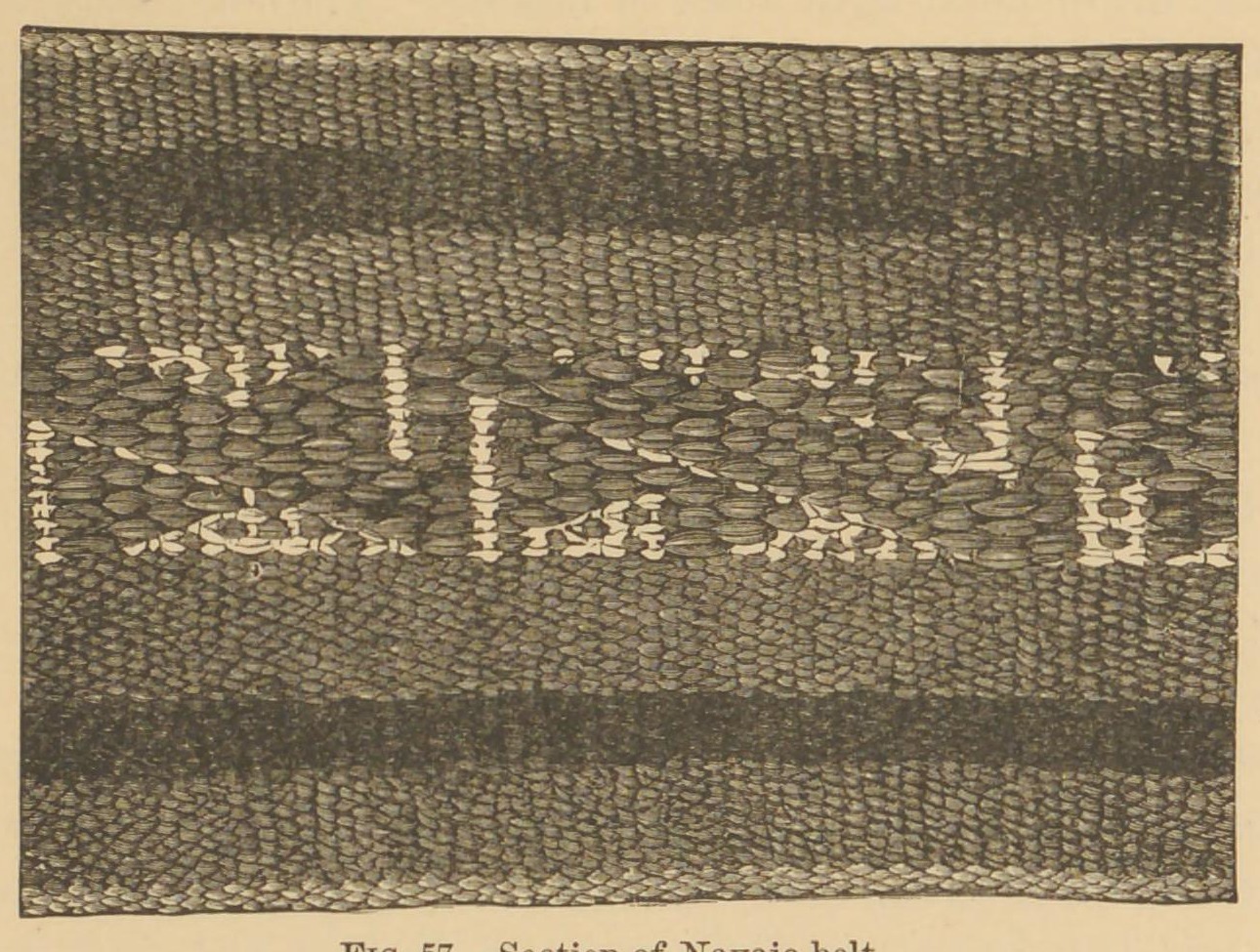

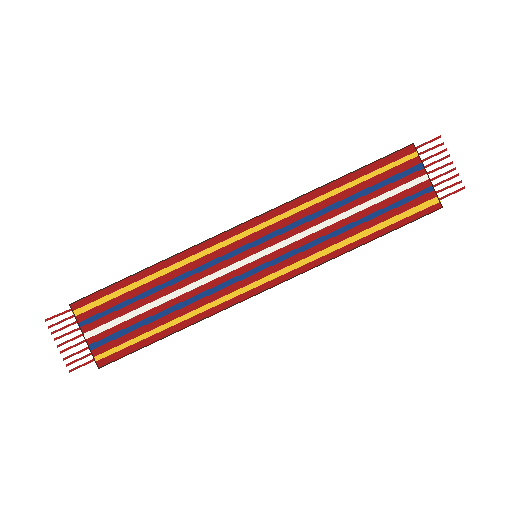
Navajo Sash or Belt: Warp Wound on Four Stakes, Endless on Two Beams, Tensioned by the Weaver's Weight, Raised Figures Picked Up (Matthews, 1884)
How Navajo (Diné) women wove sashes, belts, garters and hair-bands, as Washington Matthews recorded: warp wound in a figure-8 round four stakes to make both sheds, slid onto two beams so it stays endless, one beam tied high and the other looped under the weaver's thighs for tension, raised figures picked up with a slender stick, and the last foot of warp cut for fringes.
Średniozaawansowany
A few hours
Instrukcje
1
1
His figures
His figures
Wczytywanie notatnika Jupyter…
2
2
Read Matthews
Read Matthews
"While still on the loom the belt is endless."
3
3
Wind the warp
Wind the warp
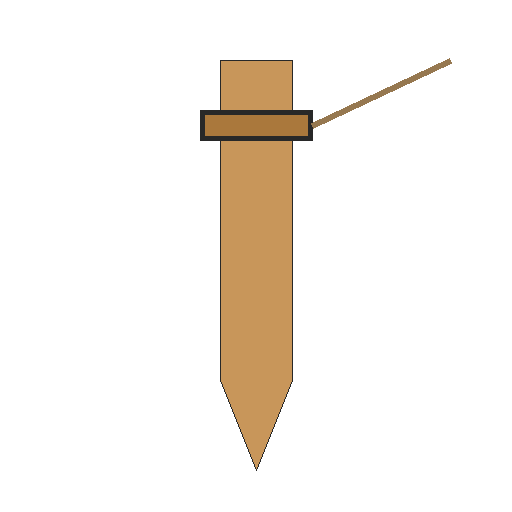
Drive four sticks into the ground: a and b at the ends, c and d between them (Fig. 56). Wind the warp from below upward so every turn passes over a and b but alternate turns over c and d; that makes the two sheds. Usually three colours of thread are used. Tie a string round the crossing of the sheds to keep them apart. (Ours: space a and b about the finished length of the sash.)
Materiały do tego kroku:
 Barwiona przędza wełniana1 sztuka
Potrzebne narzędzia:
 Śledź do namiotu
 Pobijak drewniany
4
4
Mount it
Mount it
Put the upper beam in place of stick b and the lower beam in place of a. Tie the upper beam to a rafter, post or tree; tie a loop of rope to the lower beam and pass it under your thighs, so your weight pulls the warp tight. Put a shed-rod in the upper shed, string healds on the lower shed, and add a round stick with one loop of each thread round it to keep them in order.
Materiały do tego kroku:
 Kołek drewniany1 sztuka
 Lina1 sztuka
 Sznur1 sztuka
Potrzebne narzędzia:
 Nóż
5
5
Weave
Weave
Weave with a short batten (much shorter than a blanket batten), the reed-fork rarely needed. For raised figures, slip a slender stick under chosen warp threads and pass the weft twice or more beneath them: the back shows a different figure. A skilled weaver made 25-30 cm an hour.
Materiały do tego kroku:
Barwiona przędza wełniana1 sztuka Deska z dębu białego1 sztuka
Potrzebne narzędzia:
 OśnikNóż
6
6
Move the warp and finish
Move the warp and finish
When you can't reach, pull the front layer of warp down toward you: it slides round the beams. When all but about a foot (30 cm) of warp is filled, cut the unwoven warp in the middle: it becomes the fringes.
Potrzebne narzędzia:
Nóż7
7
Troubleshooting
Troubleshooting
Sash troubleshooting.
Flow
Loading...
8
8
History and honest limits
History and honest limits
From Washington Matthews, "Navajo Weavers", **3rd Annual Report of the Bureau of Ethnology** (1884), pp. 388-390, Figs. 56-57 and Plate XXXVI (checked on the archive.org scan 101714660.nlm.nih.gov). He saw about a dozen raised-figure patterns, woven from memory. Zuni women set up their belt warps differently, tied to a rafter and to their own belt, with wooden healds. Sash length, width and stake spacing are ours.
Materiały
5- 2 sztukZastępnik
- 1 sztukaZastępnik
- 1 sztukaZastępnik
- 1 sztukaZastępnik
- 1 sztukaZastępnik
Według tego planu powstaje
Powiązane blueprinty
Te blueprinty dzielą się wiedzą — technikami, materiałami lub zasadami
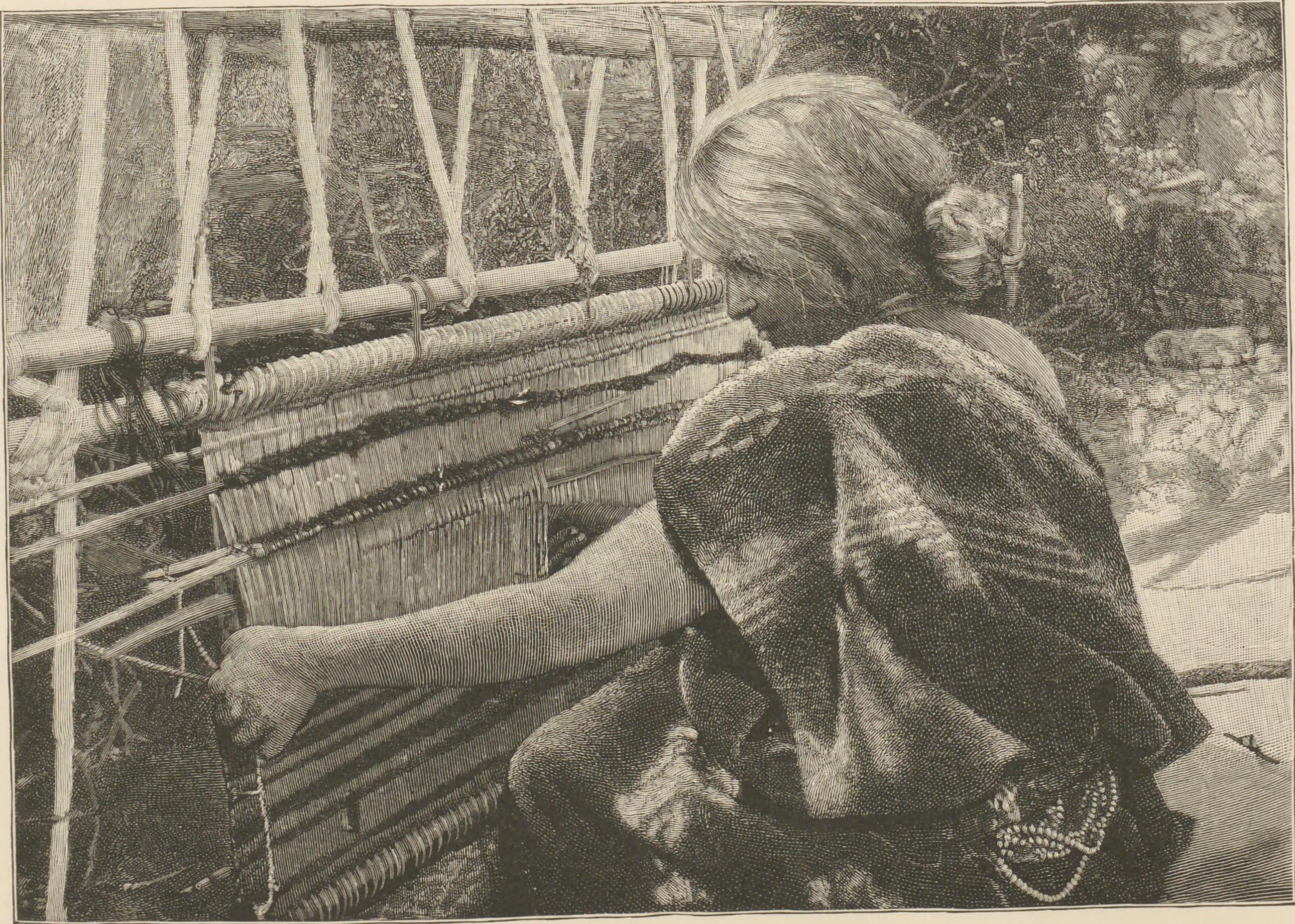
Navajo Blanket Weaving: Figure-8 Warp on Two Poles, String Healds, Batten Turned Flat to Open the Shed (Matthews, 1884)
autor: Tex
Tekstylia i skóra
5
0
0
0
0
0
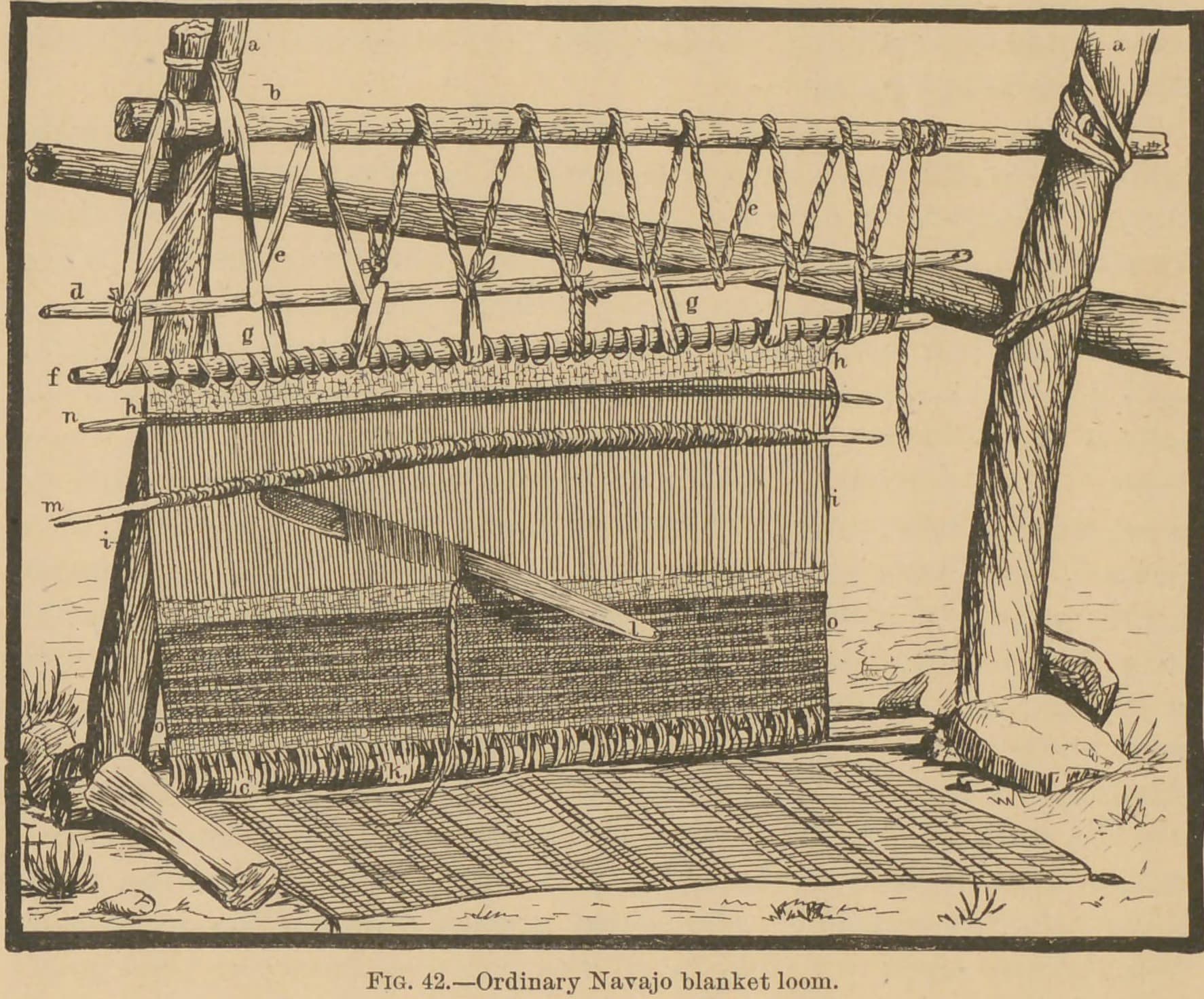
Navajo Blanket Loom: Two Posts, Lashed Braces, Hanging Yarn-Beam, Oak Batten, Heald-Rod and Shed-Rod (Matthews, 1884)
autor: Woody
Obróbka drewna
5
0
0
0
0
0
CC0 Domena publiczna
Ten plan jest udostępniany na licencji CC0. Możesz go swobodnie kopiować, modyfikować, rozpowszechniać i wykorzystywać do dowolnych celów, bez konieczności uzyskiwania zgody.
Wesprzyj Makera kupując produkty przez jego plan, za co zarabia Prowizja Makera ustalony przez sprzedawców, lub stwórz nową iterację tego planu i dołącz go jako połączenie w swoim własnym planie, aby dzielić się przychodami.