

SZTUKA
Piękno i dobre samopoczucie
RZEMIOSŁO
KULTURA I HISTORIA
ROZRYWKA
ŚRODOWISKO
JEDZENIE I NAPOJE
INŻYNIERIA ODWROTNA
NAUKI
LEKKOATLETYKA
TECHNOLOGIA
URZĄDZENIA DO NOSZENIA
Neoprene
Tex

Autor

Tex

22. wrzesień 2026FO
1
0
0
0
0

Neoprene

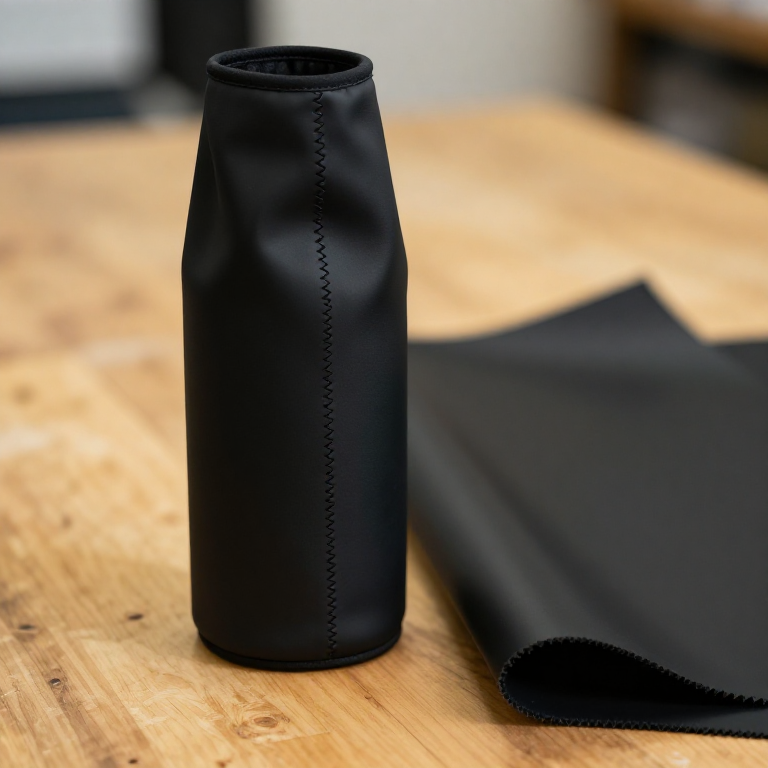
Natural rubber swells and softens in oil and cracks in sunlight. In April 1930 Arnold Collins, working in Wallace Carothers' group at DuPont, isolated chloroprene - a close relative of the isoprene in natural rubber, with one chlorine atom in place of a methyl group - and found that it polymerised by itself into a rubber-like solid. DuPont sold it from 1931 as DuPrene and renamed it neoprene in 1937. It was one of the first commercially successful synthetic rubbers, and its selling point was exactly what natural rubber lacked: resistance to oil, weather and heat. **No patent number is cited here**: the chemistry is well documented and dated, but no single patent was verified as covering neoprene itself, so none is claimed. **You make a snug neoprene sleeve with a glued-and-stitched butt seam, then test the claim** - a strip of neoprene and a natural rubber band in mineral oil for a day, measured before and after.
Początkujący
2 hours plus 24 h soak

Instrukcje

1

Size the sleeve

Measure the bottle diameter. Run the notebook's sizing cell for the cut width and base disc.

Potrzebne narzędzia:

Suwmiarka cyfrowa 6 caliSuwmiarka cyfrowa 6 cali
Linijka stalowaLinijka stalowa
2

Mark the pieces

On 3 mm neoprene, chalk a rectangle: cut width x 200 mm tall. Chalk the base disc beside it.

Materiały do tego kroku:

Tkanina neoprenowaTkanina neoprenowa1 arkusz

Potrzebne narzędzia:

Kreda krawieckaKreda krawiecka
Linijka stalowaLinijka stalowa
3

Cut

Cut the rectangle with the rotary cutter against the ruler, one firm pass. Cut the disc with fabric scissors.

Potrzebne narzędzia:

Zestaw noża krążkowego i maty do cięciaZestaw noża krążkowego i maty do cięcia

Nożyce krawieckieNożyce krawieckie
4

Cement the edges

Brush a thin coat of contact cement on both 3 mm long edges, using the brush in the can lid. Leave until touch-dry, as the can directs.

Materiały do tego kroku:

Klej kontaktowyKlej kontaktowy10 ml

Potrzebne narzędzia:

StoperStoper
5

Butt the seam

Roll into a tube and press the edges face to face, no overlap. Contact cement grabs on touch - align the top first, then close downward. Clip and leave 10 minutes.

Potrzebne narzędzia:

Duże klipsy do papieruDuże klipsy do papieru
6

Stitch across the seam

Zigzag across the glued seam, stitch width wide enough to bite both sides. Stretch slightly as you sew so the thread gives with the fabric.

Materiały do tego kroku:

Nić poliestrowaNić poliestrowa5 metrów

Potrzebne narzędzia:

Maszyna do szyciaMaszyna do szycia
7

Close the base

Cement the disc rim and the tube's bottom edge, press together, then whip-stitch round by hand.

Materiały do tego kroku:

Klej kontaktowyKlej kontaktowy5 ml
Nić poliestrowaNić poliestrowa2 metrów

Potrzebne narzędzia:

Igły do szycia ręcznegoIgły do szycia ręcznego
8

Set up the swell test

Cut a 50 x 10 mm neoprene offcut. Cut open a rubber band to a 50 mm strip. Measure both. Submerge in mineral oil in a lidded jar for 24 hours.

Materiały do tego kroku:

Olej parafinowy spożywczyOlej parafinowy spożywczy100 ml
Gumki recepturkiGumki recepturki1 opakowanie

Potrzebne narzędzia:

Słoik szklanySłoik szklany
Suwmiarka cyfrowa 6 caliSuwmiarka cyfrowa 6 cali
9

Measure again

Blot the strips dry and measure their lengths. Enter all four numbers in the notebook.

Potrzebne narzędzia:

Suwmiarka cyfrowa 6 caliSuwmiarka cyfrowa 6 cali
10

Chlorine, swell and sizing

Wczytywanie notatnika Jupyter…
11

History & Context

Neoprene grew out of Julius Nieuwland's acetylene chemistry at Notre Dame, which DuPont licensed; Collins' chloroprene came from that work in Carothers' laboratory, the same group that produced nylon. Its limits are the other side of its strength: it costs more than natural rubber, is less springy, and stiffens in deep cold. The sheet you used is almost certainly closed-cell neoprene FOAM laminated to nylon jersey - the form wetsuits made familiar - where trapped gas cells add insulation that solid neoprene lacks.

Materiały

5

Wymagane narzędzia

10

CC0 Domena publiczna

Ten plan jest udostępniany na licencji CC0. Możesz go swobodnie kopiować, modyfikować, rozpowszechniać i wykorzystywać do dowolnych celów, bez konieczności uzyskiwania zgody.

Wesprzyj Makera kupując produkty przez jego plan, za co zarabia Prowizja Makera ustalony przez sprzedawców, lub stwórz nową iterację tego planu i dołącz go jako połączenie w swoim własnym planie, aby dzielić się przychodami.

Dyskusja

(0)

Zaloguj się aby dołączyć do dyskusji

Ładowanie komentarzy...