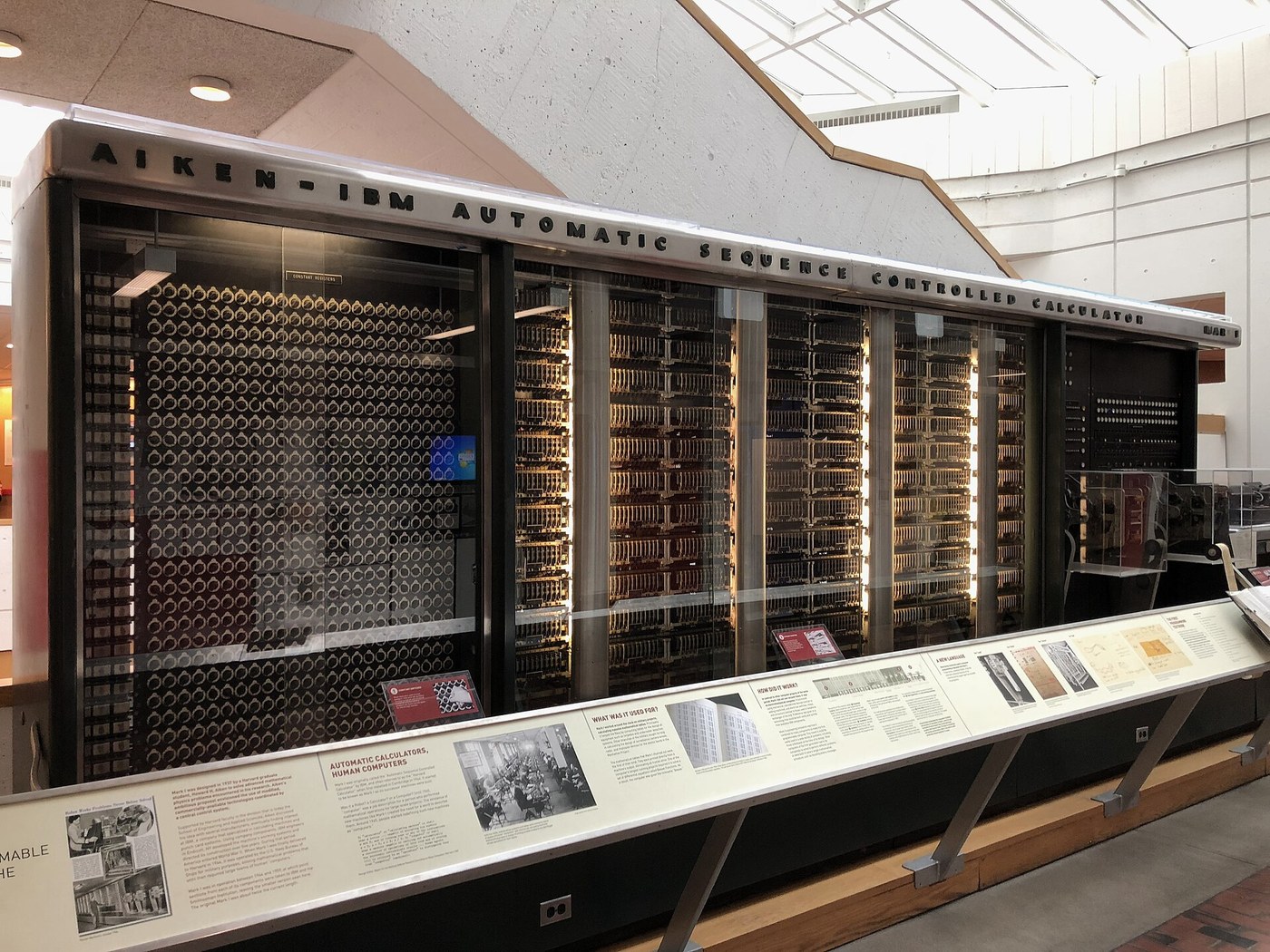


Logic Gates from Relays
Instrukcje
Start from the telegraph relay
Start from the telegraph relay
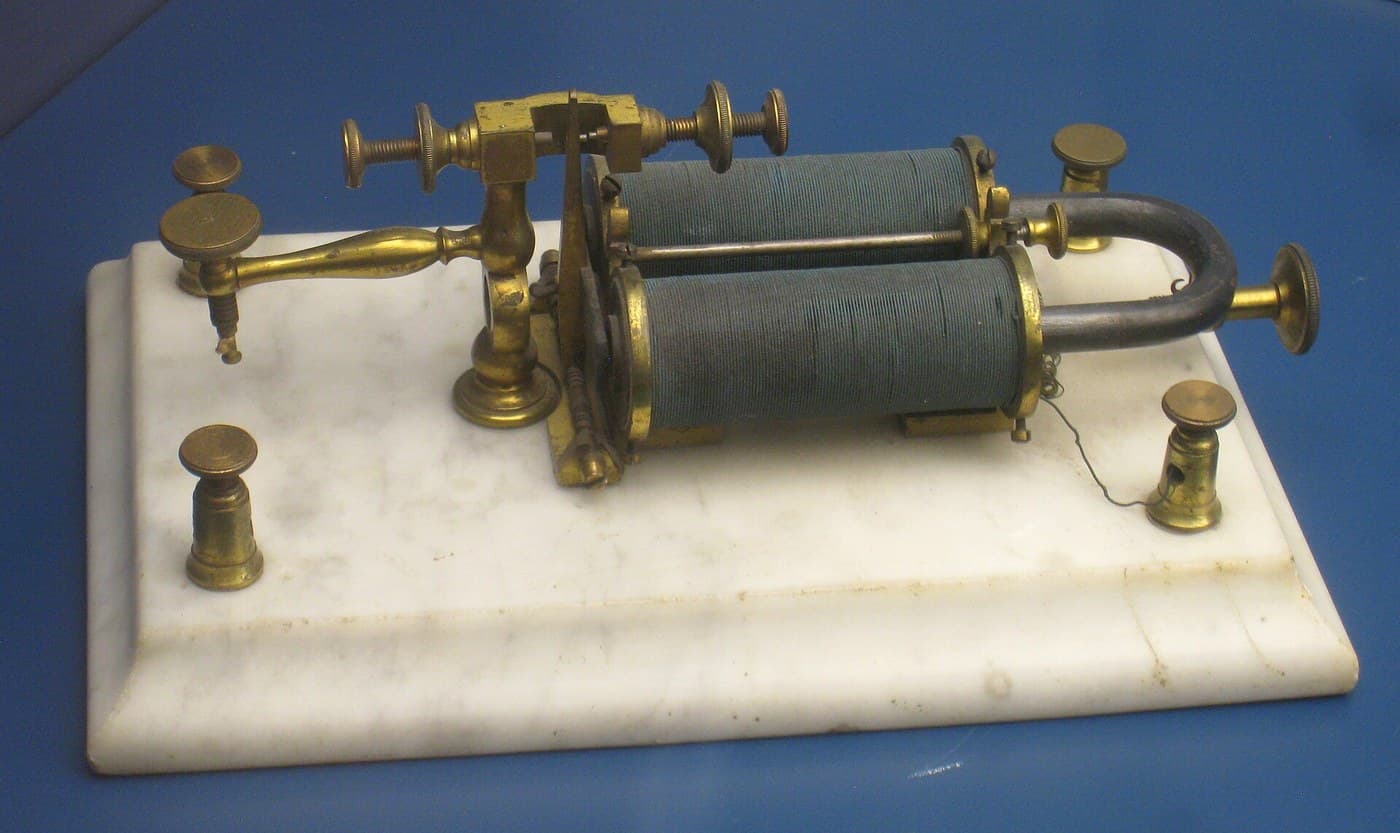
Build or re-read the relay first. It was invented to solve a completely different problem — a telegraph signal too weak to travel further, restored by using it to operate a local switch on a fresh battery.
Note the property that matters here and mattered not at all to its inventors: the thing that operates the switch is the same KIND of thing the switch controls. A lever needs a hand; a relay needs only another relay. That closure under composition is what makes logic possible, and it was sitting unused in telegraph offices for eighty years.
Wire AND, OR and NOT from contacts
Wire AND, OR and NOT from contacts
Three circuits, and every digital device ever built is made of them.
- AND: wire two relay contacts in SERIES between supply and lamp. The lamp lights only if both coils are energised.
- OR: wire two contacts in PARALLEL. The lamp lights if either coil is energised.
- NOT: use a normally-CLOSED contact. The lamp lights when the coil is NOT energised.
- Build all three and fill in a truth table for each by trying every input combination.
Series is AND, parallel is OR, normally-closed is NOT. That is Shannon's entire correspondence, and it is worth pausing on how unreasonable it is that a topology of wires should match an algebra of propositions.
Now the payoff: because it IS algebra, you can simplify circuits symbolically. De Morgan's laws say NOT(A AND B) equals NOT A OR NOT B — which means the same function can be built two different ways, and you pick whichever needs fewer contacts. Engineers had been optimising relay circuits by intuition; after 1937 they optimised them by algebra.Materiały do tego kroku:
 Przekaźnik4 sztuk
 Zestaw diod sygnalizacyjnych LED1 zestaw
 Zestaw rezystorów1 zestaw
 Płytka uniwersalna1 sztuka
 Przewód montażowy1 reel
Potrzebne narzędzia:
 Stacja lutownicza
 Multimetr cyfrowy klasy laboratoryjnej
 Regulowany zasilacz warsztatowy
 Okulary ochronne bezbarwne
Build the same logic as blocks
Build the same logic as blocks
Przestrzeń Blockly
Loading Blockly workspace...
Potrzebne narzędzia:
 Komputer stacjonarny
Simulate, simplify, and count the contacts
Simulate, simplify, and count the contacts
Potrzebne narzędzia:
Komputer stacjonarnyMeasure the switching time, and find the ceiling
Measure the switching time, and find the ceiling
Relay logic works perfectly and is slow. Measure exactly how slow, because that number ends the era.
- Drive a relay coil with a square wave and put the oscilloscope on both the drive and the contact output.
- Measure the delay from coil energising to contacts closing, and again for release.
- Watch the contact closure closely at high sweep speed.
- Chain three relays so each drives the next, and measure the total delay.
A relay takes something like 5 to 20 milliseconds to switch, and the contacts BOUNCE for a millisecond or two after closing. Chain them and the delays add, so a computation passing through fifty gates takes most of a second.
The bounce is its own problem: a single logical transition arrives as a burst of several, and any counter downstream counts them all. Debouncing exists because a mechanical contact does not close once.
So the ceiling is mechanical, not logical. The algebra is fine and the relay is honest; it simply has mass, and mass takes time to move. The escape is a switch with no moving parts at all — the vacuum tube, which switches in microseconds, and then the transistor, which does it without the heat. That is the rest of this batch.Materiały do tego kroku:
Przekaźnik3 sztukZestaw rezystorów1 zestawPotrzebne narzędzia:
 Oscyloskop
 Generator funkcyjnyMultimetr cyfrowy klasy laboratoryjnejRegulowany zasilacz warsztatowy
Materiały
5- 7 sztukZastępnik
- 1 zestawZastępnik
- Zastępnik
- 1 sztukaZastępnik
- 1 reelZastępnik
Wymagane narzędzia
7- Zastępnik
- Zastępnik
- Zastępnik
- Zastępnik
- Zastępnik
- Zastępnik
Powiązane blueprinty
Te blueprinty dzielą się wiedzą — technikami, materiałami lub zasadami

CC0 Domena publiczna
Ten plan jest udostępniany na licencji CC0. Możesz go swobodnie kopiować, modyfikować, rozpowszechniać i wykorzystywać do dowolnych celów, bez konieczności uzyskiwania zgody.
Wesprzyj Makera kupując produkty przez jego plan, za co zarabia Prowizja Makera ustalony przez sprzedawców, lub stwórz nową iterację tego planu i dołącz go jako połączenie w swoim własnym planie, aby dzielić się przychodami.