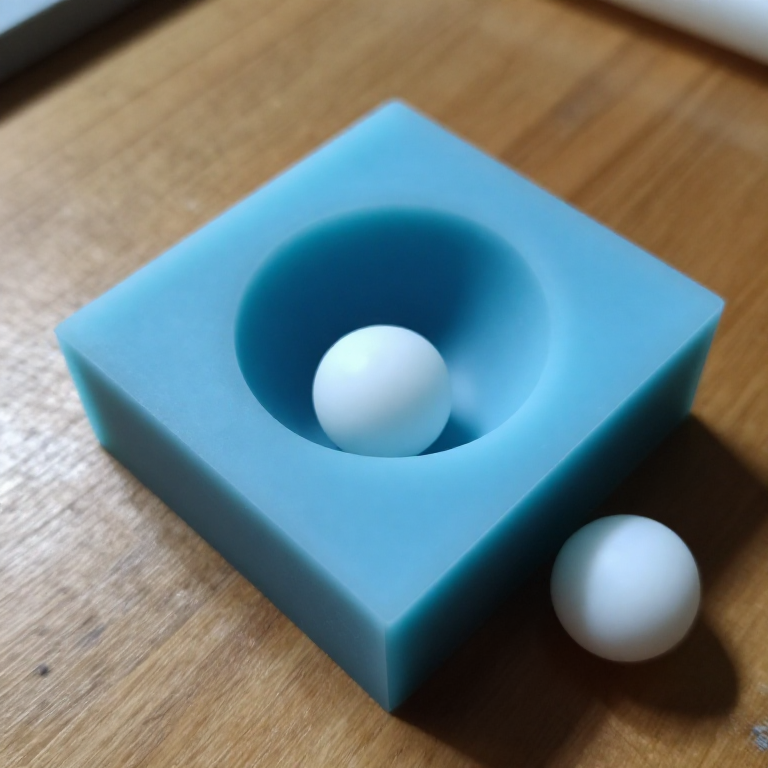


Silicone (Rochow Direct Process)
Instrukcje
Build the box
Build the box
Materiały do tego kroku:
 Karton piankowy do makiet1 arkusz
Potrzebne narzędzia:
 Nóż introligatorski
 Pistolet do kleju na gorąco
 Linijka stalowa
Clay bed and keys
Clay bed and keys
Materiały do tego kroku:
 Glina modelarska150 g
 Szklane kulki2 sztuk
Potrzebne narzędzia:
 Suwmiarka cyfrowa 6 cali
Weigh and mix
Weigh and mix
Materiały do tego kroku:
 Zestaw do form silikonowych1 zestaw
Potrzebne narzędzia:
 Precyzyjna waga cyfrowa
 Kubki miarowe do mieszania
 Pręcik do mieszania
First pour
First pour
Potrzebne narzędzia:
Kubki miarowe do mieszaniaFlip and release
Flip and release
Materiały do tego kroku:
 Wazelina5 g
Second pour
Second pour
Materiały do tego kroku:
Zestaw do form silikonowych1 zestawPotrzebne narzędzia:
Precyzyjna waga cyfrowaKubki miarowe do mieszaniaOpen and cut sprues
Open and cut sprues
Potrzebne narzędzia:
Nóż introligatorskiCast wax
Cast wax
Materiały do tego kroku:
 Parafina100 g
 Gumki recepturki1 opakowanie
Potrzebne narzędzia:
 Garnek do kąpieli wodnej
 Termometr cukierniczy
 Rękawice spawalnicze
 Okulary ochronne bezbarwne
Troubleshoot the mould
Troubleshoot the mould
Flow
Reaction, pour size, siblings
Reaction, pour size, siblings
History & Context
History & Context
Materiały
7- Karton piankowy do makiet10% prowizji1 arkuszZastępnik
- 150 gZastępnik
- 2 sztukZastępnik
- 2 zestawZastępnik
- 5 gZastępnik
- 100 gZastępnik
- 1 opakowanieZastępnik
Wymagane narzędzia
11- Zastępnik
- Zastępnik
- Zastępnik
- Zastępnik
- Zastępnik
- Zastępnik
- Zastępnik
- Zastępnik
- Zastępnik
- Rękawice spawalnicze10% prowizjiZastępnik
- Zastępnik
Powiązane blueprinty
Te blueprinty dzielą się wiedzą — technikami, materiałami lub zasadami



CC0 Domena publiczna
Ten plan jest udostępniany na licencji CC0. Możesz go swobodnie kopiować, modyfikować, rozpowszechniać i wykorzystywać do dowolnych celów, bez konieczności uzyskiwania zgody.
Wesprzyj Makera kupując produkty przez jego plan, za co zarabia Prowizja Makera ustalony przez sprzedawców, lub stwórz nową iterację tego planu i dołącz go jako połączenie w swoim własnym planie, aby dzielić się przychodami.