SZTUKA
Piękno i dobre samopoczucie
RZEMIOSŁO
KULTURA I HISTORIA
ROZRYWKA
ŚRODOWISKO
JEDZENIE I NAPOJE
INŻYNIERIA ODWROTNA
NAUKI
LEKKOATLETYKA
TECHNOLOGIA
URZĄDZENIA DO NOSZENIA
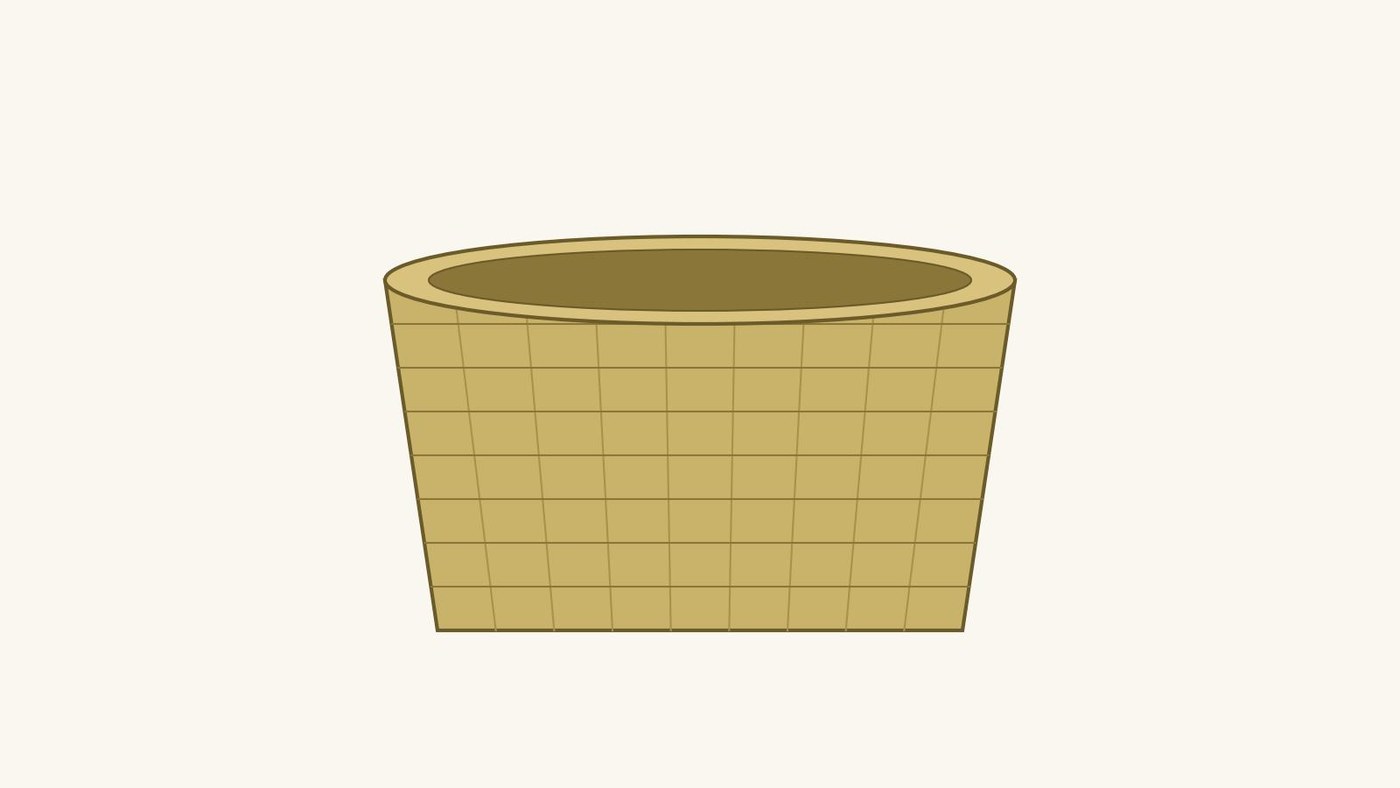


Rush Basket: Soaked Rush Plaited into a Base and Turned Up into Sides
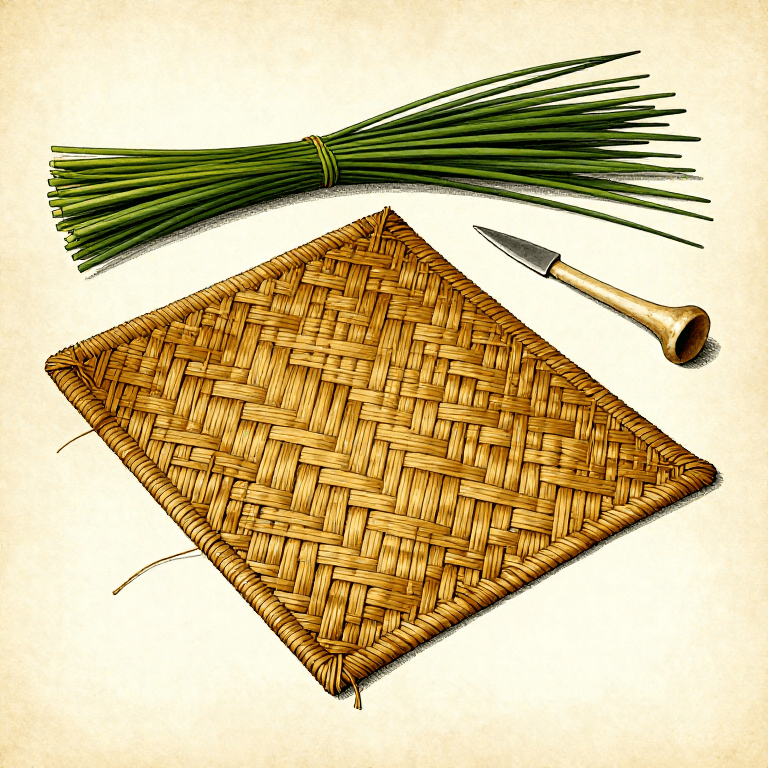
Rush stems are fibrous: from California to Scandinavia people made baskets of them. Soak dried rush until supple, plait a square base over one, under one, then bend the strands up and plait round to build the sides, tucking the ends in at the rim.
The picture: our diagram of a plaited rush basket.
Początkujący
A day
Instrukcje
1
1
Soak
Soak
Soak the dried rush in water until it bends without cracking, then keep it wrapped in a damp cloth.
Materiały do tego kroku:
 Suszone łodygi sitowia1 kg
Potrzebne narzędzia:
 Wiadro
 Woda
 Tkanina bawełniana
2
2
Plait the base
Plait the base
Lay half the strands side by side and weave the rest across them, over one and under one, into a tight square.
Potrzebne narzędzia:
Tkanina bawełniana3
3
Raise the sides
Raise the sides
Bend all the strands up at the edge of the base and weave new strands round them, over one and under one, pushing each round down tight.
Potrzebne narzędzia:
Wiadro4
4
Finish the rim
Finish the rim
Fold each upright strand down over the last round and tuck it into the weave with the awl. Trim the ends and let the basket dry.
Potrzebne narzędzia:
 Szydło
 Nóż
5
5
Strands for your basket
Strands for your basket
Wczytywanie notatnika Jupyter…
Materiały
1- Zastępnik
Według tego planu powstaje

Powiązane blueprinty
Te blueprinty dzielą się wiedzą — technikami, materiałami lub zasadami

CC0 Domena publiczna
Ten plan jest udostępniany na licencji CC0. Możesz go swobodnie kopiować, modyfikować, rozpowszechniać i wykorzystywać do dowolnych celów, bez konieczności uzyskiwania zgody.
Wesprzyj Makera kupując produkty przez jego plan, za co zarabia Prowizja Makera ustalony przez sprzedawców, lub stwórz nową iterację tego planu i dołącz go jako połączenie w swoim własnym planie, aby dzielić się przychodami.