SZTUKA
Piękno i dobre samopoczucie
RZEMIOSŁO
KULTURA I HISTORIA
ROZRYWKA
ŚRODOWISKO
JEDZENIE I NAPOJE
INŻYNIERIA ODWROTNA
NAUKI
LEKKOATLETYKA
TECHNOLOGIA
URZĄDZENIA DO NOSZENIA



Speed Through the Water: Using and Calibrating the Log
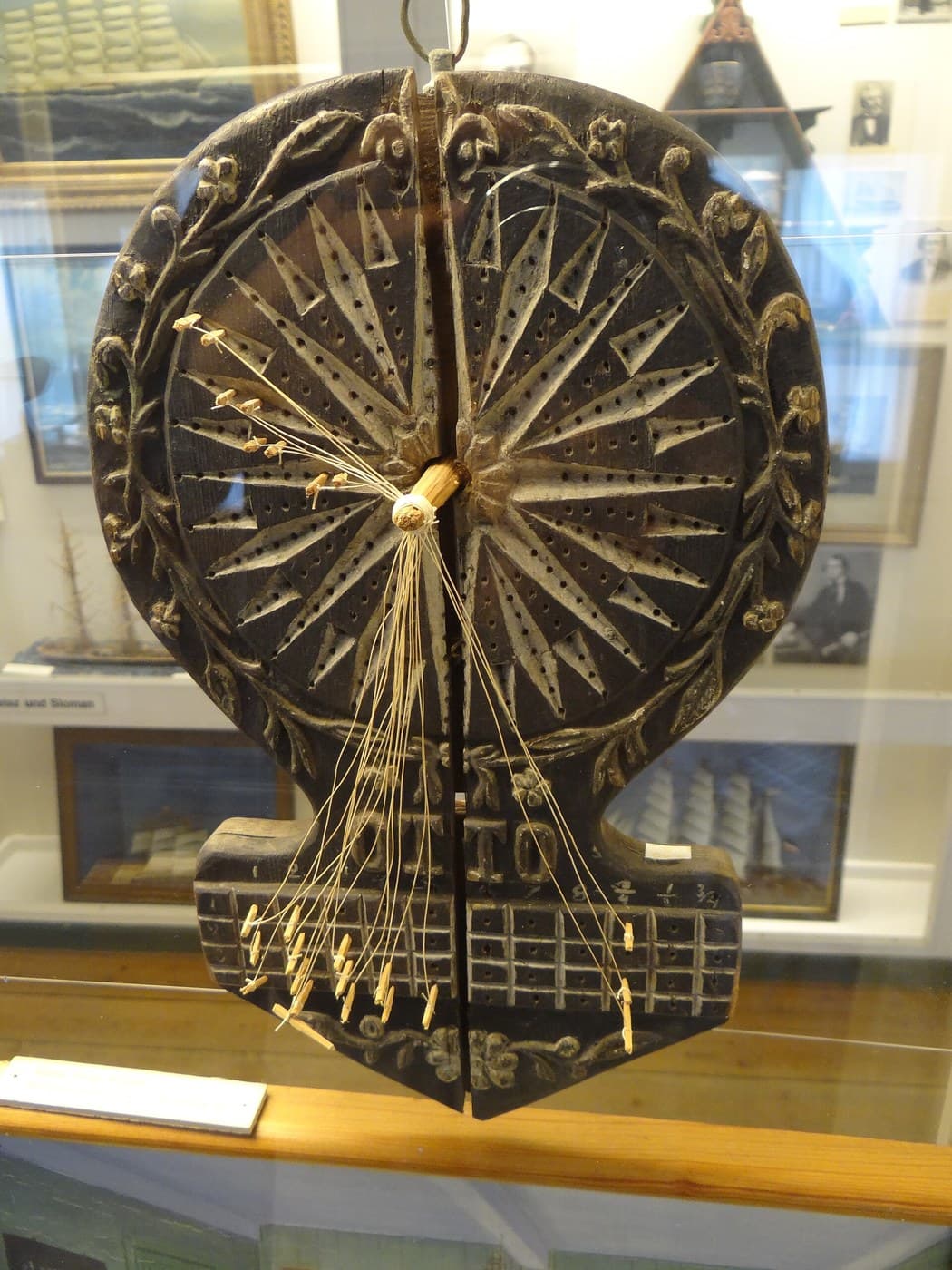
Dead reckoning needs a speed, and the word 'knot' is a fossil of how it was first measured: a wedge of wood on a line knotted at even intervals, thrown over the stern, with the knots counted as they ran out during a measured interval of a sand glass.
The chip log, already published here, is that instrument. This rung is about USING it honestly — because every log measures speed through the WATER, and the water itself is usually moving. A log reading five knots in a two-knot foul tide is a boat making three over the ground, and no log will ever tell you that.
You will build a simple log, calibrate it over a measured distance, and learn the difference between speed, distance run and distance made good — three quantities that are routinely confused and are never the same number.
Początkujący
1 day
Instrukcje
1
1
Understand why the knot spacing is what it is
Understand why the knot spacing is what it is
A nautical mile is 1852 metres. If knots are spaced at 1/120th of that — about 15.4 metres — then the number running out in 30 seconds is the speed in nautical miles per hour directly.
Thirty seconds is 1/120th of an hour, so the two ratios cancel and the count IS the speed. That is the whole elegance of the device: no calculation at sea, in the dark, by a tired watch. Choose a different glass and you must re-space the knots to match.
Materiały do tego kroku:
 Sznur traserski60 metre
Potrzebne narzędzia:
 Miara zwijana
 Marker permanentny
2
2
Make a chip that stays put in the water
Make a chip that stays put in the water
Cut a quadrant of thin board about 200 mm on its straight edges, weight the curved edge with lead so it floats upright, and bridle it from three points so it presents its face to the pull.
The chip must stay still in the water while the line runs off the reel — it is a sea anchor, not a float. If it skids or planes, every reading is short. The traditional bridle has one leg on a tapered peg that pulls free when the line is jerked, so the chip turns edge-on and can be hauled in easily.
Materiały do tego kroku:
 Płyta sklejkowa1 arkuszSznur traserski10 metre
Potrzebne narzędzia:
 Piła ręczna
 Papier ścierny
3
3
Leave stray line before the first knot
Leave stray line before the first knot
Mark a length of 'stray line' — typically 10 to 20 metres — before the first knot, and only start the glass when the stray-line marker passes your hand.
Close astern the water is disturbed by the boat's wake and is travelling with her, so a chip in that zone is dragged along and reads slow. The stray line gets the chip out into undisturbed water before timing begins. Skipping it is the single commonest reason a hand log under-reads.
Potrzebne narzędzia:
Marker permanentnyMiara zwijana4
4
Calibrate against a measured distance, both ways
Calibrate against a measured distance, both ways
Run a known distance between two fixed marks at steady throttle, timing it, then run the SAME distance back at the same setting.
Averaging the two runs cancels the current, which otherwise adds to one and subtracts from the other. One run alone measures your speed over the ground on that day's tide and tells you nothing reliable about the log. Do it in calm conditions, and repeat at two or three speeds, because log errors are rarely a constant percentage.
Potrzebne narzędzia:
 Stoper
5
5
Knot spacing, calibration and the three distances
Knot spacing, calibration and the three distances
Wczytywanie notatnika Jupyter…
Potrzebne narzędzia:
Stoper6
6
Record the correction and use it every time
Record the correction and use it every time
Write the correction factor for each speed on a card by the chart table, and apply it to every log reading before it goes into the plot.
A calibration in a notebook you do not consult is worth nothing. Re-check it after anything that changes the hull — a season's weed growth easily costs five per cent, which over a night passage is several miles of error accumulating steadily in one direction.
Materiały do tego kroku:
 Brystol4 sztuk
Materiały
3- 70 metreZastępnik
- 1 arkuszZastępnik
- 4 sztukZastępnik
Powiązane blueprinty
Te blueprinty dzielą się wiedzą — technikami, materiałami lub zasadami

CC0 Domena publiczna
Ten plan jest udostępniany na licencji CC0. Możesz go swobodnie kopiować, modyfikować, rozpowszechniać i wykorzystywać do dowolnych celów, bez konieczności uzyskiwania zgody.
Wesprzyj Makera kupując produkty przez jego plan, za co zarabia Prowizja Makera ustalony przez sprzedawców, lub stwórz nową iterację tego planu i dołącz go jako połączenie w swoim własnym planie, aby dzielić się przychodami.