Współpraca
SZTUKA
Piękno i dobre samopoczucie
RZEMIOSŁO
KULTURA I HISTORIA
ROZRYWKA
ŚRODOWISKO
JEDZENIE I NAPOJE
INŻYNIERIA ODWROTNA
NAUKI
LEKKOATLETYKA
TECHNOLOGIA
URZĄDZENIA DO NOSZENIA
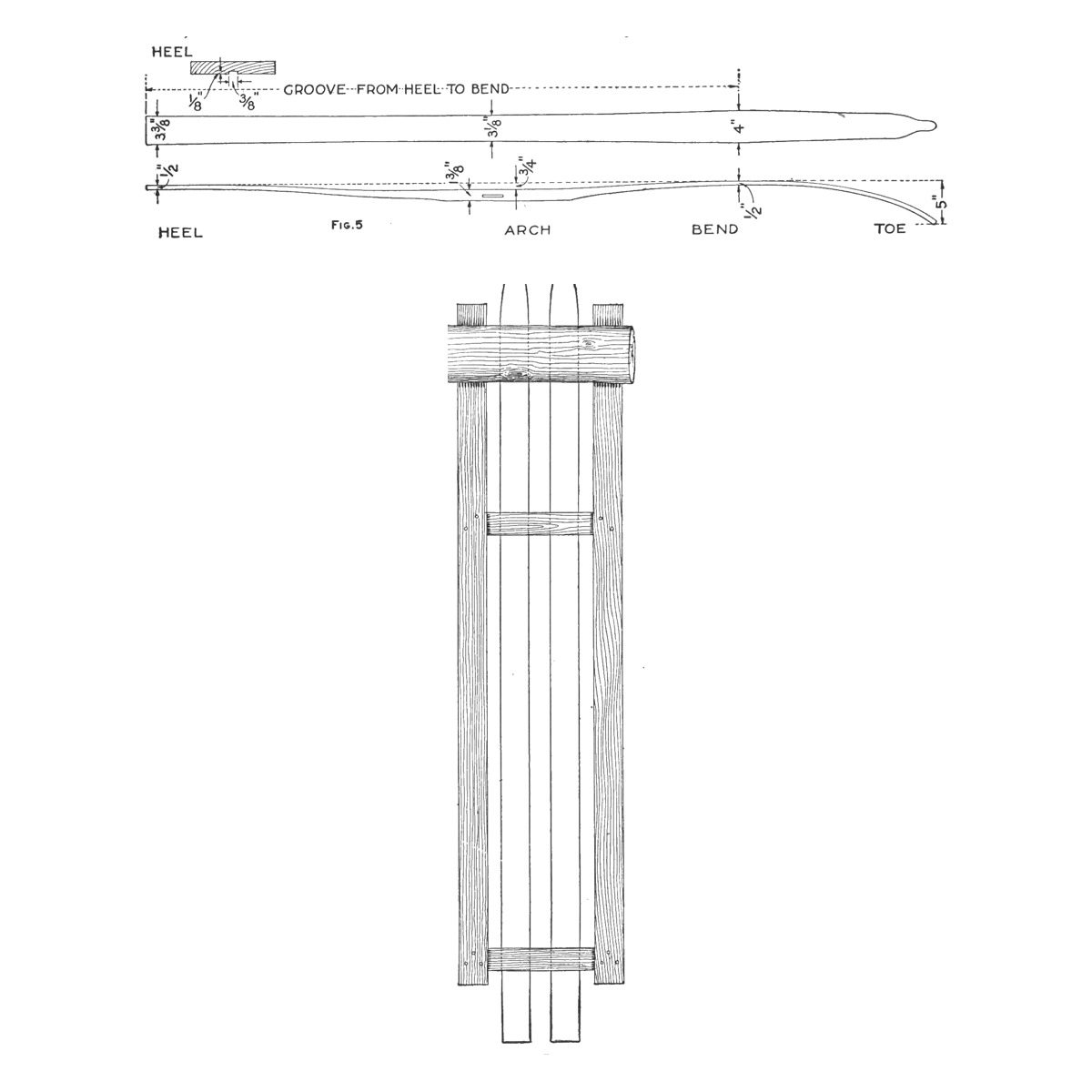


Skis: Ash or Hickory Planks Shaped to an 8 ft Pattern, Steam-Bent Tips and a Running Groove (Boy Mechanic, 1919)
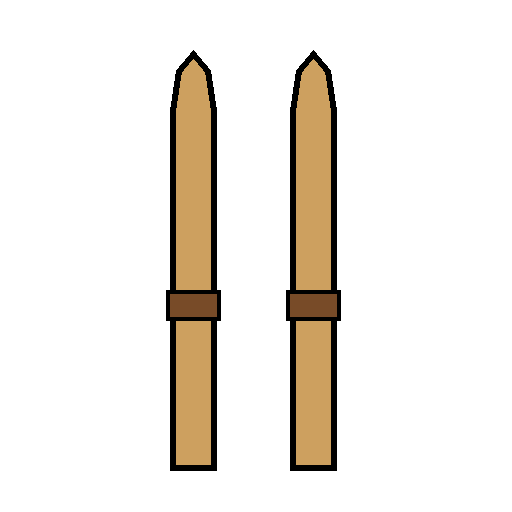
Stillman Taylor's skis from The Boy Mechanic, Book 3 (1919): "far easier than snowshoe construction, since each runner is made from a single piece of plank". Ash or hickory is cut to his 8 ft pattern, thinned from the top only, the tips steamed to a 6 in bend, a centre groove cut, and the skis oiled and waxed.
Średniozaawansowany
About 1 week
Instrukcje
1
1
Fig. 5 in centimetres, and the wax
Fig. 5 in centimetres, and the wax
Wczytywanie notatnika Jupyter…
2
2
Read The Boy Mechanic, Book 3
Read The Boy Mechanic, Book 3
"Either hickory or ash will give satisfaction, because both are heavy woods, as well as strong and flexible." For a man of good height, 7 to 8 ft is the right length.
3
3
Get and choose the wood
Get and choose the wood
Get two ash or hickory planks about 9 ft long and 2 in thick, from the outside of the lower trunk, with the grain running as in his Fig. 6, A/D (in ash choose open, widely spaced grain). Or split a sound, straight tree about 10 in across and clear of knots for 10 ft: axe a straight groove about 1 in deep along each side and drive small wood wedges along it; hew only enough off the outside to make the flat running surface.
Materiały do tego kroku:
 Deska z drewna liściastego2 sztuk
Potrzebne narzędzia:
 Piła ręczna
 Miara zwijana
4
4
Lay out and saw
Lay out and saw
Make a paper pattern from his Fig. 5 (8 ft ski): 3-3/8 in wide at the heel, 3-1/8 in at the foot, 4 in at the bend, rounding to the toe. Trace it on the plank and saw out; on green wood make the width about 1/4 in greater for shrinkage.
Materiały do tego kroku:
Deska z drewna liściastego1 sztukaPotrzebne narzędzia:
 OłówekPiła ręcznaMiara zwijana
5
5
Plane to thickness
Plane to thickness
Plane the running surface perfectly smooth, grain straight from point to heel. Work the thickness down from the top side only, never the bottom: about 1/2 in at the heel, 3/4 in at the foot and 1/2 in at the bend.
Potrzebne narzędzia:
 Strug ręczny
 Strug kabłąkowy
6
6
Steam the tip
Steam the tip
Lay the ski over a wash boiler of boiling water and soak the tip by mopping it with the water on a cloth tied to a stick. Bend gradually over many treatments to a good 6 in bend (it finishes near 5 in, as the wood straightens a little as it dries). Hold it in a rough frame over a short log, or lash or cleat the tips to the bench, as in his Fig. 7. The arch under the foot is easily put in, and easily straightened when cold if overdone.
Potrzebne narzędzia:
 Duży garnek
 Mop
 Ścisk stolarski listwowy
7
7
Binding hole, balance and groove
Binding hole, balance and groove
Put in the hole for the foot binding. If the wood was left long, trim the heel so the ski balances when lifted by the toe straps (he sees no advantage in weighting a light heel with lead). Cut a groove in the exact centre of the running surface, about 1/8 in deep and 3/8 to 1/2 in wide, from the heel to the start of the bend, with a grooving plane or a small gouge.
Materiały do tego kroku:
 Rzemień skórzany2 sztuk
Potrzebne narzędzia:
 Wiertarka ręczna
 Dłuta
 Dłuto półokrągłePiła ręczna
8
8
Finish and wax
Finish and wax
Sandpaper top and bottom and rub down with linseed oil with a little paraffin or beeswax in it; oil and wax the running surface (spar varnish on the tops if you want gloss). For a hard wax, melt 10 oz of beeswax with 5 oz of rosin, stir in 1 oz of turpentine and pour into small boxes. Rub it on and go over it with a hot flatiron; too much wax makes climbing hard.
Materiały do tego kroku:
 Papier ścierny1 sztuka
 Olej lniany1 sztuka
 Parafina1 sztuka
 Wosk pszczeli1 sztuka
 Kalafonia sosnowa1 sztuka
 Terpentyna1 sztuka
Potrzebne narzędzia:
Duży garnek Żelazko płaskie
 Pędzel szeroki
9
9
Troubleshooting
Troubleshooting
Ski troubleshooting.
Flow
Loading...
10
10
History and honest limits
History and honest limits
From "How to Make Skis" by Stillman Taylor, in **The Boy Mechanic, Book 3**, Popular Mechanics, 1919 (Project Gutenberg 71856; checked on the archive.org scan boymechanic0003unse, pp. 27-30). His text gives the groove as 3/8 to 1/2 in wide; Fig. 5 shows 3/8 in. He does not describe the binding. The tools and metric figures are ours.
Materiały
8- 2 sztukZastępnik
- 2 sztukZastępnik
- 1 sztukaZastępnik
- 1 sztukaZastępnik
- 1 sztukaZastępnik
- 1 sztukaZastępnik
- 1 sztukaZastępnik
- 1 sztukaZastępnik
Wymagane narzędzia
13- Zastępnik
- 1 vendor sell this, none ship to you yetZastępnik
- 1 vendor sell this, none ship to you yetZastępnik
- Zastępnik
- Zastępnik
- Zastępnik
- Zastępnik
- Zastępnik
- Zastępnik
- Zastępnik
- Zastępnik
- Zastępnik
- Zastępnik
Według tego planu powstaje
Powiązane blueprinty
Te blueprinty dzielą się wiedzą — technikami, materiałami lub zasadami
CC0 Domena publiczna
Ten plan jest udostępniany na licencji CC0. Możesz go swobodnie kopiować, modyfikować, rozpowszechniać i wykorzystywać do dowolnych celów, bez konieczności uzyskiwania zgody.
Wesprzyj Makera kupując produkty przez jego plan, za co zarabia Prowizja Makera ustalony przez sprzedawców, lub stwórz nową iterację tego planu i dołącz go jako połączenie w swoim własnym planie, aby dzielić się przychodami.