SZTUKA
Piękno i dobre samopoczucie
RZEMIOSŁO
KULTURA I HISTORIA
ROZRYWKA
ŚRODOWISKO
JEDZENIE I NAPOJE
INŻYNIERIA ODWROTNA
NAUKI
LEKKOATLETYKA
TECHNOLOGIA
URZĄDZENIA DO NOSZENIA
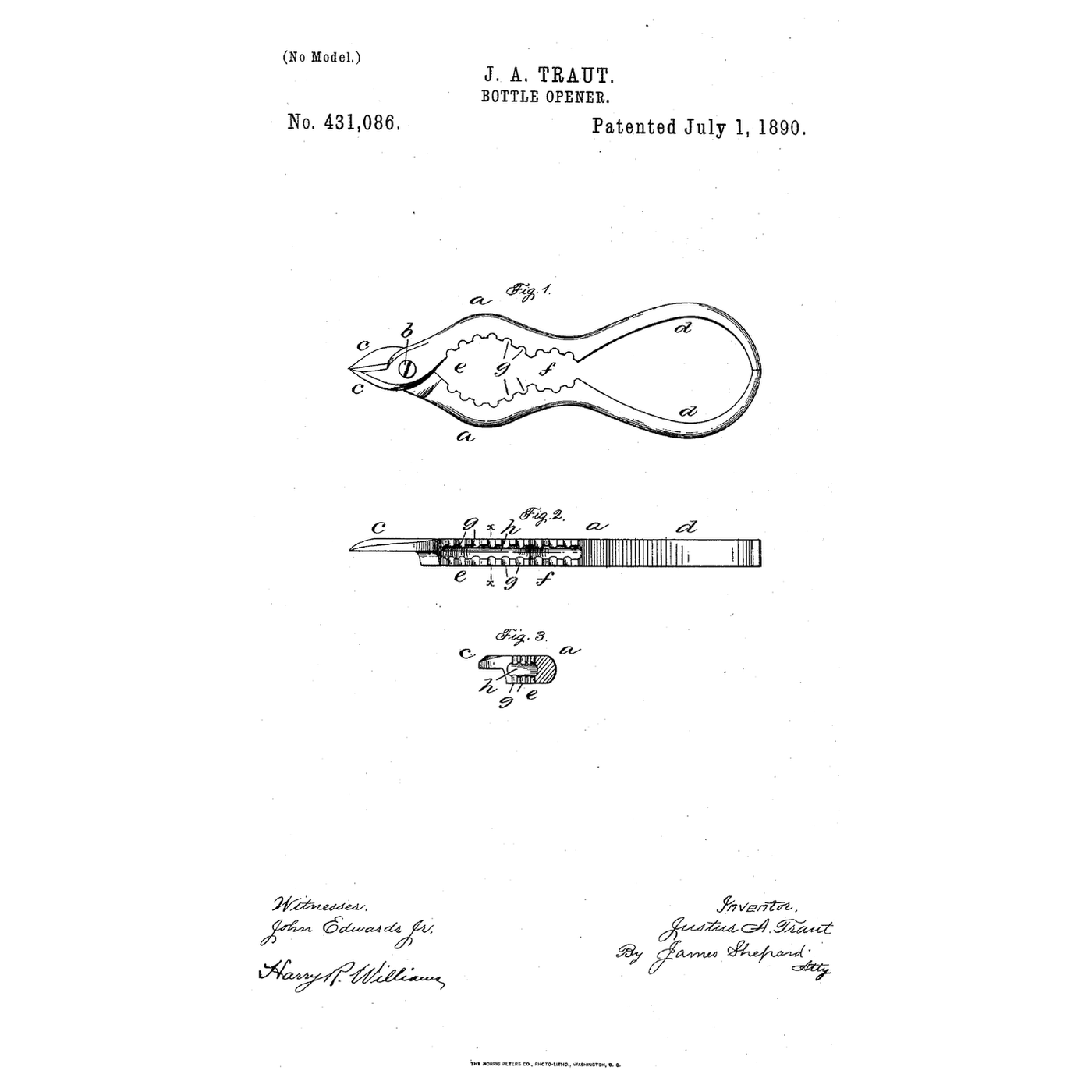

The Blunt-Toothed Cork Pliers: Cut the Wire, Then Grip the Cork Without Tearing It
Pliers with sharp teeth tear a cork, and the cork breaks in pieces in the neck.
Justus A. Traut of New Britain, Connecticut, received US 431,086, dated 1 July 1890, for "a cheap implement of this class with peculiarly-shaped grasping-jaws that can be made to grasp and firmly hold a cork without cutting or breaking it into pieces when the cork is being removed from the bottle." Two pivoted levers carry blades in front of the pivot to cut the wire that holds the cork, and behind it jaws curved to different sizes for different corks, with rows of wide, blunt teeth along their edges and a groove between the rows.
This rung works out how hard the jaws must grip, then makes the pliers from flat bar, cuts the wire from a fastened bottle and draws its cork.
Zaawansowany
About 5 hours
Instrukcje
1
1
Grip from the handles
Grip from the handles
Wczytywanie notatnika Jupyter…
2
2
A cork puller before it
A cork puller before it
The embedded blueprint draws a cork with a helix driven into it. Traut's pliers grip the cork from the side instead, so it can be taken out whole.
3
3
Read US 431,086
Read US 431,086
"These levers are secured together by a pivot b near one end, and on one side of the pivot are shaped into blades c c, so as to form shears, that may be used to sever the wire, cord, or metal fastening which is used to hold corks in place in the mouth of a bottle."
"It is preferred that these grooves should be circular and at sufficient distance apart to make wide blunt teeth, each tooth being a truncated pyramid rather than coming to a point, so that the teeth will compress the fiber of the cork and settle into its surface without cutting or tearing its fiber, as would be the case if the teeth were sharp."
4
4
Make the pliers and draw a cork
Make the pliers and draw a cork
**Levers.** Cut two 20 cm lengths of 20 × 5 mm mild steel flat bar and clamp them together. Drill both for an M6 pivot bolt 3 cm from one end.
**Jaws.** Just behind the pivot, file two opposite curved recesses of different sizes across the pair, one for small corks and one for large. Along both edges of each recess, file transverse grooves a few millimetres apart so the teeth between them are wide and flat-topped, then file a groove lengthwise between the two rows.
**Blades.** In front of the pivot, file the two ends into bevelled blades that pass each other closely, as shears.
**Assemble.** Bolt the levers with a washer between them, tighten until they move without play, and lock the nut.
**Test.** Cork a wine bottle of water with the corking kit and bind the cork with a loop of wire. Cut the wire with the blades. Grip the cork in the jaw that fits it, twist slightly and draw it out. Compare the cork's surface with one drawn by ordinary pliers with sharp teeth.
Materiały do tego kroku:
 Płaskownik ze stali miękkiej0.4 metr
 Zestaw śrub sześciokątnych1 sztuka
 Nakrętka sześciokątna2 sztuk
 Podkładka płaska1 sztuka
 Butelka szklana (bezbarwna)1 sztuka
 Korki2 sztuk
 Drut stalowy ocynkowany0.3 metr
 Woda0.75 litr
Potrzebne narzędzia:
 Piła do metalu
 Wiertarko-wkrętarka akumulatorowa
 Zestaw wierteł
 Imadło warsztatowe
 Pilniki (pilnik ręczny)
 Zestaw pilników iglaków
 Punktak
 Młotek
 Klucz nastawny
 Zestaw do korkowania butelek wina
 Kombinerki
 Okulary ochronne bezbarwne
5
5
Pliers that slip, tear the cork or will not cut the wire
Pliers that slip, tear the cork or will not cut the wire
Blunt-toothed cork pliers troubleshooting.
Flow
Loading...
6
6
History and honest limits
History and honest limits
**Justus A. Traut** of New Britain, Hartford County, Connecticut, filed US 431,086 on 12 December 1889; it is dated 1 July 1890. His levers a a were cast or forged of any suitable metal, the handles d d beyond the jaws, and the jaws e f were curved to different radii for corks of various sizes. The two rows of teeth also give a wide grasping surface with a space between them, so the compressed cork swells into the groove and keeps the tool from slipping. His claim is the pivoted levers with jaws having a row of blunt teeth along each edge and a groove between the rows.
**Honest limits.** Filed mild steel stands in for his cast or forged levers, so the blades dull on hard wire. The notebook's friction coefficient and the cork's hold are examples, not measurements; its forces and lengths are examples too. Your drawn cork is the result.
Materiały
8- 0.4 metrZastępnik
- 1 sztukaZastępnik
- 2 sztukZastępnik
- 1 sztukaZastępnik
- 1 sztukaZastępnik
- 2 sztukZastępnik
- 0.3 metrZastępnik
- 0.75 litrZastępnik
Wymagane narzędzia
12- Zastępnik
- 1 vendor sell this, none ship to you yetZastępnik
- Zastępnik
- Zastępnik
- Zastępnik
- Zastępnik
- Zastępnik
- Zastępnik
- Zastępnik
- Zastępnik
- Zastępnik
- Zastępnik
Powiązane blueprinty
Te blueprinty dzielą się wiedzą — technikami, materiałami lub zasadami
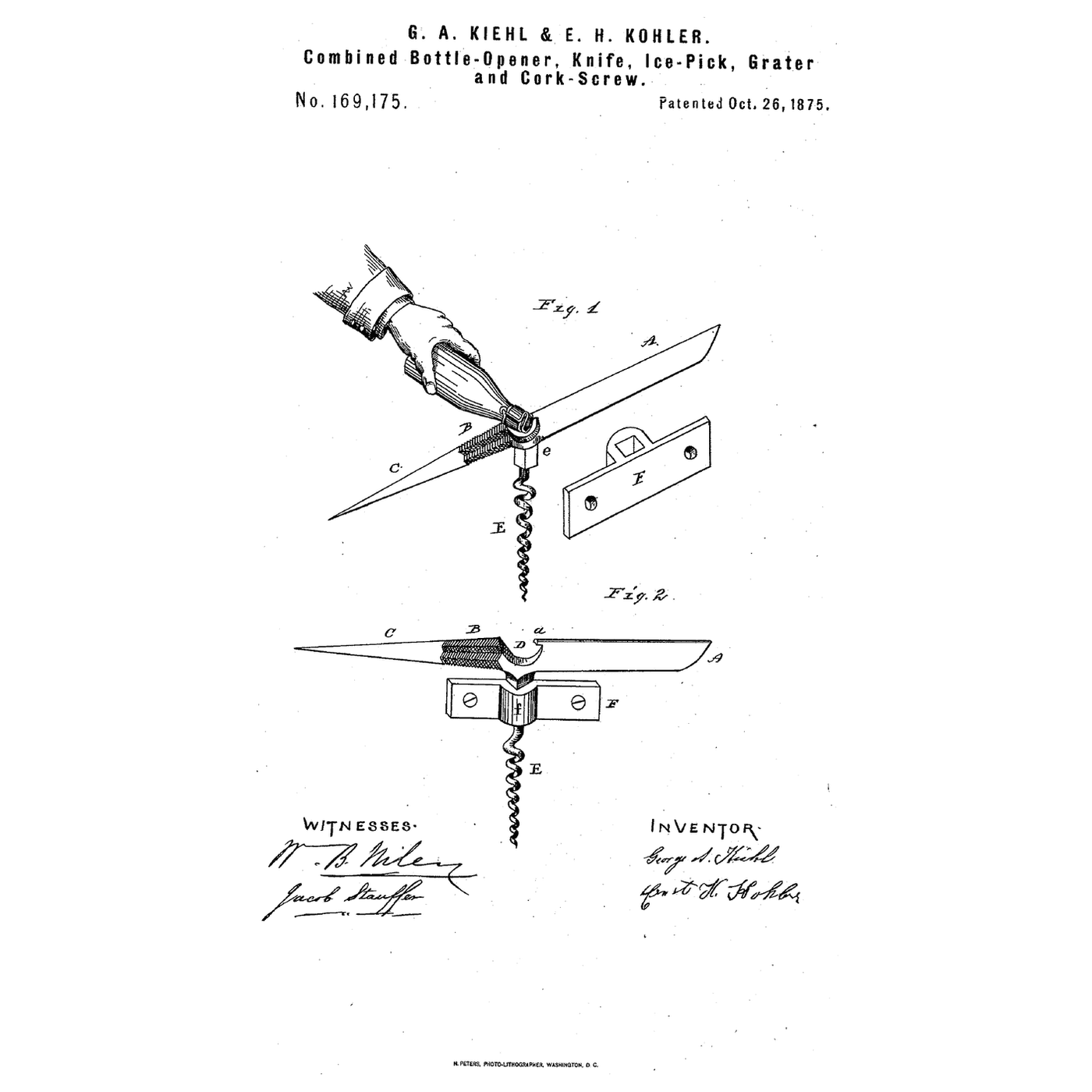
The Socket-Bracket Bar Tool: Bottle Opener, Knife, Ice Pick, Grater and Corkscrew in One
autor: TheChef
Obróbka metali
11
0
0
0
0
0
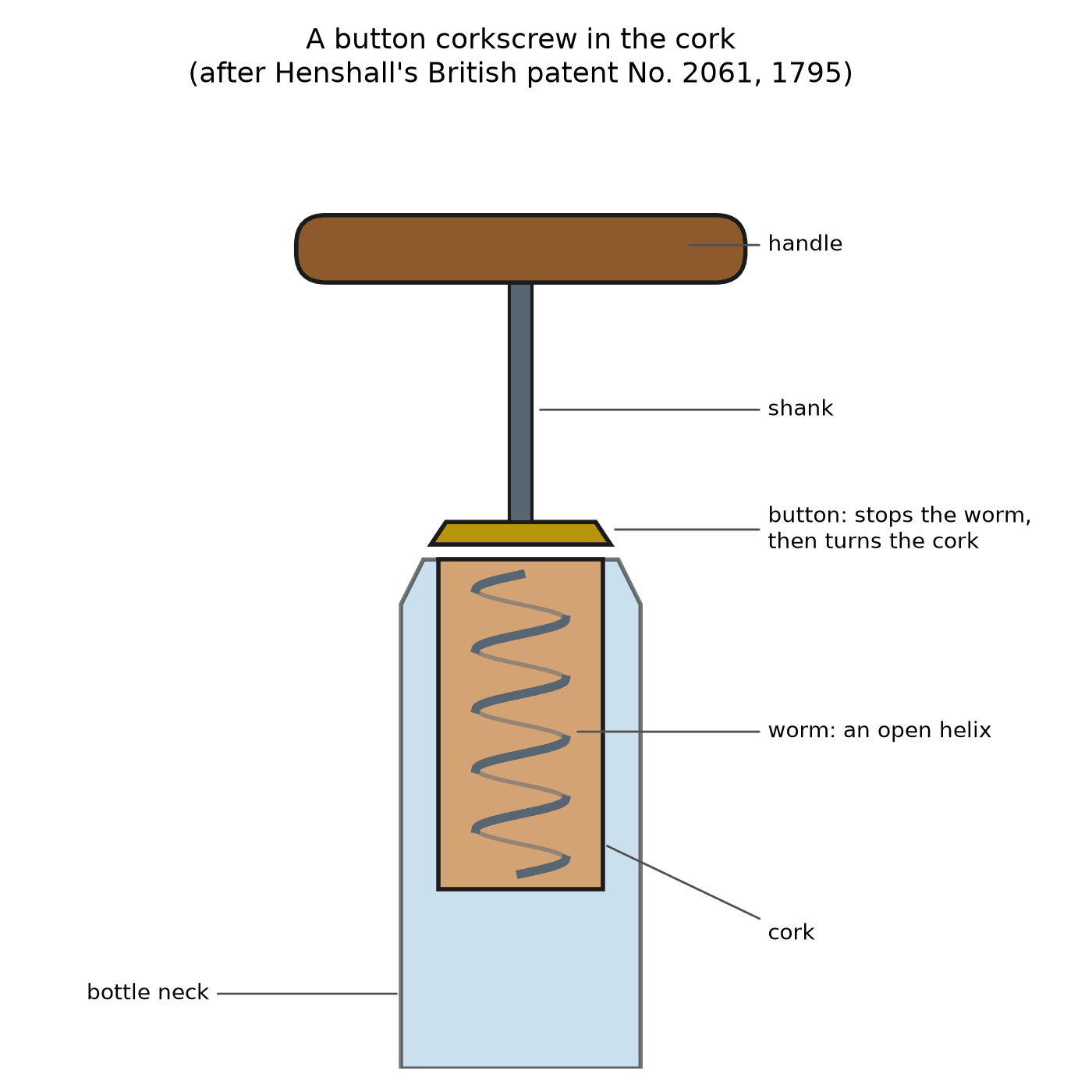
The Button Corkscrew: A Helix That Grips and a Disc That Stops It
autor: YourGrandma
JEDZENIE I NAPOJE
15
0
0
0
0
0
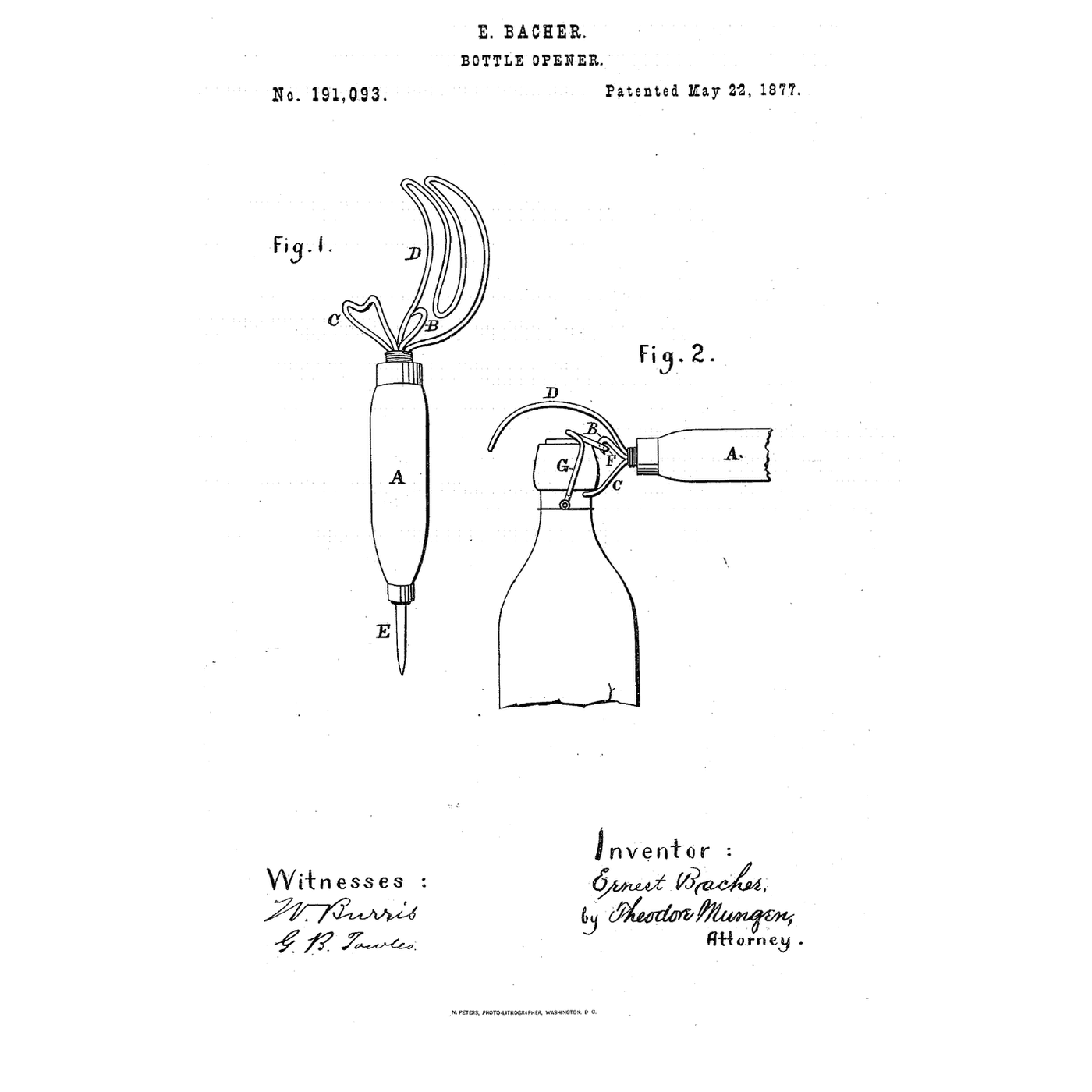
The Hook-and-Guard Bottle Opener: Draw the Wire, Catch the Cork
autor: Forge
Obróbka metali
9
0
0
0
0
0

The Law of the Lever — Archimedes' Balance of Weight and Distance
autor: Martin
Fizyka
60
0
0
0
1
0
CC0 Domena publiczna
Ten plan jest udostępniany na licencji CC0. Możesz go swobodnie kopiować, modyfikować, rozpowszechniać i wykorzystywać do dowolnych celów, bez konieczności uzyskiwania zgody.
Wesprzyj Makera kupując produkty przez jego plan, za co zarabia Prowizja Makera ustalony przez sprzedawców, lub stwórz nową iterację tego planu i dołącz go jako połączenie w swoim własnym planie, aby dzielić się przychodami.