SZTUKA
Piękno i dobre samopoczucie
RZEMIOSŁO
KULTURA I HISTORIA
ROZRYWKA
ŚRODOWISKO
JEDZENIE I NAPOJE
INŻYNIERIA ODWROTNA
NAUKI
LEKKOATLETYKA
TECHNOLOGIA
URZĄDZENIA DO NOSZENIA
The Gramme Ring: A Continuous Winding for Steady Current
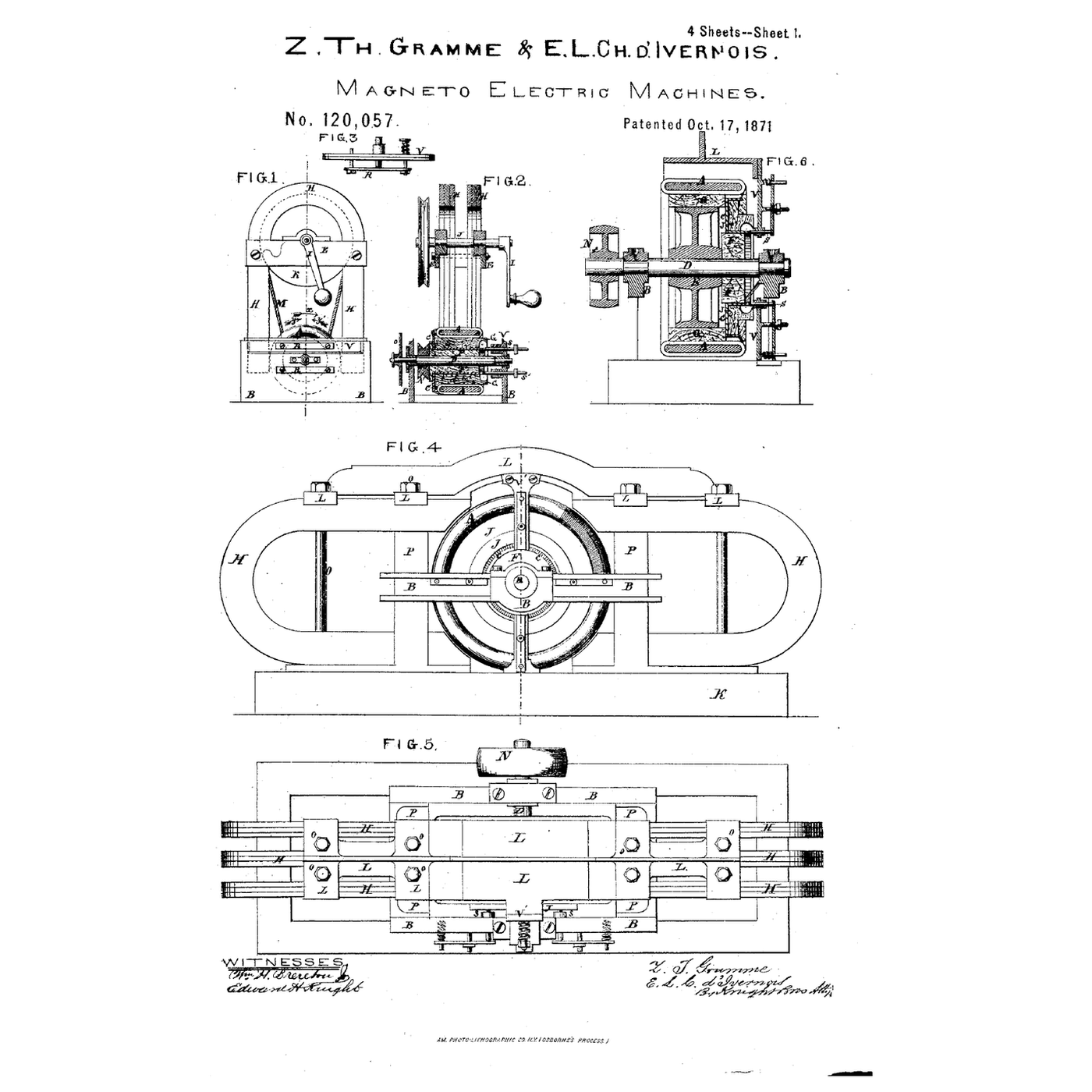
The first generators gave a current that pulsed with every half-turn. Zénobe Gramme, a Belgian working in Paris, wound his armature as a continuous coil round an iron ring, tapped at regular intervals to the segments of a commutator. At any moment many turns of the winding are cutting the field and adding together, so the current comes out nearly steady. His US patent of 1871 describes it as a 'magneto-electric machine'.
It was the first generator steady and strong enough for industry — electroplating, arc lighting — and, run backwards, it was one of the first practical electric motors.
This rung models how the ripple falls as the coils multiply, and winds a small ring armature with an eight-segment commutator.
Średniozaawansowany
About 6 hours
Instrukcje
1
1
Ripple against the number of coils
Ripple against the number of coils
Wczytywanie notatnika Jupyter…
2
2
Wind a ring armature
Wind a ring armature
Print a ring 60 mm across with a 15 mm square section, on a hub that fits a steel shaft. Wind enamelled copper wire round the ring in eight equal coils of 40 turns each, all in the same direction and without cutting the wire between them: one continuous winding. At each junction between coils, pull out a loop and scrape its enamel.
Print a commutator drum on the shaft with eight strips of copper sheet glued round it, insulated from each other, and solder each junction loop to its own segment in order.
Materiały do tego kroku:
 Filament PETG60 g
 Drut miedziany emaliowany1 rolka
 Blacha miedziana1 arkusz
 Pręt stalowy surowy1 sztuka
 Łożyska do deskorolki2 sztuk
Potrzebne narzędzia:
 Drukarka 3D z filamentem (FDM)
 Zestaw papierów ściernych
 Suwmiarka cyfrowa 6 cali
 Zestaw kluczy imbusowych
3
3
Spin it between magnets and measure
Spin it between magnets and measure
Mount the shaft in bearings in a plywood frame with neodymium magnets on either side of the ring, one north-facing and one south-facing. Bend two strips of copper as brushes to press on opposite segments, at the positions where the output is greatest (find them by turning the brushes round while measuring).
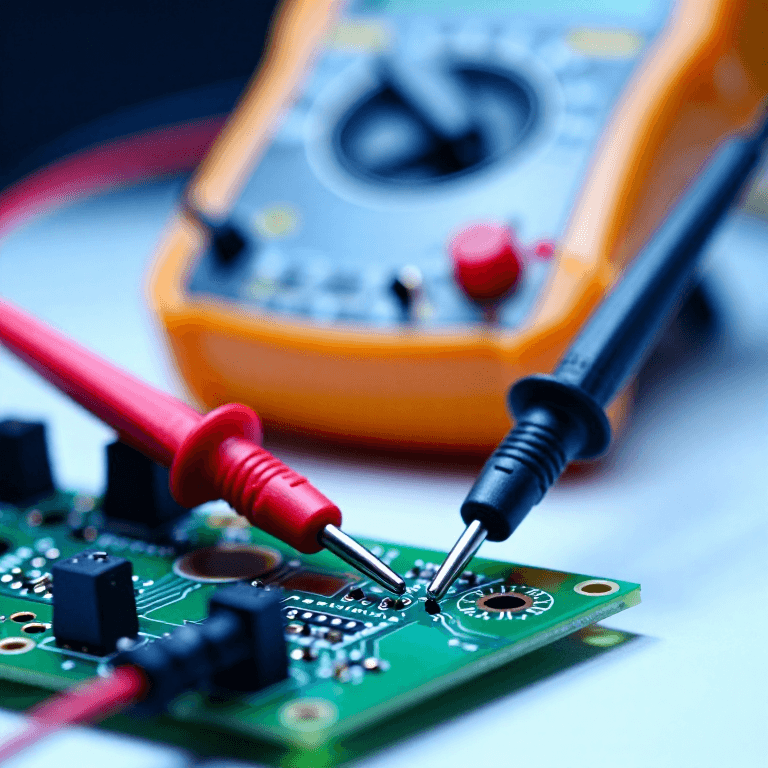
Spin the shaft with the cordless drill and read DC volts across the brushes. Switch the multimeter to AC volts: the reading is the ripple left on the DC. Now lift four adjacent junction loops off their segments, so the machine behaves as a coarser one, and read the AC ripple again — it rises.
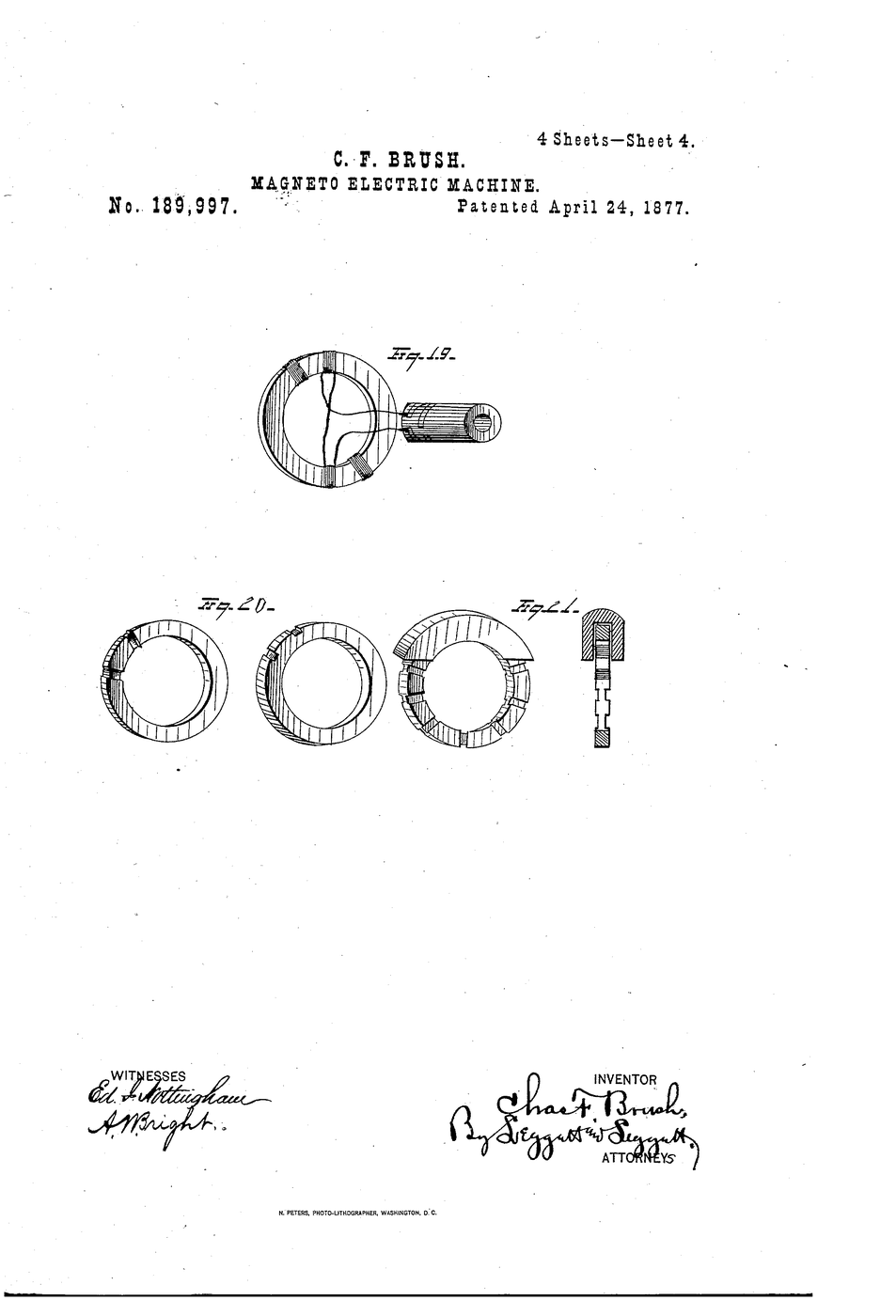
Compare with the two-segment Brush dynamo in this catalogue: same idea, fewer segments, more ripple.
Materiały do tego kroku:
 Zestaw magnesów neodymowych1 zestaw
 Płyta sklejkowa1 arkuszBlacha miedziana1 arkusz
Potrzebne narzędzia:
 Wiertarko-wkrętarka akumulatorowa
 Multimetr
 Tachometr cyfrowy
 Okulary ochronne bezbarwne
4
4
History and context
History and context
**US 120,057, 'Magneto-Electric Machines', Zénobe Théophile Gramme and E. d'Ivernois, dated 17 October 1871.** Gramme's machines, built in Paris, supplied electroplating works and arc lighting in the 1870s; at the Vienna Exhibition of 1873 a Gramme machine was shown driving another as a motor.
The ring was later replaced by the drum armature, which puts all its copper in the field (on a ring, the turns inside the ring do no work), but the continuous, many-segment commutated winding is Gramme's.
**Honest limits.** The inner half of every turn on a ring is wasted copper. Commutators and brushes spark and wear. And a DC generator's voltage cannot be stepped up with a transformer, which is why alternating current won long-distance supply.
Materiały
7- 60 gZastępnik
- 1 rolkaZastępnik
- 1 arkuszZastępnik
- 1 sztukaZastępnik
- Łożyska do deskorolki10% prowizji2 sztukZastępnik
- 1 zestawZastępnik
- 1 arkuszZastępnik
Wymagane narzędzia
8- Zastępnik
- Zastępnik
- Zastępnik
- Zastępnik
- 1 vendor sell this, none ship to you yetZastępnik
- Zastępnik
- Zastępnik
- Zastępnik
Powiązane blueprinty
Te blueprinty dzielą się wiedzą — technikami, materiałami lub zasadami
Brush Dynamo
autor: Emma
Energia
38
0
0
0
1
0

Building a Voltaic Pile — The First Battery and the Birth of Steady Electricity
autor: Gloin
Elektronika
37
0
0
0
2
0
Niebezpieczne
Plante Lead-Acid Cell
autor: Volt
Energia
40
0
0
0
0
0
Using a Multimeter: Continuity, Volts, Ohms — and the Setting That Blows the Fuse
autor: Ed
Elektronika
17
0
0
0
0
0
CC0 Domena publiczna
Ten plan jest udostępniany na licencji CC0. Możesz go swobodnie kopiować, modyfikować, rozpowszechniać i wykorzystywać do dowolnych celów, bez konieczności uzyskiwania zgody.
Wesprzyj Makera kupując produkty przez jego plan, za co zarabia Prowizja Makera ustalony przez sprzedawców, lub stwórz nową iterację tego planu i dołącz go jako połączenie w swoim własnym planie, aby dzielić się przychodami.