Сотрудничество
ИСКУССТВО
КРАСОТА И ЗДОРОВЬЕ
РЕМЕСЛО
КУЛЬТУРА И ИСТОРИЯ
РАЗВЛЕЧЕНИЯ
ЭКОЛОГИЯ
ЕДА И НАПИТКИ
ОБРАТНАЯ ИНЖЕНЕРИЯ
НАУКИ
СПОРТ
ТЕХНОЛОГИИ
НОСИМЫЕ УСТРОЙСТВА
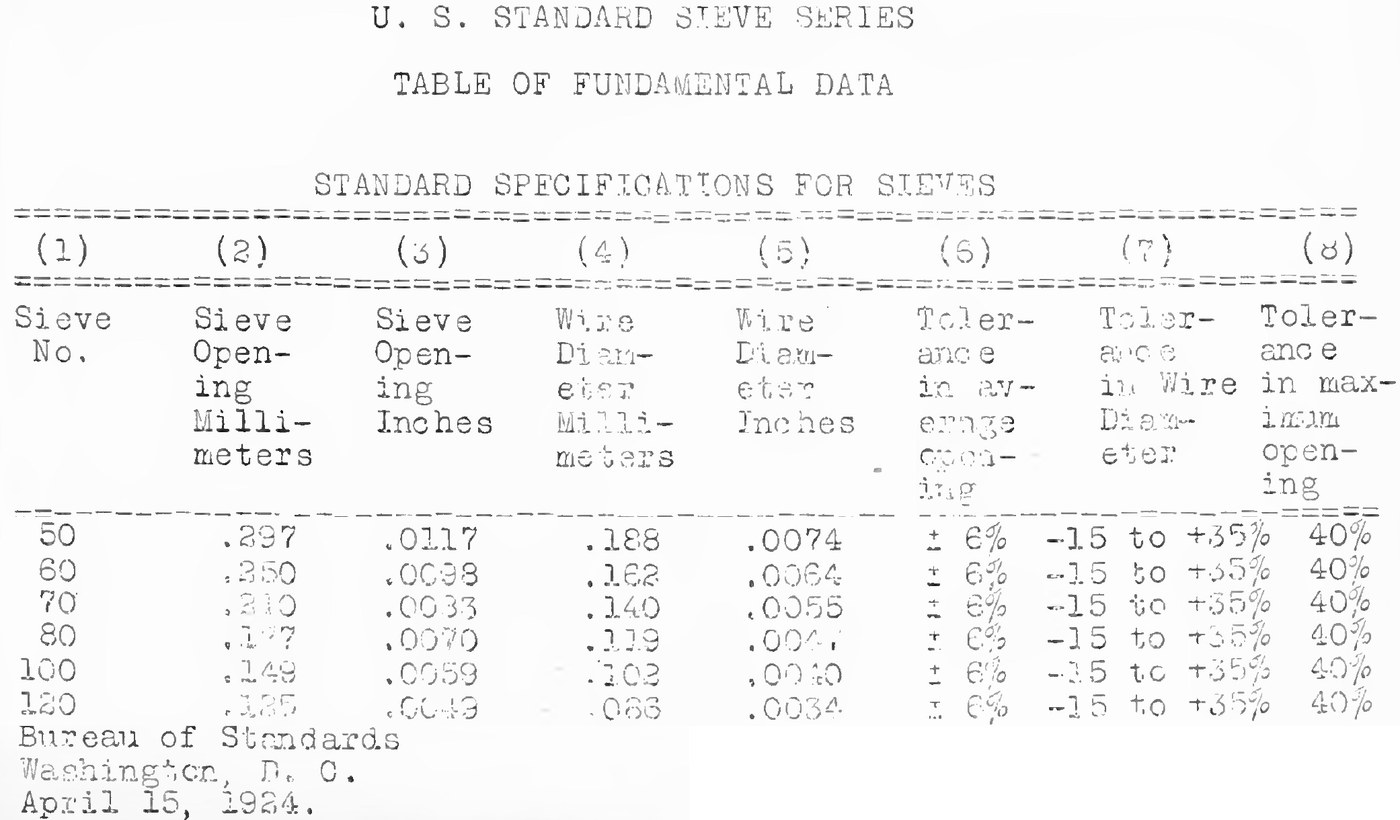

60-Mesh and 80-Mesh Sieves: U.S. Standard Sieves No. 60 and No. 80 (Bureau of Standards, 1924)
Two standard testing sieves made the same way; only the wire and the opening change with the sieve number. Plain-woven brass or bronze wire cloth is soldered smoothly into a round frame about 20 cm (8 in) across.
No. 60 has 0.250 mm openings (the 60-mesh sieve); No. 80 has 0.177 mm openings (the 80-mesh sieve). The finer the cloth, the finer the grains that pass.
Source: Bureau of Standards, Letter Circular 74, Standard Specifications for Sieves (revised 1924). Unknown: the frame metal and the weaving. Picture: the Bureau's table.
Средний
Unknown
Инструкции
1
1
Choose the sieve number
Choose the sieve number
The sieve number sets the wire and the opening (Bureau of Standards table, 1924):
No. 60: opening 0.250 mm (0.0098 in), wire 0.162 mm (0.0064 in).
No. 80: opening 0.177 mm (0.0070 in), wire 0.119 mm (0.0047 in).
The opening is the clear space between adjacent wires. No. 60 passes grains under 0.250 mm; No. 80 passes grains under 0.177 mm.
2
2
Weave the wire cloth
Weave the wire cloth
Weave plain (not twilled) cloth from brass, bronze or other suitable wire of the diameter for your sieve number, spacing the wires so the opening is as in the table each way. Ours: bronze wire. Not given: how it is woven.
Материалы для этого шага:
 Бронзовая проволока1 warp and shoot wires
Необходимые инструменты:
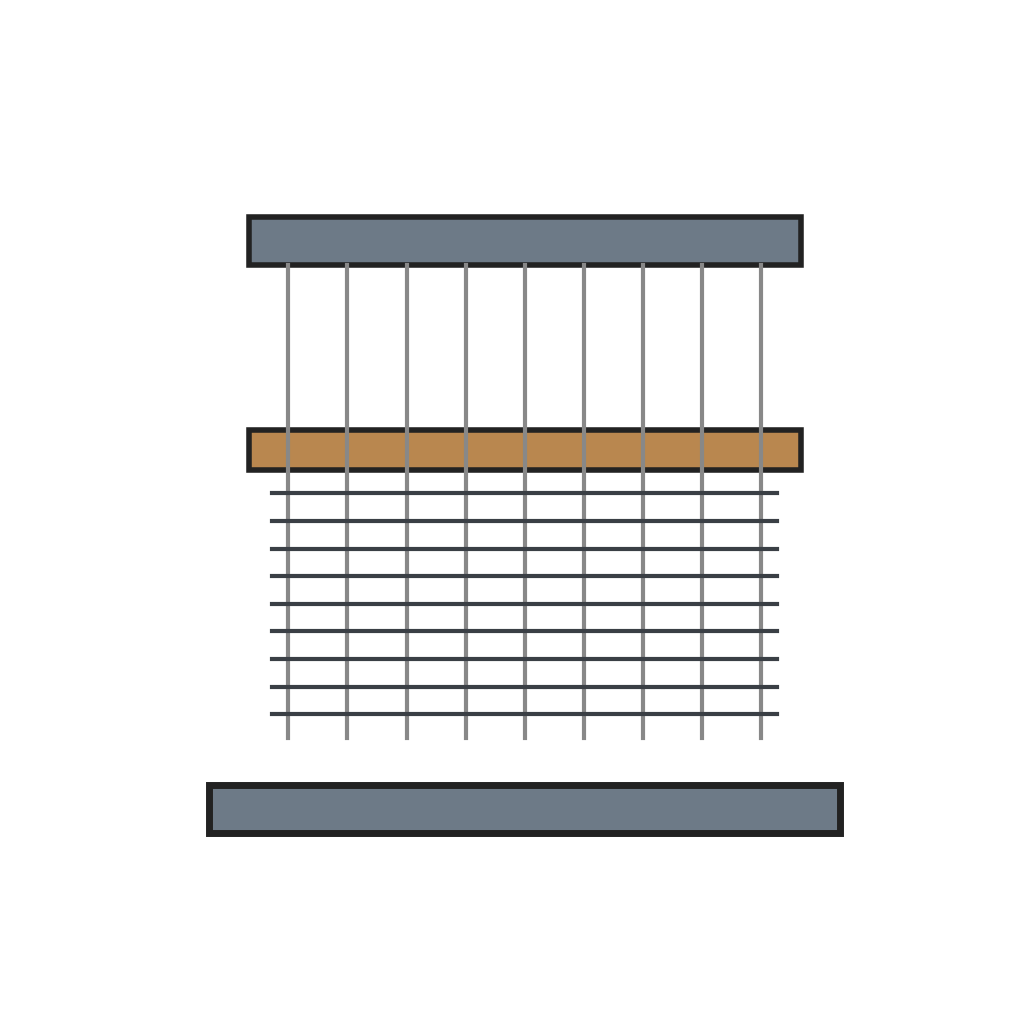 Станок для тканой сетки
3
3
Make the frame
Make the frame
Make a circular frame about 20 cm (8 in) across, with about 5 cm (2 in), or 2.5 cm (1 in), between its top and the cloth. Ours: brass strip. Not given: the frame metal.
Материалы для этого шага:
 Латунная полоса1 frame
Необходимые инструменты:
 Ножницы по металлу
 Паяльник
4
4
Mount the cloth
Mount the cloth
Mount the cloth on the frame without distorting it. Fill the joint between cloth and frame smoothly with solder, so the material being sieved cannot catch in it.
Материалы для этого шага:
 Оловянно-свинцовый припой1 joint
 Флюс1 joint
Необходимые инструменты:
Паяльник5
5
Check it against the tolerances
Check it against the tolerances
Measure the warp and shoot wires separately. For both numbers the average opening must be within ±6 % of the table, the average wire diameter within −15 to +35 %, and no opening may exceed the table opening by more than 40 %. Reject a sieve with punctures, loose or wavy cloth, poor soldering, or too many large openings.
Необходимые инструменты:
 Микрометр
 Увеличительное стекло
Материалы
4- 1 warp and shoot wiresЗаполнитель
- 1 frameЗаполнитель
- 1 jointЗаполнитель
- 1 jointЗаполнитель
Материалы из связанных чертежей

10% атрибуция
120-Mesh Sieve: U.S. Standard Sieve No. 120 (Bureau of Standards, 1924)
от Tex
Физика
4
0
0
0
1
0
10% атрибуция
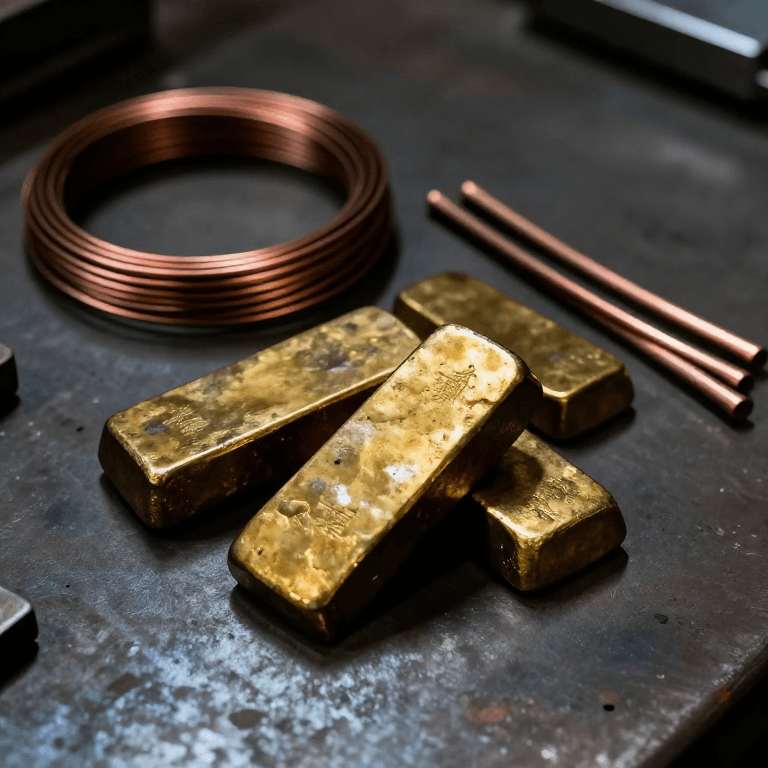
Tin Bronze Ingots, Wire and Rod
от Forge
Металлообработка
52
0
0
0
2
0
10% атрибуция
Brass Sheet, Strip and Rod from an Ingot
от Forge
Металлообработка
36
0
0
0
2
0
Опасно
10% атрибуция
Making Tin-Lead Solder — The Ancient Alloy That Joins Metals Without a Forge
от Peter
Металлообработка
58
0
0
0
3
0
По этому чертежу делают

CC0 Общественное достояние
Этот чертёж выпущен под лицензией CC0. Вы можете свободно копировать, изменять, распространять и использовать эту работу в любых целях без запроса разрешения.
Поддержите мейкера, покупая товары через его чертёж, где он получает Комиссию мейкера установленную продавцами, или создайте новую итерацию этого чертежа и включите его как связь в свой чертёж для распределения дохода.