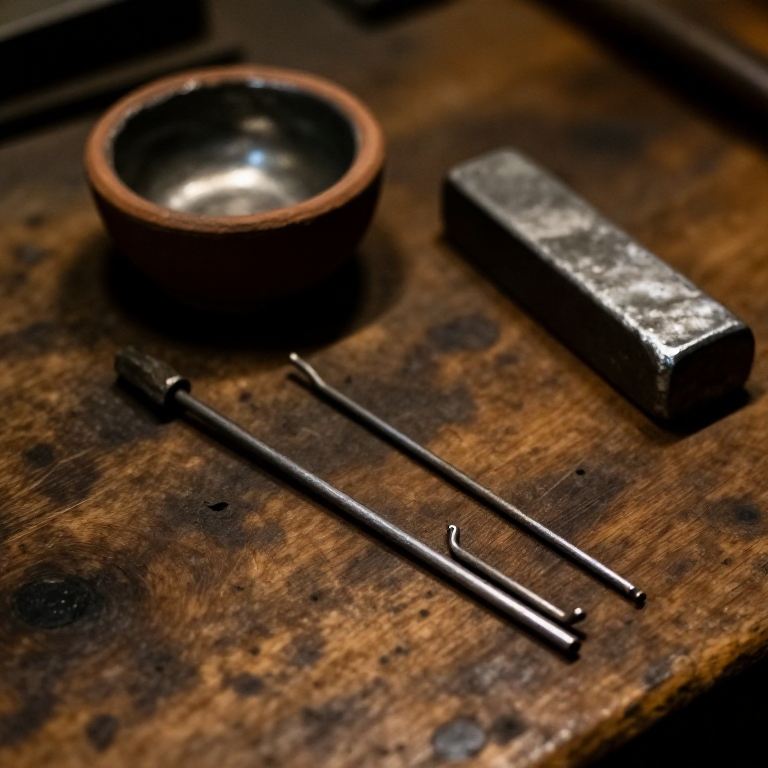


Making Tin-Lead Solder — The Ancient Alloy That Joins Metals Without a Forge
Solder is a low-melting-point alloy — traditionally tin and lead — used to join metals together without heating them to their own melting points. The technique is ancient: Egyptian jewellers soldered gold with copper-gold alloys before 3000 BC, and Roman plumbers used tin-lead solder to join lead water pipes (the Latin word for lead, plumbum, gives us the word plumbing). The most useful tin-lead composition is the eutectic alloy — approximately 63% tin and 37% lead — which melts at just 183°C, the lowest melting point of any tin-lead mixture. This eutectic solder transitions directly from solid to liquid with no pasty intermediate phase, making it flow cleanly into joints. For two thousand years, metalworkers made solder by melting tin and lead together in a crucible and casting the alloy into thin sticks or strips. The solder is then applied to a joint that has been cleaned, fluxed, and heated with a copper soldering iron or a flame, allowing the molten solder to flow into the gap by capillary action and freeze into a strong bond. This blueprint makes tin-lead solder from raw tin and lead ingots.
Опасный контент
Этот чертёж содержит опасные процедуры. Войдите в систему и включите опасный контент в настройках аккаунта, чтобы просмотреть пошаговые инструкции.
ВойтиПо этому чертежу делают

Связанные чертежи
Эти чертежи делятся знаниями — техники, материалы или принципы
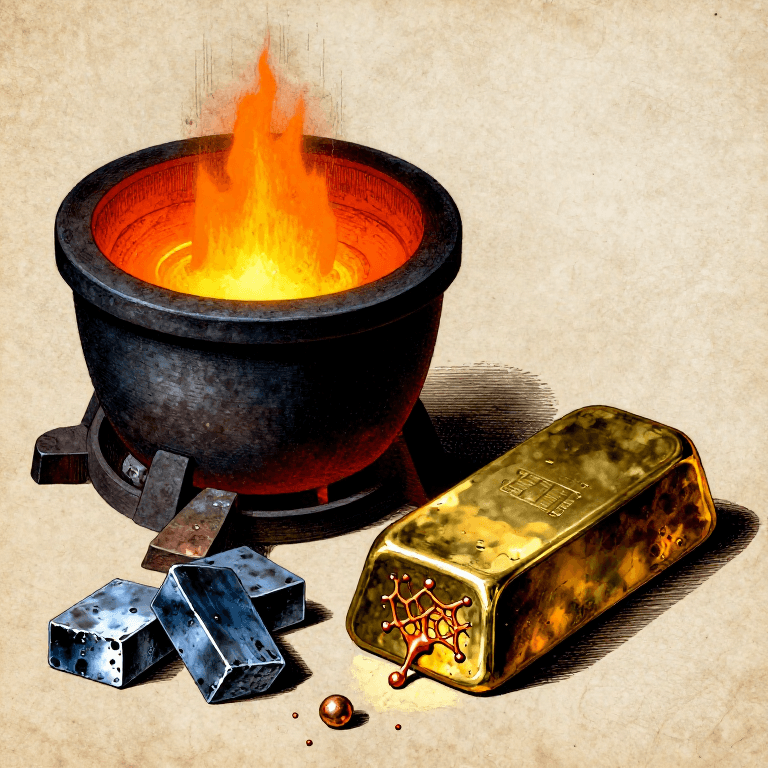
Alloying Brass from Copper and Zinc — The Golden Metal That Is Neither Gold Nor Bronze
от Mary
Металлообработка
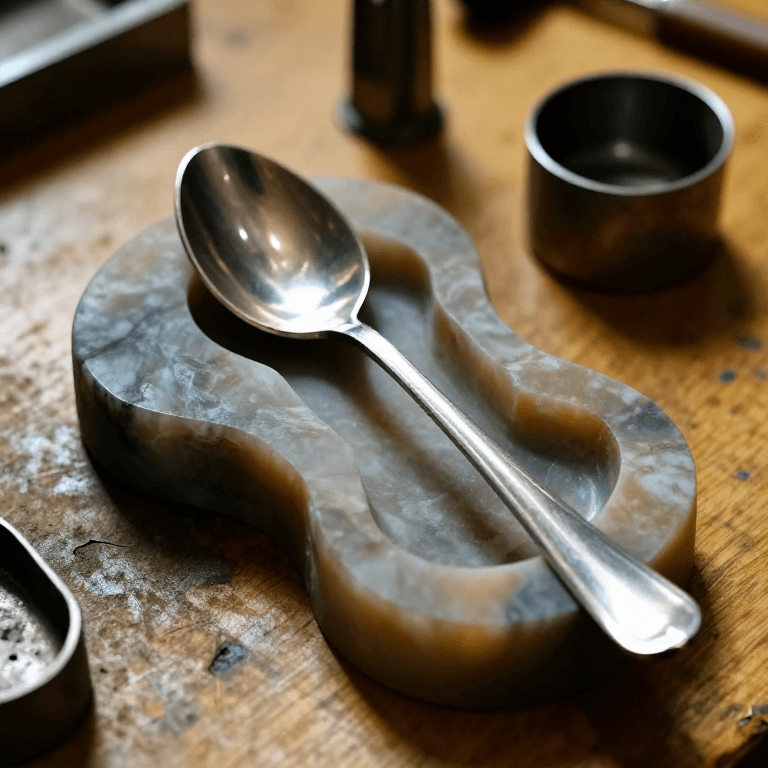
Casting a Pewter Spoon in a Soapstone Mould — Low-Temperature Metal Casting
от Forge
Металлообработка
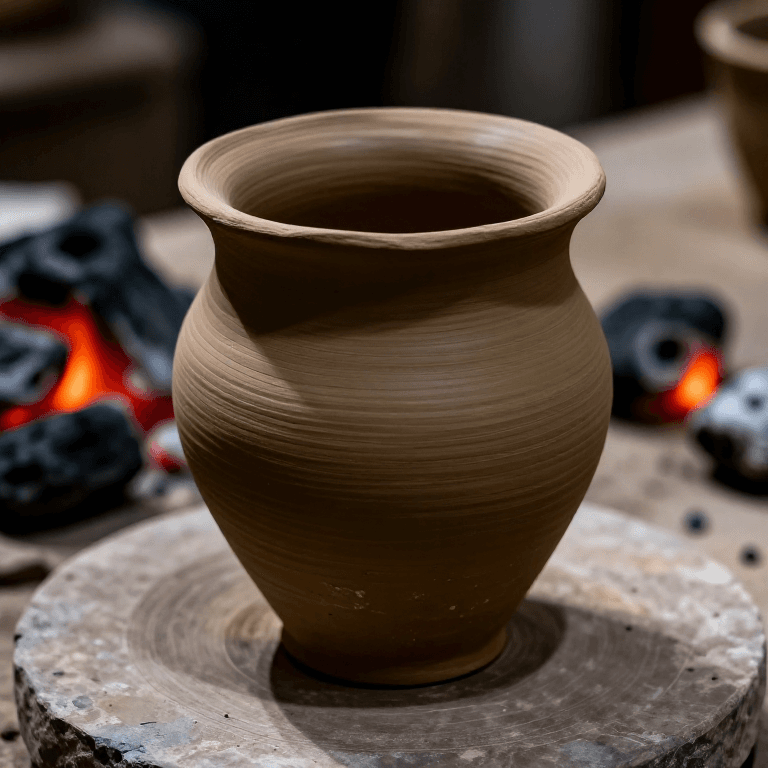
Making a Clay Crucible for Smelting — The Vessel That Holds Molten Metal
от Forge
Металлообработка
CC0 Общественное достояние
Этот чертёж выпущен под лицензией CC0. Вы можете свободно копировать, изменять, распространять и использовать эту работу в любых целях без запроса разрешения.
Поддержите мейкера, покупая товары через его чертёж, где он получает Комиссию мейкера установленную продавцами, или создайте новую итерацию этого чертежа и включите его как связь в свой чертёж для распределения дохода.