
ИСКУССТВО
КРАСОТА И ЗДОРОВЬЕ
РЕМЕСЛО
КУЛЬТУРА И ИСТОРИЯ
РАЗВЛЕЧЕНИЯ
ЭКОЛОГИЯ
ЕДА И НАПИТКИ
ЗЕЛЁНОЕ БУДУЩЕЕ
ОБРАТНАЯ ИНЖЕНЕРИЯ
НАУКИ
СПОРТ
ТЕХНОЛОГИИ
НОСИМЫЕ УСТРОЙСТВА
Striking Fire with Flint and Steel — The Iron Age Upgrade to Fire Starting
Forge

Создано

Forge

26. май 2026NO
5
0
0
0
0

Striking Fire with Flint and Steel — The Iron Age Upgrade to Fire Starting

The moment iron became available, someone struck it against flint and noticed the sparks were hotter and more reliable than the old flint-on-pyrite method. Flint and steel replaced friction fire-starting and flint-on-pyrite across the entire Old World and remained the primary fire-starting technology for over two thousand years — from the Iron Age through the invention of friction matches in the 1830s.

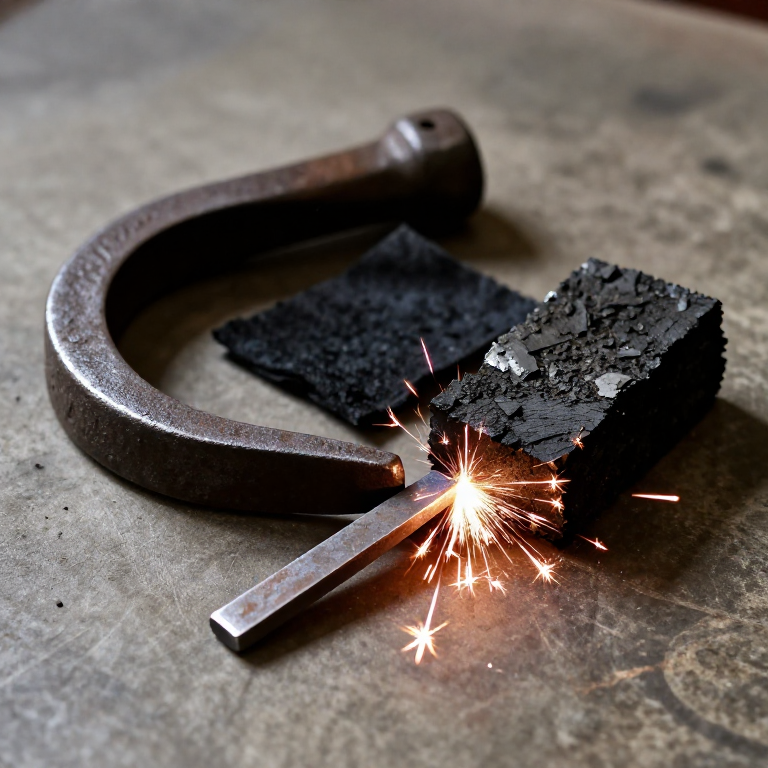
The principle is simple: striking a hardened steel edge sharply against the sharp edge of flint shears off tiny curls of steel. The impact heats these curls to their ignition temperature (about 1,500 °C) and they burn in air as bright white sparks. These sparks are caught in a prepared tinder — charcloth, dried fungus, or charred plant pith — which smoulders and is blown into flame.

The steel used must be high-carbon steel (case-carburised wrought iron or proper spring steel). Soft wrought iron does not produce good sparks — the flint simply scrapes off cold shavings. A properly made fire steel is one of the most important personal tools in pre-match society.

Начинающий
1-2 hours (forging the steel, plus practice)

Инструкции

1

Forge the fire steel blank

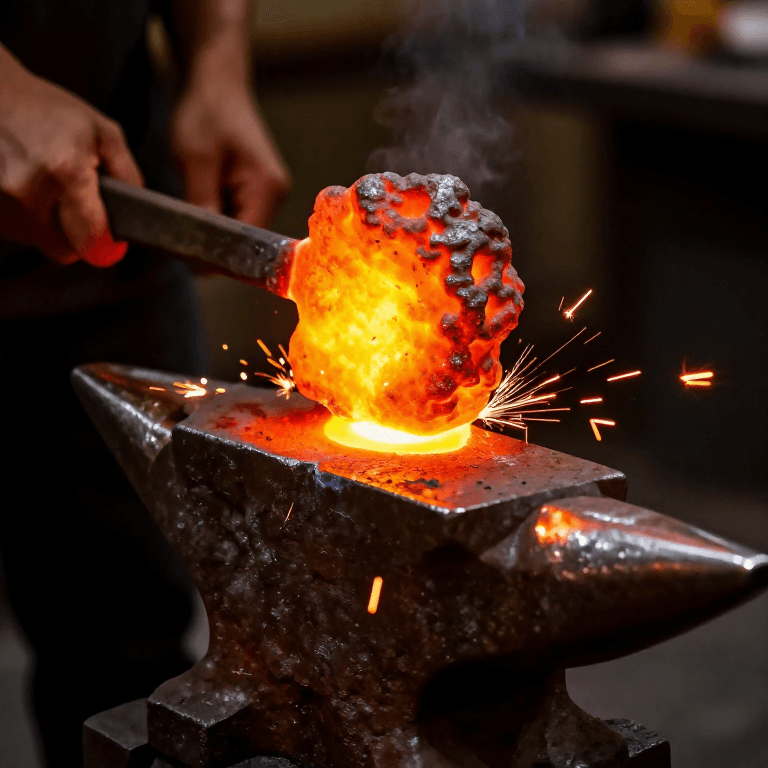
Start with a piece of high-carbon steel about 10 cm long, 2 cm wide, and 5 mm thick. If only wrought iron is available, forge a thin bar and case-carburise it by packing in charcoal at bright orange heat for 2-3 hours. The traditional fire steel shape is a C or D curve — bent so the knuckles fit inside the curve and the flint strikes the outside edge. Draw the bar to an even thickness and bend it around the horn of the anvil.

Материалы для этого шага:

CharcoalCharcoal2 кг

Необходимые инструменты:

Forge Hammer (Cross-Peen)Forge Hammer (Cross-Peen)
Forge TongsForge Tongs
Hearth (Forge Fire)Hearth (Forge Fire)
2

Harden the striking edge

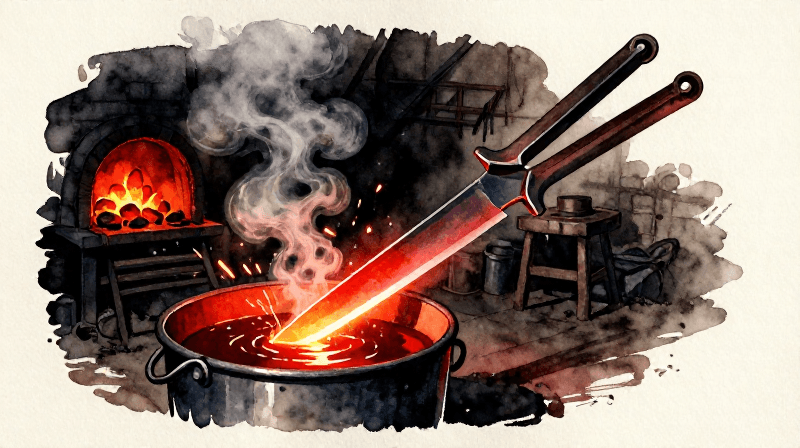
Heat the fire steel to cherry red (about 800 °C) and quench the entire piece in water. The carbon-enriched steel transforms into martensite — extremely hard. Test by drawing a file across the surface: a properly hardened steel resists the file and rings when tapped. Do not temper the fire steel (unlike a knife or chisel) — maximum hardness produces the hottest sparks. A tempered steel is too soft and yields dim, cold sparks.
3

Select and prepare flint

Choose a piece of flint, chert, jasper, or agate with at least one sharp edge. The sharp edge is what shears the steel — a rounded stone produces few sparks. Knap a fresh edge by striking off a flake with a hammerstone to expose a razor-sharp ridge. The flint piece should fit comfortably in one hand, with the sharp striking edge projecting from between the fingers.
4

Make charcloth tinder

Cut small squares (about 3-4 cm) of linen or cotton cloth. Place them in a small tin or clay pot with a tight-fitting lid that has a single small hole. Set the container in the fire. Smoke pours from the hole as the cloth pyrolyses — the heat drives off volatile compounds, leaving pure carbon fibre. When the smoke stops, seal the hole and remove from the fire. The resulting charcloth is jet black, extremely fragile, and catches a spark instantly.
5

Strike sparks onto the tinder

Hold the flint in one hand with a piece of charcloth on top of the flint, touching the sharp edge. Grip the fire steel in the other hand. Strike the steel sharply downward against the flint edge in a glancing blow. The flint shears tiny curls of steel that ignite as white-hot sparks. Direct the sparks onto the charcloth. When a spark lands on the charcloth, it glows red and begins to spread — a single spark is enough.
6

Blow the ember into flame

Transfer the glowing charcloth into a nest of fine dry tinder — shredded bark, dried grass, or milkweed fluff. Fold the tinder nest gently around the ember and blow steadily. The ember heats the surrounding tinder until it reaches ignition temperature. Within 10-20 seconds of steady blowing, the tinder nest bursts into flame. Place the burning nest under prepared kindling to build the fire.

Материалы

1

Требуемые инструменты

3

Материалы из связанных чертежей

CC0 Общественное достояние

Этот чертёж выпущен под лицензией CC0. Вы можете свободно копировать, изменять, распространять и использовать эту работу в любых целях без запроса разрешения.

Поддержите мейкера, покупая товары через его чертёж, где он получает Комиссию мейкера установленную продавцами, или создайте новую итерацию этого чертежа и включите его как связь в свой чертёж для распределения дохода.

Обсуждение

(0)

Войти чтобы присоединиться к обсуждению

Загрузка комментариев...