

Riving Planks from a Log — Splitting Timber Along the Grain with Wedges
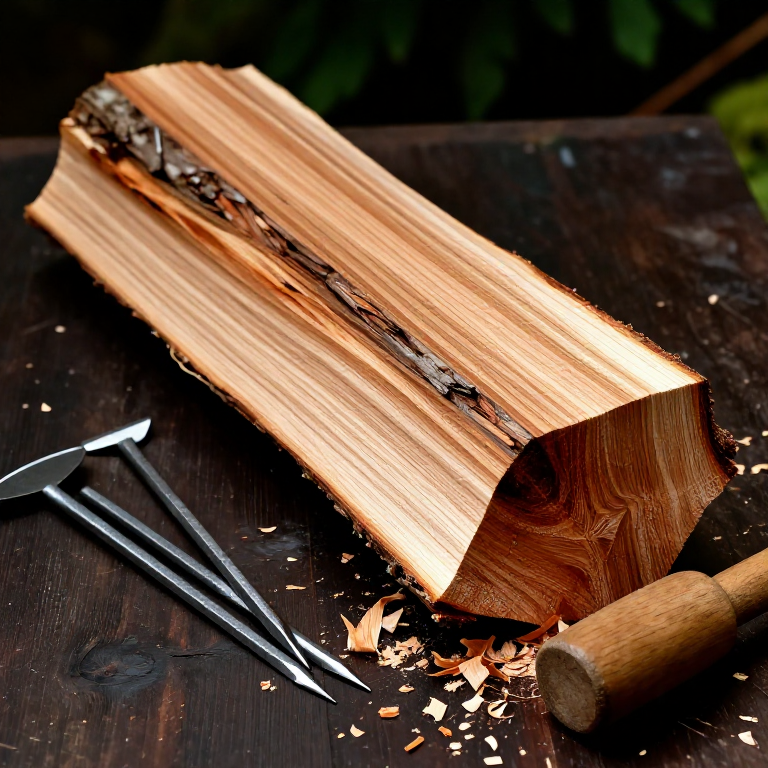
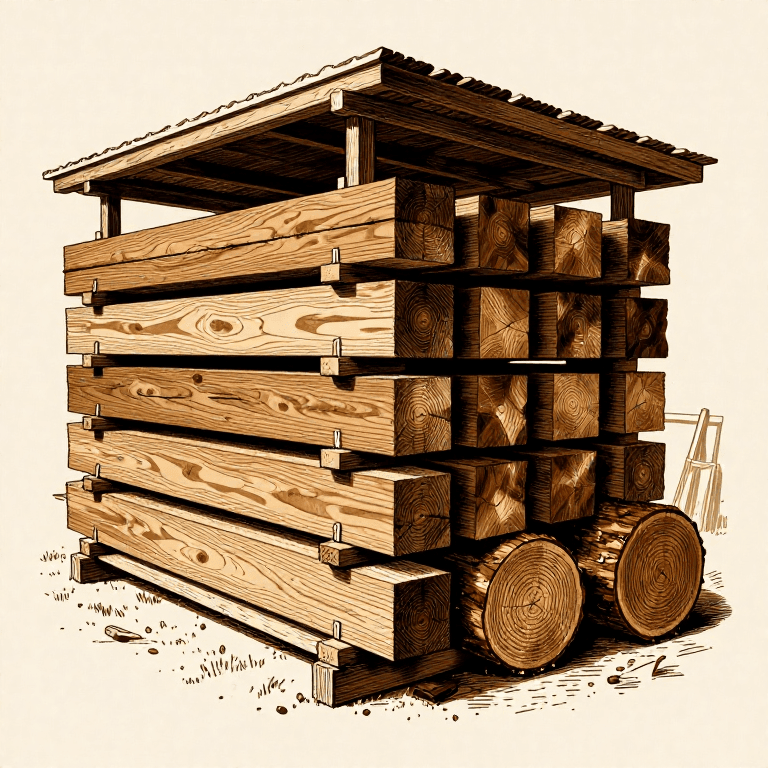
Before sawmills, every plank was riven — split from a log using wedges and mallets. Riving exploits the natural grain of the wood: a wedge driven into the end grain propagates a crack that follows the fibres, producing a plank that is stronger than any sawn board because no fibres are cut across. Every Viking longship, every medieval roof, and every Iron Age door was built from riven timber.
The technique is simple but requires reading the wood. A straight-grained log splits cleanly into halves, quarters, and eighths. Each successive split reduces the section until planks of the desired thickness are reached. Crooked grain, knots, or spiral growth cause the split to run off-line, ruining the plank. Selecting the right log is half the skill.
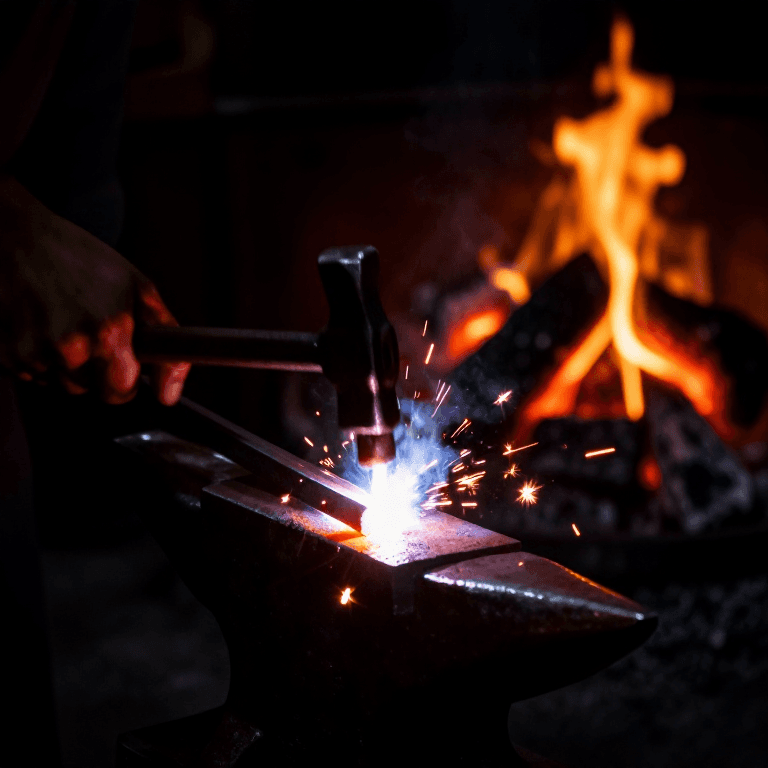
Iron wedges transformed riving from a slow stone-age process into an efficient production method. A smith's iron wedge driven by a wooden maul splits a log in minutes. Combined with an iron drawknife for smoothing, riving produces finished planks faster than pit-sawing and with superior strength.
Инструкции
Select a straight-grained log
Select a straight-grained log
Материалы для этого шага:
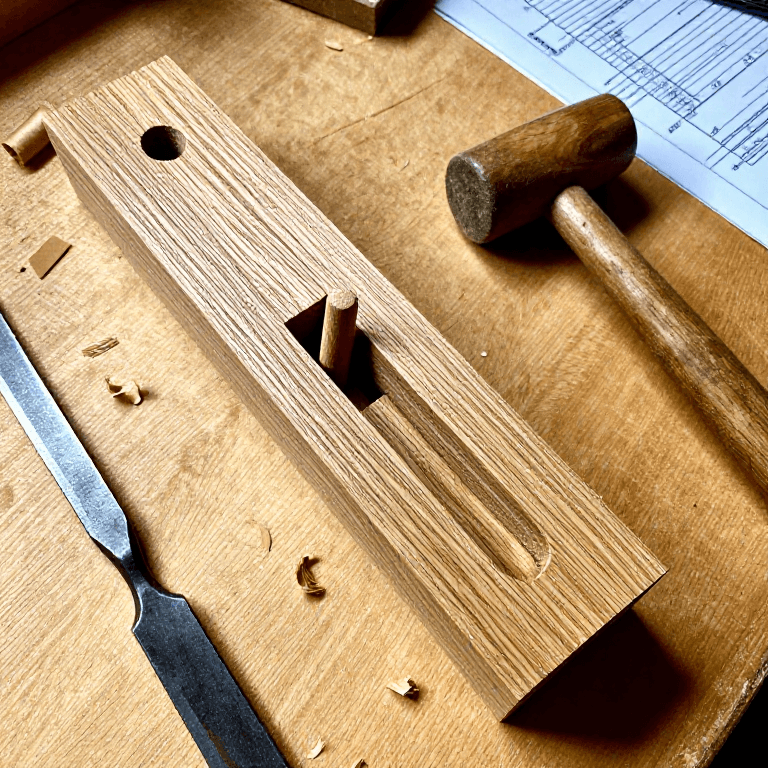
 Дубовая доска (красный дуб)1 штука
Split the log in half
Split the log in half
Необходимые инструменты:
 Кузнечный молот
 Набор стальных клиньев
 Кувалда
Quarter each half
Quarter each half
Rive planks from the quarters
Rive planks from the quarters
Необходимые инструменты:
 Колун-фро (froe)
 Деревянная киянка
Correct wandering splits
Correct wandering splits
Smooth the riven surface
Smooth the riven surface
Необходимые инструменты:
 Скобель
 Скамья-зажим строгальщика
 Тесло
ТеслоМатериалы
1- 1 штукаЗаполнитель
Требуемые инструменты
8- Заполнитель
- Заполнитель
- Заполнитель
- Заполнитель
- Заполнитель
- Заполнитель
- Заполнитель
- Заполнитель
Материалы из связанных чертежей
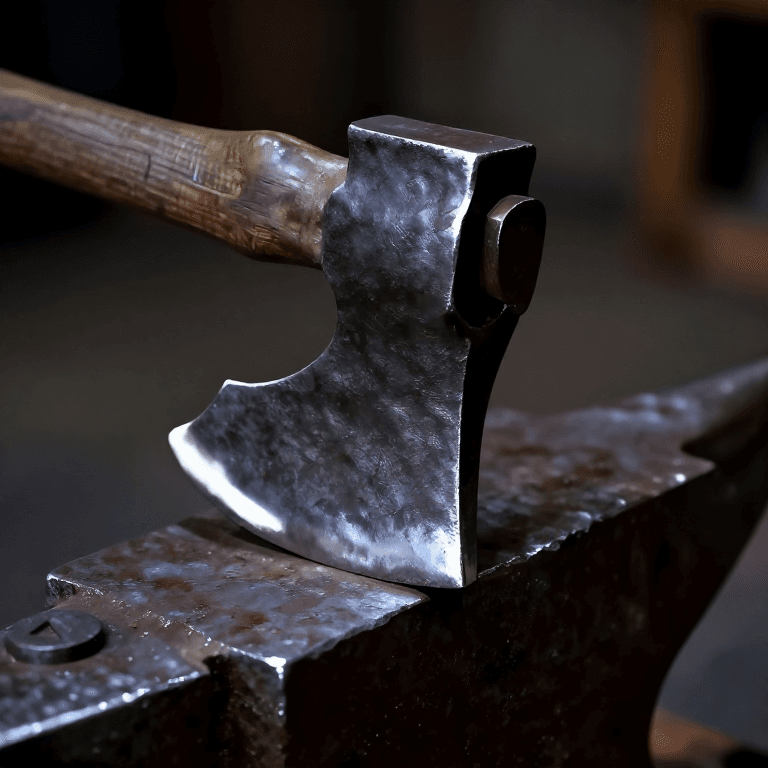
По этому чертежу делают

Связанные чертежи
Эти чертежи делятся знаниями — техники, материалы или принципы
CC0 Общественное достояние
Этот чертёж выпущен под лицензией CC0. Вы можете свободно копировать, изменять, распространять и использовать эту работу в любых целях без запроса разрешения.
Поддержите мейкера, покупая товары через его чертёж, где он получает Комиссию мейкера установленную продавцами, или создайте новую итерацию этого чертежа и включите его как связь в свой чертёж для распределения дохода.