ИСКУССТВО
КРАСОТА И ЗДОРОВЬЕ
РЕМЕСЛО
КУЛЬТУРА И ИСТОРИЯ
РАЗВЛЕЧЕНИЯ
ЭКОЛОГИЯ
ЕДА И НАПИТКИ
ОБРАТНАЯ ИНЖЕНЕРИЯ
НАУКИ
СПОРТ
ТЕХНОЛОГИИ
НОСИМЫЕ УСТРОЙСТВА
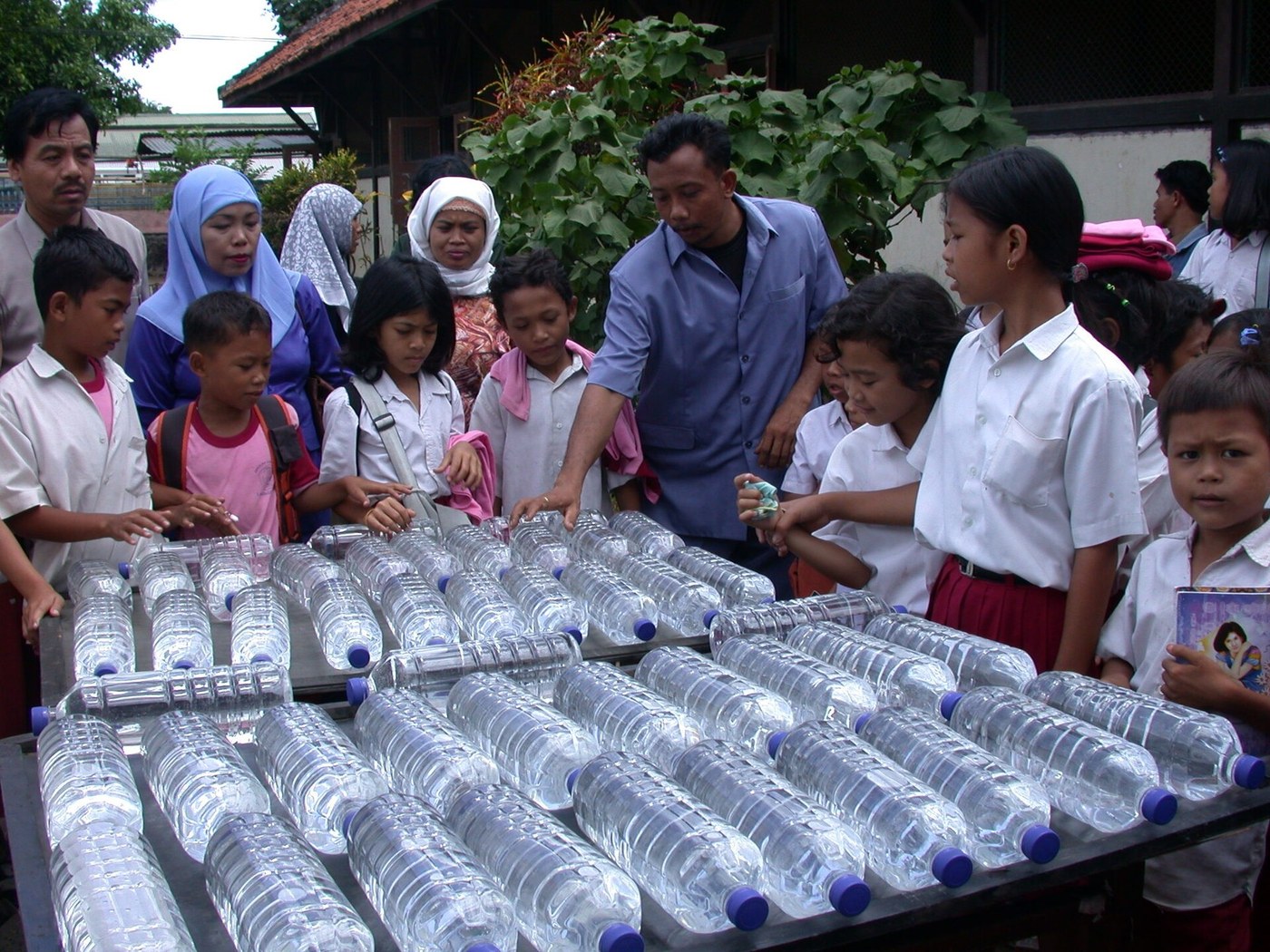


SODIS: Disinfecting Water with Sunlight
Every rung so far needed something: alum, a kiln, graphite rods, a lamp, a pump. This one needs a clear plastic bottle and a sunny day, and it is endorsed by the World Health Organization for exactly that reason.
Aftim Acra and colleagues at the American University of Beirut showed in the early 1980s that sunlight in a transparent bottle inactivates the organisms that cause diarrhoeal disease. Two things do the work together: UV-A in the sunlight damages the cells directly, and the heat makes them far more vulnerable to it — above about 45 °C the two effects multiply rather than add. You will run it properly, with a control, and measure the one variable that decides whether it worked.
Начинающий
1 day
Инструкции
1
1
Choose the right bottle
Choose the right bottle
Use a clear PET drinks bottle of 2 litres or less, in good condition. Scrub off the label so light reaches the whole volume.
Glass is the wrong choice here and the reason is precise: ordinary window and bottle glass blocks most UV-A, which is the part doing the killing. PET passes it. Avoid scratched or cloudy bottles — the haze scatters the light you need — and avoid anything over 2 litres, because light cannot reach the middle of a deeper container.
Необходимые инструменты:
 Пластиковая бутылка для напитков (2 л)
2
2
Filter first if the water is cloudy
Filter first if the water is cloudy
Hold a filled bottle over a newspaper headline at arm's length. If you can read the text through it, the water is clear enough. If not, it must be settled or filtered first.
This is the same shadow problem the UV lamp had, and it is the thread running through the whole batch: a microbe hiding behind a particle of clay receives no dose at all. SODIS has a firm published limit of about 30 NTU turbidity, and the headline test is the field version of it.
3
3
Fill, aerate, and cap
Fill, aerate, and cap
Fill each bottle three-quarters, shake hard for twenty seconds to drive oxygen into the water, then top up and cap tightly.
The shake matters more than it looks. Dissolved oxygen lets the UV-A produce reactive oxygen species inside the cells, and that photo-oxidative damage is a large part of the killing. Water straight from a deep well with little dissolved oxygen disinfects measurably more slowly if you skip this.
Необходимые инструменты:
 Секундомер
4
4
Lay them on metal, not on grass
Lay them on metal, not on grass
Put the bottles on their side — never upright — on a corrugated iron roof, or on a board covered with foil, in full sun for six hours. If it is cloudy for more than half the day, leave them for two full days.
On their side because a lying bottle presents a short light path and a large sunlit area; upright, the sun has to penetrate the whole depth. On metal because the reflected light adds dose and, more importantly, the hot surface pushes the water past 45 °C where heat and light start multiplying each other. Grass does neither.
Материалы для этого шага:
 Алюминиевая фольга1 рулон
Необходимые инструменты:
 Термометр
5
5
The temperature and the dose
The temperature and the dose
Загрузка блокнота Jupyter…
Необходимые инструменты:
Термометр6
6
Run a control, or you have measured nothing
Run a control, or you have measured nothing
Treat two bottles identically except that one is wrapped in foil, completely dark, and sits beside the other all day at the same temperature.
Without it you cannot separate what the sun did from what simply sitting in a warm bottle did. This is the whole discipline of the thing: a control is not extra work, it is what turns an afternoon in the sun into a measurement. If you have access to a simple coliform test, run both bottles and the untreated source — three samples, one comparison.
Материалы для этого шага:
Алюминиевая фольга1 рулонНеобходимые инструменты:
Пластиковая бутылка для напитков (2 л)7
7
Drink from the bottle it was treated in
Drink from the bottle it was treated in
Leave the water in its bottle and drink straight from it. Every time you decant treated water into another container you risk putting back what you just spent the day removing — SODIS leaves no residual, so there is nothing to protect it from a dirty cup.
Reuse bottles until they go hazy or brittle, then replace them; a scratched bottle passes less UV-A and treats less reliably. Concerns about PET leaching have been tested repeatedly under exactly these conditions and the measured levels sit far below drinking-water limits — a fact worth knowing, because it is the objection this method always meets.
Материалы
1- 1 рулонЗаполнитель
Связанные чертежи
Эти чертежи делятся знаниями — техники, материалы или принципы




CC0 Общественное достояние
Этот чертёж выпущен под лицензией CC0. Вы можете свободно копировать, изменять, распространять и использовать эту работу в любых целях без запроса разрешения.
Поддержите мейкера, покупая товары через его чертёж, где он получает Комиссию мейкера установленную продавцами, или создайте новую итерацию этого чертежа и включите его как связь в свой чертёж для распределения дохода.