ИСКУССТВО
КРАСОТА И ЗДОРОВЬЕ
РЕМЕСЛО
КУЛЬТУРА И ИСТОРИЯ
РАЗВЛЕЧЕНИЯ
ЭКОЛОГИЯ
ЕДА И НАПИТКИ
ОБРАТНАЯ ИНЖЕНЕРИЯ
НАУКИ
СПОРТ
ТЕХНОЛОГИИ
НОСИМЫЕ УСТРОЙСТВА
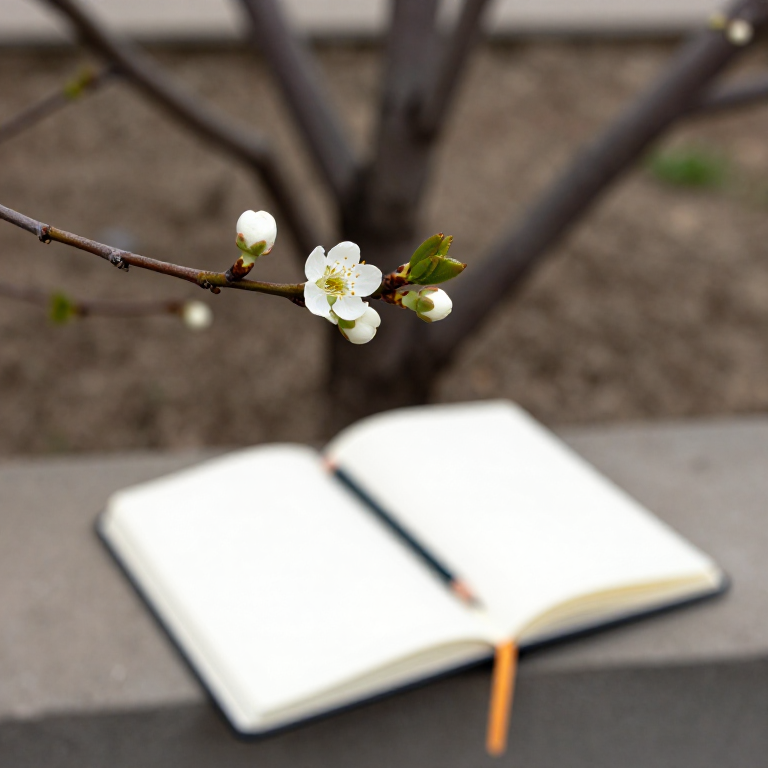


The Phenology Record: Writing Down When Things Happen
Every other rung in this batch measures how much or how many. This one measures WHEN, and it needs no equipment at all — only a date, a species, an event, and the discipline to write it down every year.
Robert Marsham began recording his 'Indications of Spring' in Norfolk in 1736: the first hawthorn leaf, the first swallow, the first frog spawn. His family continued it for two centuries, and that unbroken series is now one of the most valuable biological records in existence — because nobody could have designed it in advance, and nobody can go back and collect it.
Phenology is the cheapest science an individual can do and the one where a careful amateur contributes most. The only requirement is that you keep doing it, and that you record the same event the same way each year.
Начинающий
ongoing
Инструкции
1
1
Choose events with an unambiguous definition
Choose events with an unambiguous definition
Pick events that are either clearly happening or clearly not: first open flower, first ripe fruit, first leaf fully unfolded, last leaf fallen, first frog spawn, first swallow seen.
Then write your definition down and never change it. 'First flowering' can mean the first bud showing colour, the first fully open flower, or the first day the plant looks generally in flower — and these differ by a fortnight. Which you choose does not matter; changing it silently in year six destroys the series.
Необходимые инструменты:
 Полевой блокнот
2
2
Watch the same individuals, in the same places
Watch the same individuals, in the same places
Choose specific trees, specific ponds, specific patches, and mark or photograph them.
A different oak fifty metres away in a frost hollow will leaf a week later, so wandering between individuals adds a swing larger than the signal you are looking for. Pick ones you pass anyway — on the way to work, in the garden, at the bus stop — because the record only survives if observing costs you almost nothing.
Необходимые инструменты:
 КомпасПолевой блокнот
 Набор геодезических флажков и колышков
3
3
Record absence as well as presence
Record absence as well as presence
Note the dates you LOOKED and saw nothing, not just the date you finally saw something.
A 'first flowering' date means very little without knowing when you last checked: if you looked on the 3rd and again on the 24th, the true first day is somewhere in three weeks. Recording the previous negative visit turns a date into a date with an error bar, and that is the difference between an anecdote and data.
Необходимые инструменты:
Полевой блокнот4
4
Record the weather alongside it
Record the weather alongside it
Keep your phenology record next to, or inside, the weather record from the previous batch.
Phenological dates are driven mostly by accumulated warmth, so the date on its own is a result without an explanation. With temperatures beside it you can test whether an early spring was warm or merely early, and that is the question worth asking. This pairing is exactly why the two batches sit next to each other.
Необходимые инструменты:
Полевой блокнот5
5
Reading a series: trends, warmth and how long before it means anything
Reading a series: trends, warmth and how long before it means anything
Загрузка блокнота Jupyter…
Необходимые инструменты:
Полевой блокнот6
6
Send it somewhere it will outlive you
Send it somewhere it will outlive you
Submit your records to a national phenology network, and keep your own copy.
A single garden's record is interesting; ten thousand gardens is a map of a continent's spring, and that is a thing no institution could fund. Submitting also means the record survives a house move, a flood or a death — which is how most private records end. Marsham's survived because it was published.
Необходимые инструменты:
Полевой блокнотСвязанные чертежи
Эти чертежи делятся знаниями — техники, материалы или принципы

CC0 Общественное достояние
Этот чертёж выпущен под лицензией CC0. Вы можете свободно копировать, изменять, распространять и использовать эту работу в любых целях без запроса разрешения.
Поддержите мейкера, покупая товары через его чертёж, где он получает Комиссию мейкера установленную продавцами, или создайте новую итерацию этого чертежа и включите его как связь в свой чертёж для распределения дохода.