ИСКУССТВО
КРАСОТА И ЗДОРОВЬЕ
РЕМЕСЛО
КУЛЬТУРА И ИСТОРИЯ
РАЗВЛЕЧЕНИЯ
ЭКОЛОГИЯ
ЕДА И НАПИТКИ
ОБРАТНАЯ ИНЖЕНЕРИЯ
НАУКИ
СПОРТ
ТЕХНОЛОГИИ
НОСИМЫЕ УСТРОЙСТВА
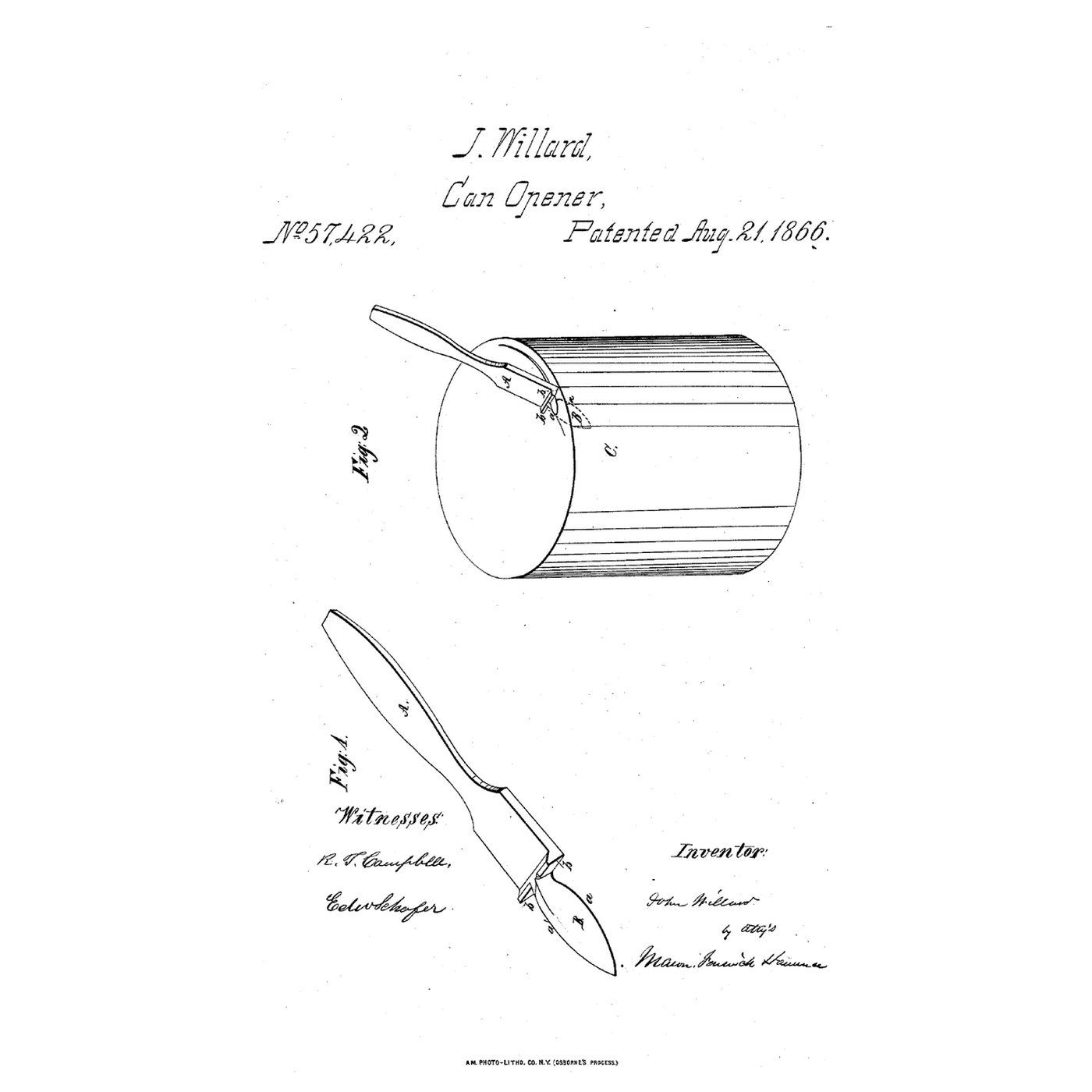


The Shouldered-Blade Can Opener: The Shoulders Are the Fulcrum
A hermetically sealed tin can was opened with a knife or a chisel, which slips and tears the metal.
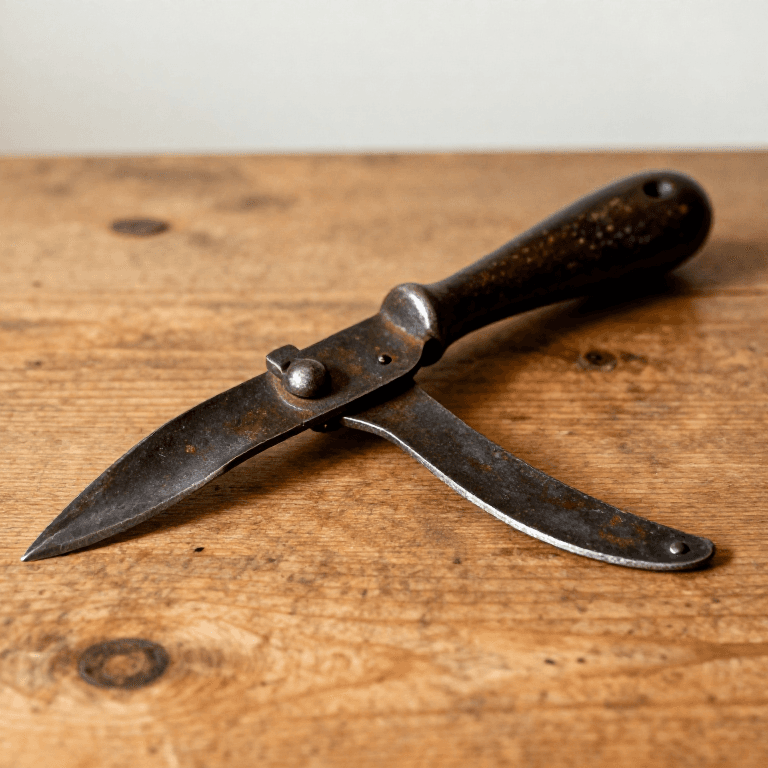
John Willard of Norwich, Connecticut, received US 57,422, dated 21 August 1866, for an instrument for opening tin cans made of one piece of metal: a pointed blade at right angles to the handle, ending in two right-angle shoulders that rest on the can top as the fulcrum and press the cut edges down as the blade advances.
This rung works out the force the lever saves, then forges the opener from flat bar and opens a can with it.
Средний
About 3 hours
Инструкции
1
1
Cutting force and hand force
Cutting force and hand force
Загрузка блокнота Jupyter…
2
2
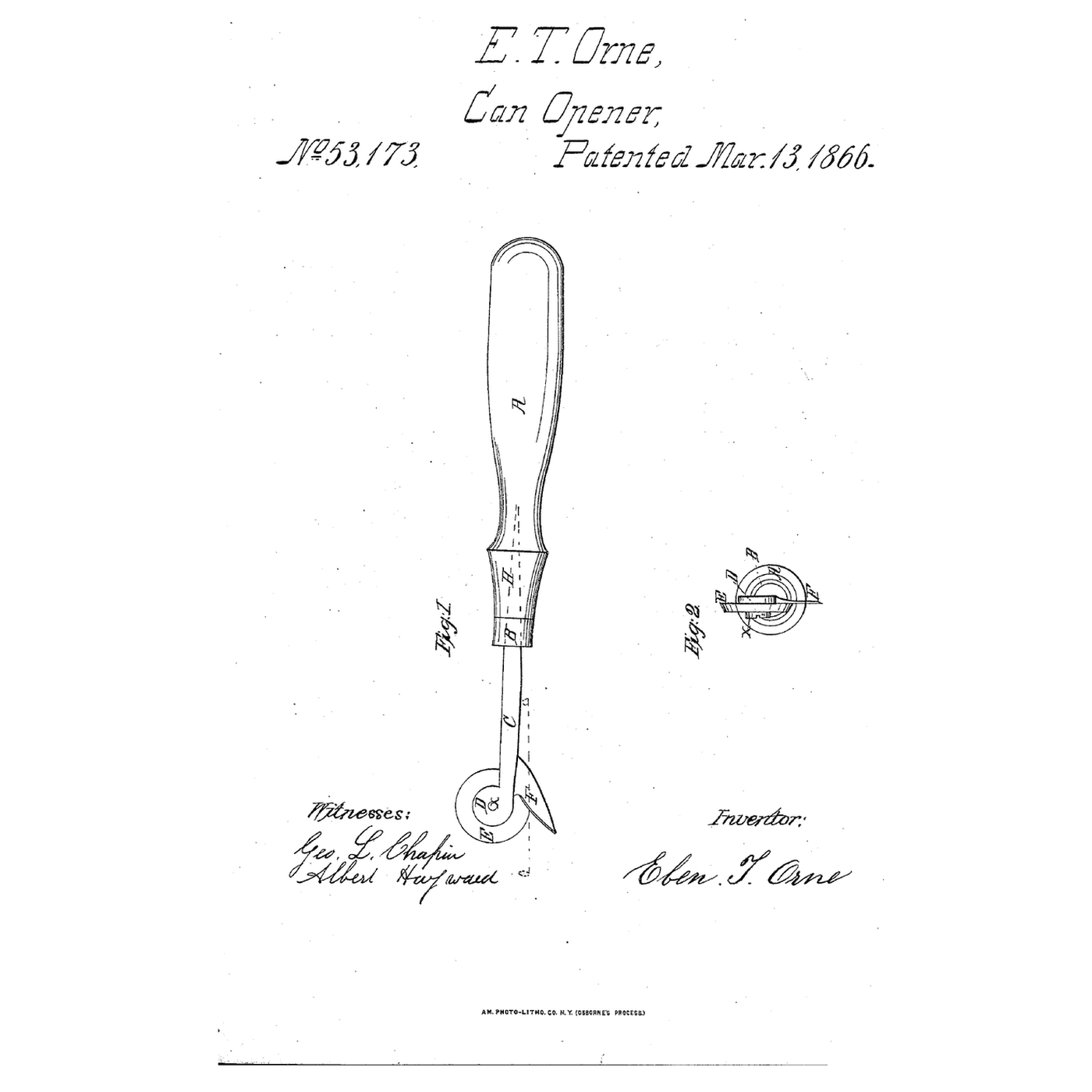
A lever-knife opener before it
A lever-knife opener before it
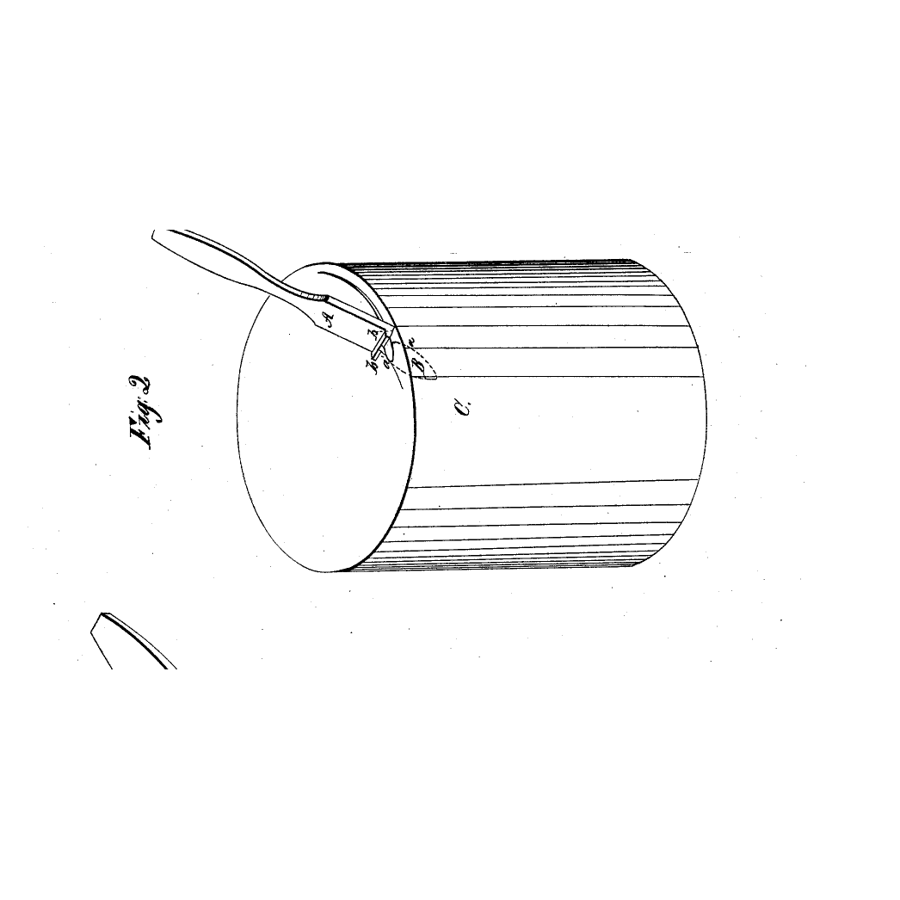
The embedded blueprint cuts a can with a lever and a guard. Willard makes blade, fulcrum and handle in one piece, the shoulders resting on the can.
3
3
Read US 57,422
Read US 57,422
"This will bring the shoulders b b upon the top surface of the can, so that these shoulders will serve as a fulcrum when the handle of the knife is depressed, and cause the cutting-edge a' of the blade B to make a slit through the can top."
"The shoulders b b not only serve as the support for the instrument upon the can, but these shoulders also press the edges of the metal down as the instrument is moved up to its work."
4
4
Mark and cut the blank
Mark and cut the blank
Cut 190 mm of 25 × 3 mm flat bar. At one end mark a 10 mm neck 12 mm long, then the 30 mm blade with its point; saw and file the neck, leaving the shoulders full width.
Материалы для этого шага:
 Полоса из малоуглеродистой стали1 штука
Необходимые инструменты:
 Ножовка по металлу
 Слесарные тиски
 Напильники (ручной напильник)
 Линейка
 Перманентный маркер
5
5
Twist the blade
Twist the blade
Grip the neck in the vice and twist the blade a quarter turn with the wrench, so it stands at right angles to the handle.
Необходимые инструменты:
Слесарные тиски Разводной ключ
 Кожаные рабочие перчатки
6
6
Grind the edge and point
Grind the edge and point
File the blade's upper edge to a cutting bevel and its end to a sharp point. Finish on the whetstone.
Необходимые инструменты:
Напильники (ручной напильник) Точильный каменьСлесарные тиски
 Прозрачные защитные очки
7
7
The build in 3D
The build in 3D
FreeCAD model of this build, not of the patent: a 130 mm handle of 25 × 3 mm bar, the shoulders, the 10 mm neck, and the pointed 30 mm blade standing at right angles to the handle.
8
8
Open a can
Open a can
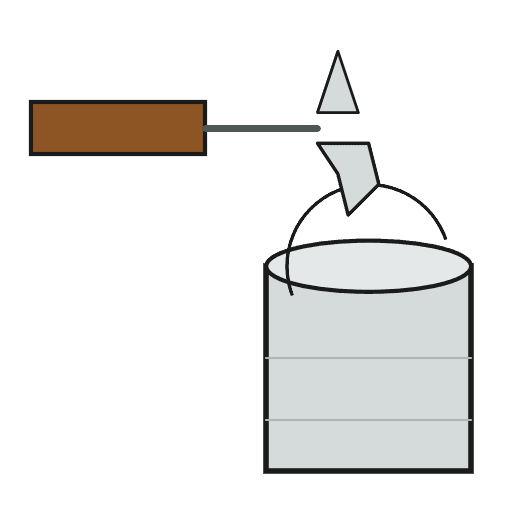
Stand a sealed can on the kitchen scale. Push the point through the top, rock the handle down on the shoulders and advance; read the peak load on the scale and time a full circle.
Материалы для этого шага:
 Жестяная банка1 штука
Необходимые инструменты:
 Цифровые кухонные весы
 СекундомерКожаные рабочие перчатки
9
9
A blade that tears, skids or will not pierce
A blade that tears, skids or will not pierce
Shouldered-blade can opener troubleshooting.
Flow
Loading...
10
10
History and honest limits
History and honest limits
**John Willard** of Norwich, Connecticut, received US 57,422, dated 21 August 1866. His handle may be of any length and width; the blade's lower edge may curve upward, and its cutting edge may project above the handle's flat surface so it meets the metal at a steep angle. His claim covers the one-piece opener with blade, shoulders and handle.
**Honest limits.** Mild flat bar does not hold an edge like hardened steel; the notebook's shear strength is an estimate. Your loads and times are the result.
Материалы
2- Заполнитель
- 1 штукаЗаполнитель
Требуемые инструменты
11- Заполнитель
- Заполнитель
- Заполнитель
- Заполнитель
- Заполнитель
- Заполнитель
- Заполнитель
- Заполнитель
- Заполнитель
- Заполнитель
- Заполнитель
Файлы дизайна
1По этому чертежу делают
Связанные чертежи
Эти чертежи делятся знаниями — техники, материалы или принципы


CC0 Общественное достояние
Этот чертёж выпущен под лицензией CC0. Вы можете свободно копировать, изменять, распространять и использовать эту работу в любых целях без запроса разрешения.
Поддержите мейкера, покупая товары через его чертёж, где он получает Комиссию мейкера установленную продавцами, или создайте новую итерацию этого чертежа и включите его как связь в свой чертёж для распределения дохода.