Ubufatanye
UBUHANZI
UBWIZA N'UBUZIMA
UBUKORIKORI
UMUCO N'AMATEKA
IMYIDAGADURO
IBIDUKIKIJE
IBIRIBWA N'IBINYOBWA
UBWUBATSI BUSUBIRA INYUMA
UBUMENYI
SIPORO
IKORANABUHANGA
IBYAMBARWA
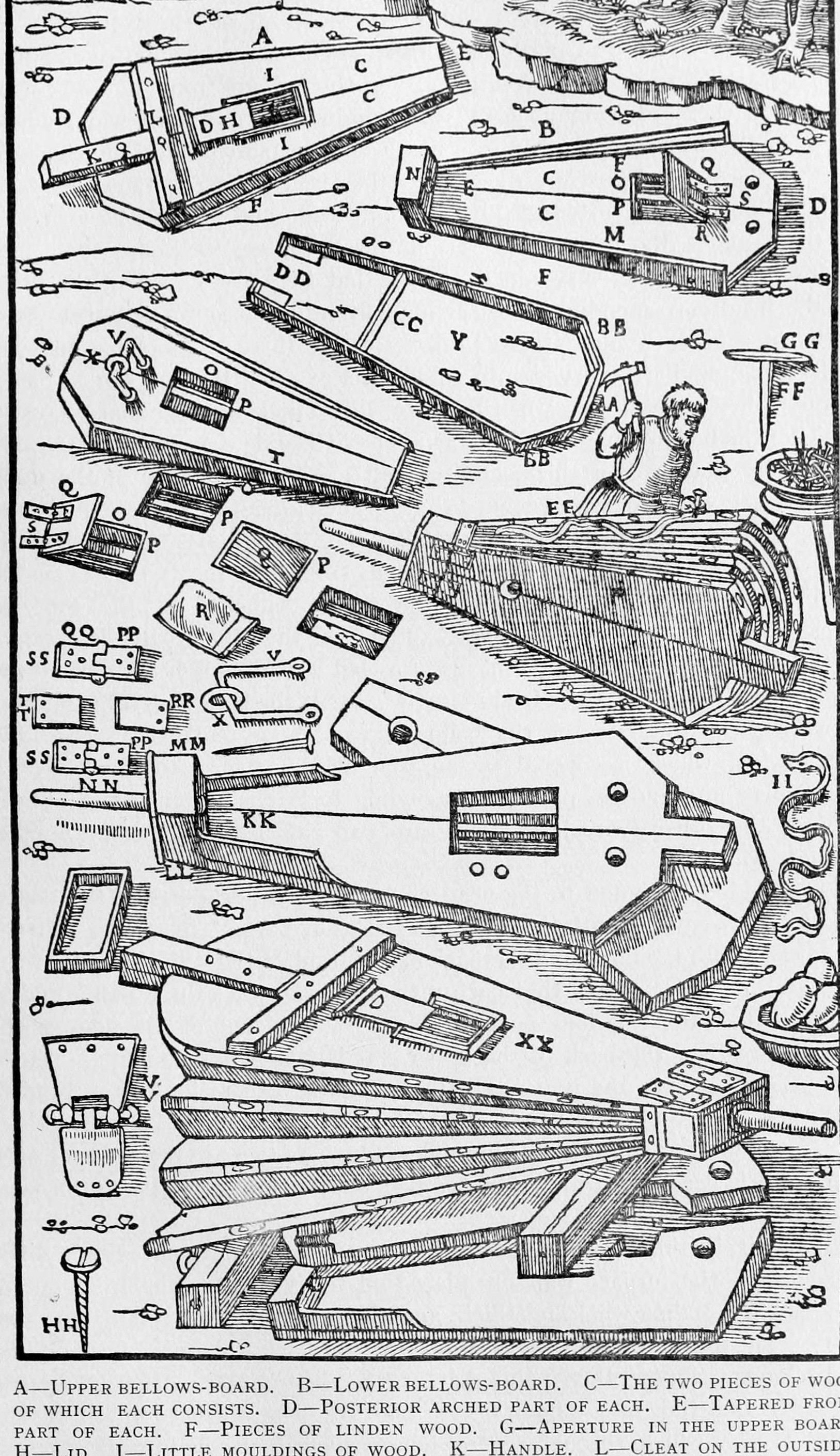


Great Bellows of the Smelting Works: Pine Boards, Linden Bows, Ox-Hide and Iron Nozzle (Agricola, 1556)
The large blast bellows of a 16th-century smelting works, every part measured, from Agricola's De Re Metallica, Book IX (1556): two tapered boards of glued pine edged with linden, about 1.7 m long, two linden bows, two ox-hides nailed on with T-headed nails, a goatskin flap valve in the lower board, and a glued head carrying a 3 ft iron nozzle.
Hejuru
About 2 weeks
Amabwiriza
1
1
Roman units in metric
Roman units in metric
Gupakira ikaye ya Jupyter…
2
2
Read De Re Metallica, Book IX
Read De Re Metallica, Book IX
"Each bellows consists of a body and a head. The body is composed of two 'boards', two bows, and two hides."
3
3
Make the upper board
Make the upper board
Glue two pieces of pine into a board a palm thick, 5 ft 3 palms long, 2-1/2 ft wide at the back (sides a little curved) and a cubit wide at the front, tapering to the head. Glue on linden edge strips, 7 digits wide at the back and 1-1/2 at the front, to take the nails. Cut an aperture 6 by 4 digits in the middle, 1 ft 3 palms from the head, with a sliding lid 2 palms 1 digit square and 3 digits thick running in mouldings a palm wide and 3 digits thick (or bore 2-3 round holes with plugs). Glue and peg a handle 7 palms or longer (2 palms wide, 1 thick on the board; rounded and 7 digits thick beyond), with a 2 ft cleat 2 palms wide and a palm thick over it and another 2 ft cleat underneath, 3 palms from the end.
Ibikoresho by'iyi ntambwe:
 Ikibaho cy'igiti cya pinusi2 ibice
 Urupapuro rw'igiti cya basswood1 igice
 Ifatanyo ry'uruhu rw'inyamaswa1 igice
 Inkoni z'Ibiti1 igice
Ibikoresho bikenewe:
 Umucumita w'Intoki
 Ikoresho cyo gusiga ibiti
 Ibyuma byo kubaza
 Ivuvuzo ry'ukuboko rifite umutwe
 Igifashe cy'inkoni
4
4
Make the lower board and flap valve
Make the lower board and flap valve
Make the lower board the same way and a cubit longer (the extra length is part of the head). About a cubit from the back, centred, cut an air-hole a foot long and 3 palms wide, leaving a rib a palm long and 1/3 digit wide across it. Make the flap a foot 3 digits by 3 palms 3 digits of thin board covered with goatskin, hair toward the ground, hinged with a doubled strip of leather a palm wide nailed to it and tied through two holes 7 digits apart. A foot beyond, fix a slightly elliptical iron ring 2 palms by 1 on a staple, 3 palms from the back, for the wooden bolt that holds the board to its frame (or use two iron screws).
Ibikoresho by'iyi ntambwe:
Ikibaho cy'igiti cya pinusi2 ibiceUrupapuro rw'igiti cya basswood1 igiceIfatanyo ry'uruhu rw'inyamaswa1 igice Uruhu rubisi rw'ihene1 igice
 Umukandara w'uruhu1 igice
 Metal Ring1 igice
 Imisumari1 igice
Ibikoresho bikenewe:
Umucumita w'IntokiIbyuma byo kubazaIvuvuzo ry'ukuboko rifite umutwe Inyundo
5
5
Make the bows
Make the bows
Make each bow as long as the upper board from four pieces of linden 3 digits thick: two long pieces 7 digits wide at the back and 2-1/2 at the front, a back piece 2 palms wide, its ends a little over a digit thick, bent to meet the long pieces, mortised, bored and pegged with glued pegs. Mortise in a crossbar a cubit from the head, a foot long without tenons and a palm 2 digits wide. Glue and peg two small pieces, 3 palms 2 digits long, a palm high and a digit thick, at the head to keep the bow ends off the air passage.
Ibikoresho by'iyi ntambwe:
Urupapuro rw'igiti cya basswood2 ibiceIfatanyo ry'uruhu rw'inyamaswa1 igiceInkoni z'Ibiti1 igiceIbikoresho bikenewe:
Umucumita w'IntokiIbyuma byo kubazaIvuvuzo ry'ukuboko rifite umutwe Inyundo y'Igiti
6
6
Make the head and nozzle
Make the head and nozzle
Glue the upper head board, a cubit long and 1-1/2 palms thick, onto the lower board's extension (a palm and a digit thick). Shape it a cubit wide at the back, 2 digits narrower 3 palms forward, then round the front to 2 palms 2 digits across and bind it with an iron ring 3 digits wide. Bore it for the nozzle: a pipe of thin iron plate 3 ft long, 3 digits across in front and a palm high by 2 palms wide at the back.
Ibikoresho by'iyi ntambwe:
Ikibaho cy'igiti cya pinusi1 igiceIfatanyo ry'uruhu rw'inyamaswa1 igice Ikibaho cy'icyuma (gikubiswe)1 igiceMetal Ring1 igice
Ibikoresho bikenewe:
Umucumita w'IntokiIvuvuzo ry'ukuboko rifite umutwe Iziko ryo Gucura
 IngoyiInyundo
7
7
Hide the bellows
Hide the bellows
Use ox-hide (far better than horse), two hides each 3-1/2 ft wide at the back. Lay a long leather thong along each board and bow and nail the hide through it with T-shaped iron nails 5 digits long, horns 2-1/2 digits long and half a digit wide, the horn of one nail almost touching the next along the boards; on each bow two nails in the back piece and four in each long piece, ten in all. Pine strips nailed over the hide on the long pieces guard against tearing; iron screws through strips over the hide hold even better.
Ibikoresho by'iyi ntambwe:
 Uruhu rwatunganyijwe n'ibimera2 ibiceUmukandara w'uruhu1 igiceImisumari1 igice
Ibikoresho bikenewe:
Inyundo Icyuma cyo gukata uruhu
 Umukasi
8
8
Troubleshooting
Troubleshooting
Bellows troubleshooting.
Flow
Loading...
9
9
History and honest limits
History and honest limits
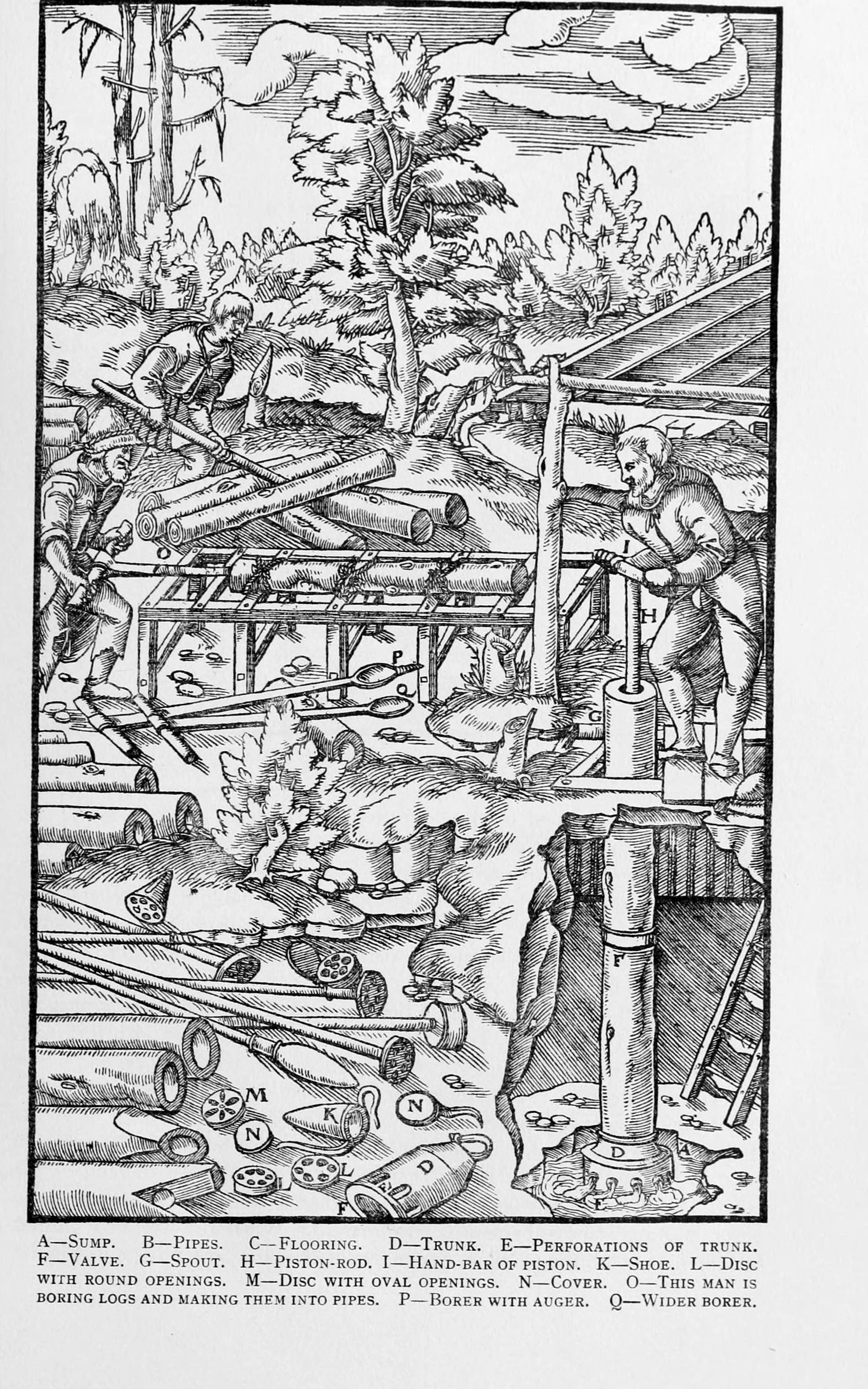
From Georgius Agricola, **De Re Metallica** (1556), Book IX, translated by Herbert C. and Lou H. Hoover, 1912 (checked on the archive.org scan georgiusagricola00agri, pp. 362-365). The frame and the machinery that work the bellows are not covered here. The metric conversions (digit ~1.85 cm, palm ~7.4 cm, Roman foot ~29.6 cm, cubit ~44.4 cm) and the tools are ours.
Ibikoresho
10- 2 ibiceUmwanya
- Umwanya
- Umwanya
- 1 igiceUmwanya
- 1 igiceUmwanya
- 2 ibiceUmwanya
- 1 igiceUmwanya
- 2 ibiceUmwanya
- Umwanya
- Umwanya
Ibikoresho bikenewe
11- Umwanya
- Umwanya
- Umwanya
- Umwanya
- Umwanya
- Umwanya
- Umwanya
- Umwanya
- Umwanya
- Umwanya
Iki gishushanyo gikora
Blueprint zijyanye
Izi blueprint zisangira ubumenyi — uburyo, ibikoresho cyangwa amahame
CC0 Umurenge rusange
Iyi blueprint yasohowe munsi ya CC0. Ushobora gukoporora, guhindura, gukwirakwiza no gukoresha nta kwemererwa.
Shyigikira Umuremyi ugura ibicuruzwa binyuze muri Blueprint ye Komisiyo y'Umuremyi byashyizweho n'Abacuruzi, cyangwa kora verisiyo nshya y'iyi Blueprint ukayinjiza nk'isano muri Blueprint yawe kugira ngo musangire inyungu.