Ubufatanye
UBUHANZI
UBWIZA N'UBUZIMA
UBUKORIKORI
UMUCO N'AMATEKA
IMYIDAGADURO
IBIDUKIKIJE
IBIRIBWA N'IBINYOBWA
UBWUBATSI BUSUBIRA INYUMA
UBUMENYI
SIPORO
IKORANABUHANGA
IBYAMBARWA
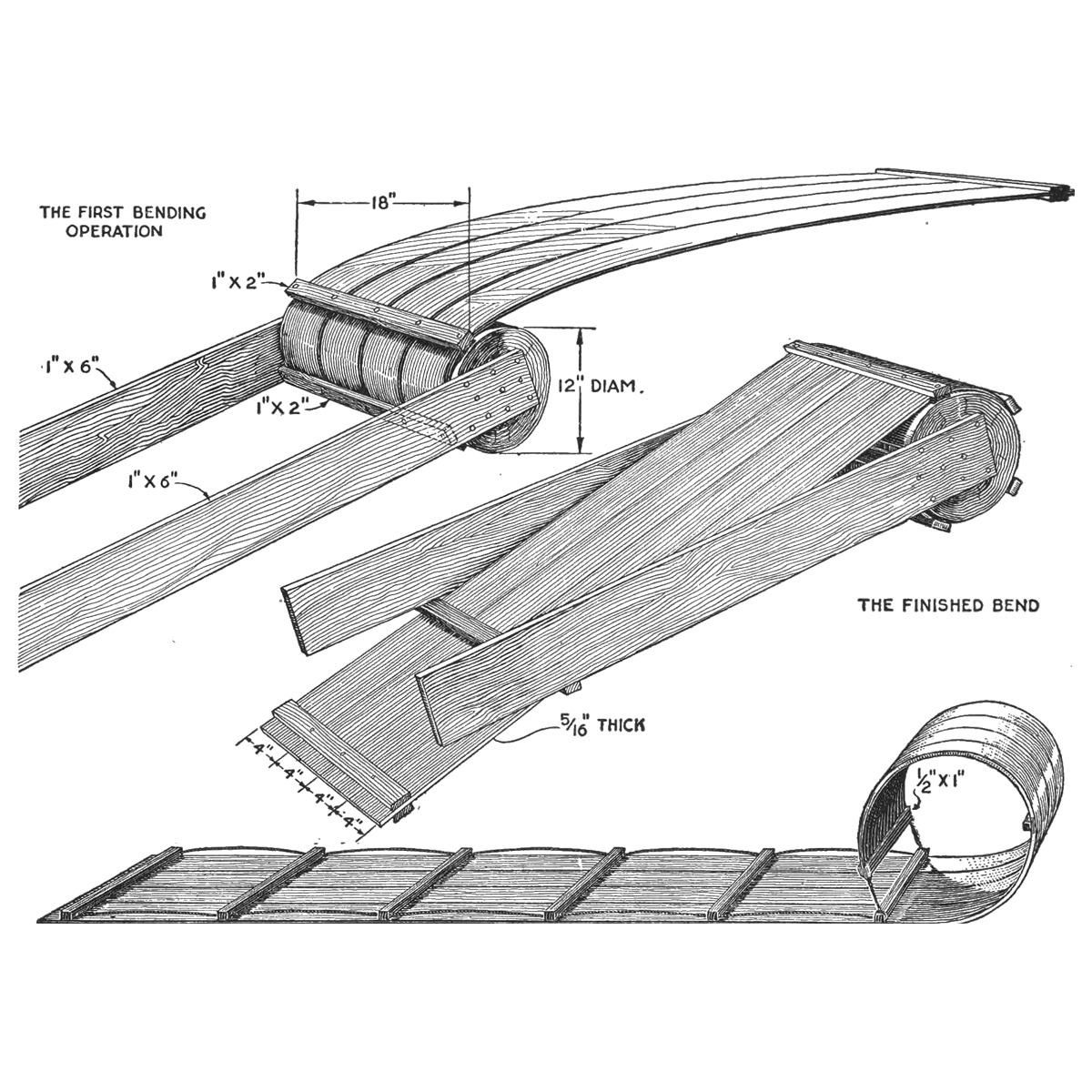


Coasting Toboggan: Four Steamed Hardwood Boards Bent Over a Log Form (Boy Mechanic, 1919)
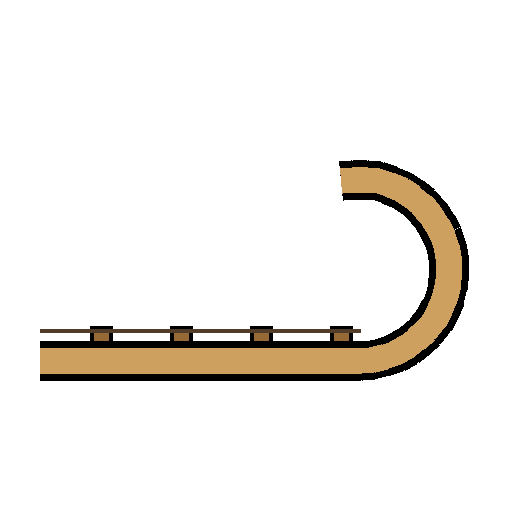
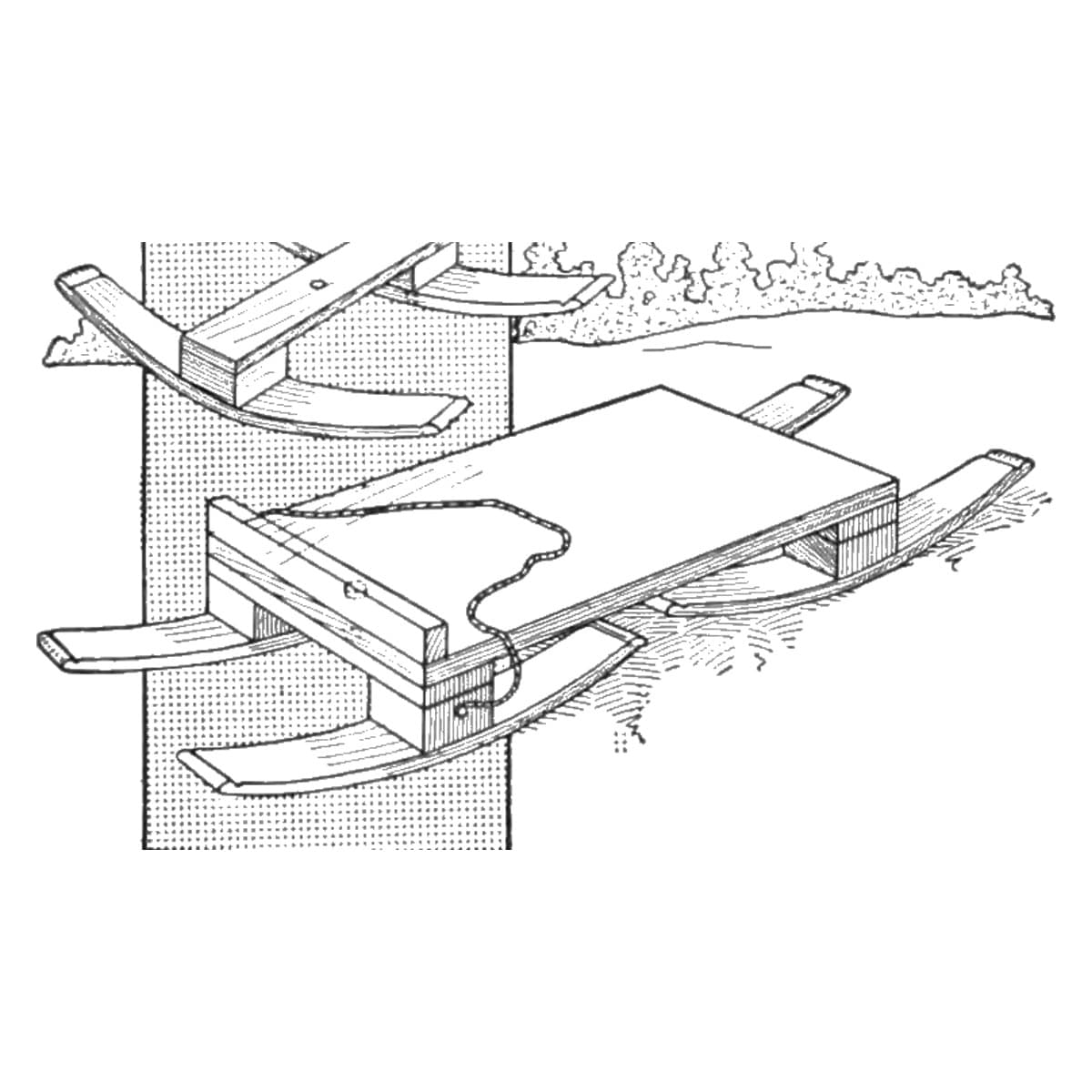
A. M. Parker's toboggan from The Boy Mechanic, Book 3 (1919), 7-1/2 ft long and 16 in wide: four 5/16 in hardwood boards steamed at one end and bent round a 12 in log on a simple form, held by notched cross cleats, the curl riveted and wired, and a rope run along the sides.
Hagati
About 1 week (four days drying)
Amabwiriza
1
1
His mill bill in centimetres
His mill bill in centimetres
Gupakira ikaye ya Jupyter…
2
2
Read The Boy Mechanic, Book 3
Read The Boy Mechanic, Book 3
"Essentials of a good toboggan, whether for coasting or use in transportation, are strength and lightness." Woods in order of merit: hickory, birch and oak (not quarter-sawed).
3
3
Prepare the boards and cleats
Prepare the boards and cleats
Choose four 5/16 by 4 in by 10 ft boards straight in grain and free from knots. Plane the running side and bevel the edges so that, together, they form a wide V joint half the depth of the boards. Notch the seven 1 by 1 in cross cleats on one side, 1 in from each end, for the side ropes.
Ibikoresho by'iyi ntambwe:
 Ikibaho cy'Igiti Gikomeye4 ibice
Ibikoresho bikenewe:
 Ikoresho cyo gusiga ibiti
 Umucumita w'Intoki
 Ibyuma byo kubaza
 Ikaramu ya penisile
 Umugozi wo Gupima
4
4
Build the bending form
Build the bending form
Bore a gimlet hole through the centre of each 1 by 2 by 18 in piece and two more 4-1/4 in each side of it. Nail one 6 ft common board to each end of the 12 in by 18 in log block so their ends run parallel. With 3 in nails fix one bored cleat to the block between them, held out 1/2 in by a temporary spacer.
Ibikoresho by'iyi ntambwe:
 Ikibaho cy'igiti cya pinusi2 ibice
 Imisumari1 igice
Ibikoresho bikenewe:
Umucumita w'Intoki Igikoresho cyo gutobora gikoreshwa n'intoki
 Inyundo
5
5
Steam and bend
Steam and bend
Steam about 3 ft of the board ends, or boil them in a tank. Clamp or nail the dry ends together edge to edge between two of the 1 by 2 in pieces, about 1/4 in apart. Push the steamed ends under the cleat on the block (its nails slip between the boards), bear down and nail on another bored cleat as far as the floor allows. Turn it over and bend the boards round the block, nailing on more cleats, until the clamped end lies between the 6 ft boards; hold it with a piece nailed across. The closer the cleats, the less risk of splitting.
Ibikoresho by'iyi ntambwe:
Imisumari1 igiceIbikoresho bikenewe:
 Inkono NiniInyundo
 Igifashe cy'inkoni
6
6
Fit the cleats and finish
Fit the cleats and finish
Dry at least four days on the form. Clamp the two 1/2 by 1 in pieces on each side of the bow ends, drill through and rivet them. Rivet a 1 by 1 in crossbar inside the bow at the extreme front and another under the end of the curl, and wire them together to hold the bend. Put the tail crossbar not nearer than 2-1/2 in from the board ends and space the rest evenly, notched side down. Trim, scrape and sandpaper the bottom, finish with oil, and run a 3/8 in rope through the notches under the cleat ends.
Ibikoresho by'iyi ntambwe:
Ikibaho cy'Igiti Gikomeye1 igice Utuma tw'icyuma1 igice
 Urusinga rw'icyuma1 igice
 Amavuta y'Ubudodo1 igice
 Urupapuro rwo Gusya1 igice
 Umugozi munini w'ipamba1 igice
Ibikoresho bikenewe:
Igikoresho cyo gutobora gikoreshwa n'intokiInyundoUmucumita w'Intoki Igikanda cy'icyuma
 Ipfundo Rifite Umunwa Uringaniye
7
7
Troubleshooting
Troubleshooting
Toboggan troubleshooting.
Flow
Loading...
8
8
History and honest limits
History and honest limits
From "Making a Coasting Toboggan" by A. M. Parker, in **The Boy Mechanic, Book 3**, Popular Mechanics, 1919 (Project Gutenberg 71856; checked on the archive.org scan boymechanic0003unse, pp. 11-13). The tools and metric figures are ours.
Ibikoresho
8- 4 ibiceUmwanya
- 2 ibiceUmwanya
- 2 ibiceUmwanya
- 1 igiceUmwanya
- 1 igiceUmwanya
- 1 igiceUmwanya
- 1 igiceUmwanya
- 1 igiceUmwanya
Ibikoresho bikenewe
11- Umwanya
- Umwanya
- Umwanya
- 1 vendor sell this, none ship to you yetUmwanya
- 1 vendor sell this, none ship to you yetUmwanya
- Umwanya
- Umwanya
- Umwanya
- Umwanya
Iki gishushanyo gikora
Blueprint zijyanye
Izi blueprint zisangira ubumenyi — uburyo, ibikoresho cyangwa amahame
CC0 Umurenge rusange
Iyi blueprint yasohowe munsi ya CC0. Ushobora gukoporora, guhindura, gukwirakwiza no gukoresha nta kwemererwa.
Shyigikira Umuremyi ugura ibicuruzwa binyuze muri Blueprint ye Komisiyo y'Umuremyi byashyizweho n'Abacuruzi, cyangwa kora verisiyo nshya y'iyi Blueprint ukayinjiza nk'isano muri Blueprint yawe kugira ngo musangire inyungu.