Ubufatanye
UBUHANZI
UBWIZA N'UBUZIMA
UBUKORIKORI
UMUCO N'AMATEKA
IMYIDAGADURO
IBIDUKIKIJE
IBIRIBWA N'IBINYOBWA
UBWUBATSI BUSUBIRA INYUMA
UBUMENYI
SIPORO
IKORANABUHANGA
IBYAMBARWA
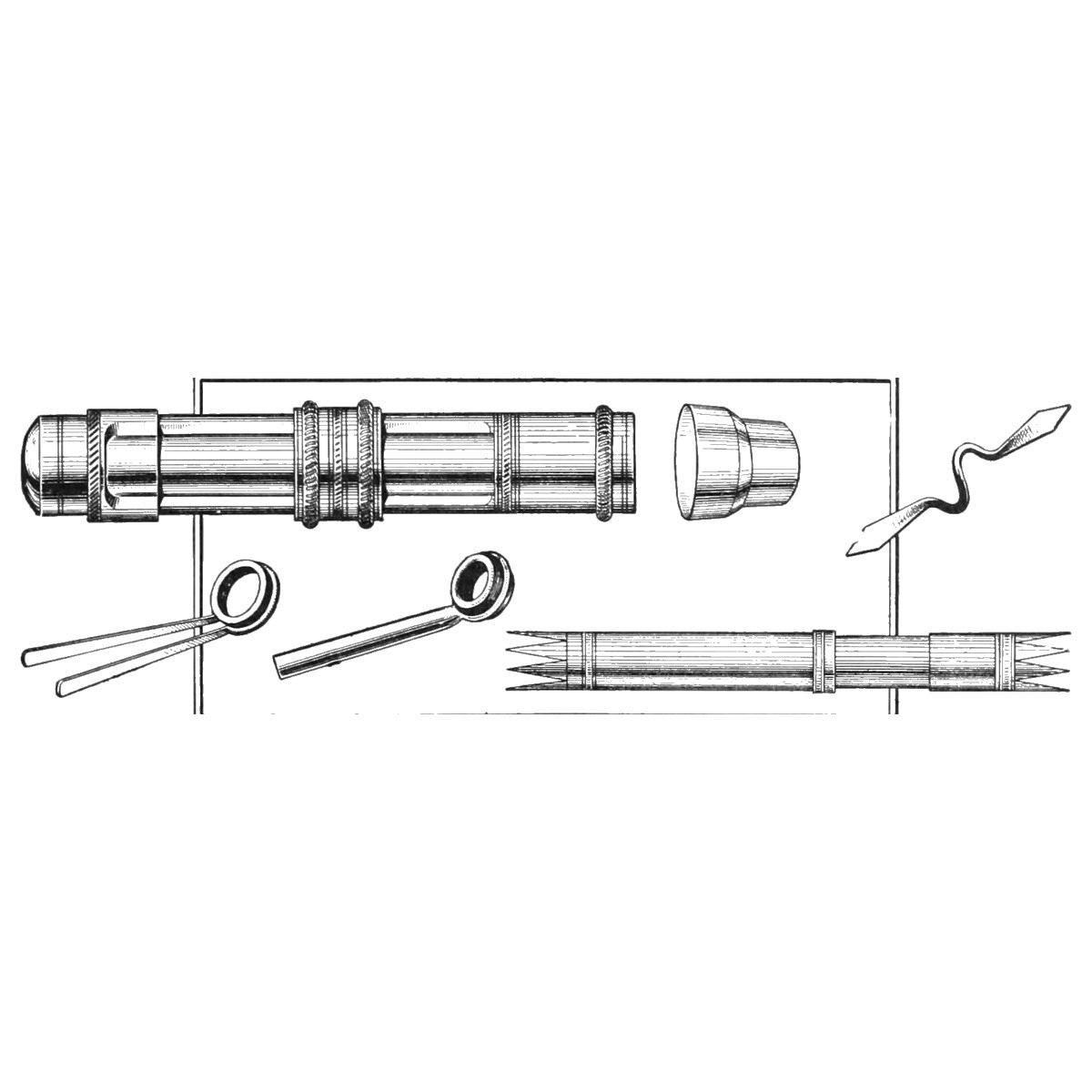


Jointed Fishing Rods: Two- and Three-Piece Casting, Trout and Bass Fly, Salt-Water and Tarpon Rods (Boy Mechanic, 1915)
Part II of Stillman Taylor's rod-making series (The Boy Mechanic, Book 2, 1915): once the one-piece casting rod is mastered, the same planing, grasp and finishing methods make jointed rods. He gives full caliper tables and fitting lists for six rods; choose one in the notebook. Sections join with welted, shouldered ferrules, and every rod gets two tips "in view of a possible breakage".
Hejuru
About 2-3 weeks (glue and varnish drying)
Amabwiriza
1
1
His caliper tables
His caliper tables
Gupakira ikaye ya Jupyter…
2
2
Read The Boy Mechanic, Book 2
Read The Boy Mechanic, Book 2
"While the action of the one-piece rod is undeniably better than when the rod is made in two or three pieces, it is less compact to carry." He warns that "the more joints incorporated in a rod, the less satisfactory it will be from an angling standpoint", since ferrules cannot follow the rod's curve.
3
3
Choose the rod and get the stock
Choose the rod and get the stock
Pick a rod from the notebook. Stock (dagame or greenheart): two-piece casting -- butt 5/8 in x 3 ft, two tips 3/8 in x 3 ft; three-piece casting -- all 2 ft, butt 5/8 in, joint and tips 3/8 in; trout or bass fly -- butt 5/8 in x 4 ft, joint and tips 3/8 in x 4 ft; salt-water -- both 4 ft, butt 3/4 in, tip 1/2 in; tarpon -- one piece 1 in x 6-1/2 ft.
Ibikoresho by'iyi ntambwe:
 Dagame Wood4 ibice
Ibikoresho bikenewe:
 Umucumita w'Intoki
 Umugozi wo Gupima
4
4
Plane each section to its table
Plane each section to its table
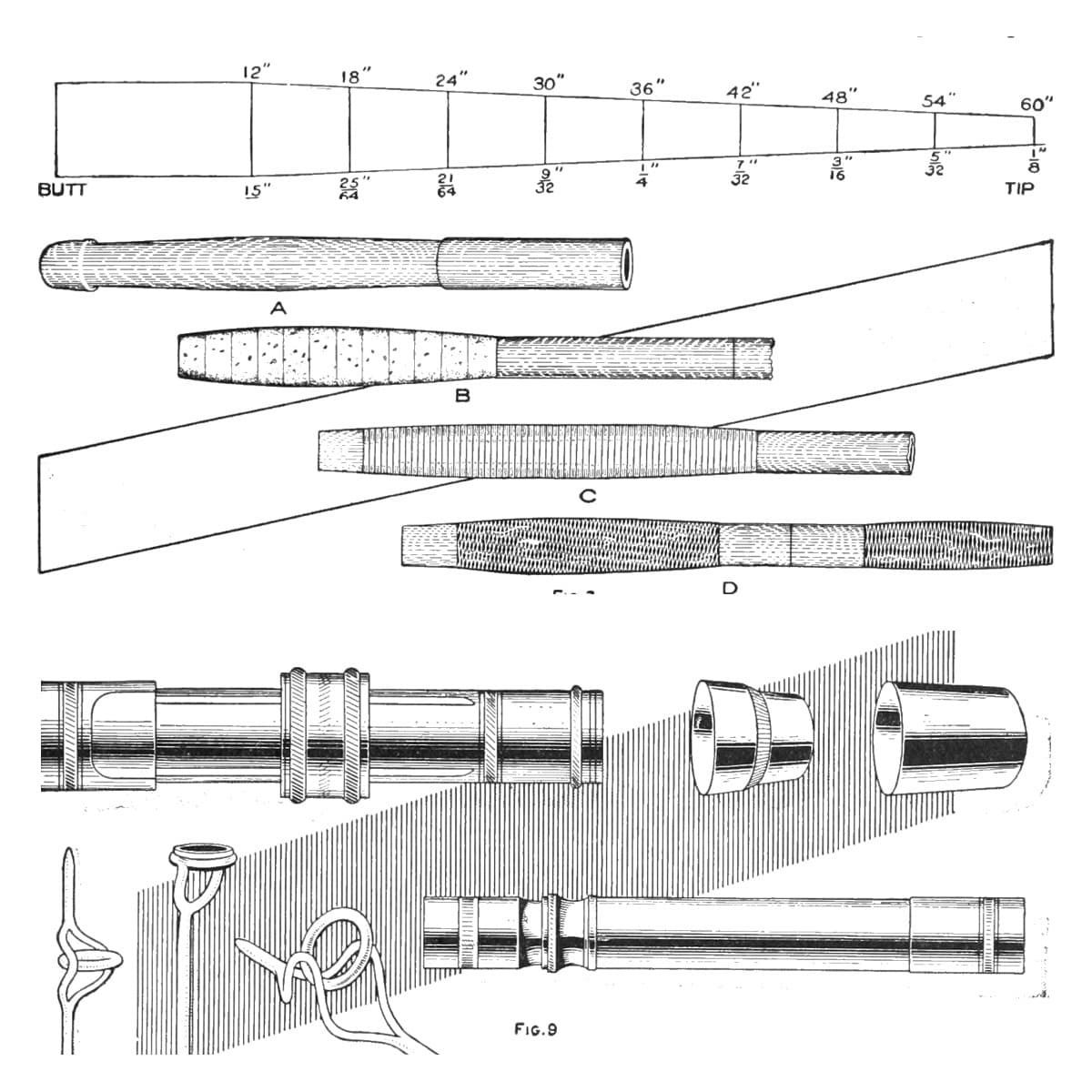
Plane, round and scrape each section exactly as for the one-piece rod, calipering at every station in the table. Two-piece casting rod: he first suggests a butt of about 23 in and a 32-1/2 in tip to fit a 35 in rod case, then specifies a 6-1/2 oz rod with a 32-1/2 in butt (15/32 in at the grasp to 19/64 in at the ferrule) and a 33 in tip (17/64 in to 7/64 in), equal when ferrule and top are on. Make two tips for each rod.
Ibikoresho by'iyi ntambwe:
 Urupapuro rwo Gusya1 igice
Ibikoresho bikenewe:
 Ikoresho cyo gusiga ibiti
 Ikiryabyo gito
 Igikanda cy'icyuma
 Amakariso (Ikariso ry'Intoki)
 Kalipe ya Vernier
5
5
Fit the ferrules
Fit the ferrules
Fit a welted, shouldered ferrule at each joint, sized from his list: 17/64 in for the two-piece casting rod; 21/64 in and 15/64 in for the three-piece; 9/32 in and 11/64 in for the fly rods; 7/16 in for the salt-water rod; a 3/4 in male ferrule on the tarpon butt. The tip ferrule comes with two closed-end centres, one for each tip. Cement them on with ferrule cement; serrated (toothed) ferrule ends are wound with silk for strength.
Ibikoresho by'iyi ntambwe:
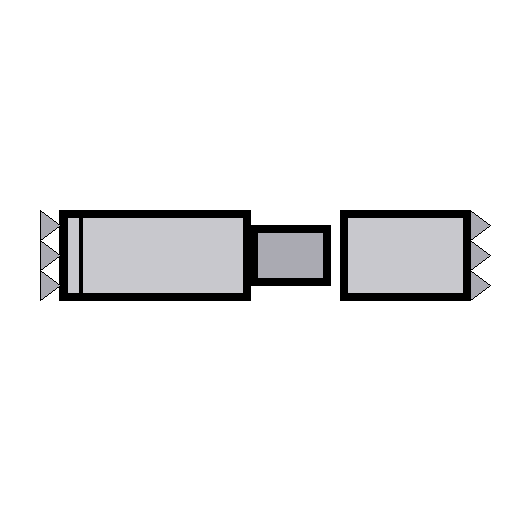 Rod Ferrule2 ibice
 Ferrule Cement1 igice
 Rod Winding Silk1 igice
Ibikoresho bikenewe:
Amakariso (Ikariso ry'Intoki) Itara rya PropaneKalipe ya Vernier
6
6
Build the grasp and reel seat
Build the grasp and reel seat
Build the cork grasp and reel seat as for the one-piece rod: 3/4 in reel seat with straight hood for the casting rods (fly-rod type with butt cap on the fly rods, 9 in or 9-1/2 in of cork above it), 7/8 in on the salt-water rod with an 18 in double grasp, 1 in on the tarpon rod. Use a 1 in butt cap (1-1/8 in on the tarpon rod) and a taper (winding check) of the small-end size in his list. For an independent butt, fit the ferrule straight on a rounded dagame core so the seated ferrule does not touch the wood, cement and rivet it, fit a soft-pine sleeve over core and ferrule, glue it on, cement and rivet the reel seat, then glue on the corks and cut the core flush.
Ibikoresho by'iyi ntambwe:
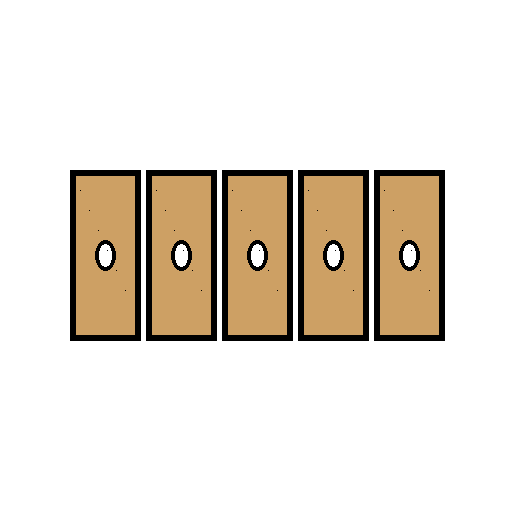 Cork Rings24 ibice
 Ifatanyo ry'inyamaswa1 igice
 Ikibaho cy'igiti cya pinusi1 igice
 Reel Seat1 igice
 Rod Butt Cap1 igice
 Winding Check1 igiceFerrule Cement1 igice
 Utuma tw'umuringa1 igice
Ibikoresho bikenewe:
 Icyuma cy'Ubukorikori
 Igikoresho cyo gutobora gikoreshwa n'intokiIkiryabyo gitoItara rya Propane
 Inyundo
7
7
Mount the guides and tops
Mount the guides and tops
Casting rods: two 1/2 in narrow agate guides, two No. 1 one-ring casting guides and two 3/32 in offset agate tops. Fly rods: two No. 4 snake guides on the butt joint, three No. 3 on the middle joint, three No. 2 on each tip, and two No. 7 agate angle fly tops of the wind-on kind. Salt-water rod: a 10/32 in stirrup-tube agate top and two No. 3 bell guides. Tarpon rod: two No. 11 wide raised agate guides, two No. 1 trumpet guides and a 3/8 in agate stirrup top; whip its guides on double, the first set 10 in from the top, the second 26 in from the reel. Whip with 00 silk (00 or 0 on the three-piece rod, size A on the salt-water and tarpon rods), using the invisible knot.
Ibikoresho by'iyi ntambwe:
 Rod Guide8 ibice
 Rod Tip Top2 ibiceRod Winding Silk1 igice
 Igishashara1 igice
Ibikoresho bikenewe:
Amakariso (Ikariso ry'Intoki)Icyuma cy'Ubukorikori8
8
Shellac and varnish
Shellac and varnish
Shellac the windings and varnish the rod with coach varnish as for the one-piece rod: thin coats, warm, three days between coats.
Ibikoresho by'iyi ntambwe:
 Varinishi ya sherake1 igice
 Coach Varnish3 ibice
Ibikoresho bikenewe:
 Uburoso bugari
9
9
Troubleshooting
Troubleshooting
Jointed rod troubleshooting.
Flow
Loading...
10
10
History and honest limits
History and honest limits
From "Fishing-Rod Making and Angling, Part II" by Stillman Taylor, in **The Boy Mechanic, Book 2**, Popular Mechanics, 1915 (Project Gutenberg 44585; checked on the archive.org scan boymechanicbook200chic2, pp. 69-72). Two points are given as he wrote them: the two-piece casting rod's butt is about 23 in in one sentence and 32-1/2 in in the next; the three-piece rod's stock is "2 ft. long" while its finished sections are 21-1/2, 21-3/4 and 21 in. Guide counts in the list are for the fly rods, the largest set. The tools and metric figures are ours.
Ibikoresho
17- 4 ibiceUmwanya
- 1 igiceUmwanya
- 2 ibiceUmwanya
- 2 ibiceUmwanya
- 2 ibiceUmwanya
- 24 ibiceUmwanya
- 1 igiceUmwanya
- 1 igiceUmwanya
- 1 igiceUmwanya
- 1 igiceUmwanya
- 1 igiceUmwanya
- 1 igiceUmwanya
- 8 ibiceUmwanya
- 2 ibiceUmwanya
- 1 igiceUmwanya
- 1 igiceUmwanya
- 3 ibiceUmwanya
Ibikoresho bikenewe
12- Umwanya
- 1 vendor sell this, none ship to you yetUmwanya
- Umwanya
- Umwanya
- Umwanya
- Umwanya
- Umwanya
- Umwanya
- Umwanya
- Umwanya
Iki gishushanyo gikora
Blueprint zijyanye
Izi blueprint zisangira ubumenyi — uburyo, ibikoresho cyangwa amahame
CC0 Umurenge rusange
Iyi blueprint yasohowe munsi ya CC0. Ushobora gukoporora, guhindura, gukwirakwiza no gukoresha nta kwemererwa.
Shyigikira Umuremyi ugura ibicuruzwa binyuze muri Blueprint ye Komisiyo y'Umuremyi byashyizweho n'Abacuruzi, cyangwa kora verisiyo nshya y'iyi Blueprint ukayinjiza nk'isano muri Blueprint yawe kugira ngo musangire inyungu.