Ubufatanye
UBUHANZI
UBWIZA N'UBUZIMA
UBUKORIKORI
UMUCO N'AMATEKA
IMYIDAGADURO
IBIDUKIKIJE
IBIRIBWA N'IBINYOBWA
UBWUBATSI BUSUBIRA INYUMA
UBUMENYI
SIPORO
IKORANABUHANGA
IBYAMBARWA
English


Craft Knife: Doniger's Hinged Handle and Reversible Blade
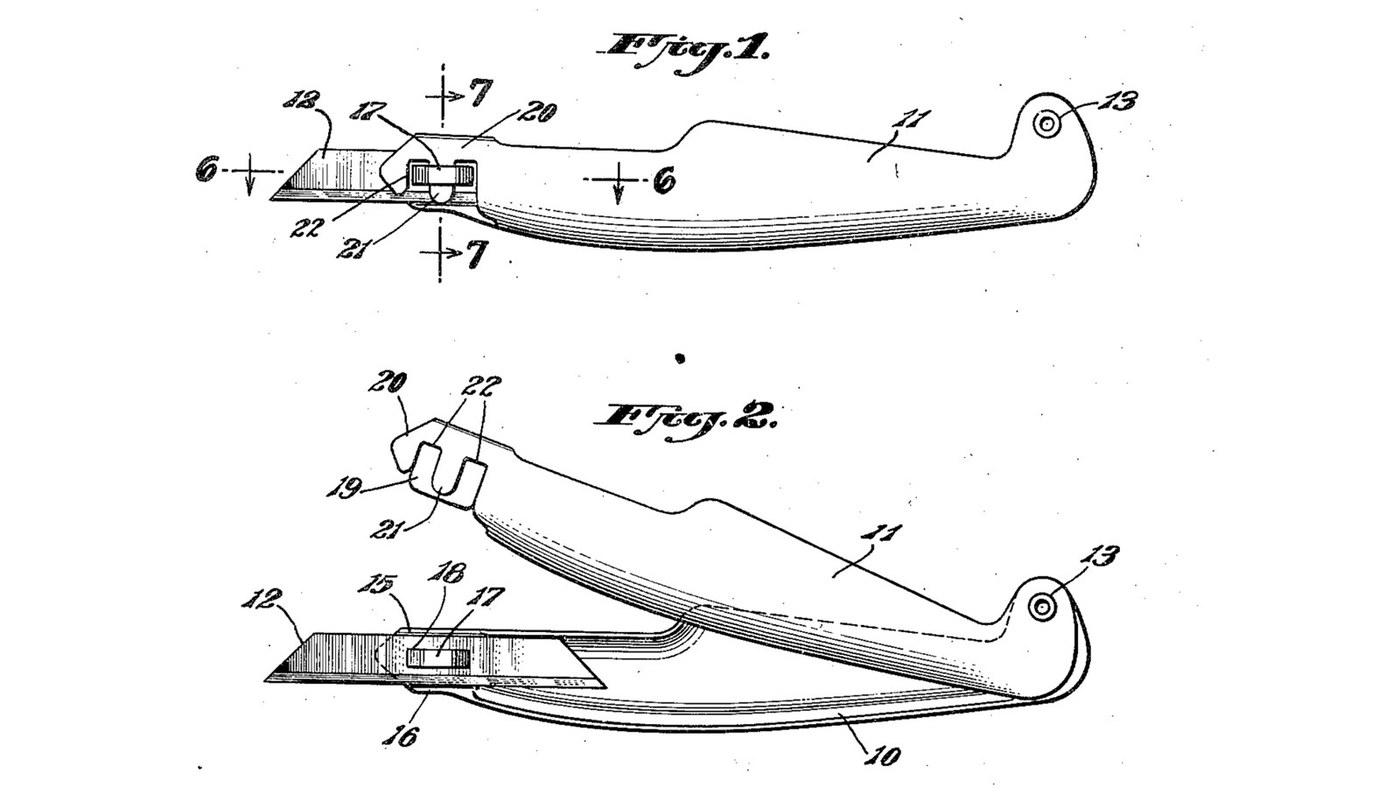
A knife for model carving and fine cutting, by Sundel Doniger of New York, founder of X-Acto (US 2,463,682, filed 1945, granted 1949). The handle is two shell-like metal halves pivoted at the rear. A thin blade with a slot in its middle drops over a small 'staple' pressed out of one half; closing the other half pushes a tongue into the staple and locks the blade solid. Swing it open to change the blade or turn it end for end: the spare end rests inside the handle.
The patent gives no sizes or metals. Mild steel sheet, the rivet, the spring steel blade and the sizes are ours. The picture: Figs. 1 and 2 of the patent.
Hagati
1 day
Amabwiriza
1
1
Mark out the two handle halves
Mark out the two handle halves
Scribe two mirror-image halves, about 130 mm long, on mild steel sheet about 0.8 mm thick (ours). Give each a flat rear ear for the pivot and a nose at the blade end.
Ibikoresho by'iyi ntambwe:
 Urupapuro rw'icyuma cyoroshye1 igice
Ibikoresho bikenewe:
 Igikoresho Gishushanya Imirongo
 Umurongo w'ipima
2
2
Cut and file the halves
Cut and file the halves
Cut both halves out with tin snips and file the edges smooth.
Ibikoresho bikenewe:
 Ibyuma bikata ibyuma bisanzwe
 Ikariso ry'Icyuma
 Ifatiro ry'Ameza
3
3
Dome the grip, keep the ends flat
Dome the grip, keep the ends flat
Hammer the middle of each half into a shallow bulge over a hollow in a hardwood block. Leave the pivot ends flat, so the pivot cannot wobble, and leave the noses flat.
Ibikoresho bikenewe:
 Inyundo ifite umutwe wa buruta
 Igihimba cy'Igiti Gikomeye
4
4
Form the blade wall and its shoulders
Form the blade wall and its shoulders
On the mounting half (10), the nose is a flat wall (14) in the plane where the halves meet. Turn its top and bottom edges inward into shoulders (15, 16) just as far apart as the blade is wide.
Ibikoresho bikenewe:
 Ipfundo Rifite Umunwa UringaniyeInyundo ifite umutwe wa burutaIfatiro ry'Ameza
5
5
Press out the staple
Press out the staple
Slit the middle of the wall along two short parallel lines, lengthwise. Press the strip between the slits outward to form the staple (17).
Ibikoresho bikenewe:
 Ishoka ry'icyuma gikonje
 Igicukuzi cyo Gushyira IkimenyetsoInyundo ifite umutwe wa buruta
 Ingoyi
6
6
Bend the locking channel
Bend the locking channel
Bend the nose of the locking half (11) into a springy channel: a broad rear flange (19) about the size of the wall, and a front flange (20) with a tongue (21) and a cut-out (22) each side of it to clear the staple's legs.
Ibikoresho bikenewe:
Ibyuma bikata ibyuma bisanzwe Ikusanyirizo ry'Amakariso MatoIpfundo Rifite Umunwa Uringaniye
7
7
Drill the pivot
Drill the pivot
Clamp the halves together, punch the centre of the rear ear and drill through both.
Ibikoresho bikenewe:
Igicukuzi cyo Gushyira Ikimenyetso Igikoresho cyo gutobora gikoreshwa n'intokiIfatiro ry'Ameza
8
8
Rivet the pivot
Rivet the pivot
Rivet the flat ends together (Doniger used an eyelet; ours: a steel rivet). Close it firmly: the friction of the flat ends must hold the halves wherever you swing them.
Ibikoresho by'iyi ntambwe:
 Utuma tw'icyuma1 igice
Ibikoresho bikenewe:
 Inyundo yo gushyira rivetiIngoyi
9
9
Anneal and cut the blade blank
Anneal and cut the blade blank
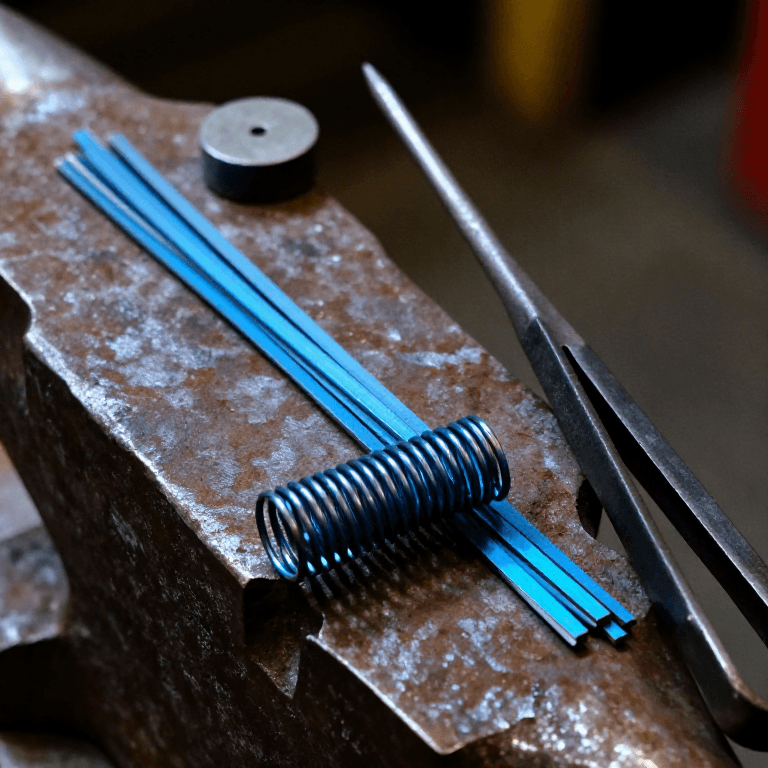
Soften a piece of spring steel strip about 0.4 mm thick (ours), as in the connected spring-steel blueprint. Cut a blank as wide as the gap between the shoulders.
Ibikoresho by'iyi ntambwe:
 Umurongo w'icyuma cya sipringi1 igice
Ibikoresho bikenewe:
 Iziko ryo Gucura
 Amakoro y'Umucuzi
 Ivu ry'Igiti GikomeyeIbyuma bikata ibyuma bisanzwe
 Uturindantoki two gukomeza ibyuma
10
10
Cut the centre slot
Cut the centre slot
Cut a slot (18) in the exact middle of the blank that fits closely over the staple. Drill its ends and file out between them.
Ibikoresho bikenewe:
Igicukuzi cyo Gushyira IkimenyetsoIgikoresho cyo gutobora gikoreshwa n'intokiIkusanyirizo ry'Amakariso MatoIfatiro ry'Ameza11
11
Shape both points
Shape both points
Cut each end of the blank to a slanting point, as in Fig. 1, and grind a cutting bevel at both ends.
Ibikoresho bikenewe:
Ibyuma bikata ibyuma bisanzwe Ibuye ryo gutyaza ry'uruzigaIkariso ry'Icyuma
12
12
Harden and temper the blade
Harden and temper the blade
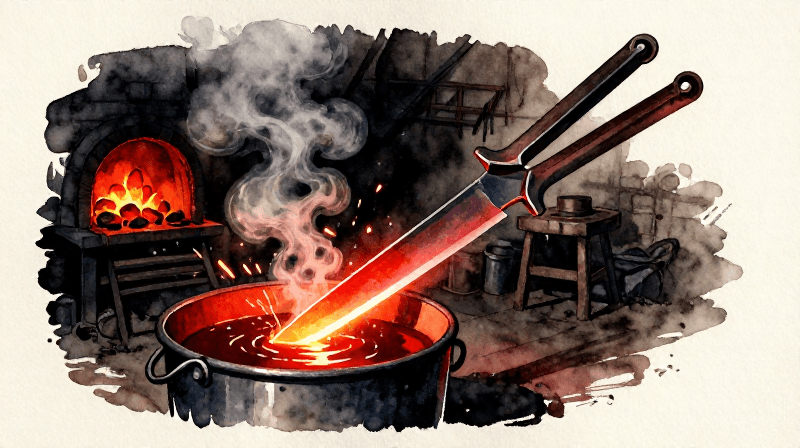
Harden the blade in oil as in the connected spring-steel blueprint. Temper it to the knife colour given in the connected heat-treatment blueprint, not to spring blue.
Ibikoresho bikenewe:
Iziko ryo GucuraAmakoro y'Umucuzi Amavuta ya kolzaUturindantoki two gukomeza ibyuma
13
13
Hone both edges
Hone both edges
Hone both ends keen on the sharpening stone.
Ibikoresho bikenewe:
 Ibuye ryo gutyaza
14
14
Fit and lock the blade
Fit and lock the blade
Swing the halves open. Lay the blade flat on the wall, its slot over the staple and its edges between the shoulders. Swing the locking half shut: the tongue enters the staple and the channel grips the blade. No tools needed.
15
15
Reverse or change the blade
Reverse or change the blade
Swing the locking half up, lift the blade off the staple and turn it end for end, or fit a new one. The spare end sits protected inside the handle.
16
16
What the patent says, and what is ours
What the patent says, and what is ours
The patent fixes the parts and how they lock: hinged shell halves, flat riveted pivot ends that hold by friction, a wall with shoulders and a pressed-out staple, a slotted double-ended blade, a springy channel with tongue and cut-outs. It gives no sizes, no metals and no blade making. All sizes, the mild steel, the rivet and the spring steel blade are our choices. Doniger's better-known X-Acto knives hold the blade in a round collet instead.
Ibikoresho
3- Umwanya
- 1 igiceUmwanya
- Umwanya
Ibikoresho bikenewe
21- Umwanya
- Umwanya
- Umwanya
- Umwanya
- Umwanya
- Umwanya
- Umwanya
- Umwanya
- Umwanya
- Umwanya
- Umwanya
- Umwanya
- Umwanya
Iki gishushanyo gikora

Blueprint zijyanye
Izi blueprint zisangira ubumenyi — uburyo, ibikoresho cyangwa amahame

CC0 Umurenge rusange
Iyi blueprint yasohowe munsi ya CC0. Ushobora gukoporora, guhindura, gukwirakwiza no gukoresha nta kwemererwa.
Shyigikira Umuremyi ugura ibicuruzwa binyuze muri Blueprint ye Komisiyo y'Umuremyi byashyizweho n'Abacuruzi, cyangwa kora verisiyo nshya y'iyi Blueprint ukayinjiza nk'isano muri Blueprint yawe kugira ngo musangire inyungu.