Ubufatanye
UBUHANZI
UBWIZA N'UBUZIMA
UBUKORIKORI
UMUCO N'AMATEKA
IMYIDAGADURO
IBIDUKIKIJE
IBIRIBWA N'IBINYOBWA
UBWUBATSI BUSUBIRA INYUMA
UBUMENYI
SIPORO
IKORANABUHANGA
IBYAMBARWA
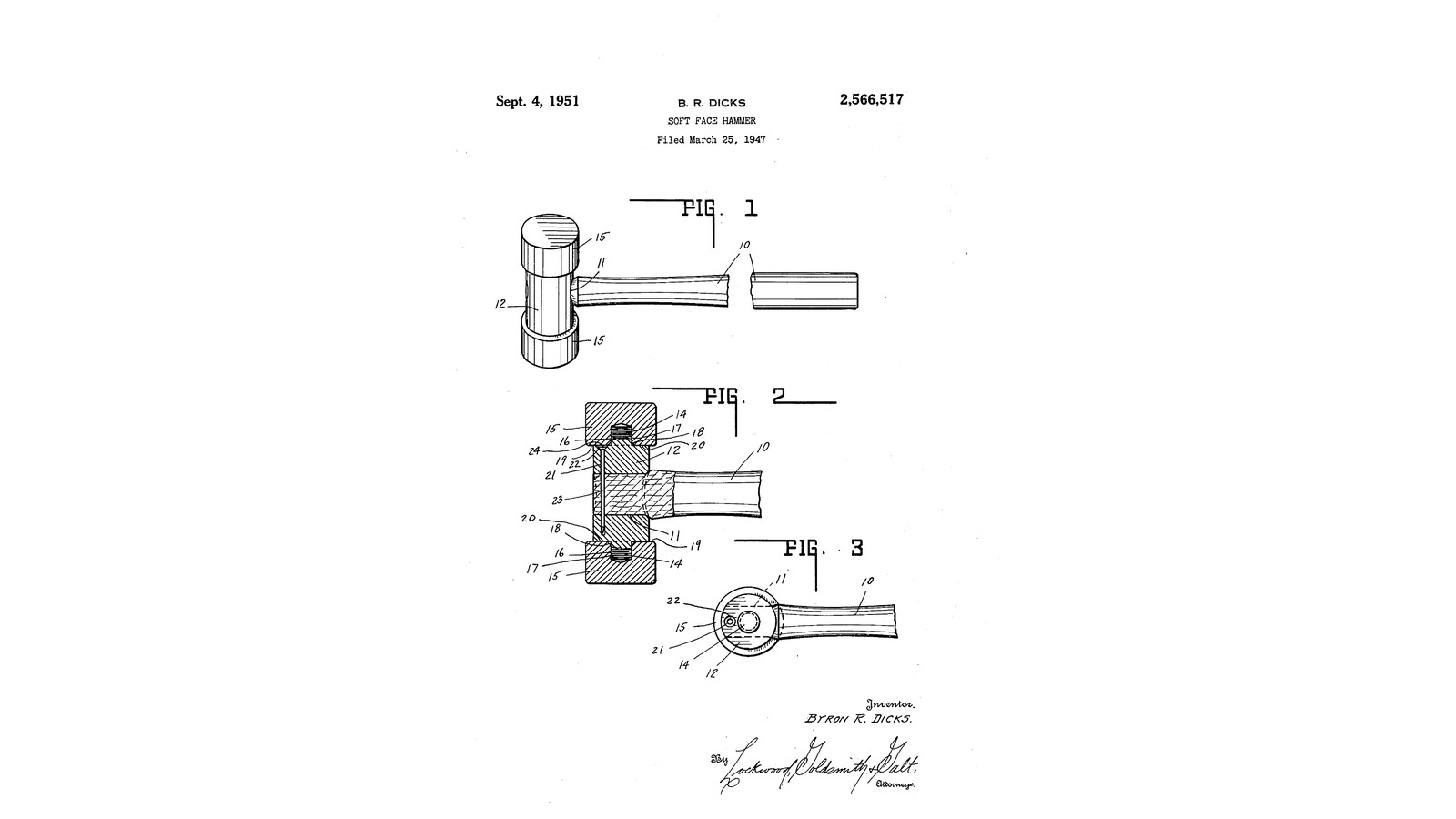

Threaded-Stud Rubber-Head Hammer: Heads Screw Onto the Body's Own Studs and Lock the Handle's Nail In (Dicks, 1951)
Byron R. Dicks of Lebanon, Indiana, received US 2,566,517, dated 4 September 1951, for a hammer made cheaply from bar stock with heads of any material. Each end of the cylindrical body has a threaded stud turned in one piece with it. Each head has a threaded socket chamfered at its mouth, so it bears on the body's flat end face in a true ring and the stud only connects. A nail driven down a bore beside the stud locks the handle. Its head sits in a counterbore, and the screwed-on head keeps it from ever coming out.
We give it two rubber heads, from his list of materials. The sizes are ours.
Hagati
About 2 days
Amabwiriza
1
1
Where the locking nail goes
Where the locking nail goes
Gupakira ikaye ya Jupyter…
2
2
Read US 2,566,517
Read US 2,566,517
"The nail when driven home obviously forms its own hole through the handle." "Obviously application of the head 15 retains the nail against loss if the same ever became somewhat loose in the handle."
3
3
Turn the body 12
Turn the body 12
From 38 mm steel round bar turn a body 80 mm long between end faces cut truly square, with a stud 14 16 mm across and 18 mm long standing out of each end; cut M16 threads on them with the die. Drill a 20 mm eye 11 through the middle, square to the axis, in a V-block, and flare its ends a little with a half-round file.
Ibikoresho by'iyi ntambwe:
 Umurongo uziguye w'icyuma cyoroheje1 igice
 Amavuta yo gukata1 igice
Ibikoresho bikenewe:
 Imashini yo guhinguza icyuma
 Igikoresho gifata cy'ibirenge 3 cy'imashini ihingura
 Icyuma cyo kuca cy'itorero
 Icyuma cyo guca ku ruziga
 Agakoresho ko gukata imizingo y'ibyuma
 Igifashi cyo guhindukiza umuyoboro wo hanze
 Ifatiro ry'Ameza
 Icyuma Cyivumbura Gihagaze
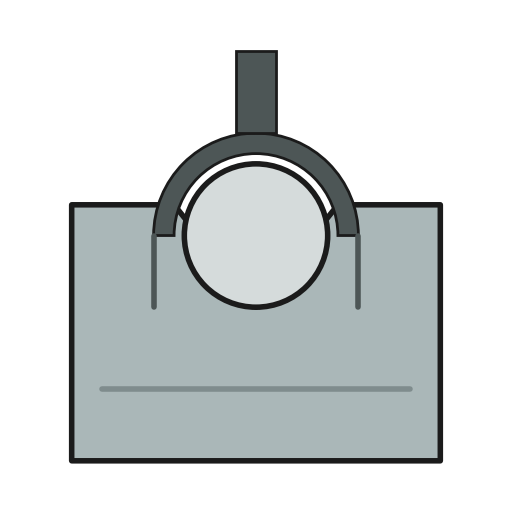 Ikibumbe cya V
 Ibyuma Byinshi byo Gucukura
 Amakariso Menshi
 Ikigereranyo cya Digitale cy'Amasentimetero 6
 Amadarubindi y'umutekano
4
4
Bore for the locking nail 21
Bore for the locking nail 21
Scribe a line across one end face along the eye's direction. Centre-punch it 13 mm from the centre and drill 4.2 mm parallel to the axis, down into the eye, and counterbore the mouth 7 mm across and 4 mm deep for the nail's head.
Ibikoresho bikenewe:
 Igikoresho Gishushanya Imirongo
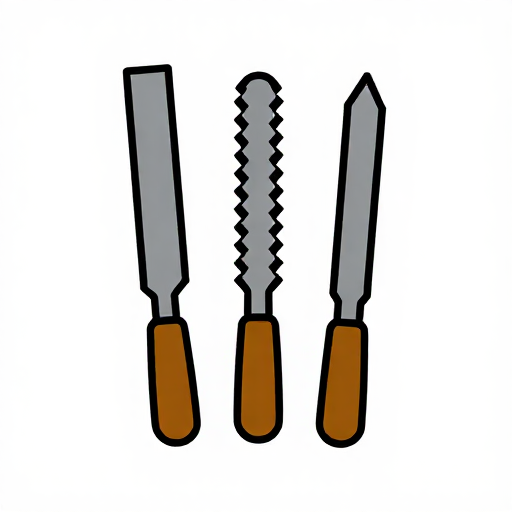
 Igicukuzi cyo Gushyira IkimenyetsoIcyuma Cyivumbura GihagazeIkibumbe cya VIbyuma Byinshi byo GucukuraIkigereranyo cya Digitale cy'Amasentimetero 6
5
5
Rubber heads 15
Rubber heads 15
For each head saw an M16 coupling nut to 25 mm and chamfer one end's thread 1 mm with a countersink: the socket 16 with its chamfered mouth 18. Cut 4 mm rubber discs 50 mm across: seven with a hole just round the nut and five solid. Bond them up round the nut with contact cement, the chamfered end flush with the head's inner face, and the solid discs at the striking face; clamp overnight and trim round.
Ibikoresho by'iyi ntambwe:
 Umupira w'Impande Esheshatu2 ibice
 Urupapuro rwa kawushu karemano1 igice
 Ifatanya rikorana1 igice
Ibikoresho bikenewe:
 Umucumita w'IbyumaIfatiro ry'Ameza
 Urutonde rw'ibikoresho byo kwagura utwoboIcyuma Cyivumbura Gihagaze
 Ikirangamurongo
 Icyuma cy'Ubukorikori
 Igifashe cy'inkoni
6
6
Handle, nail and heads
Handle, nail and heads
Turn an ash handle 300 mm long to drive tight into the eye. Drive it home, then drive a 4 mm nail 23 down the bore through the handle until its head sits in the counterbore below the end face. Screw the rubber heads onto the studs until each bears hard on its end face.
Ibikoresho by'iyi ntambwe:
 Ikibaho cy'Igiti Gikomeye1 igice
 Imisumari1 igice
Ibikoresho bikenewe:
 Imashini ikerekeza ibiti
 Icyegeranyo cy'ibikoresho by'imashini izunguruka (HSS)
 Inyundo ifite umutwe wa buruta
7
7
Troubleshooting
Troubleshooting
Threaded-stud hammer troubleshooting.
Flow
Loading...
8
8
History and honest limits
History and honest limits
**Byron R. Dicks** of Lebanon, Indiana, US 2,566,517, dated 4 September 1951, filed 25 March 1947. He claimed a cylindrical body "having flat faces at both ends disposed at true right angles to the axis", "threaded extensions integral with said body", detachable heads with threaded sockets "in face to face contact" with the body, a transverse handle opening, a longitudinal bore offset from the extensions through it, and "a safety pin" in the bore sealed in by the heads. His heads were turned from bar or made of any of the materials he lists, rubber among them; ours are rubber discs bonded round a threaded steel insert. He gives no sizes; every size here is ours.
Ibikoresho
7- Umwanya
- 1 igiceUmwanya
- 2 ibiceUmwanya
- Umwanya
- 1 igiceUmwanya
- 1 igiceUmwanya
- 1 igiceUmwanya
Ibikoresho bikenewe
23- Umwanya
- Umwanya
- Umwanya
- Umwanya
- Umwanya
- Umwanya
- Umwanya
- Umwanya
- Umwanya
- Umwanya
- Umwanya
- Umwanya
- Umwanya
- Umwanya
Iki gishushanyo gikora

Blueprint zijyanye
Izi blueprint zisangira ubumenyi — uburyo, ibikoresho cyangwa amahame
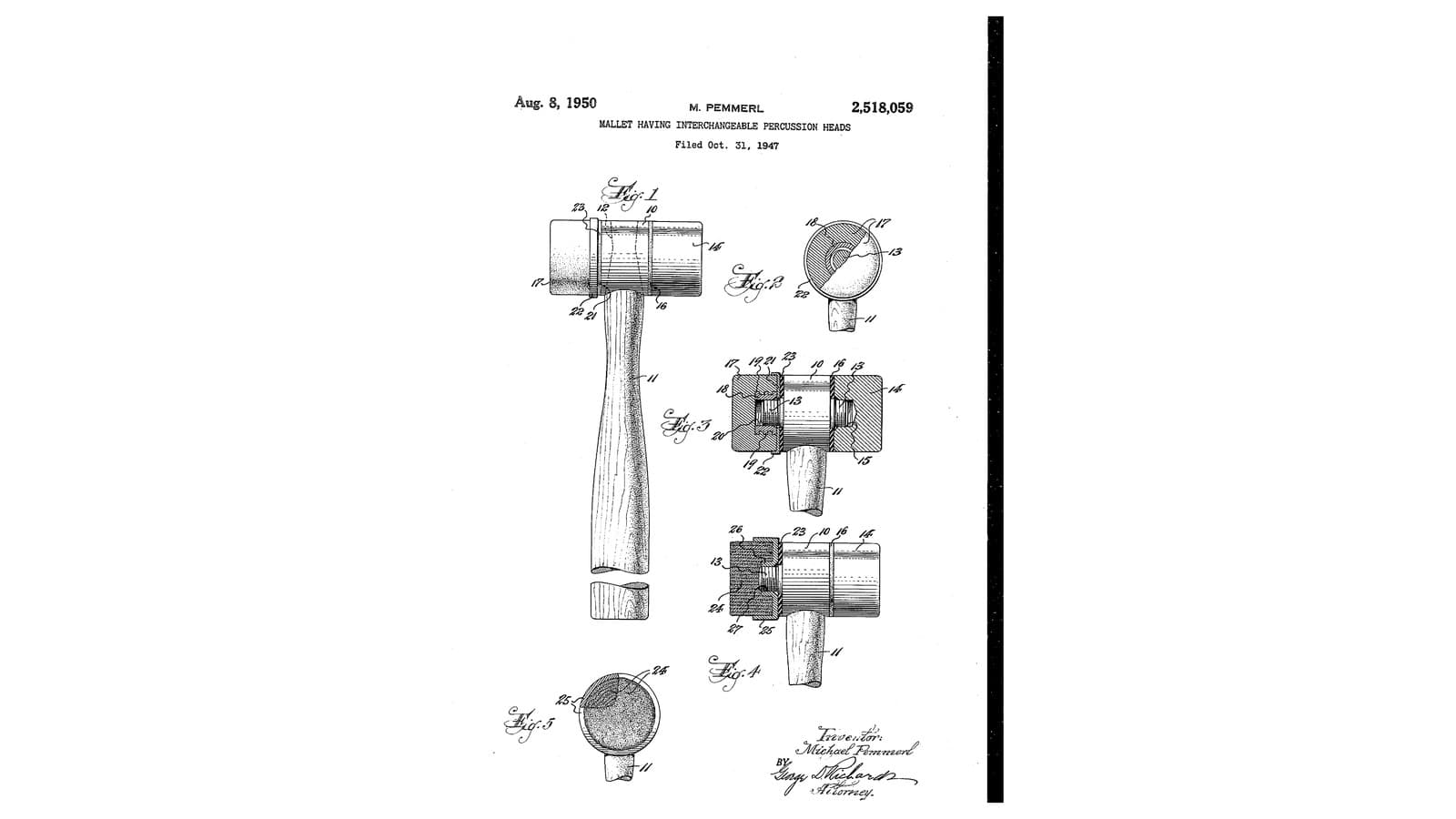
Screw-On Rubber Head Mallet: Rubber Members on Flanged Ferrules, Cupped and Cushioned on Steel Studs (Pemmerl, 1950)
na Forge
Ubucuzi bw'Ibyuma
0
0
0
0
0
0
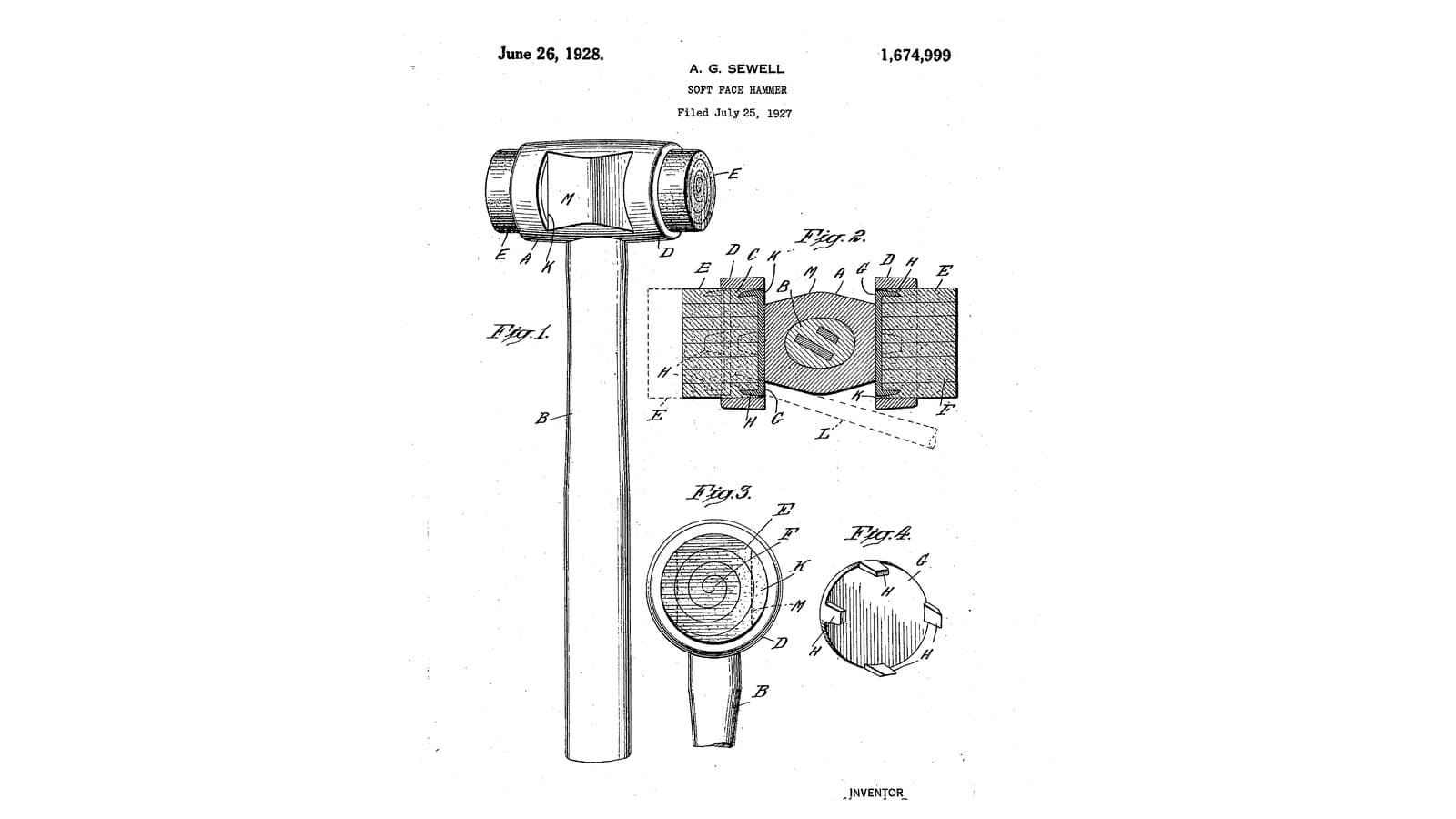
Renewable Rubber-Face Hammer: Rolled Faces Pressed Onto Pronged Discs, Driven Out Through a Notch When Worn (Sewell, 1928)
na Forge
Ubucuzi bw'Ibyuma
0
0
0
0
0
0
CC0 Umurenge rusange
Iyi blueprint yasohowe munsi ya CC0. Ushobora gukoporora, guhindura, gukwirakwiza no gukoresha nta kwemererwa.
Shyigikira Umuremyi ugura ibicuruzwa binyuze muri Blueprint ye Komisiyo y'Umuremyi byashyizweho n'Abacuruzi, cyangwa kora verisiyo nshya y'iyi Blueprint ukayinjiza nk'isano muri Blueprint yawe kugira ngo musangire inyungu.