Ubufatanye
UBUHANZI
UBWIZA N'UBUZIMA
UBUKORIKORI
UMUCO N'AMATEKA
IMYIDAGADURO
IBIDUKIKIJE
IBIRIBWA N'IBINYOBWA
UBWUBATSI BUSUBIRA INYUMA
UBUMENYI
SIPORO
IKORANABUHANGA
IBYAMBARWA
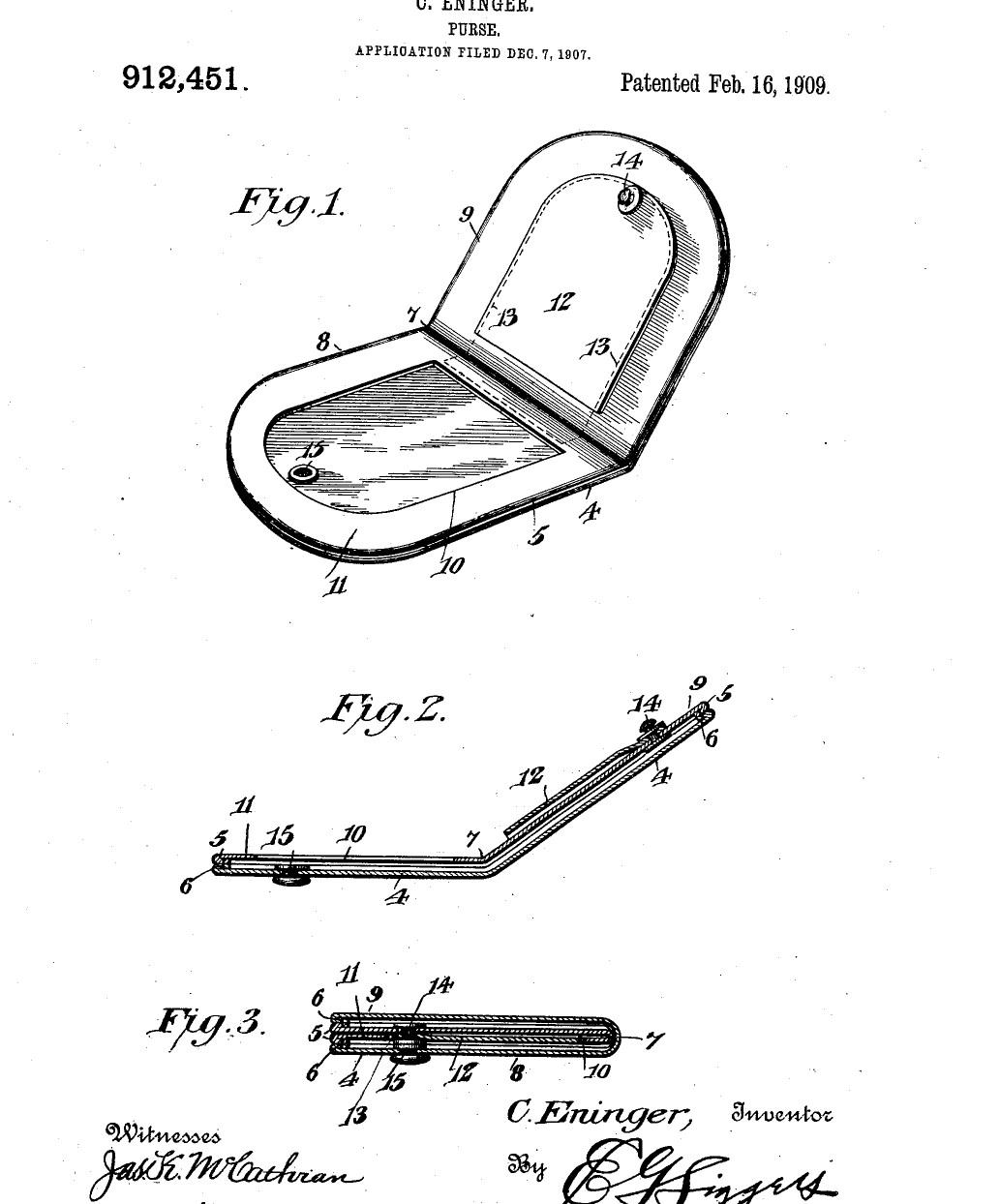


Folding Leather Coin Purse With a Tray Leaf and a Pocket Leaf (Eninger, 1909)
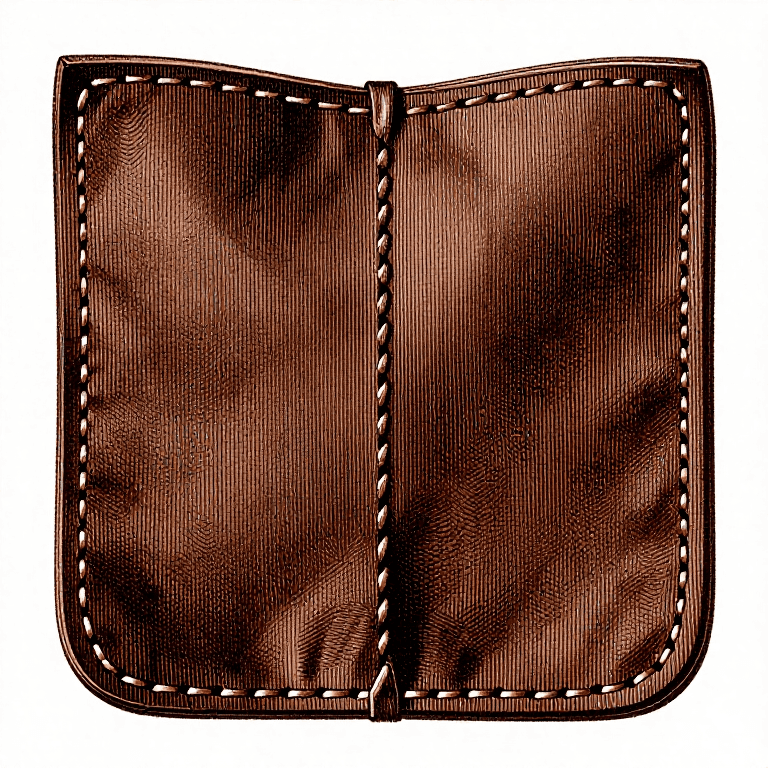
Charles Eninger of New York received US 912,451, dated 16 February 1909, for a coin purse made of two oval pieces of leather sewn together, turned and folded in half. Between the two walls of one half is a closed pocket for the coins; the inner wall of the other half has an opening, so that half is a tray the coins slide onto when it is opened. The piece cut out for the opening is sewn on the pocket half and fills the opening when it is folded. A snap fastener holds it shut, and "there is practically no waste of material".
All sizes are ours.
Utangiye
About 2 hours
Amabwiriza
1
1
Pattern sizes
Pattern sizes
Gupakira ikaye ya Jupyter…
2
2
Read US 912,451
Read US 912,451
"The leaf 9 constitutes a pocket or receptacle for the coins, while the leaf 8 is in effect a tray on to which the coins from the pocket will slide when the purse is opened."
3
3
Cut the two walls
Cut the two walls
Draw an ellipse 150 x 90 mm (ours) on paper, cut it out and mark round it twice on thin leather: the outer wall and the inner wall, each in one piece.
Ibikoresho by'iyi ntambwe:
 Uruhu rw'inyana1 igice
 Urupapuro rwa kare1 igice
Ibikoresho bikenewe:
 Ikaramu ya penisile
 Icyuma cyo gukata uruhu
4
4
Cut the opening
Cut the opening
Mark the transverse centre line (the fold). In one half of the inner wall (the tray half) cut an oval opening that stops short of the outer edge and short of the fold, leaving a margin all round: his retaining flange 11. Keep the piece you cut out: it becomes the third wall 12.
Ibikoresho bikenewe:
Icyuma cyo gukata uruhu5
5
Sew the walls and turn them
Sew the walls and turn them
Lay the two walls face to face and sew them together all round the edge (his line 6). Turn the purse inside out (through the opening, ours) so the seam is hidden, and rub the edge flat.
Ibikoresho by'iyi ntambwe:
 Insinga yo kudoda1 igice
Ibikoresho bikenewe:
 Urushinge Rutobora
 Inshinge zo kudoda n'intoki
 Igikoresho cy'igufa cyo guhina
6
6
Sew on the third wall
Sew on the third wall
Fold the purse along the centre line. On the other leaf (the pocket half), where the opening lands, sew the cut-out piece to the inner wall (his stitching 13), so that when the purse is folded it fits into the opening and lets the leaves lie flat.
Ibikoresho by'iyi ntambwe:
Insinga yo kudoda1 igiceIbikoresho bikenewe:
Urushinge RutoboraInshinge zo kudoda n'intoki7
7
Fit the snap
Fit the snap
Fix the stud on the inner side of the pocket leaf, on the third wall's side, and the socket on the outer wall of the other leaf in line with the opening, so the stud passes into the opening and snaps into the socket when closed, as he describes.
Ibikoresho by'iyi ntambwe:
 Buto ikandwa y'imyenda1 igice
Ibikoresho bikenewe:
 Igikoresho gitobora uruhu
 Inyundo ifite inzara
8
8
Use it
Use it
Coins go into the space between the walls through the opening. Opened flat, they slide from the pocket onto the tray leaf, where they can be seen and picked out through the opening; the flange stops them falling unless the purse is held upside down. Folded, the third wall closes the opening.
9
9
Troubleshooting
Troubleshooting
Coin purse troubleshooting.
Flow
Loading...
10
10
History and honest limits
History and honest limits
**Charles Eninger** of New York, assignor to H. B. Hardenburg & Co., US 912,451, dated 16 February 1909, filed 7 December 1907. He claimed "a purse comprising an outer flexible wall of one piece, and an inner flexible wall of one piece and of equal extent with the outer wall, said walls being secured together at their edges". He says leather is the material preferably employed but gives no sizes; the sizes, calf and thread are ours.
Ibikoresho
4- 1 igiceUmwanya
- 1 igiceUmwanya
- 2 ibiceUmwanya
- 1 igiceUmwanya
Ibikoresho bikenewe
7- 1 vendor sell this, none ship to you yetUmwanya
- Umwanya
- Umwanya
- Umwanya
- Umwanya
- Umwanya
Iki gishushanyo gikora
Blueprint zijyanye
Izi blueprint zisangira ubumenyi — uburyo, ibikoresho cyangwa amahame
CC0 Umurenge rusange
Iyi blueprint yasohowe munsi ya CC0. Ushobora gukoporora, guhindura, gukwirakwiza no gukoresha nta kwemererwa.
Shyigikira Umuremyi ugura ibicuruzwa binyuze muri Blueprint ye Komisiyo y'Umuremyi byashyizweho n'Abacuruzi, cyangwa kora verisiyo nshya y'iyi Blueprint ukayinjiza nk'isano muri Blueprint yawe kugira ngo musangire inyungu.