Ubufatanye
UBUHANZI
UBWIZA N'UBUZIMA
UBUKORIKORI
UMUCO N'AMATEKA
IMYIDAGADURO
IBIDUKIKIJE
IBIRIBWA N'IBINYOBWA
UBWUBATSI BUSUBIRA INYUMA
UBUMENYI
SIPORO
IKORANABUHANGA
IBYAMBARWA
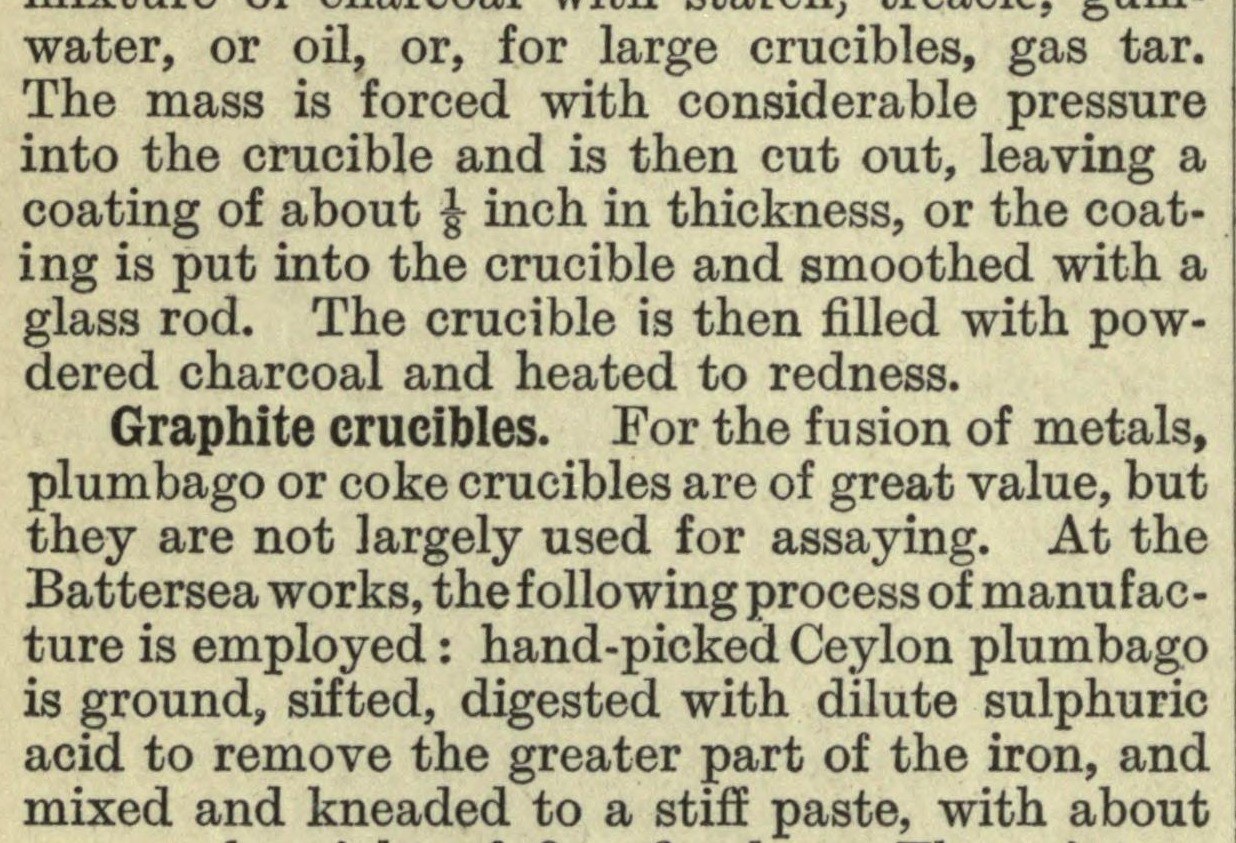


Graphite-Clay Crucible: Plumbago and Fireclay, the Battersea Works Way (Thorpe 1912)
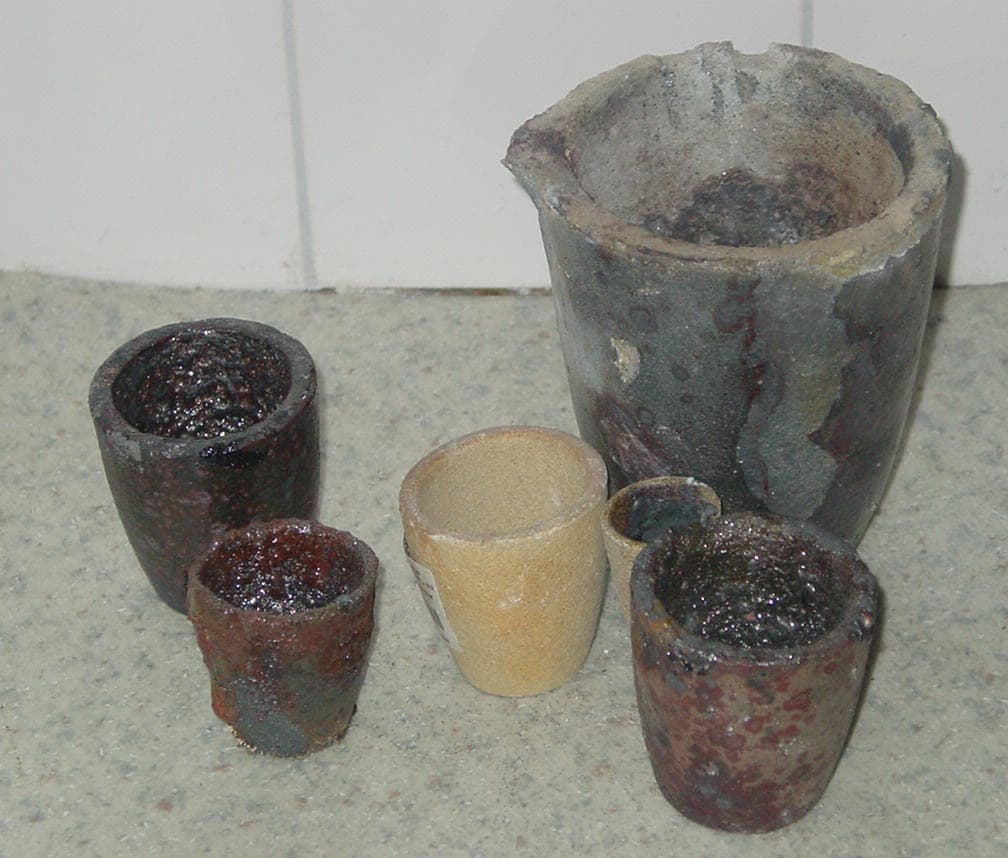
A graphite (plumbago) crucible is a melting pot of graphite bound with clay: fine grained, it stands the highest heats and sudden changes of temperature, and Thorpe counts it of great value for melting metals.
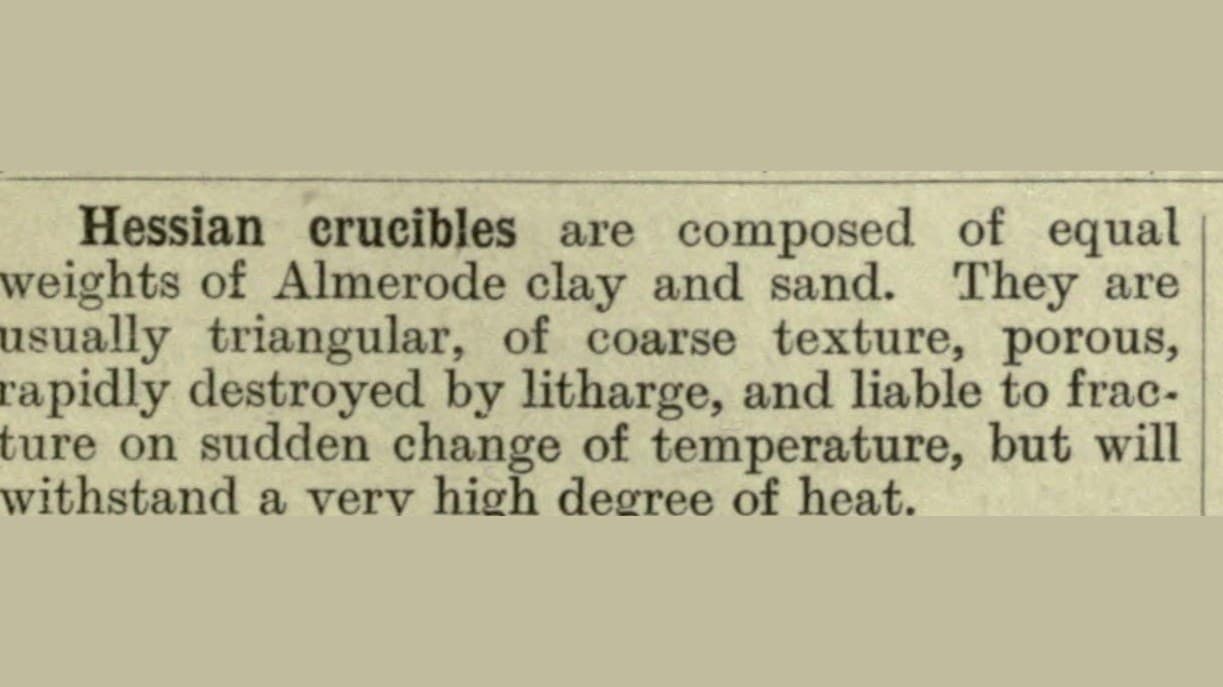
Thorpe's Dictionary of Applied Chemistry (1912) gives the Battersea works process: Ceylon plumbago ground, sifted and digested with dilute sulphuric acid to take out most of its iron, kneaded with about its own weight of fine fireclay, pugged, cut into blocks, pugged again, thrown on a wheel or moulded, dried and baked in saggars.
Acid strength, sizes and baking heat are not given.
Source: Thorpe, Dictionary of Applied Chemistry vol. II (1912), CRUCIBLES, p. 170. Picture: that paragraph.
Hagati
Several days with drying and baking
Amabwiriza
1
1
Read Thorpe
Read Thorpe
"Hand-picked Ceylon plumbago is ground, sifted, digested with dilute sulphuric acid to remove the greater part of the iron, and mixed and kneaded to a stiff paste, with about an equal weight of fine fireclay."
2
2
Grind and clean the plumbago
Grind and clean the plumbago
Pick over the plumbago by hand, grind it and sift it. Digest it with dilute sulphuric acid to remove the greater part of its iron, which would otherwise pass into the melt; the strength and time are not given.
Ibikoresho by'iyi ntambwe:
 Garafite karemano1 half by weight
Ibikoresho bikenewe:
 Urusyo rwo gusya
 Akayungurizo
 Aside ya sulifuriki yoroheje
 Amazi
 Uturindantoki twa Nitirile
 Amadarubindi y'umutekano
3
3
Knead with fireclay and pug
Knead with fireclay and pug
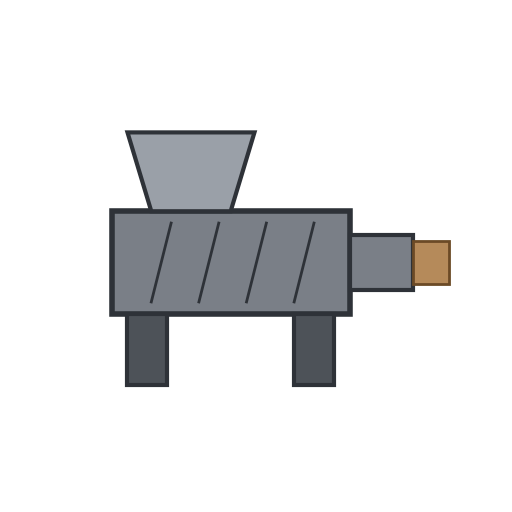
Mix the plumbago with about an equal weight of fine fireclay and knead it with water to a stiff paste. Pass it through a pug mill and cut the column into blocks. Pass the blocks through the mill again when you are ready to make crucibles.
Ibikoresho by'iyi ntambwe:
 Ibumba ryihanganira umuriro1 half by weightAmazi1 to a stiff paste
Ibikoresho bikenewe:
 Iminzani ya Digitale Nyayo
 Imashini ivuga ibumba (pug mill)
4
4
Form the crucibles
Form the crucibles
Make the crucibles by hand on a wheel, or mould them. Sizes are not given (unknown).
Ibikoresho bikenewe:
 Uruziga rw'umubumbyi
 Ingano zitazwi
5
5
Dry and bake in saggars
Dry and bake in saggars
Dry the crucibles, then bake them inside saggars. To slow the burning out of the graphite in use, a crucible may be dipped in a paste of clay and a solution of borax.
Ibikoresho bikenewe:
 Agasanduku k'ibumba ryihanganira umuriro
 Itanura
 Ifu ya boraki
6
6
History and honest limits
History and honest limits
Thorpe notes that graphite crucibles are of great value for melting metals but little used for assaying, that the graphite is slowly burnt by metal oxides and furnace gases, and that iron left in the graphite can pass into the metal. He also gives Digby's 1893 mixture of coarse and fine plumbago, Russian clay, china-stone and gas carbon, a different route.
The acid strength and time, the sizes and the baking heat are not given; refractory clay stands for his fine fireclay.
Ibikoresho
3- 1 half by weightUmwanya
- 1 half by weightUmwanya
- 1 to a stiff pasteUmwanya
Ibikoresho bikenewe
13- Umwanya
- Umwanya
- Umwanya
- Umwanya
- Umwanya
- Umwanya
- Umwanya
- Umwanya
- Umwanya
- Umwanya
- Umwanya
Iki gishushanyo gikora

Blueprint zijyanye
Izi blueprint zisangira ubumenyi — uburyo, ibikoresho cyangwa amahame

CC0 Umurenge rusange
Iyi blueprint yasohowe munsi ya CC0. Ushobora gukoporora, guhindura, gukwirakwiza no gukoresha nta kwemererwa.
Shyigikira Umuremyi ugura ibicuruzwa binyuze muri Blueprint ye Komisiyo y'Umuremyi byashyizweho n'Abacuruzi, cyangwa kora verisiyo nshya y'iyi Blueprint ukayinjiza nk'isano muri Blueprint yawe kugira ngo musangire inyungu.