Ubufatanye
UBUHANZI
UBWIZA N'UBUZIMA
UBUKORIKORI
UMUCO N'AMATEKA
IMYIDAGADURO
IBIDUKIKIJE
IBIRIBWA N'IBINYOBWA
UBWUBATSI BUSUBIRA INYUMA
UBUMENYI
SIPORO
IKORANABUHANGA
IBYAMBARWA
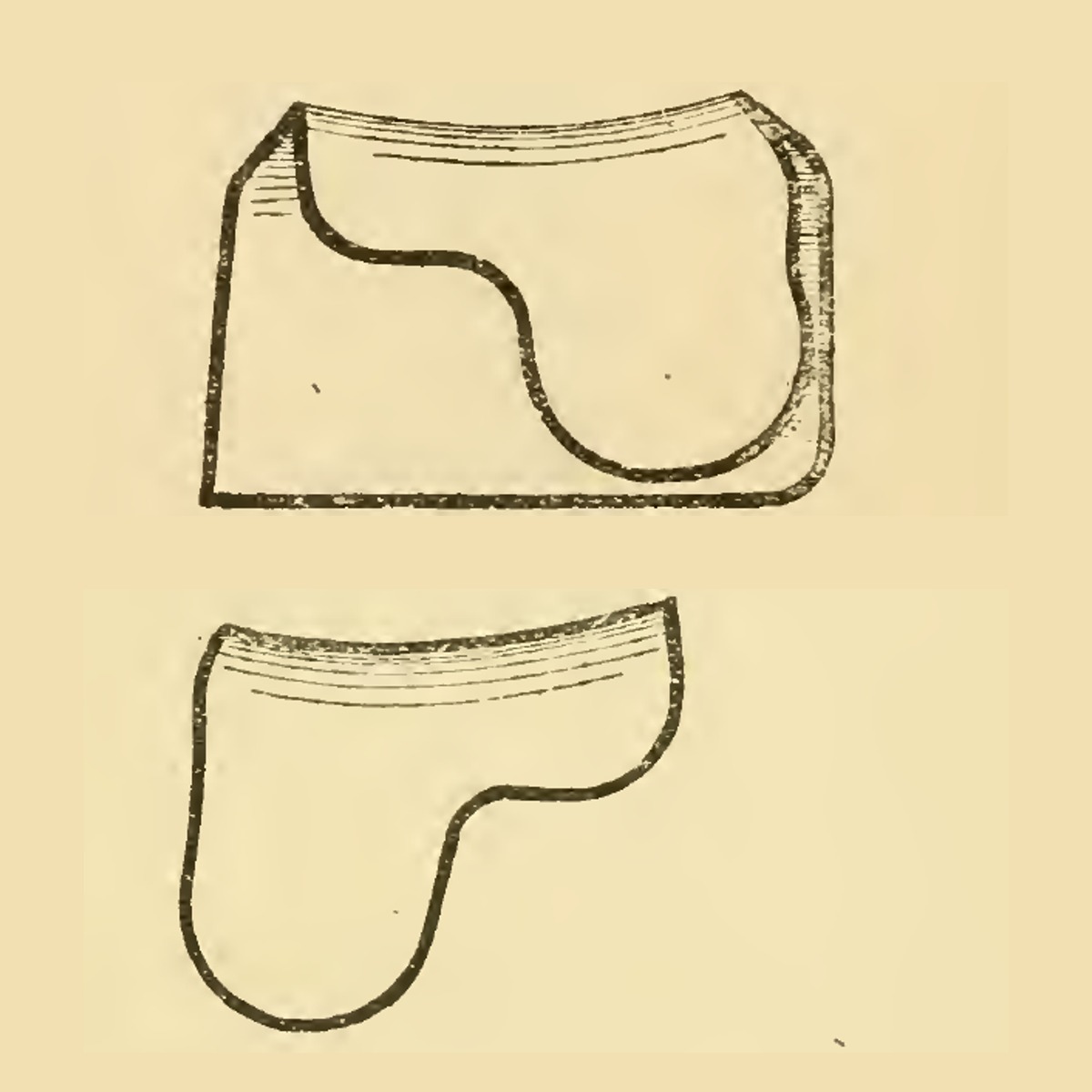


Felt Saddle Cloth (Numnah): Two Pieces Whip-Stitched and Bound in Coloured Cloth (Hasluck, Saddlery, 1904)
A saddle cloth goes under the saddle to protect the horse's back and the saddle panel by soaking up sweat. This is the felt saddle cloth from Paul N. Hasluck's Saddlery (1904), the army's numnah: two pieces of felt cut to the saddle's shape but a little larger, whip-stitched together and bound in red, yellow or blue cloth. He gives no sizes; they come from your saddle.
Utangiye
About 3 hours
Amabwiriza
1
1
Read Saddlery, ch. V
Read Saddlery, ch. V
"As a rule, saddle-cloths (Figs. 16 and 17) are made of felt in the same shape as the saddle, but a little larger." In the army they are called numnahs; he says felt "is certainly the best material to use for the purpose, but kersey, cloth, and holland have been commonly employed."
2
2
Cut the two pieces
Cut the two pieces
Lay the saddle on the felt and mark round it a little larger (marking round the saddle is our way; he gives only the rule). Cut the cloth in two pieces, one for each side, with a small curve at the back, rising a little at each end. Felt comes in blue, brown, fawn and other colours.
Ibikoresho by'iyi ntambwe:
 Ubwoya bw'intama bwashongeshejwe1 igice
Ibikoresho bikenewe:
 Ikaramu ya penisile
 Umukasi
 Umugozi wo Gupima
3
3
Join the pieces
Join the pieces
Stitch the two pieces together with a whip stitch, then stitch a piece of binding along the joint.
Ibikoresho by'iyi ntambwe:
 Agace gasiga ku nkengero1 igice
 Udodo w'igitani1 igice
 Igishashara1 igice
Ibikoresho bikenewe:
 Inshinge ebyiri zo kudoda uruhuUmukasi
4
4
Bind the edges
Bind the edges
Bind the edges all round with red, yellow or blue cloth.
Ibikoresho by'iyi ntambwe:
 Umwenda w'ubwoya ukimara kubohwa1 igiceUdodo w'igitani1 igiceIgishashara1 igice
Ibikoresho bikenewe:
Inshinge ebyiri zo kudoda uruhuUmukasi Icyuma cyo gukata uruhu
5
5
Using it
Using it
The cloth is shaped to go easily under the saddle. He also uses it when the stuffing of the saddle is uneven: "this is a good remedy, and one that has been used almost universally in the cavalry".
Ibikoresho bikenewe:
Umugozi wo Gupima6
6
Troubleshooting
Troubleshooting
Saddle cloth troubleshooting.
Flow
Loading...
7
7
History and honest limits
History and honest limits
From **Saddlery**, edited by Paul N. Hasluck, David McKay, 1904 (archive.org saddlery00hasl), chapter V, saddle cloths, pp. 49-50, Figs. 16-17; read on the scan. He gives no sizes, only the rule "the same shape as the saddle, but a little larger". He notes that kersey, a coarse, usually ribbed woollen cloth, was famous from Devon as far back as the fourteenth century. Marking round the saddle, the thread and tools are ours.
Ibikoresho
5- Umwanya
- 1 igiceUmwanya
- 2 ibiceUmwanya
- 2 ibiceUmwanya
- Umwanya
Iki gishushanyo gikora

Blueprint zijyanye
Izi blueprint zisangira ubumenyi — uburyo, ibikoresho cyangwa amahame
CC0 Umurenge rusange
Iyi blueprint yasohowe munsi ya CC0. Ushobora gukoporora, guhindura, gukwirakwiza no gukoresha nta kwemererwa.
Shyigikira Umuremyi ugura ibicuruzwa binyuze muri Blueprint ye Komisiyo y'Umuremyi byashyizweho n'Abacuruzi, cyangwa kora verisiyo nshya y'iyi Blueprint ukayinjiza nk'isano muri Blueprint yawe kugira ngo musangire inyungu.