Ubufatanye
UBUHANZI
UBWIZA N'UBUZIMA
UBUKORIKORI
UMUCO N'AMATEKA
IMYIDAGADURO
IBIDUKIKIJE
IBIRIBWA N'IBINYOBWA
UBWUBATSI BUSUBIRA INYUMA
UBUMENYI
SIPORO
IKORANABUHANGA
IBYAMBARWA
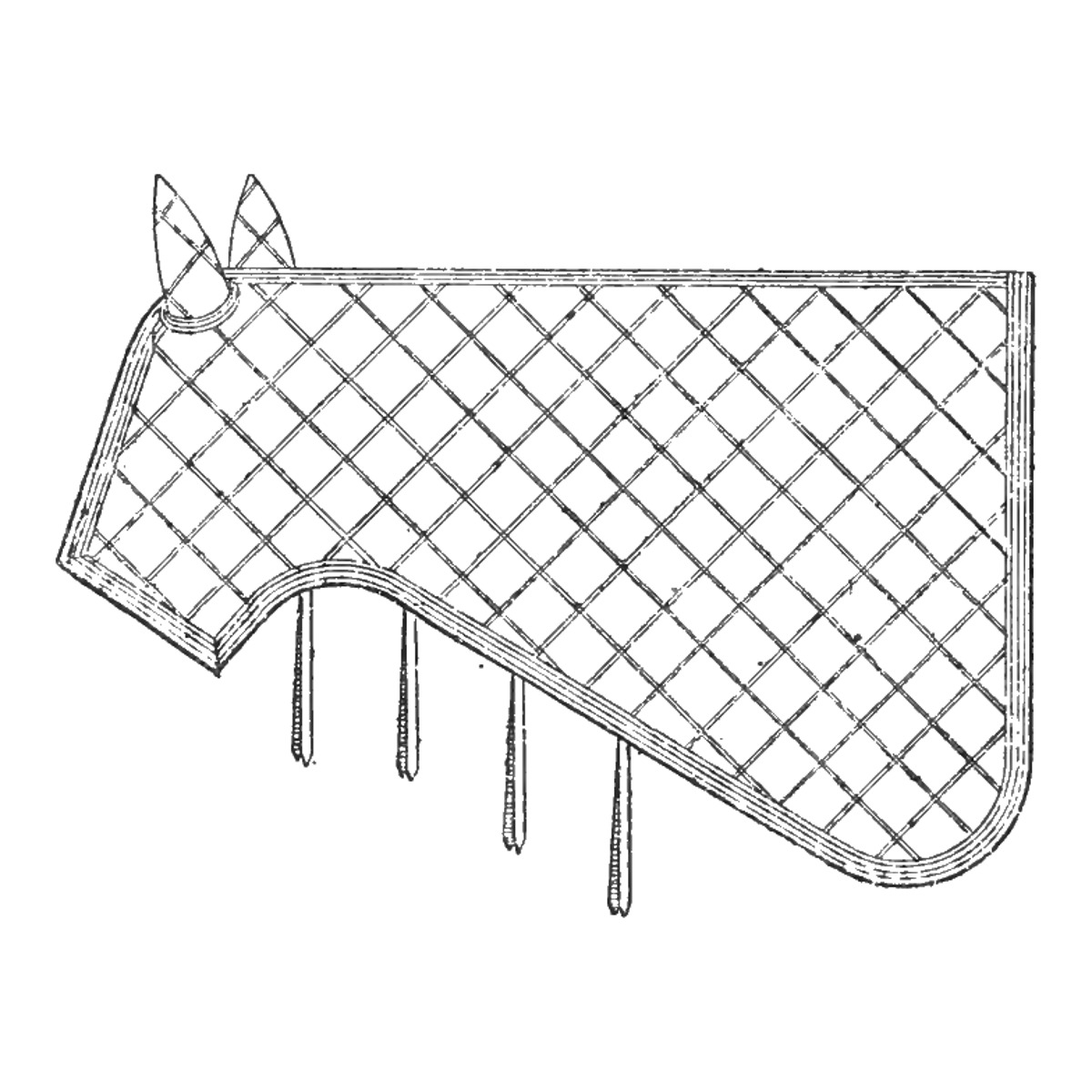


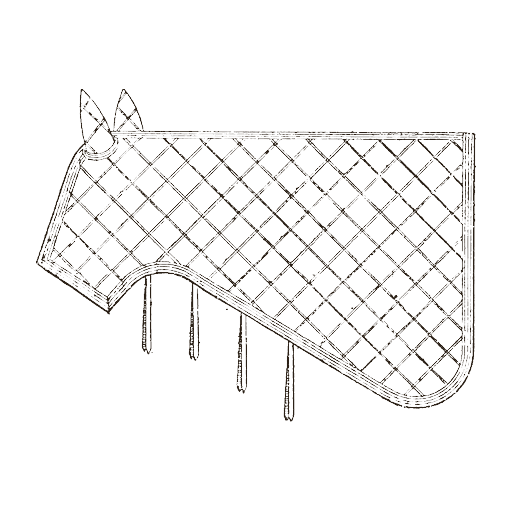
Horse Hood: Two-Piece Cloth Hood With Ear Covers, Bound Edges and Jaw Strap (Hasluck, Saddlery, 1904)
The hood completes a horse's stable suit of sheet, breast cloth and pad cloth, covering the head and neck. This is the hood from Paul N. Hasluck's Saddlery (1904): two pieces of cloth cut to the horse from about 5-1/4 in below the eye back to the shoulder, with ear covers and eye holes, bound all round and fastened under the jaw. It is cut to fit each horse, so he gives few sizes.
Hagati
About 1 day
Amabwiriza
1
1
His sizes in centimetres
His sizes in centimetres
Gupakira ikaye ya Jupyter…
2
2
Read Saddlery, ch. IX
Read Saddlery, ch. IX
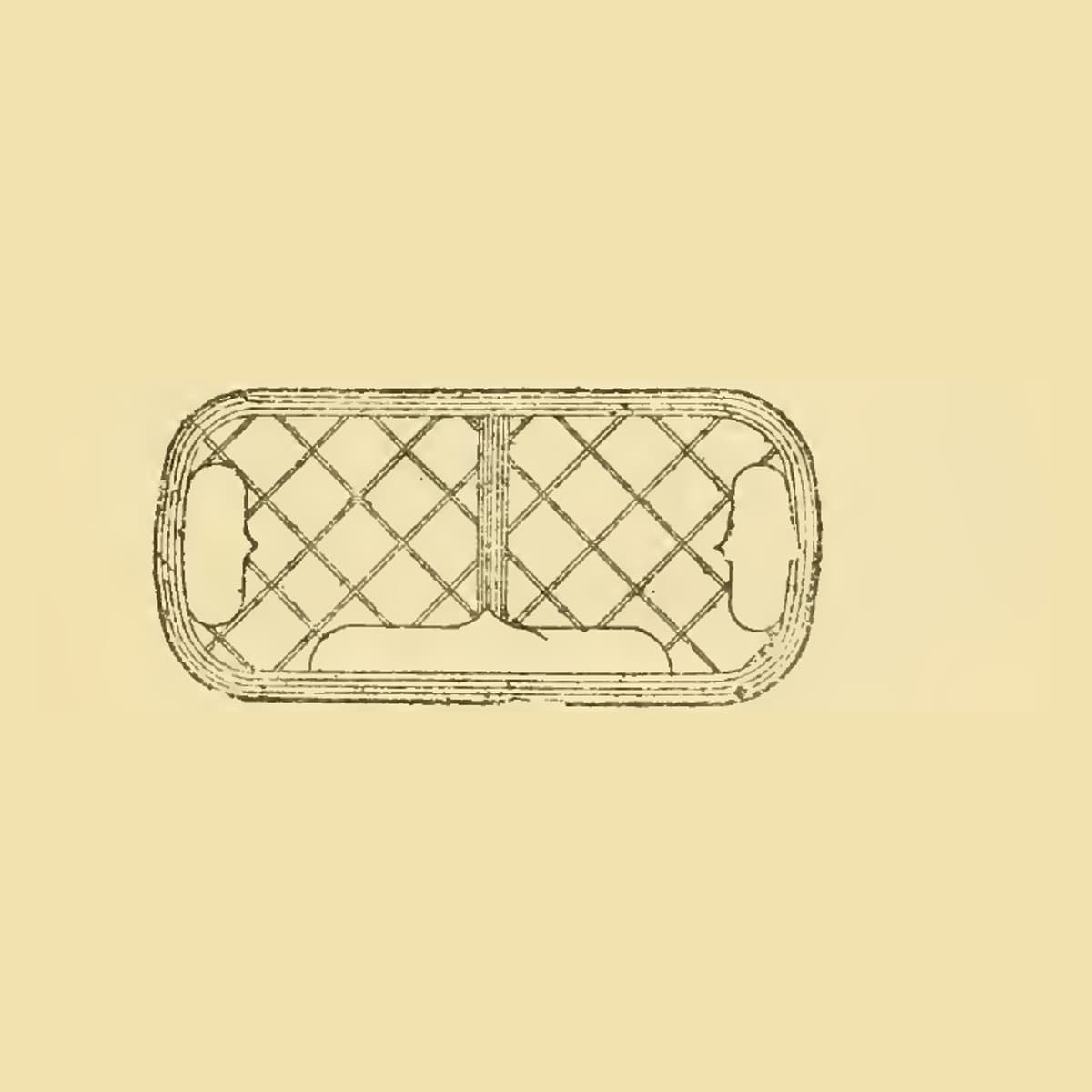
"A hood is needed to complete the suit. A suitable shape is shown by Fig. 29. The hood must be cut to the shape of the horse's neck and head, from a point about 5-1/4 in. below the eye on the nose, then along the ridge of the head and neck to the shoulder, where it should cover the front of the sheet well."
3
3
Cut the two sides
Cut the two sides
Cut the hood in two pieces, one for each side (he says sometimes four, with pieces added to the side flaps for size), shaped to the horse from about 5-1/4 in below the eye on the nose, along the ridge of the head and neck to the shoulder, covering the front of the sheet well. Under the neck, cut all round the throat and down under the head so the two sides meet exactly in the centre. Making a paper pattern on the horse first is our suggestion.
Ibikoresho by'iyi ntambwe:
 Umwenda w'ubwoya ukimara kubohwa1 igice
Ibikoresho bikenewe:
 Impapuro z'ikigina zo gupfunyika
 Ikaramu ya penisile
 Umukasi
 Umugozi wo Gupima
4
4
Cut the ear and eye holes
Cut the ear and eye holes
Cut the holes for the ears, and two holes right opposite the eyes. Put the front cut of the cloth opposite the front of the ear.
Ibikoresho bikenewe:
UmukasiIkaramu ya penisile5
5
Make the ear covers
Make the ear covers
Make a cover for each ear: the front part about 1 in larger than the face of the ear all round, the back part large enough to pass round the back of the ear and let it go in easily. Whip the edges together and stitch round the hole at the bottom, all the stitches on the outside.
Ibikoresho by'iyi ntambwe:
Umwenda w'ubwoya ukimara kubohwa1 igice Udodo w'igitani1 igice
 Igishashara1 igice
Ibikoresho bikenewe:
Umukasi Inshinge ebyiri zo kudoda uruhu
6
6
Join the sides
Join the sides
Whip the edges together level along the top of the neck and over the head, down the front of the face. Join any other piece the same way, and always bind the joint, stitching on both sides.
Ibikoresho by'iyi ntambwe:
Udodo w'igitani1 igiceIgishashara1 igiceIbikoresho bikenewe:
Inshinge ebyiri zo kudoda uruhu7
7
Bind the edges
Bind the edges
Cut the binding cloth 1-1/4 in wide (cloth, patent or Newmarket binding) and turn it round the edges just enough to catch the first row of stitching, about 1/4 in from the edge. Draw it as flat as possible and stitch another row along the inner edge. Where it puckers too much at a sharp turn, as at the throat, cut the puckers out and stitch edge to edge. Put a strip along the joint on the top of the neck, its ends under the binding, then flat strips 1/2 in wide along the side joints and the points of the ear pieces, and round the bottom to cover the ends and the joint. He notes this work can be done by machine.
Ibikoresho by'iyi ntambwe:
Umwenda w'ubwoya ukimara kubohwa1 igiceUdodo w'igitani1 igiceIgishashara1 igiceIbikoresho bikenewe:
UmukasiInshinge ebyiri zo kudoda uruhuUmugozi wo Gupima8
8
Fit the jaw strap and strings
Fit the jaw strap and strings
Fasten the hood under the jaw with a small strap and buckle. Run cadez strings (ties) from this point to about half-way down the neck on each side, to tie together.
Ibikoresho by'iyi ntambwe:
 Uruhu rw'ibikoresho by'ifarashi1 igice
 Urufunga rw'icyuma rufite urutoki1 igice
 Umugozi w'ipamba wo mu gikoni1 igiceUdodo w'igitani1 igiceIgishashara1 igice
Ibikoresho bikenewe:
 Icyuma cyo gukata uruhu
 Urushinge RutoboraInshinge ebyiri zo kudoda uruhu
9
9
Troubleshooting
Troubleshooting
Horse hood troubleshooting.
Flow
Loading...
10
10
History and honest limits
History and honest limits
From **Saddlery**, edited by Paul N. Hasluck, David McKay, 1904 (archive.org saddlery00hasl), chapter IX, "Horse Clothing", hood, pp. 70-74, Fig. 29; every fraction was read on the scan. He gives no overall sizes: the hood is cut to the horse. He does not say what cadez strings are made of; cotton string is our choice. The sheets and breast cloth of the suit are not made here. Kersey, the paper pattern, tools and metric figures are ours.
Ibikoresho
6- Umwanya
- 4 ibiceUmwanya
- 4 ibiceUmwanya
- Umwanya
- Umwanya
- Umwanya
Ibikoresho bikenewe
7- 1 vendor sell this, none ship to you yetUmwanya
- Umwanya
- 1 vendor sell this, none ship to you yetUmwanya
- Umwanya
- Umwanya
Iki gishushanyo gikora
Blueprint zijyanye
Izi blueprint zisangira ubumenyi — uburyo, ibikoresho cyangwa amahame
CC0 Umurenge rusange
Iyi blueprint yasohowe munsi ya CC0. Ushobora gukoporora, guhindura, gukwirakwiza no gukoresha nta kwemererwa.
Shyigikira Umuremyi ugura ibicuruzwa binyuze muri Blueprint ye Komisiyo y'Umuremyi byashyizweho n'Abacuruzi, cyangwa kora verisiyo nshya y'iyi Blueprint ukayinjiza nk'isano muri Blueprint yawe kugira ngo musangire inyungu.