Ubufatanye
UBUHANZI
UBWIZA N'UBUZIMA
UBUKORIKORI
UMUCO N'AMATEKA
IMYIDAGADURO
IBIDUKIKIJE
IBIRIBWA N'IBINYOBWA
UBWUBATSI BUSUBIRA INYUMA
UBUMENYI
SIPORO
IKORANABUHANGA
IBYAMBARWA
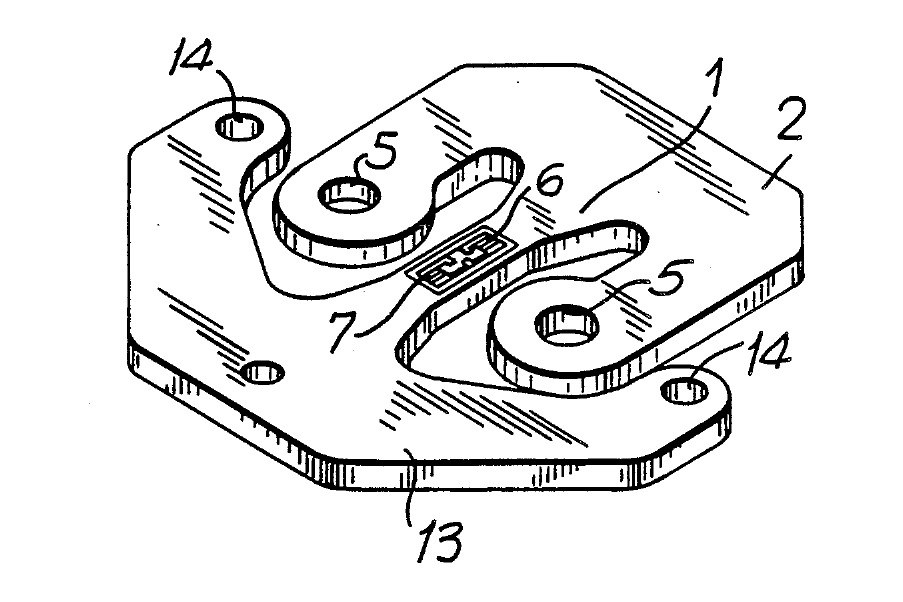


Load Cell: Flat One-Piece Stamping with a U-Shaped Loading Element (Angel, 1991)
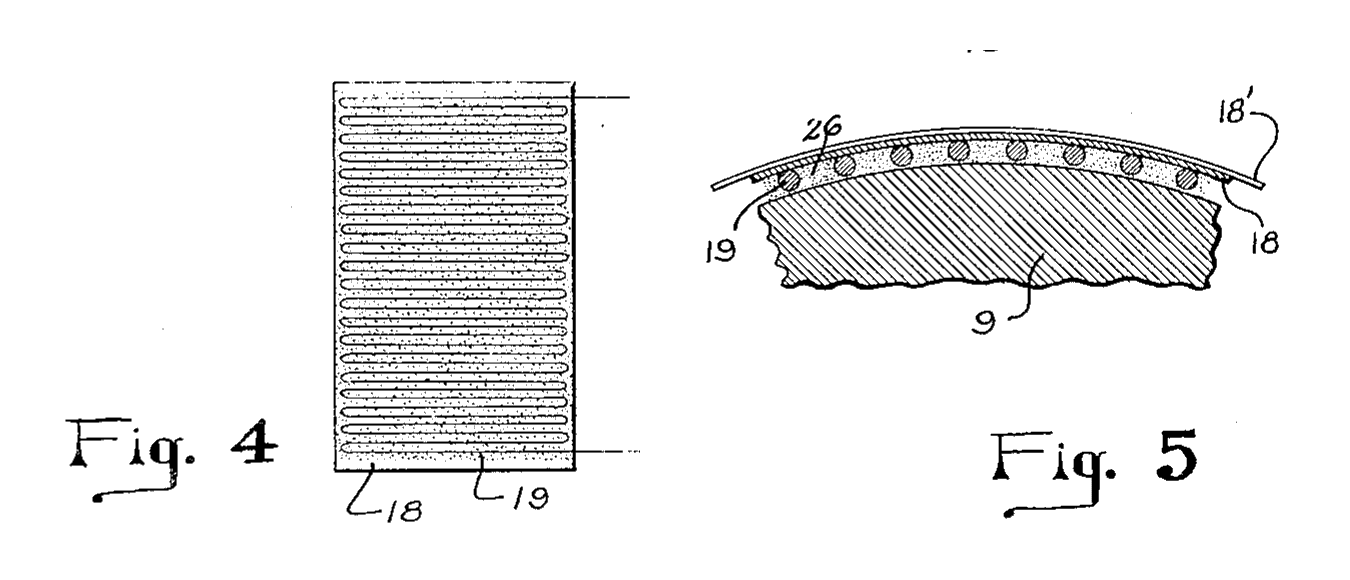
A load cell cut in one piece from flat metal, cheap enough to put four in every scale and thin enough to hide in a low floor scale. A beam in the middle carries two strain gauges; a U-shaped arm round it takes the load; a second U-shaped arm holds it down.
Result: a flat load cell whose beam bends into an S under load, stretching one gauge and squeezing the other. It stays accurate when the load is off-centre.
Source: S. Angel, US Patent 4,993,506 (1991). Unknown: the metal, its thickness and all sizes. Ours: bonded wire strain gauges and epoxy. Picture: patent drawing (Fig. 3).
Hejuru
1 day
Amabwiriza
1
1
Stamp the cell from thin metal
Stamp the cell from thin metal
Stamp the cell in one piece from thin flat metal. A flexure beam runs down the middle, narrowed at its centre. A U-shaped loading element joins one end of the beam; its two arms reach past the beam's mid-point, each with a hole, and the two holes face each other across the beam's centre. A U-shaped mounting element joins the other end, outside the loading element, with screw holes on a line through the beam's centre. Set the beam's ends by a change in width, not thickness. Not given: the metal, its thickness and the sizes.
Ibikoresho by'iyi ntambwe:
 Icyuma kitazwi1 thin flat stock
Ibikoresho bikenewe:
 Ikandagira ryo gukanda ibyuma
 Ingano zitazwi
2
2
Bond the two strain gauges
Bond the two strain gauges
Bond two strain gauges side by side on one face of the narrow middle of the beam. Put their centres at equal distances either side of the beam's centre, and at equal distances from its two edges. Under load the beam bends into an S: one gauge is stretched and rises in resistance, the other is squeezed and falls by the same amount. Wire them as one half of a Wheatstone bridge. The patent allows strain gauges, thick-film resistors or semiconductor sensors. Ours: bonded wire gauges set in epoxy.
Ibikoresho by'iyi ntambwe:
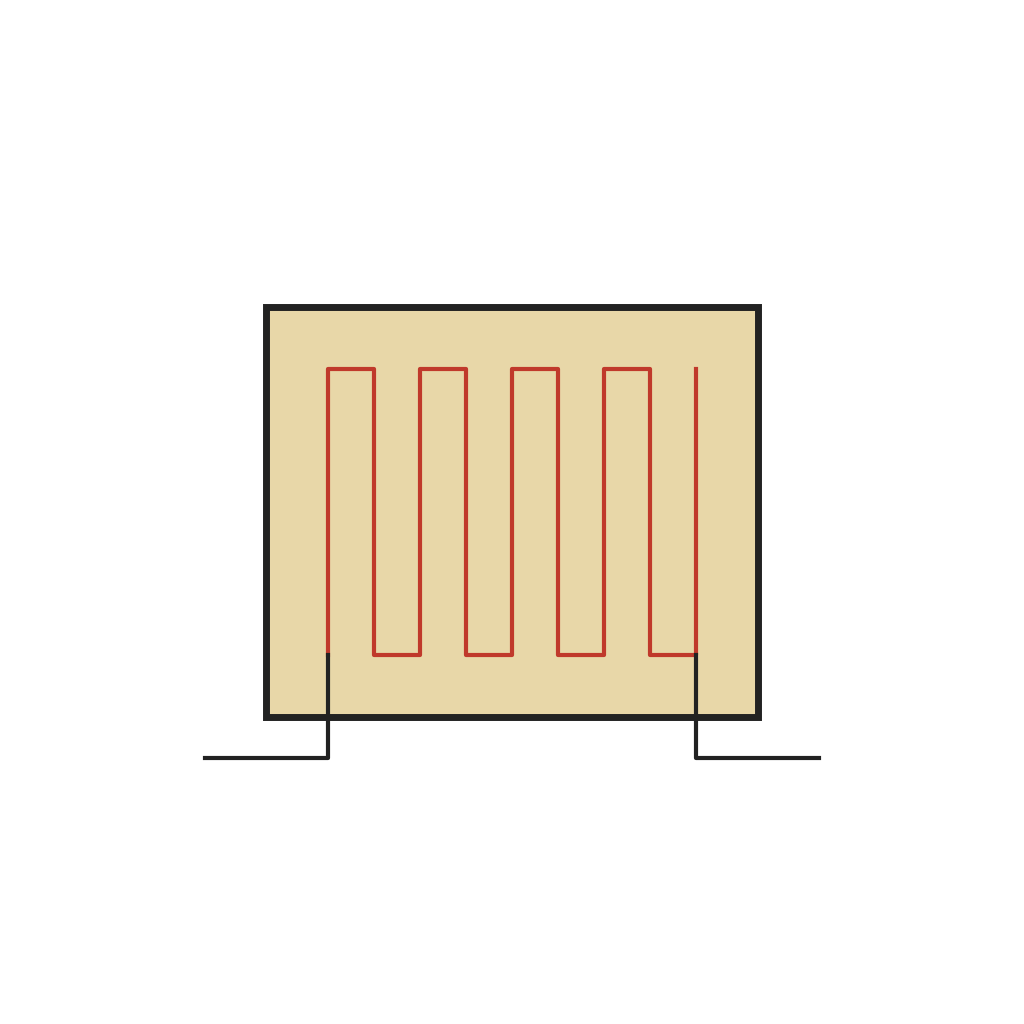 Igipima-kurambura cy'insinga gifatishijwe2 ibice
 Epoksi y'Ibice Bibiri1 a little
 Insinga yo guhuza1 short leads
 Urusinga rw'isudire1 a little
Ibikoresho bikenewe:
 Icyuma cyo gusudira
3
3
Mount and check
Mount and check
Screw the mounting element down onto small flat raised pads on a rigid plate, so the rest of the cell hangs free to bend. Press on the two loading holes: the half-bridge gives a signal in step with the load. Because the gauges sit symmetrically, the reading holds even when the two arms carry unequal shares, as long as their total is the same. Ours: check the gauges with a meter.
Ibikoresho bikenewe:
 Igipimo cy'amashanyarazi kinyuranye
Ibikoresho
5- 1 thin flat stockUmwanya
- Umwanya
- 1 a littleUmwanya
- 1 short leadsUmwanya
- 1 a littleUmwanya
Ibikoresho bikenewe
4- Umwanya
- 2 vendors sell this, none ship to you yetUmwanya
Ibikoresho by'Ibishushanyo Bifitanye Isano
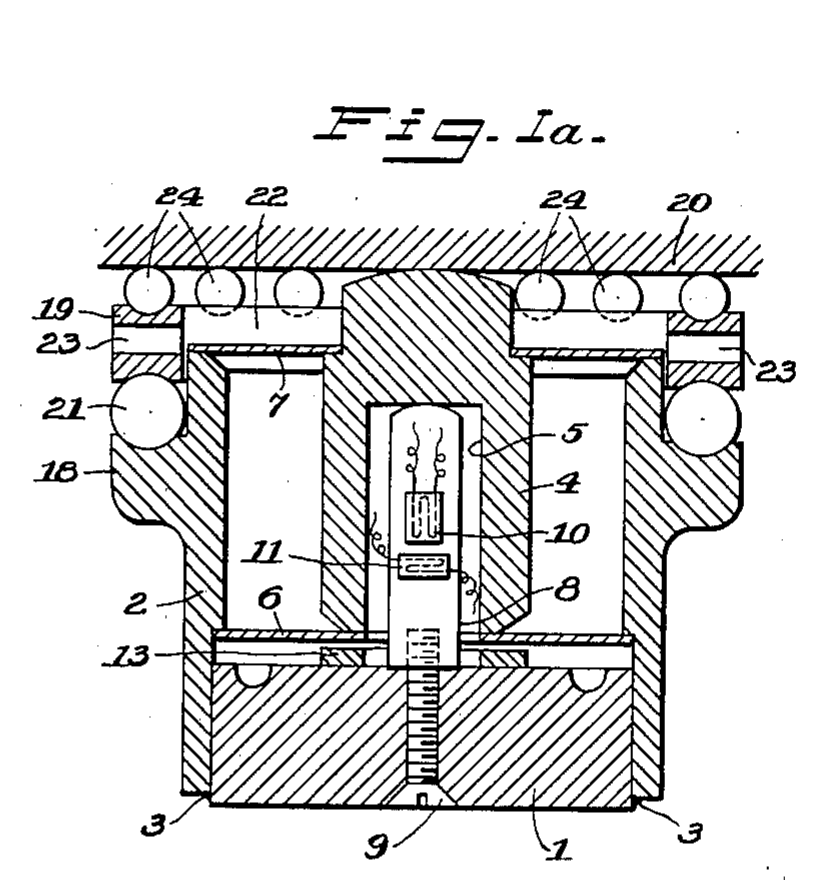
Iki gishushanyo gikora
CC0 Umurenge rusange
Iyi blueprint yasohowe munsi ya CC0. Ushobora gukoporora, guhindura, gukwirakwiza no gukoresha nta kwemererwa.
Shyigikira Umuremyi ugura ibicuruzwa binyuze muri Blueprint ye Komisiyo y'Umuremyi byashyizweho n'Abacuruzi, cyangwa kora verisiyo nshya y'iyi Blueprint ukayinjiza nk'isano muri Blueprint yawe kugira ngo musangire inyungu.