

Making Treenails — Wooden Pegs for Timber Framing and Shipbuilding
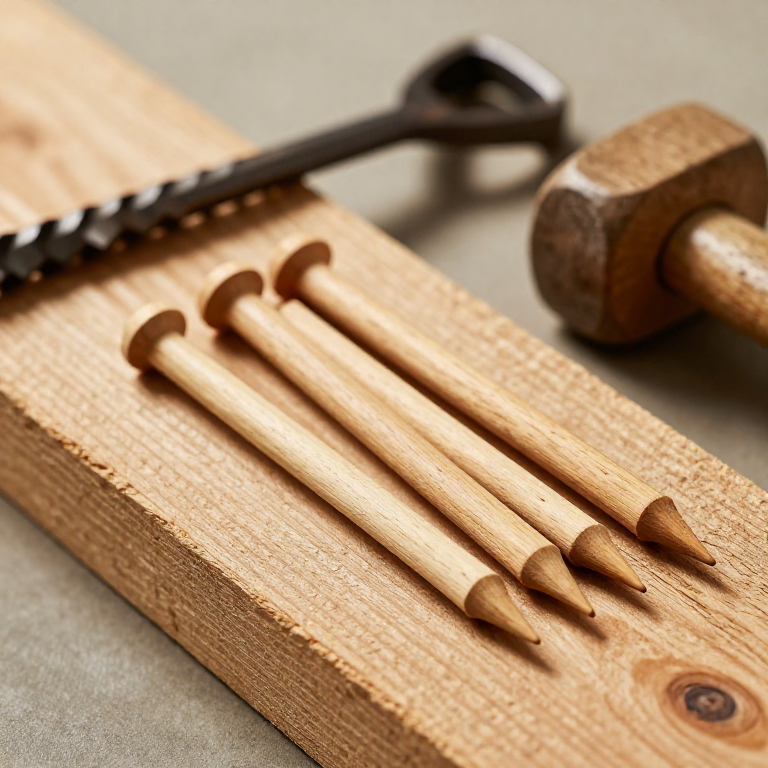
Before iron nails were cheap, wood was fastened with wood. A treenail (pronounced 'trunnel') is a cylindrical wooden peg driven into a bored hole to lock a timber joint together. Treenails held together medieval roof trusses, Viking longships, and post-and-beam barns for centuries. In many applications they outperform iron nails — they do not rust, they swell when wet to tighten the joint, and they flex with the timber instead of working loose.
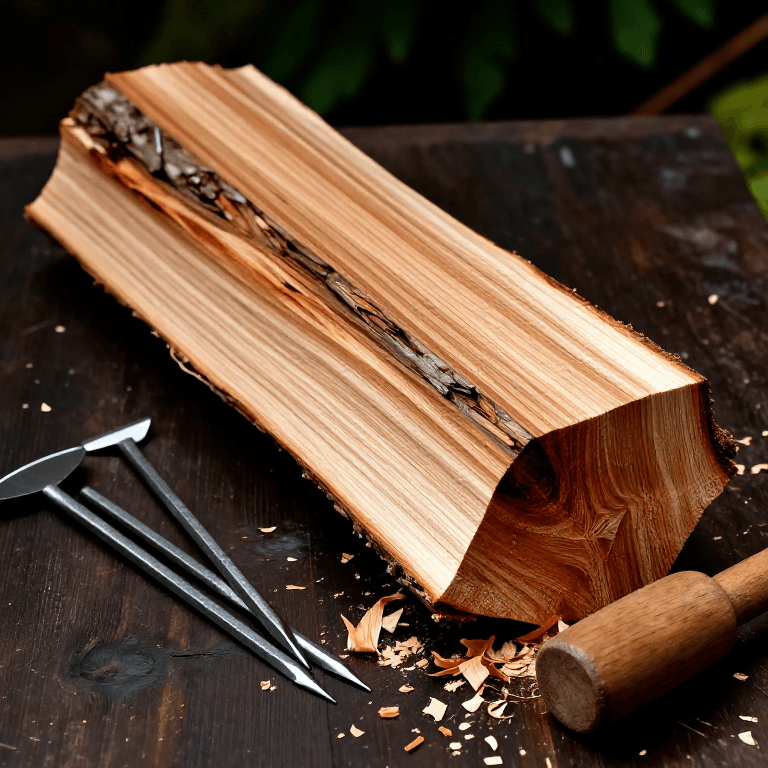
Treenails are always made from a wood harder or at least as hard as the timber they join. Oak treenails in oak frames, or locust treenails in softwood construction. They are riven from straight-grained stock, never sawn — riving preserves the grain continuity that gives the peg its shear strength. A sawn peg has cut fibres that snap under load.
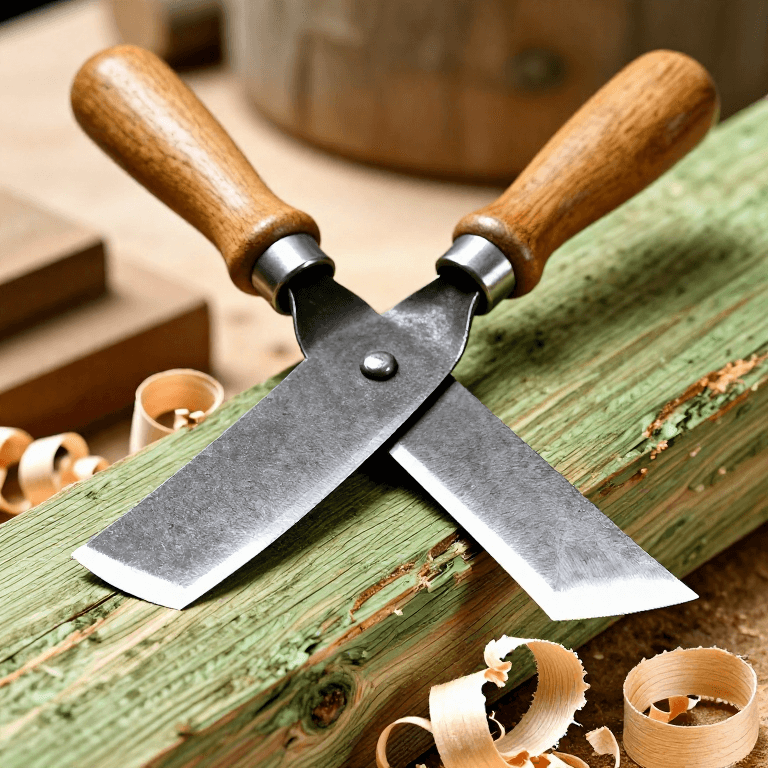
The technique is simple: rive a billet into rough square sections, then round them by driving through a steel plate with a round hole (a rounding die) or by shaving with a drawknife. The finished treenail is slightly tapered so it can be started in the hole and driven home with a mallet. Some traditions split the protruding end and drive a small hardwood wedge into the split, locking the treenail permanently.
Amabwiriza
Select straight-grained hardwood
Select straight-grained hardwood
Ibikoresho by'iyi ntambwe:
 Ikibaho cy'umwaloni (gitukura)1 igice
Rive the billet into square blanks
Rive the billet into square blanks
Ibikoresho bikenewe:
 Froe (icyuma cyo gucamo)
Round the blanks
Round the blanks
Ibikoresho bikenewe:
 Imbugita ikururwa
 Intebe yo gukanda
 Inyundo y'Igiti
Taper the leading end
Taper the leading end
Ibikoresho bikenewe:
Imbugita ikururwaBore the holes and drive the treenails
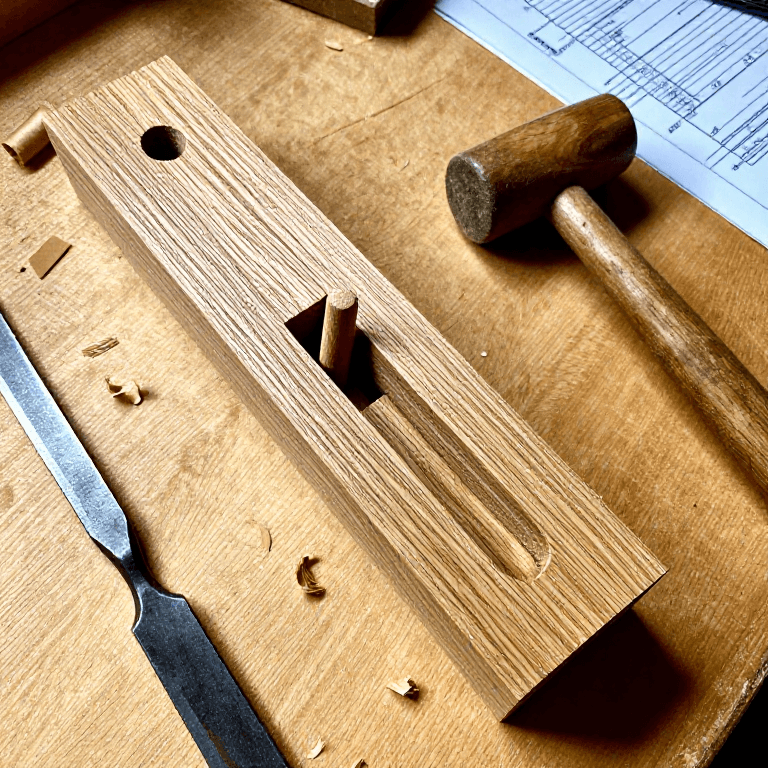
Bore the holes and drive the treenails
Ibikoresho bikenewe:
 Igikoresho cyo gutobora cy'intokiInyundo y'Igiti
Wedge the protruding end (optional lock)
Wedge the protruding end (optional lock)
Ibikoresho by'iyi ntambwe:
 Igitsindo cy'ibiti bikomeye1 igice
Ibikoresho bikenewe:
 Ibikoresho by'amasuka y'igiti
Ibikoresho
2- Umwanya
- 1 igiceUmwanya
Ibikoresho bikenewe
7- Umwanya
- Umwanya
- Umwanya
- Umwanya
- Umwanya
Ibikoresho by'Ibishushanyo Bifitanye Isano
Iki gishushanyo gikora

Blueprint zijyanye
Izi blueprint zisangira ubumenyi — uburyo, ibikoresho cyangwa amahame
CC0 Umurenge rusange
Iyi blueprint yasohowe munsi ya CC0. Ushobora gukoporora, guhindura, gukwirakwiza no gukoresha nta kwemererwa.
Shyigikira Umuremyi ugura ibicuruzwa binyuze muri Blueprint ye Komisiyo y'Umuremyi byashyizweho n'Abacuruzi, cyangwa kora verisiyo nshya y'iyi Blueprint ukayinjiza nk'isano muri Blueprint yawe kugira ngo musangire inyungu.