
Ubufatanye
UBUHANZI
UBWIZA N'UBUZIMA
UBUKORIKORI
UMUCO N'AMATEKA
IMYIDAGADURO
IBIDUKIKIJE
IBIRIBWA N'IBINYOBWA
UBWUBATSI BUSUBIRA INYUMA
UBUMENYI
SIPORO
IKORANABUHANGA
IBYAMBARWA
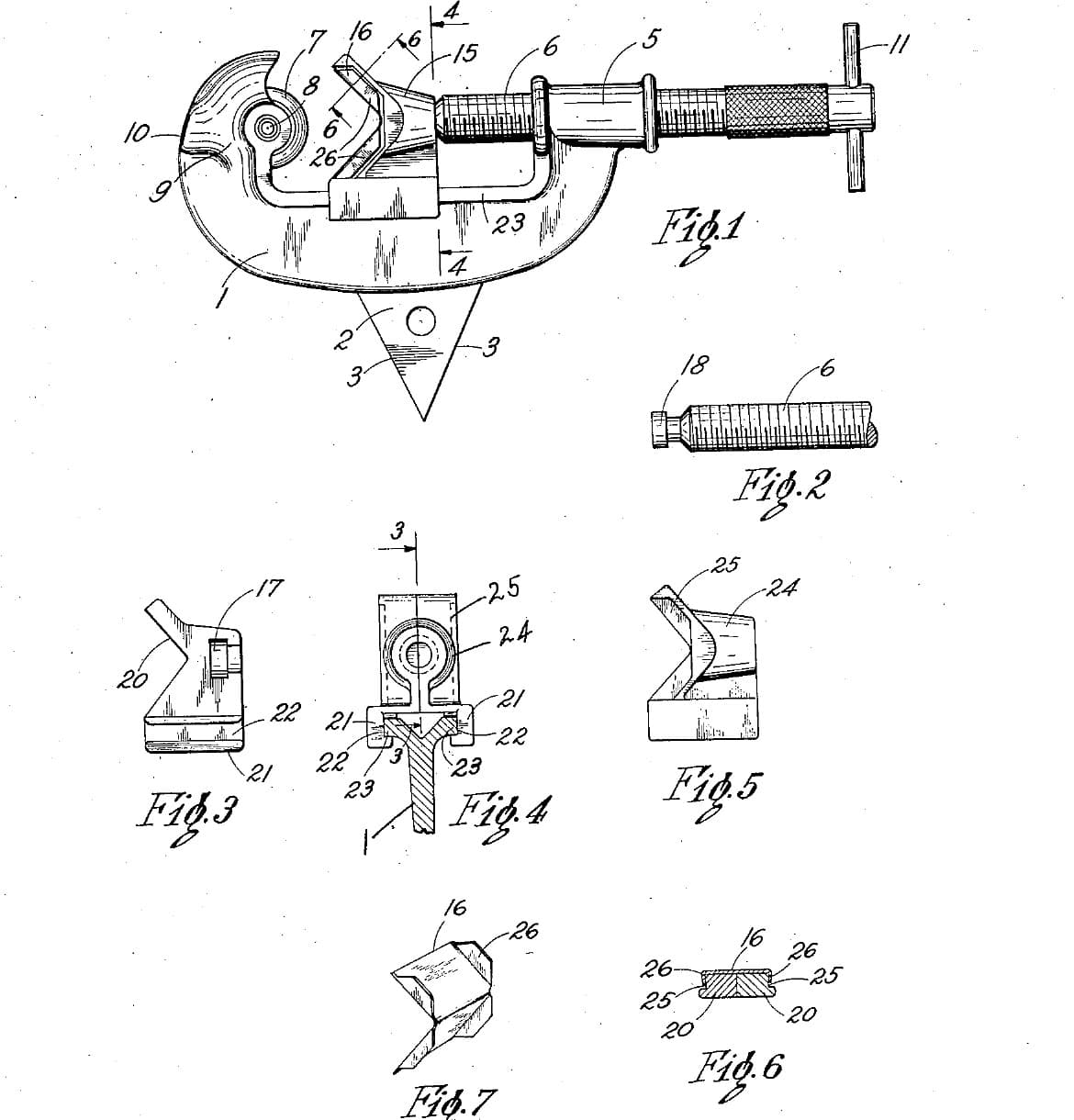
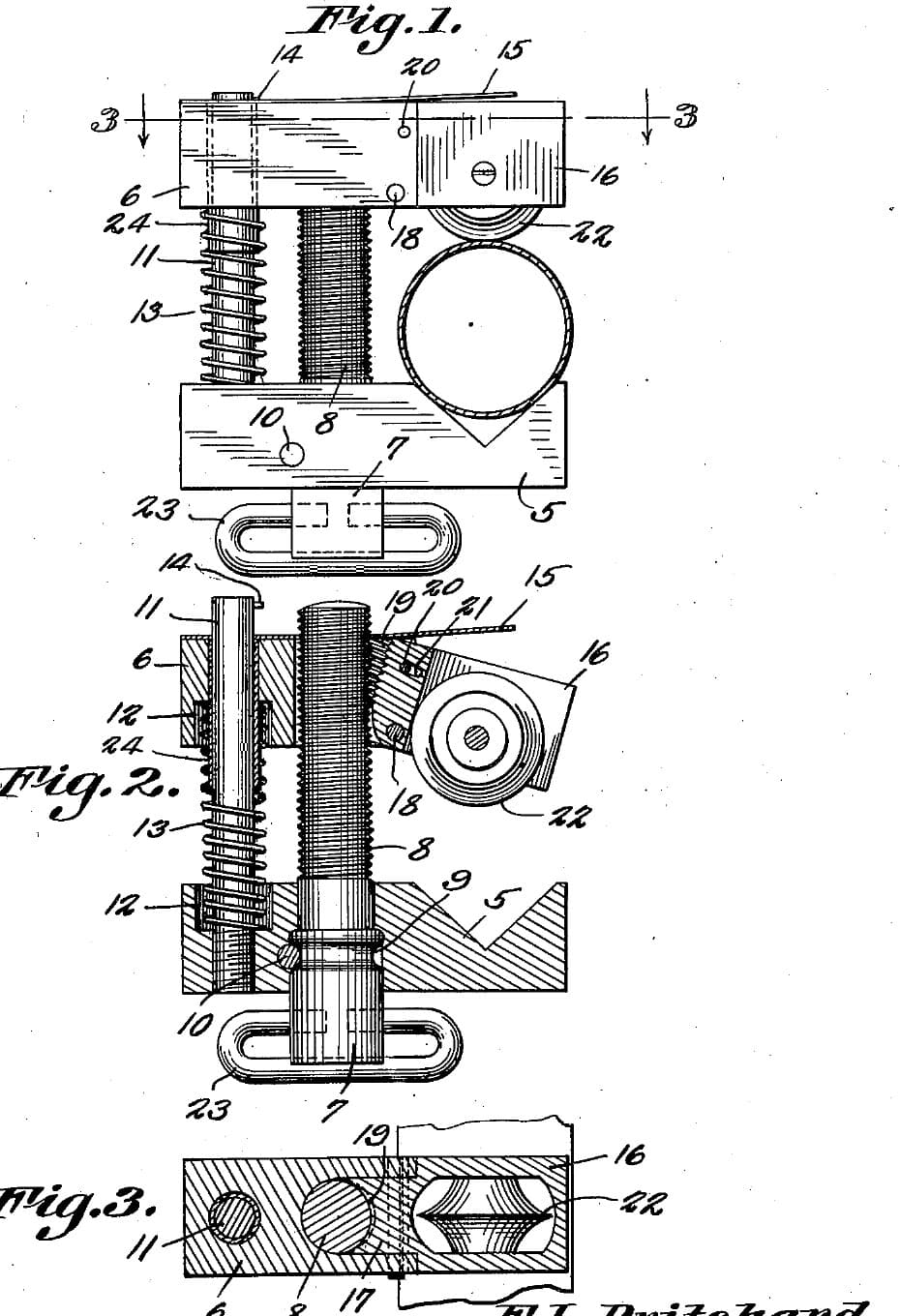
Slip-Knob Tube Cutter: the Feed Knob Turns the Screw Through Spring-Loaded Plates and Slips Before the Tube Is Crushed (Parker, 1944)
Forge

Yaremwe na

Forge

13. Ugushyingo 2026NO
0
0
0
0
0

Slip-Knob Tube Cutter: the Feed Knob Turns the Screw Through Spring-Loaded Plates and Slips Before the Tube Is Crushed (Parker, 1944)

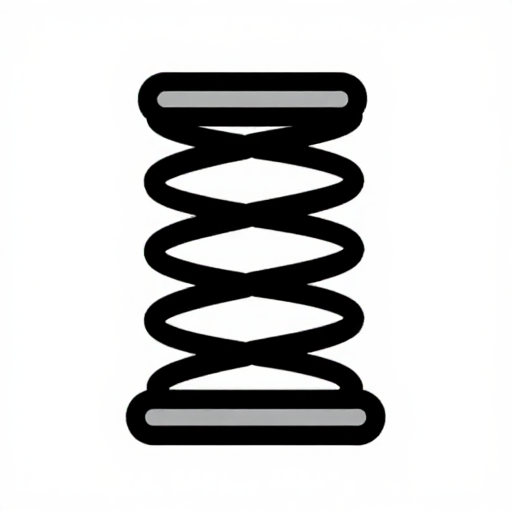
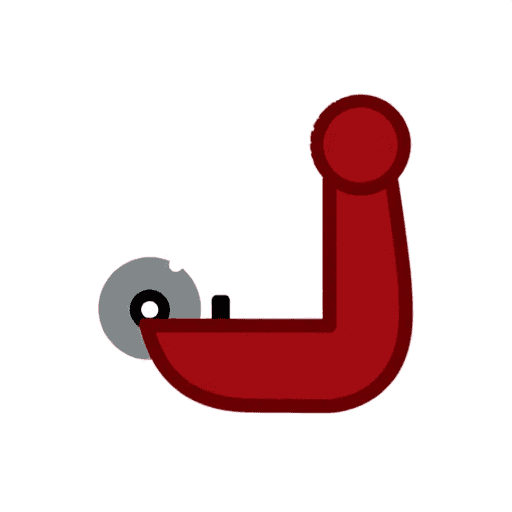
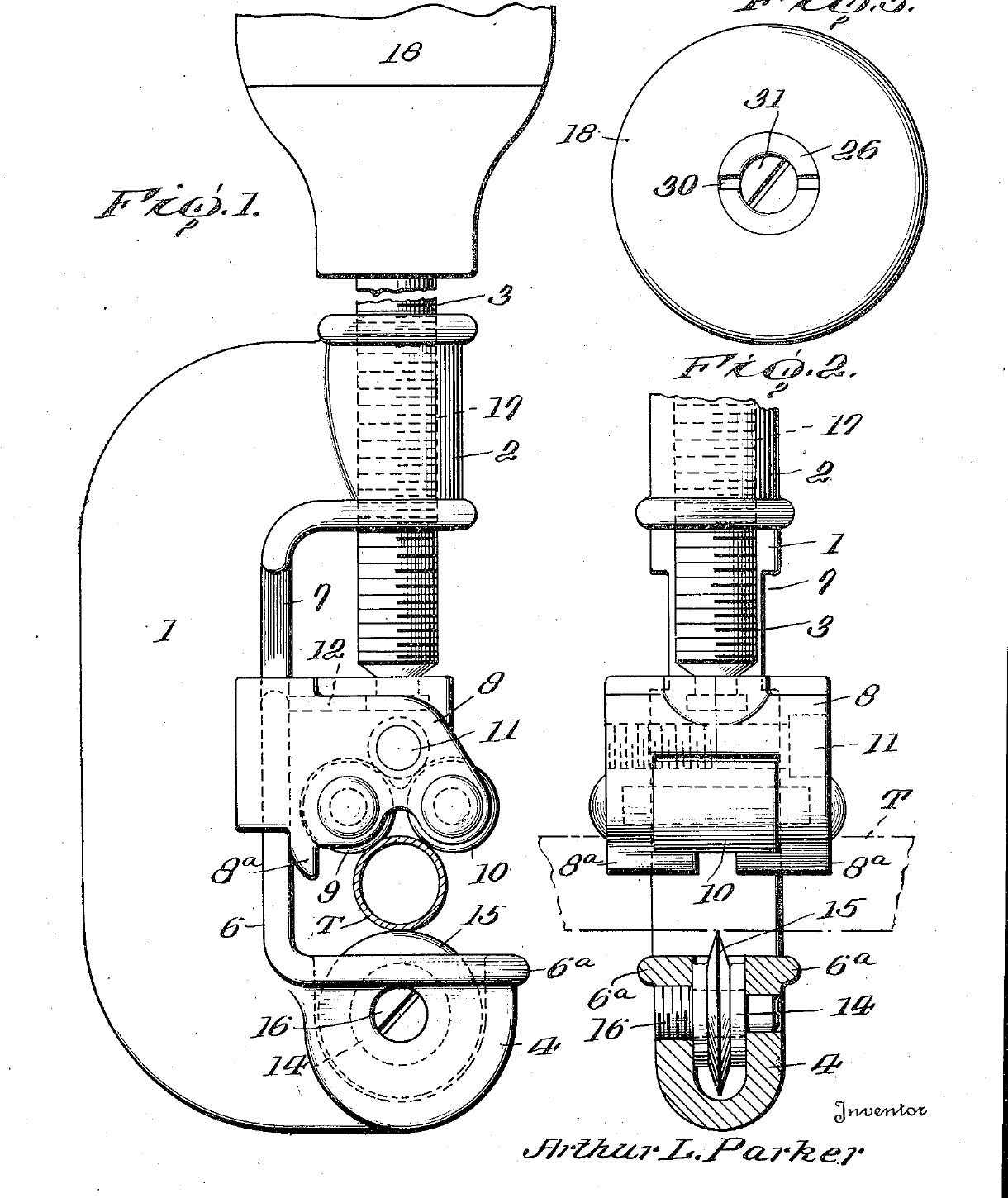
Arthur L. Parker of Cleveland, Ohio, received US 2,360,887, dated 24 October 1944 and assigned to The Parker Appliance Company, for a tube cutter that cannot be overfed. A one-piece frame holds the wheel at one end and the feed screw at the other. The screw pushes a carrier with two rollers, which press the tube onto the wheel. The screw is turned through a knob that slips when the turning force passes a set limit. Inside the knob, a brass plate on the screw is squeezed by a spring between two steel plates locked to the knob, and the spring can be set harder or softer. We saw the frame and carrier from steel plate and print the knob in PETG. His knob was moulded plastic. All sizes are ours.
Hejuru
About 4 days

Amabwiriza

1

Carrier height and slip torque

Gupakira ikaye ya Jupyter…
2

Read US 2,360,887

"If the operator exerts a pressure beyond a predetermined torque pressure, then the steel plates will slip on the brass plate and will not turn the feed screw."
3

Print the template

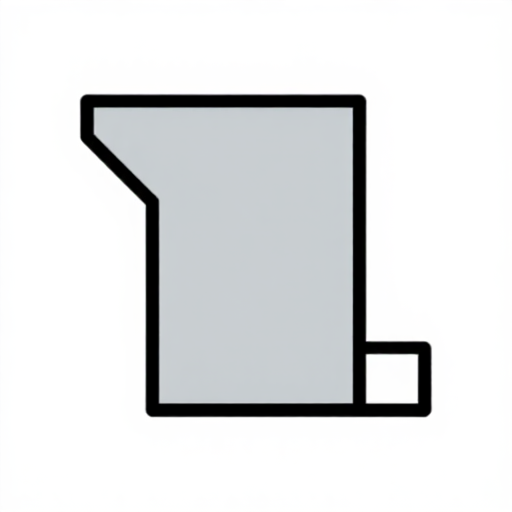
Frame, carrier half, rollers and wheel at 1:1, set for a 15 mm tube, with the screw, plates and sleeve sizes. print at 100 % (check the 50 mm bar).
Dosiye y'IgishushanyoPDFCC0 - Free
4

Saw out the frame

Glue the frame outline on 16 mm plate, drill a row of holes inside the C, saw to them and file to the line. Saw the 7 mm wheel slot down into the bottom arm with two cuts and file it flat. Drill 5 mm across it for the axle and tap the far cheek M5. Drill 8.5 mm down through the top arm and tap it M10. File the back bar to 8 mm thick over the short cut-away just under the top arm.

Ibikoresho by'iyi ntambwe:

Ikibaho cy'icyuma cyorohejeIkibaho cy'icyuma cyoroheje1 igice

Ibikoresho bikenewe:

Umucumita w'IbyumaUmucumita w'Ibyuma
Amakariso MenshiAmakariso Menshi
Icyuma Cyivumbura GihagazeIcyuma Cyivumbura Gihagaze
Ifatiro ry'imashiniIfatiro ry'imashini
Ibyuma Byinshi byo GucukuraIbyuma Byinshi byo Gucukura
Agakoresho ko gukata imizingo y'ibyumaAgakoresho ko gukata imizingo y'ibyuma
Igicukuzi cyo Gushyira IkimenyetsoIgicukuzi cyo Gushyira Ikimenyetso
Igikoresho Gishushanya ImirongoIgikoresho Gishushanya Imirongo
Ifatiro ry'AmezaIfatiro ry'Ameza
Amavuta yo gukataAmavuta yo gukata
5

Make the carrier

Saw two carrier halves from 10 mm plate, one the mirror of the other. In each half's inner face, saw and file the channel for the back bar, the 6.25 mm deep recess for the rollers, and half of the T-slot for the screw head, open to the right. Leave the lips at the back and the two lugs at the bottom. Clamp the halves together and drill the two roller pin holes and the M5 bolt hole through both.

Ibikoresho by'iyi ntambwe:

Ikibaho cy'icyuma cyorohejeIkibaho cy'icyuma cyoroheje1 igice

Ibikoresho bikenewe:

Umucumita w'IbyumaUmucumita w'Ibyuma
Amakariso MenshiAmakariso Menshi
Ikusanyirizo ry'Amakariso MatoIkusanyirizo ry'Amakariso Mato
Icyuma Cyivumbura GihagazeIcyuma Cyivumbura Gihagaze
Ifatiro ry'imashiniIfatiro ry'imashini
Ibyuma Byinshi byo GucukuraIbyuma Byinshi byo Gucukura
Ifatiro ry'AmezaIfatiro ry'Ameza
Ikigereranyo cya Digitale cy'Amasentimetero 6Ikigereranyo cya Digitale cy'Amasentimetero 6
6

Turn the rollers, screw and sleeve

From mild steel bar: turn two rollers 12 mm across and 12 mm long, bored 5 mm. Turn the feed screw from 16 mm bar: a 14 mm head 4 mm long, a 7 mm neck 4 mm long, then 102 mm at 10 mm, cut M10 with the die. File the top 12 mm to two flats 8 mm apart, and drill and tap its end M5, 15 mm deep. Turn the sleeve from 20 mm bar: an 18 mm flange 2 mm thick on a body 21 mm long cut M12, bored 5.5 mm, and saw two slots across the flange.

Ibikoresho by'iyi ntambwe:

Umurongo uziguye w'icyuma cyorohejeUmurongo uziguye w'icyuma cyoroheje2 ibice

Ibikoresho bikenewe:

Imashini yo guhinguza icyumaImashini yo guhinguza icyuma
Igikoresho gifata cy'ibirenge 3 cy'imashini ihinguraIgikoresho gifata cy'ibirenge 3 cy'imashini ihingura
Icyuma cyo kuca cy'itoreroIcyuma cyo kuca cy'itorero
Icyuma cyo guca ku ruzigaIcyuma cyo guca ku ruziga
Agatsiko k'ibitobora hagatiAgatsiko k'ibitobora hagati
Ibyuma Byinshi byo GucukuraIbyuma Byinshi byo Gucukura
Agakoresho ko gukata imizingo y'ibyumaAgakoresho ko gukata imizingo y'ibyuma
Amakariso MenshiAmakariso Menshi
Umucumita w'IbyumaUmucumita w'Ibyuma
Ikigereranyo cya Digitale cy'Amasentimetero 6Ikigereranyo cya Digitale cy'Amasentimetero 6

Amavuta yo gukataAmavuta yo gukata
7

Turn the cutting wheel

Chuck a tool steel bar and face it. Turn the end to 20 mm across for 10 mm, centre drill and drill a 5 mm hole 10 mm deep, and turn the edge to a 50 degree vee, 25 degrees each side, sharp in the middle of the 6 mm width. Part it off 6 mm long and take the burr off the hole.

Ibikoresho by'iyi ntambwe:

Inkoni y'icyuma cy'ibikoreshoInkoni y'icyuma cy'ibikoresho1 igice

Ibikoresho bikenewe:

Imashini yo guhinguza icyumaImashini yo guhinguza icyuma
Igikoresho gifata cy'ibirenge 3 cy'imashini ihinguraIgikoresho gifata cy'ibirenge 3 cy'imashini ihingura
Icyuma cyo kuca cy'itoreroIcyuma cyo kuca cy'itorero
Icyuma cyo guca ku ruzigaIcyuma cyo guca ku ruziga
Agatsiko k'ibitobora hagatiAgatsiko k'ibitobora hagati
Ibyuma Byinshi byo GucukuraIbyuma Byinshi byo Gucukura
Ikigereranyo cya Digitale cy'Amasentimetero 6Ikigereranyo cya Digitale cy'Amasentimetero 6
Amadarubindi y'umutekanoAmadarubindi y'umutekano
8

Harden and temper

Heat the wheel to a cherry red, until a magnet no longer sticks, and quench it in water, moving it about. Rub it bright with a stone, warm it on a piece of steel plate over the fire, and quench again as soon as it turns a light straw colour.

Ibikoresho bikenewe:

Iziko ryo GucuraIziko ryo Gucura
Amakoro y'UmucuziAmakoro y'Umucuzi
Magineti ntoMagineti nto
Indobo yo gukonjeshaIndobo yo gukonjesha
AmaziAmazi
Ibuye ryo gutyazaIbuye ryo gutyaza
Uturindantoki two gukomeza ibyumaUturindantoki two gukomeza ibyuma
Amadarubindi y'umutekanoAmadarubindi y'umutekano
9

Cut the clutch plates

Cut two 30 mm discs from 1.5 mm steel strip, each with two lugs 3.5 mm wide standing out 3 mm on opposite sides, and drill them 10.5 mm. Cut a 28 mm disc from 2 mm brass sheet and file its centre hole to slide snugly on the screw's flats. Make the faces flat on abrasive paper on a flat board.

Ibikoresho by'iyi ntambwe:

Umurongo w'icyuma cya sipringiUmurongo w'icyuma cya sipringi1 igice
Urupapuro rw'Umuringa w'UmuhondoUrupapuro rw'Umuringa w'Umuhondo1 igice

Ibikoresho bikenewe:

Umucumita w'IbyumaUmucumita w'Ibyuma
Amakariso MenshiAmakariso Menshi
Ikusanyirizo ry'Amakariso MatoIkusanyirizo ry'Amakariso Mato
Icyuma Cyivumbura GihagazeIcyuma Cyivumbura Gihagaze
Ibyuma Byinshi byo GucukuraIbyuma Byinshi byo Gucukura
Ifatiro ry'AmezaIfatiro ry'Ameza
Ikigereranyo cya Digitale cy'Amasentimetero 6Ikigereranyo cya Digitale cy'Amasentimetero 6
10

Print the knob's lower section

Floor with a 10.5 mm hole for the screw, the 31 mm chamber with two grooves for the plates' lugs, three holes for M4 screws. Print it floor down in PETG, 0.2 mm layers, 5 walls, 40 % infill.
Dosiye y'IgishushanyoSTLCC0 - Free
11

Print the knob's upper section

The hex channel for the M12 nut (the collar) and the sleeve's flange, which stops under the top wall, and a 15 mm hole to reach its slots. Print it top down in PETG, 0.2 mm layers, 5 walls, 40 % infill.
Dosiye y'IgishushanyoSTLCC0 - Free
12

Assemble the frame and carrier

Put the wheel in its slot on the M5 cap screw. Screw the feed screw down through the top arm. Lay the rollers on their pins in one carrier half, slide the half onto the back bar from the cut-away with the screw head in its slot, close the other half over it and bolt them together. Run the carrier down: its lugs should land on the bottom arm with the rollers clear of the wheel.

Ibikoresho by'iyi ntambwe:

Umusumari w'icyumaUmusumari w'icyuma2 ibice
Insimburangingo Ifite Umutwe UzengurutseInsimburangingo Ifite Umutwe Uzengurutse2 ibice

Umupira w'Impande EsheshatuUmupira w'Impande Esheshatu1 igice

Ibikoresho bikenewe:
Umutwe w'imfunguzo z'impande esheshatuUmutwe w'imfunguzo z'impande esheshatu
Isupana ihindurwaIsupana ihindurwa
Amavuta yo gukataAmavuta yo gukata
13

Fit the slip knob

Slide the lower section over the screw's top. Drop in a steel plate, lugs in the grooves, then the brass disc on the flats, then the second steel plate. Stand the spring on it. Push the sleeve, flange first, up into the upper section's hex channel until it stops under the top wall. Push the M12 nut in under it and turn the sleeve from the top with a screwdriver to draw the nut on a few turns. Screw the two sections together with three M4 screws. Put an M5 bolt down through the sleeve into the screw and tighten it.

Ibikoresho by'iyi ntambwe:

Ikusanyirizo ry'Imizingo IkandamizwaIkusanyirizo ry'Imizingo Ikandamizwa1 igice
Umupira w'Impande EsheshatuUmupira w'Impande Esheshatu1 igice
Insimburangingo Ifite Umutwe UzengurutseInsimburangingo Ifite Umutwe Uzengurutse4 ibice

Uruziga RurambuyeUruziga Rurambuye1 igice

Ibikoresho bikenewe:

Umutwe w'imfunguzo z'impande esheshatuUmutwe w'imfunguzo z'impande esheshatu
Isupana ihindurwaIsupana ihindurwa
14

Set the slip

Put a tube in, turn the knob until the rollers grip it, and try a cut. If the knob slips before the wheel cuts, turn the sleeve with a screwdriver through the top hole so the nut moves down and squeezes the spring harder. If the tube starts to flatten before it slips, set it softer. Set it once for the tubes you cut most.

Ibikoresho bikenewe:

Umutwe w'imfunguzo z'impande esheshatuUmutwe w'imfunguzo z'impande esheshatu
15

Cut a copper tube

Mark a copper tube and hold it in a vice with soft jaws, or by hand for small tubes. Turn the knob until the rollers press the tube onto the wheel. Turn the cutter once round, give the screw about a quarter turn, and go on until the tube parts. The wheel should run in its own groove; the end should be square and not squeezed oval. Clean the inside of the end with a deburring tool.

Ibikoresho by'iyi ntambwe:

Umuyoboro w'umuringaUmuyoboro w'umuringa1 igice

Ibikoresho bikenewe:

Ifatiro ry'AmezaIfatiro ry'Ameza

Igikoresho cyo gukuraho ibisigazwa ku mperaIgikoresho cyo gukuraho ibisigazwa ku mpera
Ikigereranyo cya Digitale cy'Amasentimetero 6Ikigereranyo cya Digitale cy'Amasentimetero 6
16

Troubleshooting

Slip-knob tube cutter troubleshooting.

Flow

Loading...
17

History and honest limits

**Arthur L. Parker** of Cleveland, Ohio, US 2,360,887, dated 24 October 1944, filed 21 December 1943, assigned to The Parker Appliance Company. He claimed "yieldable means connecting the knob to the feed screw for turning the same, said yieldable means being releasable to permit the knob to turn on the feed screw when a predetermined turning torque is applied". His knob sections were moulded plastic and screwed together, and his collar had lugs in the knob's grooves; ours are printed, held by three screws, and the collar is a hex nut in a hex channel. The patent gives no sizes or spring force; all of ours are ours, and the slip is set by test.

Ibikoresho

11

Ibikoresho bikenewe

28

Dosiye z'igishushanyo

3

CC0 Umurenge rusange

Iyi blueprint yasohowe munsi ya CC0. Ushobora gukoporora, guhindura, gukwirakwiza no gukoresha nta kwemererwa.

Shyigikira Umuremyi ugura ibicuruzwa binyuze muri Blueprint ye Komisiyo y'Umuremyi byashyizweho n'Abacuruzi, cyangwa kora verisiyo nshya y'iyi Blueprint ukayinjiza nk'isano muri Blueprint yawe kugira ngo musangire inyungu.

Ibiganiro

(0)

Injira kugira ngo ujye mu biganiro

Gutegura ibitekerezo...