
Ubufatanye
UBUHANZI
UBWIZA N'UBUZIMA
UBUKORIKORI
UMUCO N'AMATEKA
IMYIDAGADURO
IBIDUKIKIJE
IBIRIBWA N'IBINYOBWA
UBWUBATSI BUSUBIRA INYUMA
UBUMENYI
SIPORO
IKORANABUHANGA
IBYAMBARWA
Wishbone-Mast Ice Yacht: 16 ft Backbone, Twin-Pole Mast and Double Lateen Booms (Boy Mechanic, 1919)
Woody

Yaremwe na

Woody

13. Ugushyingo 2026NO
1
0
0
0
0

Wishbone-Mast Ice Yacht: 16 ft Backbone, Twin-Pole Mast and Double Lateen Booms (Boy Mechanic, 1919)

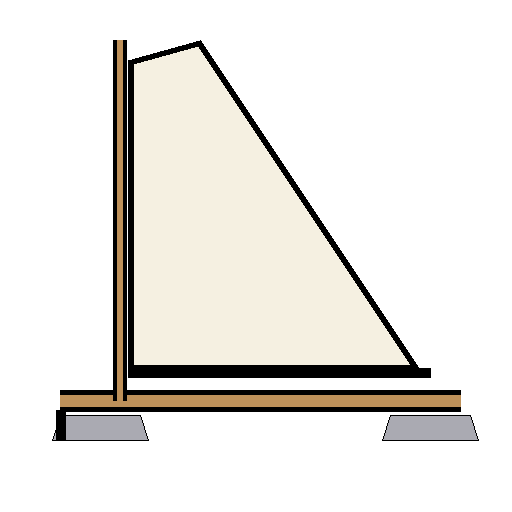
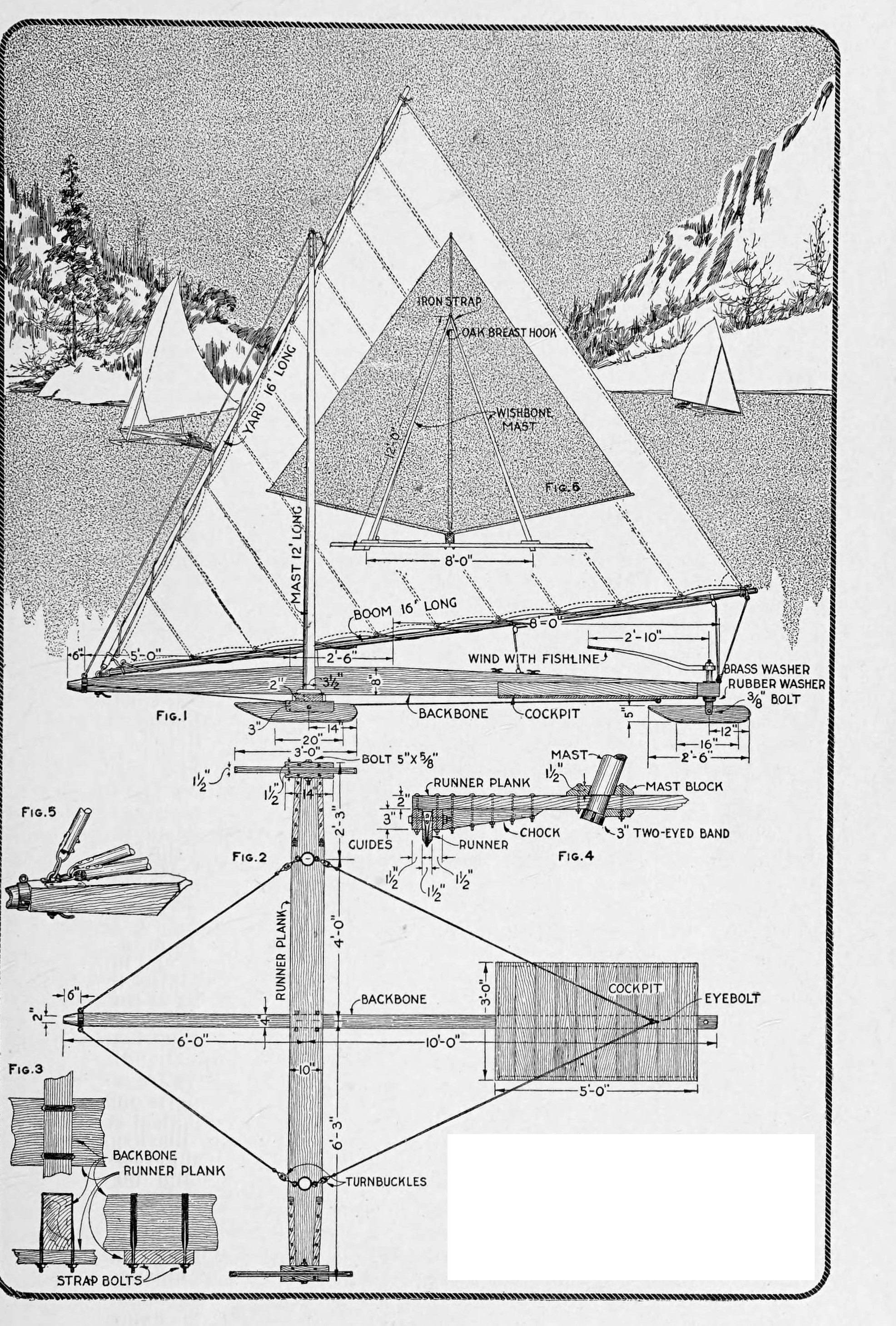
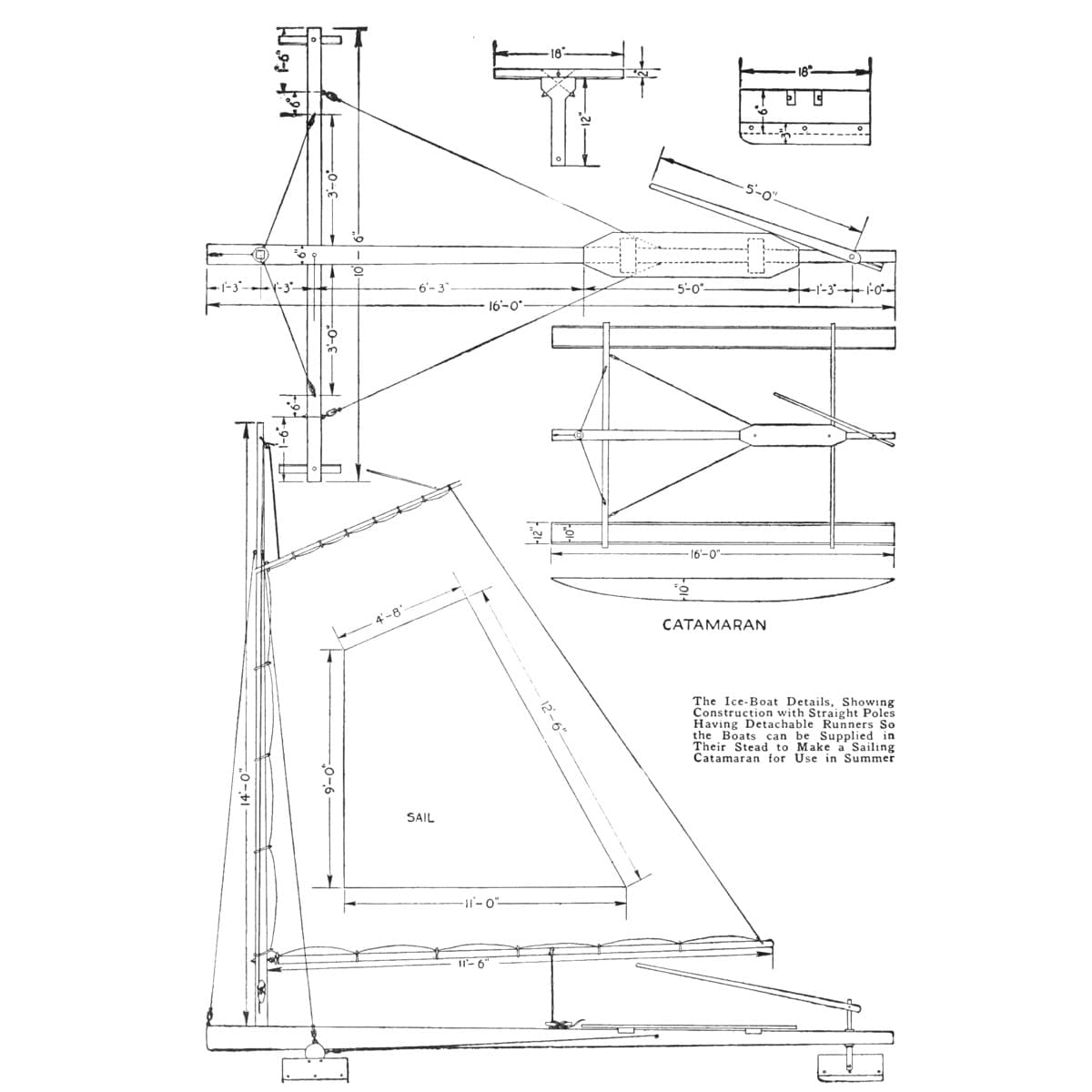
John F. Pjerrou's ice yacht from The Boy Mechanic, Book 3 (1919), for one or two passengers: a 16 ft spruce backbone on a 12 ft 6 in runner plank, oak runners shod with half-round iron, a mast of two 12 ft poles joined at the head, and two lateen sails on a yard and two 16 ft booms that spread into a V when running before the wind. It takes down for storage.
Hejuru
Several weeks

Amabwiriza

1

Main sizes and the mast's height

Gupakira ikaye ya Jupyter…
2

Read The Boy Mechanic, Book 3

"The dimensions given are for a small yacht, and care must be taken, in adapting the design, to maintain proper proportions for stability and safety."
3

Make the backbone and runner plank

Use only the best straight-grained spruce or white pine. Backbone: 4 in thick, 16 ft long and 8 in high at the centre, with a ridge 8 in high and 2 ft 6 in long; taper it from the middle, 5 ft 6 in from the forward end, to 4 in at each end, and fit a three-eye metal ring at the bow (Figs. 1, 5). Runner plank: 2 in thick, 10 in wide, 12 ft 6 in long, tapered to 8 in at the ends. Set the backbone on the plank at right angles, 6 ft from the bow, and clamp them with two strap bolts, washers and nuts (Figs. 2, 3).

Ibikoresho by'iyi ntambwe:

Imbaho za pinusiImbaho za pinusi2 ibice
Metal RingMetal Ring1 igice
Umusumari wa UUmusumari wa U2 ibice
Uruziga RurambuyeUruziga Rurambuye4 ibice
Umupira w'Impande EsheshatuUmupira w'Impande Esheshatu4 ibice

Ibikoresho bikenewe:

Umucumita w'IntokiUmucumita w'Intoki
Ikoresho cyo gusiga ibitiIkoresho cyo gusiga ibiti
Imbugita ikururwaImbugita ikururwa
Ivuvuzo ry'ukuboko rifite umutweIvuvuzo ry'ukuboko rifite umutwe
Isupana ihindurwaIsupana ihindurwa
Umugozi wo GupimaUmugozi wo Gupima
Ikaramu ya penisileIkaramu ya penisile
4

Fit the guides and forward runners

Bolt guides of straight-grained oak, 1-1/2 by 3 by 14 in, to the plank ends with 5/16 in carriage bolts, and bolt oak chocks at each tapered edge (Fig. 4). Make the forward runners of oak, 1-1/2 by 5 by 36 in, shaped at the ends as drawn, and shoe them with half-round strap iron held by screws with carefully countersunk heads. Pivot them on 5/8 in bolts (5 in long in Fig. 1), nuts to the inner side, with washers and jam nuts, or rivet the bolt ends slightly so the nuts cannot work loose.

Ibikoresho by'iyi ntambwe:

Ikibaho cy'igiti cy'umwaloni w'umweruIkibaho cy'igiti cy'umwaloni w'umweru3 ibice
Bulo ifite umutwe uzengurutseBulo ifite umutwe uzengurutse8 ibice
Half-Round Iron BarHalf-Round Iron Bar2 ibice
Imisumari y'ibitiImisumari y'ibiti1 igice
Uruziga RurambuyeUruziga Rurambuye4 ibice
Umupira w'Impande EsheshatuUmupira w'Impande Esheshatu4 ibice

Ibikoresho bikenewe:

Umucumita w'IntokiUmucumita w'Intoki
Ikoresho cyo gusiga ibitiIkoresho cyo gusiga ibiti
Ivuvuzo ry'ukuboko rifite umutweIvuvuzo ry'ukuboko rifite umutwe
Igikoresho cyo gutobora gikoreshwa n'intokiIgikoresho cyo gutobora gikoreshwa n'intoki

Urutonde rw'ibikoresho byo kwagura utwoboUrutonde rw'ibikoresho byo kwagura utwobo

Umucumita w'IbyumaUmucumita w'Ibyuma
Isupana ihindurwaIsupana ihindurwa
5

Make the stern runner and steering

Make the stern runner of oak, 1-1/2 by 5 by 30 in, shod like the others. Pivot it on a 3/8 in bolt in a hanger of heavy iron strip bent into a U and riveted to a vertical shaft. Put a heavy rubber washer, protected by a metal one, on the shaft; thread its upper end for a washer and nut, slip a section of pipe over the shaft, and clamp the steering handle (2 ft 10 in in Fig. 1) on a squared part of the shaft. The hanger may be forged, or made by a blacksmith.

Ibikoresho by'iyi ntambwe:

Ikibaho cy'igiti cy'umwaloni w'umweruIkibaho cy'igiti cy'umwaloni w'umweru1 igice
Half-Round Iron BarHalf-Round Iron Bar1 igice
Umurongo ugororotse w'icyuma cyoroshyeUmurongo ugororotse w'icyuma cyoroshye1 igice
Umurongo uziguye w'icyuma cyorohejeUmurongo uziguye w'icyuma cyoroheje1 igice
Ibyuma byo guhambiraIbyuma byo guhambira2 ibice
Bulo ifite umutwe uzengurutseBulo ifite umutwe uzengurutse1 igice
Rubber WasherRubber Washer1 igice
Uruziga RurambuyeUruziga Rurambuye2 ibice
Umupira w'Impande EsheshatuUmupira w'Impande Esheshatu2 ibice
Umuyoboro w'icyuma wasizwe zinkeUmuyoboro w'icyuma wasizwe zinke1 igice

Ibikoresho bikenewe:
Iziko ryo GucuraIziko ryo Gucura
IngoyiIngoyi
InyundoInyundo
Ifatiro ry'AmezaIfatiro ry'Ameza
Umucumita w'IbyumaUmucumita w'Ibyuma
Igikoresho cyo gutobora gikoreshwa n'intokiIgikoresho cyo gutobora gikoreshwa n'intoki

Amakariso (Ikariso ry'Intoki)Amakariso (Ikariso ry'Intoki)
Isupana ihindurwaIsupana ihindurwa
6

Build the cockpit

Fix a cockpit 5 ft long and 3 ft wide, with 4 in coaming, to the lower side of the backbone toward the stern; fasten its floor to the backbone with lag screws and fasten the coaming securely. Square corners are easiest; rounded ends with steamed, bent coaming are better. Larger craft may carry it on ribs.

Ibikoresho by'iyi ntambwe:

Ikibaho cy'igiti cya pinusiIkibaho cy'igiti cya pinusi4 ibice
Vise nini y'igiti ifunguzwa n'urufunguzoVise nini y'igiti ifunguzwa n'urufunguzo6 ibice
Imisumari y'ibitiImisumari y'ibiti1 igice

Ibikoresho bikenewe:

Umucumita w'IntokiUmucumita w'Intoki
Ivuvuzo ry'ukuboko rifite umutweIvuvuzo ry'ukuboko rifite umutwe
Isupana ihindurwaIsupana ihindurwa
Umugozi wo GupimaUmugozi wo Gupima
7

Square up and stay the frame

Line up runners, plank and backbone at right angles so the craft tracks true. Hold them with four 1/4 in wire-rope stays with turnbuckles, from eyes on the bow band and on the bands at the plank ends to an eyebolt below the cockpit (Fig. 2). Loop each rope end and clamp the eye with steel clamps made for the purpose (wire-rope clips); metal thimbles in the loops make a better finish.

Ibikoresho by'iyi ntambwe:

Wire RopeWire Rope1 igice
TurnbuckleTurnbuckle4 ibice
Akarindantoki ko kudodaAkarindantoki ko kudoda8 ibice
Wire Rope ClipWire Rope Clip8 ibice
Ibuye rifite ijishoIbuye rifite ijisho1 igice

Ibikoresho bikenewe:

Umucumita w'IbyumaUmucumita w'Ibyuma
Isupana ihindurwaIsupana ihindurwa
Umugozi wo GupimaUmugozi wo Gupima
8

Make the wishbone mast

Shape two poles of hickory or ash, 3-1/2 in thick at the base and 2 in at the top (12 ft in Fig. 6). Join them carefully at the masthead, bolt them together into an oak breast hook, and reinforce the joint with an iron strap with an eye at its upper end for the forward stay. Step the lower ends in sockets in the runner plank, about 8 ft apart, reinforced with oak mast blocks, and fit their projecting ends with 3 in two-eyed bands for the stays (Figs. 4, 6).

Ibikoresho by'iyi ntambwe:

Inkingi y'igitiInkingi y'igiti2 ibice
Ikibaho cy'igiti cy'umwaloni w'umweruIkibaho cy'igiti cy'umwaloni w'umweru1 igice
Umurongo ugororotse w'icyuma cyoroshyeUmurongo ugororotse w'icyuma cyoroshye1 igice
Bulo ifite umutwe uzengurutseBulo ifite umutwe uzengurutse2 ibice
Umupira w'Impande EsheshatuUmupira w'Impande Esheshatu2 ibice

Ibikoresho bikenewe:

Imbugita ikururwaImbugita ikururwa
Ikoresho cyo gusiga ibitiIkoresho cyo gusiga ibiti
Umucumita w'IntokiUmucumita w'Intoki
Ivuvuzo ry'ukuboko rifite umutweIvuvuzo ry'ukuboko rifite umutwe
Ibyuma byo kubazaIbyuma byo kubaza
Iziko ryo GucuraIziko ryo Gucura
IngoyiIngoyi
InyundoInyundo
9

Make the yard and booms

Make the yard and two booms of hickory or ash, each 16 ft long, 2-3/4 in at the middle tapering to 1-1/2 in at the ends, with metal rings on the ends against splitting. Bolt loops to their forward ends to engage an eyebolt and ring on the backbone at the bow; set the eyebolt in a slotted plate of 3/16 in sheet iron, fastened by a lever nut (Fig. 5).

Ibikoresho by'iyi ntambwe:

Inkingi y'igitiInkingi y'igiti3 ibice
Metal RingMetal Ring6 ibice
Ibuye rifite ijishoIbuye rifite ijisho1 igice
Urupapuro rw'icyuma cyoroshyeUrupapuro rw'icyuma cyoroshye1 igice
Umurongo ugororotse w'icyuma cyoroshyeUmurongo ugororotse w'icyuma cyoroshye1 igice
Bulo ifite umutwe uzengurutseBulo ifite umutwe uzengurutse3 ibice
Umupira w'Impande EsheshatuUmupira w'Impande Esheshatu3 ibice

Ibikoresho bikenewe:

Imbugita ikururwaImbugita ikururwa
Ikoresho cyo gusiga ibitiIkoresho cyo gusiga ibiti
Umucumita w'IbyumaUmucumita w'Ibyuma
Igikoresho cyo gutobora gikoreshwa n'intokiIgikoresho cyo gutobora gikoreshwa n'intoki
Amakariso (Ikariso ry'Intoki)Amakariso (Ikariso ry'Intoki)
Ifatiro ry'AmezaIfatiro ry'Ameza
10

Sew the sails

Make two lateen sails of 8-oz unbleached cotton duck: lap the breadths about 1 in and stitch along the edge (or fold 1 in and double-stitch), the seams parallel to the leech. Reinforce each corner with a triangular patch of duck and bind the edges with 1/4 in tarred rope, using a sailor's palm, a diamond-pointed needle and sail twine, well waxed (the wax is ours: beeswax). Along the yard and boom edges punch holes, set two 3/4 in brass grommet rings in each, one each side, and overcast them with buttonhole stitch. Sew in reef points of 1/8 in cotton rope, whipped at the ends.

Ibikoresho by'iyi ntambwe:

Umwenda wa kanvasiUmwenda wa kanvasi1 igice
Sail TwineSail Twine1 igice
IgishasharaIgishashara1 igice
Tarred RopeTarred Rope1 igice
Brass GrommetBrass Grommet40 ibice
Umugozi munini w'ipambaUmugozi munini w'ipamba1 igice

Ibikoresho bikenewe:
Sailor's PalmSailor's Palm
Sail NeedleSail Needle
Igikoresho gitobora impapuroIgikoresho gitobora impapuro
UmukasiUmukasi
Umugozi wo GupimaUmugozi wo Gupima
11

Set up and rig

Fit the forward ring and strap bolts, the runners and steering, then step the mast, clamp the masthead and fit the bands; set the bottom stays and the masthead stay with the turnbuckles. Lace the sails to yard and booms and fix the forward ends at the bow. Run a 3/8 in halyard from the yard through a pulley at the masthead and a second on the runner plank to cleats by the cockpit, and haul up so the sails set. Lash the main sheets to the boom ends, through pulleys at the stern of the backbone and on the booms about 1 ft and 5 ft from their ends, then to cleats at the cockpit; the second boom needs a duplicate set. Taking down is the reverse.

Ibikoresho by'iyi ntambwe:

UmugoziUmugozi1 igice
IpuliIpuli6 ibice
CleatCleat4 ibice
Imisumari y'ibitiImisumari y'ibiti1 igice

Ibikoresho bikenewe:

Isupana ihindurwaIsupana ihindurwa
Igikoresho cyo gutobora gikoreshwa n'intokiIgikoresho cyo gutobora gikoreshwa n'intoki
12

Finish

Smooth the masts, yard and booms, sandpaper them lightly and give them several coats of spar varnish; paint the other woodwork. He gives the metal fittings two coats of red lead "or other good paint for use on metals exposed to the weather": red lead is a lead poison, so use the other paint.

Ibikoresho by'iyi ntambwe:

Urupapuro rwo GusyaUrupapuro rwo Gusya1 igice
Spar VarnishSpar Varnish1 igice
Irangi ry'amavutaIrangi ry'amavuta1 igice

Ibikoresho bikenewe:
Uburoso bugariUburoso bugari
13

Sailing and troubleshooting

Ice yacht sailing.

Flow

Loading...
14

History and honest limits

From "A Wishbone-Mast Ice Yacht" by John F. Pjerrou, in **The Boy Mechanic, Book 3**, Popular Mechanics, 1919 (Project Gutenberg 71856; checked on the archive.org scan boymechanic0003unse, pp. 17-20). He gives no sail outline sizes. The tools, the metric figures and the choice of the non-lead paint he allows are ours.

Ibikoresho

35

Ibikoresho bikenewe

21

Blueprint zijyanye

Izi blueprint zisangira ubumenyi — uburyo, ibikoresho cyangwa amahame
CC0 Umurenge rusange

Iyi blueprint yasohowe munsi ya CC0. Ushobora gukoporora, guhindura, gukwirakwiza no gukoresha nta kwemererwa.

Shyigikira Umuremyi ugura ibicuruzwa binyuze muri Blueprint ye Komisiyo y'Umuremyi byashyizweho n'Abacuruzi, cyangwa kora verisiyo nshya y'iyi Blueprint ukayinjiza nk'isano muri Blueprint yawe kugira ngo musangire inyungu.

Ibiganiro

(0)

Injira kugira ngo ujye mu biganiro

Gutegura ibitekerezo...