Ubufatanye
UBUHANZI
UBWIZA N'UBUZIMA
UBUKORIKORI
UMUCO N'AMATEKA
IMYIDAGADURO
IBIDUKIKIJE
IBIRIBWA N'IBINYOBWA
UBWUBATSI BUSUBIRA INYUMA
UBUMENYI
SIPORO
IKORANABUHANGA
IBYAMBARWA
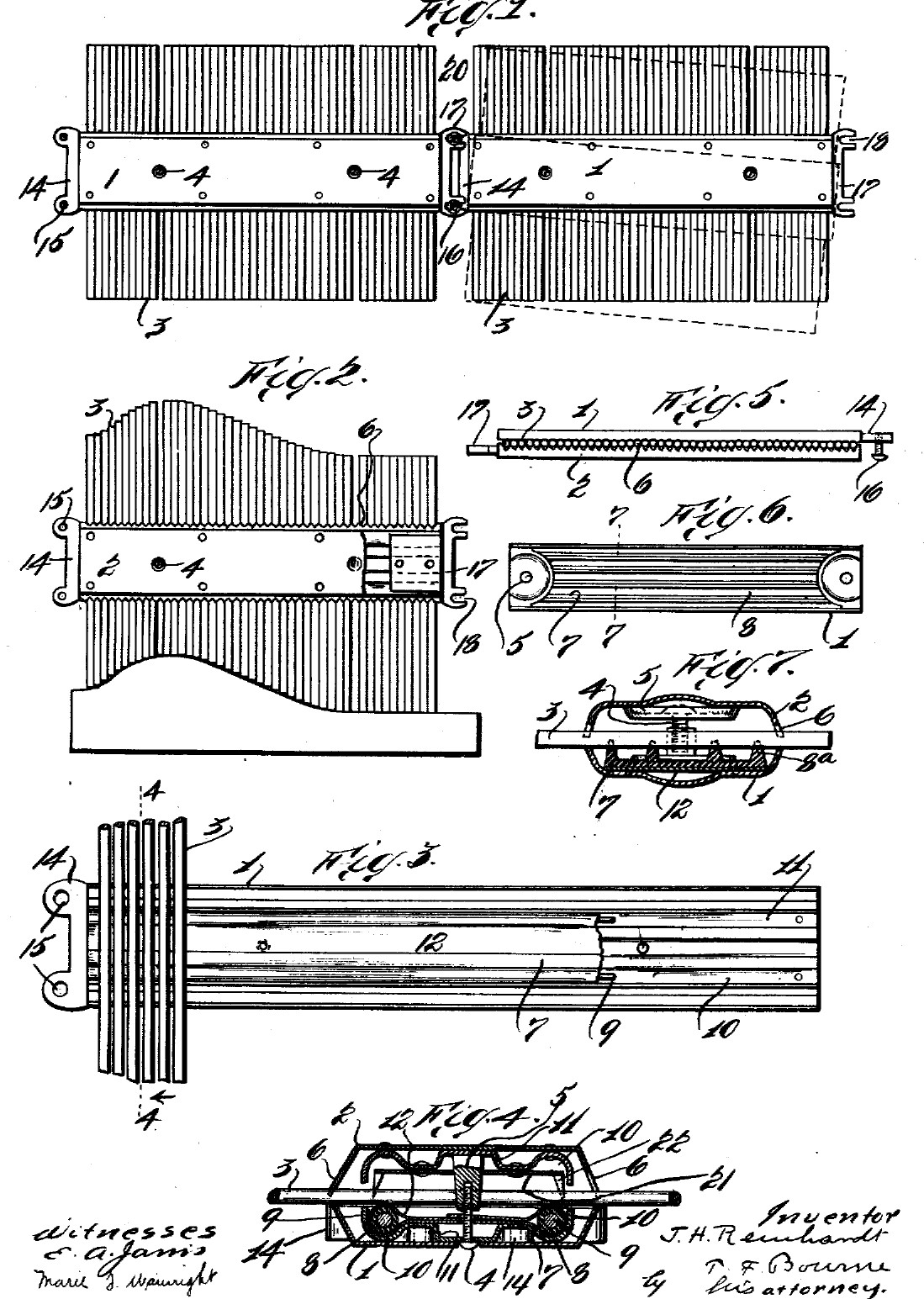


Profile Gauge: Sliding Pins Held by Cloth-Wrapped Rubber Tubes (Reinhardt, 1918)
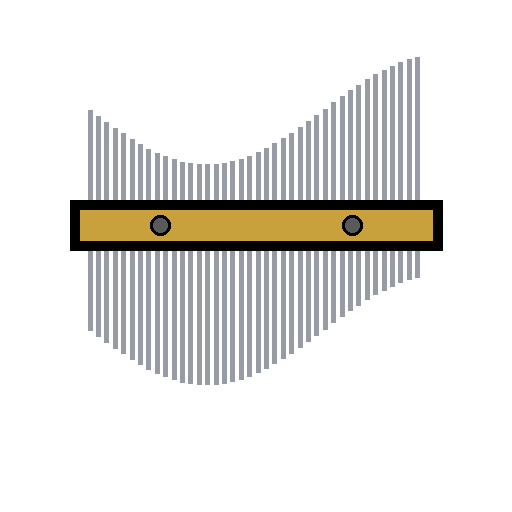
James H. Reinhardt of East Orange, New Jersey, received US 1,261,438, dated 2 April 1918, for a profile gauge: a row of pins clamped between two thin metal members. Rubber tubes wrapped in cloth press on the pins, so each one slides when pushed and stays where it is left. Pressed against an object, the pin ends take its outline, and a pencil drawn along them copies it, so the shape can be made again.
We build his single gauge from brass sheet and steel wire. All sizes are ours.
Hagati
About 5 hours
Amabwiriza
1
1
How many pins
How many pins
Gupakira ikaye ya Jupyter…
2
2
Read US 1,261,438
Read US 1,261,438
"The rods or pins 3 of the respective gages may be pushed against the surface of the object, as required, to obtain its outline along the ends of the rods or pins, whereby a pencil may be drawn along the ends of the pins to trace such outline or contour of the object. From such outlines objects corresponding to the master object may be reproduced either in relief or concave according to which way the outline drawn from the ends of the rods is used."
3
3
Make the two members
Make the two members
Cut two strips of 0.8 mm brass sheet 200 x 32 mm (ours) with tin snips and file the edges. Bend 4 mm down along each long side in the vice, so each strip becomes a shallow channel 24 mm wide: his "gutter-like form". Clamp them together, open sides facing, and drill a 3.5 mm hole through both, 50 mm from each end, on the middle line.
Ibikoresho by'iyi ntambwe:
 Urupapuro rw'Umuringa w'Umuhondo2 ibice
Ibikoresho bikenewe:
 Ibyuma bikata ibyuma bisanzwe
 Amakariso Menshi
 Ifatiro ry'Ameza
 Igikoresho Gishushanya Imirongo
 Igikoresho cyo gutobora gikoreshwa n'intoki
4
4
Make the gutters
Make the gutters
Cut two strips of the same brass 180 x 14 mm and bend each round a 6 mm rod into a U that will hold the rubber tube, his gutters 10. Rivet them inside one member, one near each long side, with copper rivets, keeping clear of the screw holes.
Ibikoresho by'iyi ntambwe:
Urupapuro rw'Umuringa w'Umuhondo1 igice Utuma tw'umuringa6 ibice
Ibikoresho bikenewe:
Ibyuma bikata ibyuma bisanzwe Umurongo Uzengurutse w'Icyuma CyoroshyeIfatiro ry'AmezaIgikoresho cyo gutobora gikoreshwa n'intoki
 Inyundo ifite umutwe wa buruta
5
5
Make the retainers
Make the retainers
Cut two pieces of 6 mm rubber tubing 170 mm long and push a 2 mm wire through each, his cores 9, "to somewhat stiffen them". Wrap each in a strip of cotton cloth, lap its edges and glue them with contact cement, his protecting cloth 12, so the rubber does not touch the metal. Lay one in each gutter.
Ibikoresho by'iyi ntambwe:
 Umuyoboro wa kawusu1 igice
 Insinga y'icyuma1 igice
 Umwenda w'Ipamba1 igice
 Ifatanya rikorana1 igice
Ibikoresho bikenewe:
 Koleyo yo guca insinga y'ukwerekeza
 Umukasi
6
6
Cut the pins
Cut the pins
Cut 1 mm steel wire into pins 120 mm long, as many as the notebook gives. Straighten any that are bent and file both ends flat and smooth, so they slide easily and do not mark the work.
Ibikoresho by'iyi ntambwe:
Insinga y'icyuma1 igiceIbikoresho bikenewe:
Koleyo yo guca insinga y'ukwerekeza Ikusanyirizo ry'Amakariso MatoIfatiro ry'Ameza
7
7
Assemble
Assemble
Lay the member with the retainers open side up. Lay the pins across it side by side, touching, centred so equal lengths stick out on both sides; leave a gap at each screw hole (ours). Put the other member on top and pass a machine screw through each hole with a nut. Tighten them evenly until each pin slides when pushed but does not fall.
Ibikoresho by'iyi ntambwe:
 Ibitorezo by'imashini2 ibice
 Umupira w'Impande Esheshatu2 ibice
Ibikoresho bikenewe:
 Ikusanyirizo ry'ibitorezi
 Isupana ihindurwa
8
8
Take a profile
Take a profile
Push all the pins level with a flat board. Press the gauge square against the object until the pins have taken its shape. Lift it off, lay it on paper or on the stock to be cut, and draw a pencil along the pin ends.
Ibikoresho bikenewe:
 Ikaramu ya penisile
9
9
Troubleshooting
Troubleshooting
Pin profile gauge troubleshooting.
Flow
Loading...
10
10
History and honest limits
History and honest limits
**James H. Reinhardt** of East Orange, New Jersey, US 1,261,438, dated 2 April 1918, filed 20 June 1914. He claimed "a profile gage comprising a pair of opposed members, rods or pins located between and transversely with respect to said members, means for clamping said members together" and "a resilient retainer comprising spaced rubber tubes". His members can have teeth along their edges, and his patent also covers end castings that join several gauges in a line or at an angle, a smaller gauge clamped between them, a toothed spacer strip and a rubber-mat retainer: none of those are built here. He gives no sizes: the brass, the 200 mm length, the 1 mm pins, the tube and core sizes, the cement, the rivets and the screws are ours.
Ibikoresho
8- Umwanya
- 6 ibiceUmwanya
- 1 igiceUmwanya
- 2 ibiceUmwanya
- 1 igiceUmwanya
- 1 igiceUmwanya
- 2 ibiceUmwanya
- 2 ibiceUmwanya
Ibikoresho bikenewe
13- Umwanya
- Umwanya
- Umwanya
- Umwanya
- Umwanya
- 1 vendor sell this, none ship to you yetUmwanya
Iki gishushanyo gikora
Blueprint zijyanye
Izi blueprint zisangira ubumenyi — uburyo, ibikoresho cyangwa amahame

CC0 Umurenge rusange
Iyi blueprint yasohowe munsi ya CC0. Ushobora gukoporora, guhindura, gukwirakwiza no gukoresha nta kwemererwa.
Shyigikira Umuremyi ugura ibicuruzwa binyuze muri Blueprint ye Komisiyo y'Umuremyi byashyizweho n'Abacuruzi, cyangwa kora verisiyo nshya y'iyi Blueprint ukayinjiza nk'isano muri Blueprint yawe kugira ngo musangire inyungu.