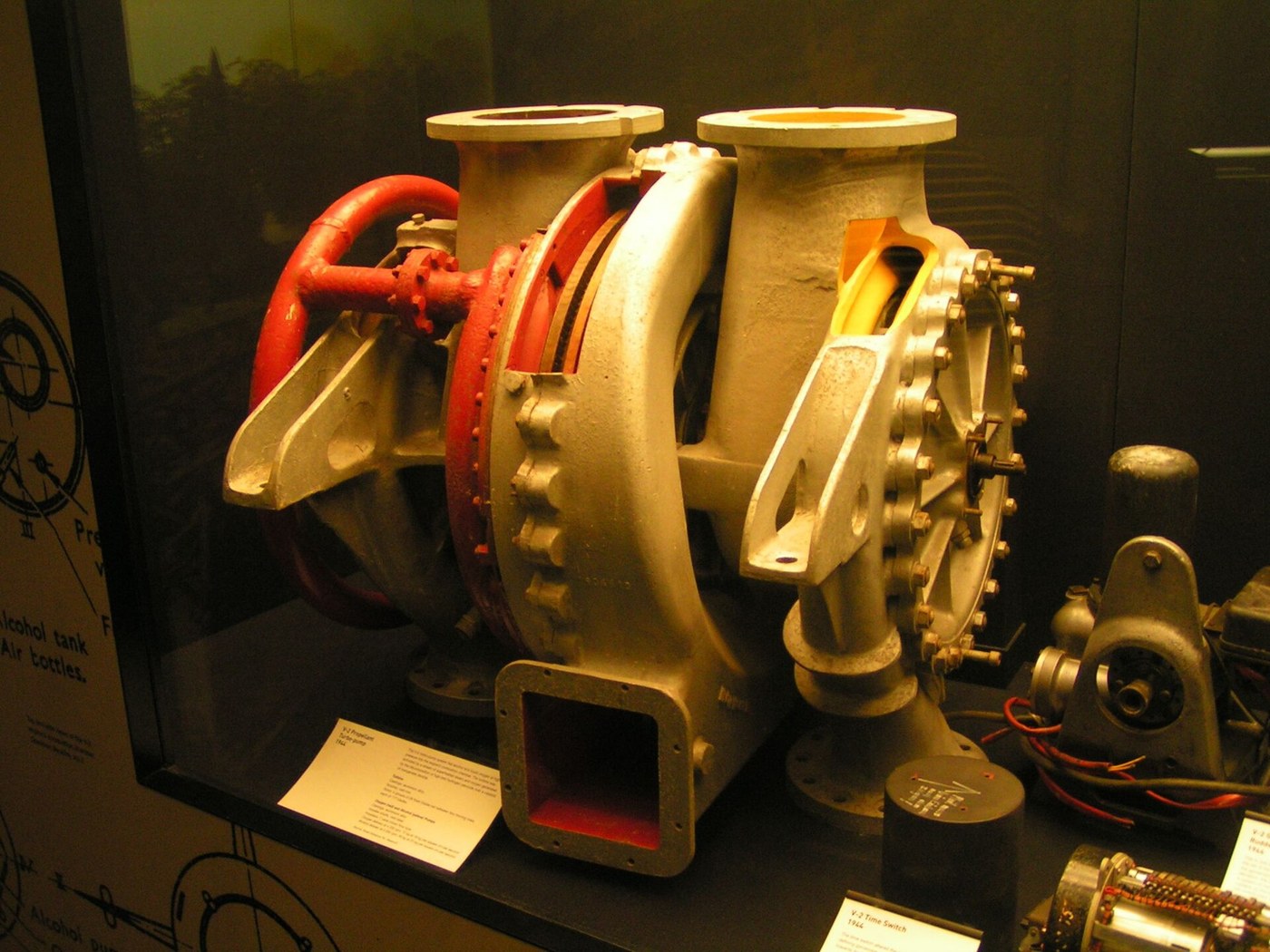


The Rocket Turbopump
Amabwiriza
Weigh a pressure-fed tank and see why it loses
Weigh a pressure-fed tank and see why it loses
Quantify the alternative before building the complicated thing.
- For a chosen tank volume, compute the wall thickness needed to hold 5 bar with a sensible safety factor, and its mass.
- Repeat for 50 bar, and again for 300 bar.
- Plot tank mass against pressure.
- Compare each against the propellant mass the tank would hold.
Tank mass rises roughly in proportion to pressure, and by a few hundred bar the tank weighs more than what is inside it. Since the rocket equation cares about the ratio of full to empty mass, that is fatal — you have added dry mass in exchange for nothing.
Pressure-fed systems are still the right answer for small upper stages, attitude thrusters and anything valuing simplicity over performance, because there is nothing to spin up and nothing to fail. The trade turns on chamber pressure: below roughly 20 bar pressure-fed wins on mass and simplicity, above it the pump wins decisively.Ibikoresho by'iyi ntambwe:
 Urupapuro rw'Imirongo1 pad
Ibikoresho bikenewe:
 Ikigereranyo cya Digitale cy'Amasentimetero 6
 Iminzani ya Digitale
 Igipima Umuvuduko
Build a centrifugal pump and measure its head curve
Build a centrifugal pump and measure its head curve
Same machine as the turbojet compressor, running on liquid instead of gas.
- Machine or adapt a centrifugal impeller in a volute housing, driven by a variable-speed motor.
- Pump water and measure delivered pressure against flow rate at a fixed speed, throttling the outlet in steps.
- Plot pressure head against flow.
- Repeat at several speeds and compare.
Head is highest at zero flow and falls as flow increases, and head rises with the SQUARE of rotational speed while flow rises only linearly. That square law is why turbopumps run at tens of thousands of rpm — the pressure you need is bought far more cheaply with speed than with size.
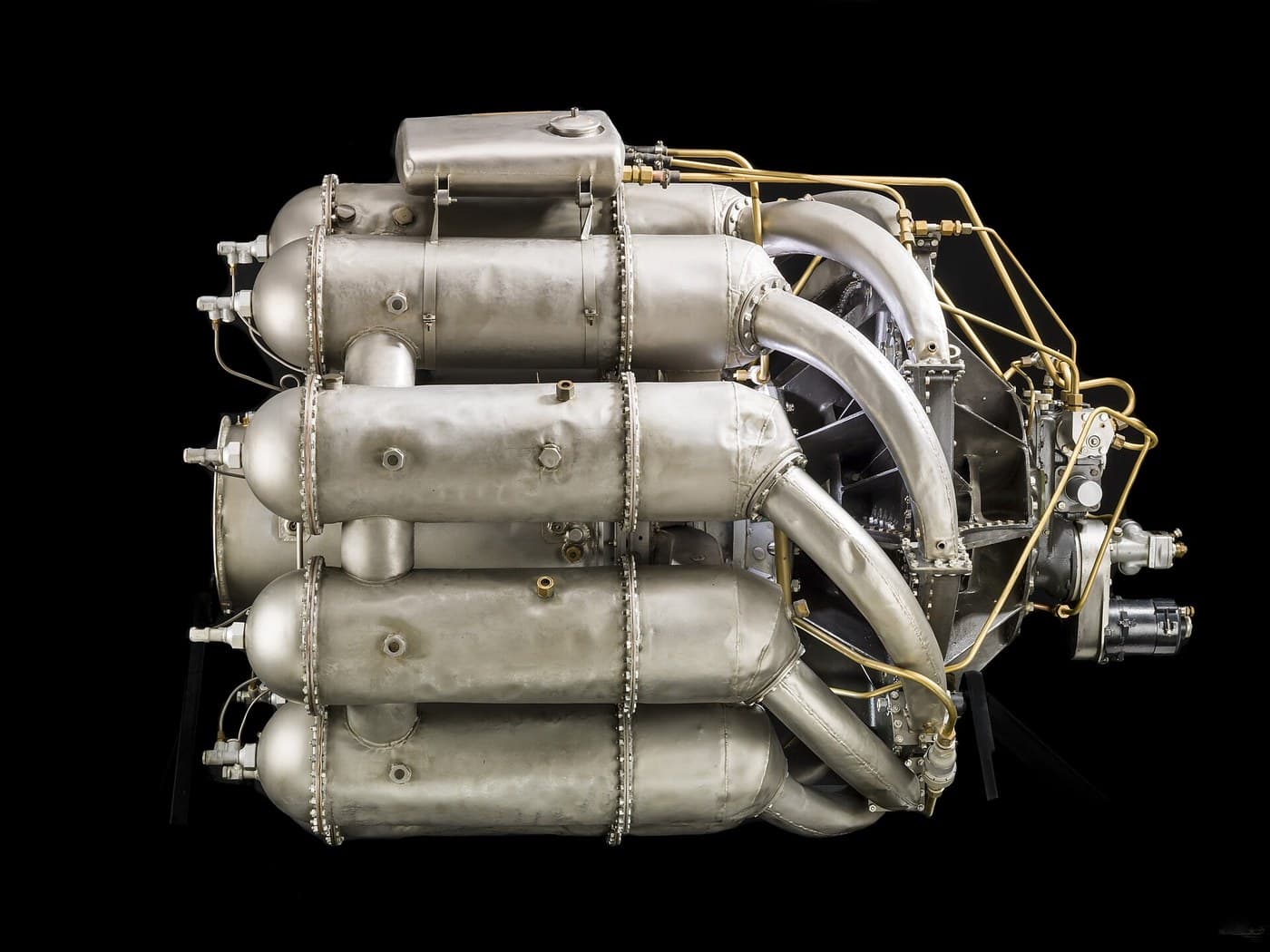
Reverse-engineering note: the impeller of a rocket turbopump is a single machined piece, usually milled from a solid forging rather than cast, because at these speeds a casting defect is a burst. The blades are backward-curved for the same reason as in the turbojet: it gives a stable, gently falling head curve rather than one that can wander.Ibikoresho by'iyi ntambwe:
 Uruziga rw'igikanda umwuka cya turbo1 igice
 Umurongo wa alumini uzengurutse1 igice
 Bearing y'utubumbe2 ibiceUrupapuro rw'Imirongo1 pad
Ibikoresho bikenewe:
 Imashini yo guhinguza icyuma
 Ifashi ry'imashini yo gusya inch 4
 Igipimo cy'urushinge (dial indicator)Ikigereranyo cya Digitale cy'Amasentimetero 6
 Igipimo cy'imizunguruko cya dijitaliIgipima Umuvuduko
 Isupana ya torike
 Amadarubindi Asobanutse yo Kwirinda
 Ikirinda amatwi (utwuma tw'amatwi, SNR 30 dB)
Find cavitation, and then defeat it with an inducer
Find cavitation, and then defeat it with an inducer
The failure that destroys pumps is not overload — it is the liquid boiling at the inlet.
- Run the pump and progressively restrict the INLET while listening and watching delivered pressure.
- Note the point where the sound turns to a gravelly rattle and head collapses.
- Stop immediately and inspect the impeller leading edges.
- Now fit an inducer — a small axial screw upstream of the main impeller — and repeat.
Restricting the inlet drops local pressure below the liquid’s vapour pressure, so it boils at the impeller eye; those bubbles collapse violently a moment later in the higher-pressure region and hammer the metal. Cavitation sounds like pumping gravel, destroys head, and pits impellers into lace.
The inducer solves it by raising pressure gently before the main impeller ever sees the flow. It is a low-head pump whose only job is to keep the real pump out of trouble, and every rocket turbopump has one.
This is also why tanks are pressurised at all in a pumped system — that few bar of ullage pressure exists purely to keep the pump inlet above vapour pressure. It is not helping deliver propellant; it is preventing cavitation. Cryogenic propellants make it harder, because they are stored at their boiling point by definition.Ibikoresho by'iyi ntambwe:
Umurongo wa alumini uzengurutse1 igiceUrupapuro rw'Imirongo1 padIbikoresho bikenewe:
Imashini yo guhinguza icyumaIfashi ry'imashini yo gusya inch 4Igipima UmuvudukoIgipimo cy'imizunguruko cya dijitali Terefone Ifata Amashusho Agenda BuhoroIkigereranyo cya Digitale cy'Amasentimetero 6Amadarubindi Asobanutse yo KwirindaIkirinda amatwi (utwuma tw'amatwi, SNR 30 dB)
Drive it with a turbine, and choose a cycle
Drive it with a turbine, and choose a cycle
Something must spin the pump, and where its energy comes from defines the whole engine.
- Sketch three arrangements. Gas generator: a small side combustor burns a little propellant, drives the turbine, and dumps its exhaust overboard. Staged combustion: a preburner runs very fuel-rich, drives the turbine, and its exhaust — still full of unburned fuel — goes into the main chamber. Expander: fuel warmed in the regenerative cooling jacket is used to drive the turbine before being injected.
- For each, trace where the turbine’s working fluid ends up.
- Mark which arrangements waste propellant.
The gas generator throws away a small percentage of propellant unburned — visible as the dark smoky exhaust alongside the main plume on older engines. Staged combustion wastes none, and pays with far higher turbine pressures and much harder engineering.
The expander cycle is the elegant one and ties straight back to the previous blueprint: the heat picked up while cooling the chamber is used to drive the pump, and then still gets burned. Its limit is that only so much heat is available, which caps engine size — which is why expander engines are upper stages.
Each cycle is a different answer to one question: what drives the turbine, and does its exhaust get wasted? That single choice sets the engine's efficiency, its complexity and its cost more than any other decision in the design.Ibikoresho by'iyi ntambwe:
Urupapuro rw'Imirongo1 padIbikoresho bikenewe:
Ikigereranyo cya Digitale cy'Amasentimetero 6Igipimo cy'imizunguruko cya dijitali Termokupuli ifite igaragaza
Seal the shaft between things that must never meet
Seal the shaft between things that must never meet
One shaft passes from the oxidiser pump to the fuel pump, and a leak between them is not a maintenance issue.
- Examine the problem: liquid oxygen on one end, kerosene or hydrogen on the other, one rotating shaft between them.
- Design a seal package — two mechanical face seals with a vented cavity between them.
- Pipe an inert purge gas into that cavity at a pressure above both sides.
- Test with air and dyed water, checking that neither fluid reaches the other even when one seal is deliberately degraded.
The intermediate purged cavity is the whole design: any leak past either seal goes into the purge and out to vent, never across. A single seal, however good, has one failure between two propellants that ignite on contact.
Recognise the pattern from earlier in this catalogue — this is the same reasoning as the double seal on the SF6 breaker shaft and the vented interspace in a hydraulic gland. Where a single barrier failing is catastrophic, use two and monitor the space between, so the first failure is detectable rather than fatal.
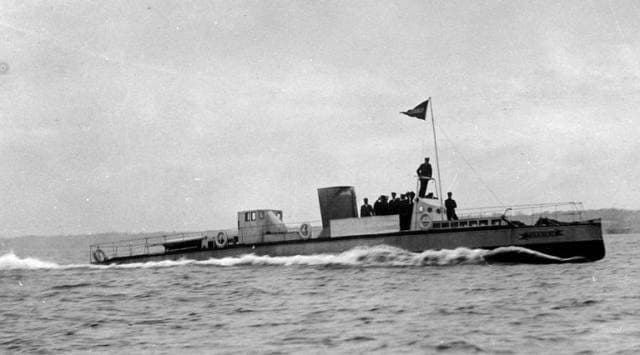
The 1969 N1 launches are the standard cautionary tale here: turbopump failures in a first stage with thirty engines, where debris from one destroyed its neighbours. Rocket turbopumps operate closer to their material limits than almost any other production machinery, and there is very little margin between working and disassembling.Ibikoresho by'iyi ntambwe:
 Igikoresho cy'ibifunga bya mekanike byo mu maso2 ibirundo
 Urutonde rw'inziga za O1 ibikoresho
 Ibara ry'ibiribwa (ibara ryo kugaragaza uko amazi atembera)1 icupa
Ibikoresho bikenewe:
Imashini yo guhinguza icyumaIfashi ry'imashini yo gusya inch 4Igipimo cy'urushinge (dial indicator)Ikigereranyo cya Digitale cy'Amasentimetero 6Igipima Umuvuduko Umuvuduko w'umwuka wa galoni 30Isupana ya torikeAmadarubindi Asobanutse yo Kwirinda
Ibikoresho
7- Umwanya
- Umwanya
- Umwanya
- Umwanya
- Umwanya
- 1 ibikoreshoUmwanya
Ibikoresho bikenewe
13- Umwanya
- Umwanya
- Umwanya
- Umwanya
- Umwanya
Blueprint zijyanye
Izi blueprint zisangira ubumenyi — uburyo, ibikoresho cyangwa amahame

CC0 Umurenge rusange
Iyi blueprint yasohowe munsi ya CC0. Ushobora gukoporora, guhindura, gukwirakwiza no gukoresha nta kwemererwa.
Shyigikira Umuremyi ugura ibicuruzwa binyuze muri Blueprint ye Komisiyo y'Umuremyi byashyizweho n'Abacuruzi, cyangwa kora verisiyo nshya y'iyi Blueprint ukayinjiza nk'isano muri Blueprint yawe kugira ngo musangire inyungu.