

Ropewalk
Amabwiriza
Spin fibre into yarn
Spin fibre into yarn
Start with loose fibre and put the first twist in.
- Draw out a bundle of hemp or jute fibre to an even thickness.
- Twist it steadily in one direction — call it clockwise.
- Keep tension on it; let go and it will kink immediately.
Ibikoresho by'iyi ntambwe:
 Insinga za shanvure500 g
Lay yarns into strands the other way
Lay yarns into strands the other way
Reverse the direction. This is the step people get wrong.
- Take several clockwise yarns and hold them parallel under tension.
- Twist the group ANTICLOCKWISE into a strand.
- Feel the yarns fighting to unwind as you do it.
Close the rope with a top
Close the rope with a top
Three strands, twisted back the original way, laid up together.
- Hold three anticlockwise strands under equal tension.
- Twist them together CLOCKWISE.
- Feed a grooved cone — the top — along between the strands as you close them.
Ibikoresho by'iyi ntambwe:
 Ibikoresho by'inkoni z'igiti cya pinusi1 ikirundo
Measure the shortening, then test it
Measure the shortening, then test it
Twisting costs length, and the finished rope is weaker than its fibres.
- Measure the total yarn length used and the finished rope length.
- Calculate the percentage lost to twist.
- Load a sample to failure and compare with the same weight of straight fibres.
Ibikoresho bikenewe:
 Iminzani ya Digitale yo mu Gikoni
 Umurongo w'ipima
History and context
History and context
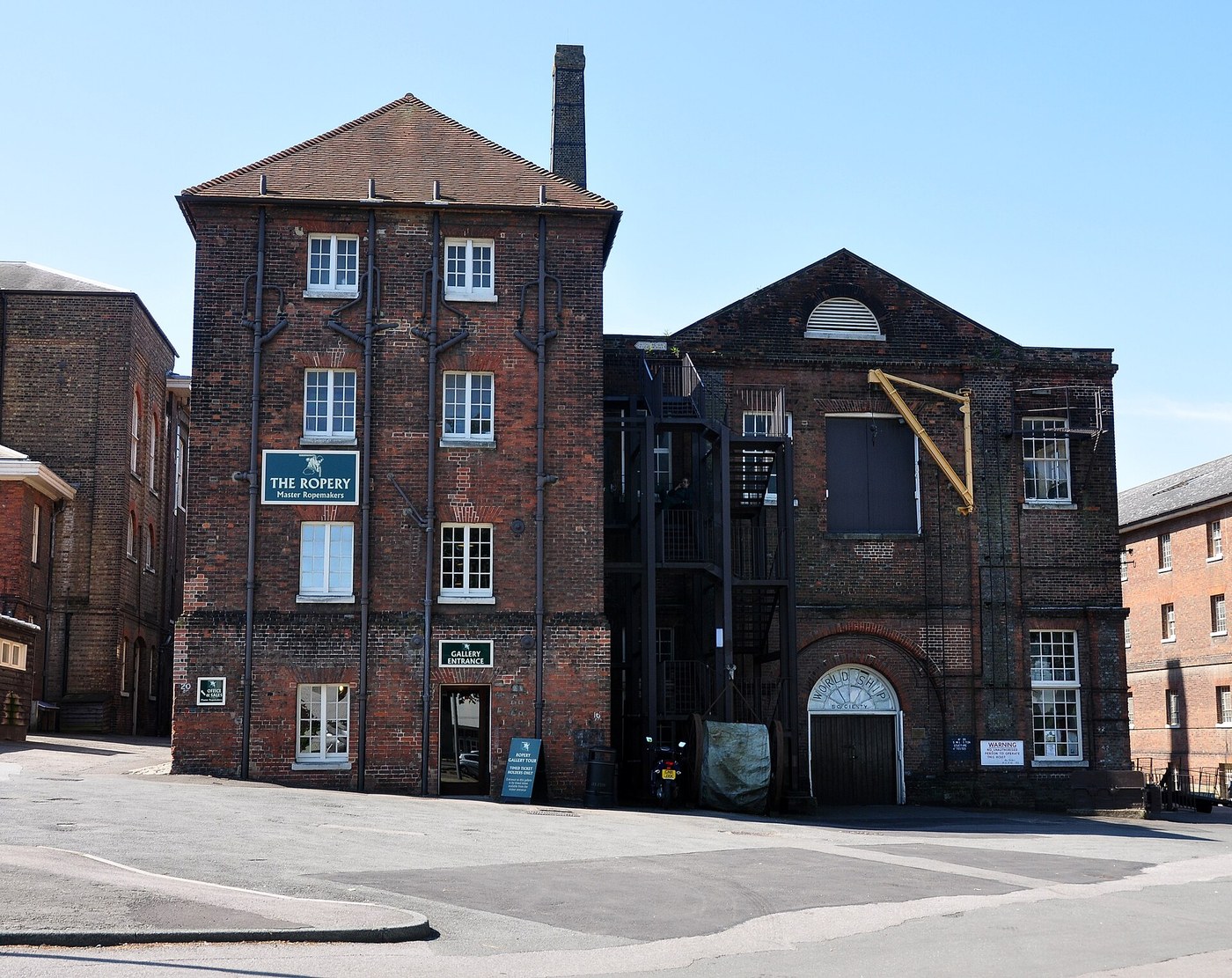
A rope must be laid out at full length while it is made, so the building is as long as the product. Naval ropewalks were among the longest buildings in the world when built — the one at Chatham Dockyard is a quarter of a mile long, was built in 1790, and still makes rope. A ship of the line needed tens of kilometres of cordage, from log lines to anchor cables, and losing the rigging meant losing the ship.
The vocabulary is still with us. A cable length is 608 feet in British practice — about a tenth of a nautical mile — and derives from the length of an anchor cable. To be at the end of your rope, to learn the ropes, and the bitter end — the inboard end of the cable, made fast to the bitts — are all from this trade.
Hemp was strategic. Naval powers fought over access to it; Russian hemp supplied much of the British fleet, and Napoleon's Continental System aimed partly at cutting Britain off from it. Hemp rots when wet, so standing rigging was tarred, which is where Jack Tar comes from.
What replaced it: wire rope for standing rigging and cranes, and synthetic fibres — nylon, polyester, and now high-modulus polyethylene — which are stronger, do not rot, and can be braided rather than laid. Braided rope has no lay to unbalance and does not spin under load, which laid rope does. But the three-strand construction survives wherever rope must be spliced by hand, because a laid rope can be unlaid and re-laid into a splice with nothing but a spike.
Ibikoresho
2- 500 gUmwanya
- 1 ikirundoUmwanya
Ibikoresho bikenewe
2- Umwanya
Iki gishushanyo gikora
CC0 Umurenge rusange
Iyi blueprint yasohowe munsi ya CC0. Ushobora gukoporora, guhindura, gukwirakwiza no gukoresha nta kwemererwa.
Shyigikira Umuremyi ugura ibicuruzwa binyuze muri Blueprint ye Komisiyo y'Umuremyi byashyizweho n'Abacuruzi, cyangwa kora verisiyo nshya y'iyi Blueprint ukayinjiza nk'isano muri Blueprint yawe kugira ngo musangire inyungu.