Ubufatanye
UBUHANZI
UBWIZA N'UBUZIMA
UBUKORIKORI
UMUCO N'AMATEKA
IMYIDAGADURO
IBIDUKIKIJE
IBIRIBWA N'IBINYOBWA
UBWUBATSI BUSUBIRA INYUMA
UBUMENYI
SIPORO
IKORANABUHANGA
IBYAMBARWA
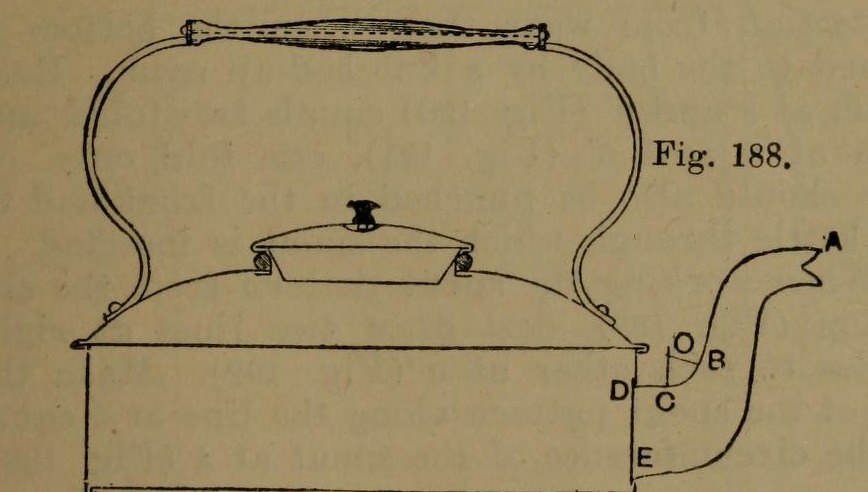


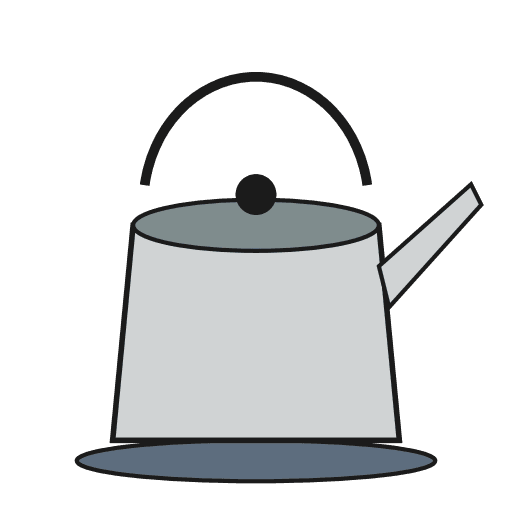
Stovetop Kettle: a Square Copper Kettle (Hasluck, 1907)
A tinsmith's square kettle in sheet copper, 9 x 9 in and 3 5/8 in deep: a box body with folded corner seams, a hollowed top pened on, a brazed and bent spout, a small cover, and a wooden handle on brass uprights.
Hasluck prefers copper; tinplate also works and is a separate route.
Source: Paul N. Hasluck, Tinplate Work (1907), pp. 91-98. Unknown: copper gauge, solder. Picture: Figs. 188-189 of the book.
Hejuru
Unknown
Amabwiriza
1
1
Cut the patterns
Cut the patterns
For a body 9 x 9 x 3 5/8 in, cut two ends 9 1/2 x 4 in and two sides 9 1/4 x 4 in, notched for box seams at the corners (Figs. 190-191), with allowances to fold at top and bottom. Punch the spout hole in the front. Cut the bottom 9 1/2 in square, notched for a 1/4 in edge. Set out the top as a 10 1/2 in square with curved allowances for hollowing and a 4 in circle for the cover hole (Fig. 193); set out the spout from the elevation (Fig. 192), the cover and its cone-shaped rim (Figs. 194-195).
Ibikoresho by'iyi ntambwe:
 Urupapuro rw'Umuringa1 body, bottom, top, spout, cover
Ibikoresho bikenewe:
 Ikizunguruka gifite imitwe ibiri
 Igikoresho Gishushanya Imirongo
 Ibyuma bikata ibyuma bisanzwe
2
2
Braze and shape the spout
Braze and shape the spout
Thin the long edges by hammering. Set in the throat with a stretching hammer on a beak iron, bend the spout round until the edges overlap, bind it with wire, lay spelter and borax along the inside of the seam and braze it; then close and braze the under seam. Fill it with lead and bend the neck with a round-faced hammer on the hollowing block; file off spare spelter and smooth it. Run out the lead, throw off a seating round the large end, trim the top with snips and tin the inside.
Ibikoresho by'iyi ntambwe:
 Icyuma kitazwi1 spelter
 Amabati1 tinning
Ibikoresho bikenewe:
 Inyundo yo koroshya
 Inkingi
 Urusinga rw'icyuma
 Ifu ya boraki
 Itara ryo gusudira ku bushyuhe bwinshi
 Isasu
 Ikiyiko gifite utwobo
 Igihimba cy'Igiti Gikomeye
 Ikariso ry'IcyumaIbyuma bikata ibyuma bisanzwe
3
3
Fold and seam the body
Fold and seam the body
Fold the top edges square, the front and back outwards and the sides likewise; fold the bottom edges right over inwards to take the bottom (Fig. 188). Hook each side's end over the front's and work the corner seam on a straight-edged tool (Figs. 198-199). Turn up the bottom's 1/4 in edge, push it edge-down into the bottom folds, and solder the bottom and seams.
Ibikoresho by'iyi ntambwe:
 Guhambira kwa Sn/Pb1 igice
Ibikoresho bikenewe:
 Inyundo y'IgitiInkingi
 Icyuma cyo gusudira cy'amashanyarazi
 Umuti wo gusudira
4
4
Hollow the top and make the cover
Hollow the top and make the cover
Hollow the top on the block: sink the four sides a little, hollow the corners with a bullet-faced hammer, flatten each side along the block edge, even the shoulder and smooth it all over. Pare the edges, mark the flange with an edging machine, set it down square with a hatchet stake and mallet, and take up an edge to fit over the body. Cut the cover hole with circular snips and fit a narrow wired rim, worked over inside. Make the cover: solder its cone rim to fit the wired rim, throw off a flange, hollow the cover disc and seam it on, and fix the knob.
Ibikoresho by'iyi ntambwe:
Urusinga rw'icyuma1 rimGuhambira kwa Sn/Pb1 igiceIcyuma kitazwi1 cover knobIbikoresho bikenewe:
Inyundo yo koroshyaIgihimba cy'Igiti GikomeyeInkingiInyundo y'IgitiIbyuma bikata ibyuma bisanzweIcyuma cyo gusudira cy'amashanyaraziUmuti wo gusudira5
5
Handle, top and spout
Handle, top and spout
Cut two handle uprights from stout brass or copper band (Fig. 196), drill them for rivets and for the spindle that carries the wooden handle, and bend them to shape. Rivet them to the top and solder over the rivet heads inside. Pene the top down onto the body and solder along each edge. Push the spout through its hole from inside until its large end butts against the front, and solder it strongly from inside.
Ibikoresho by'iyi ntambwe:
 Urupapuro rw'Umuringa w'Umuhondo1 handle uprights
 Umurongo w'Umuringa w'Umuhondo1 spindle
 Ukuboko1 wood
 Utuma tw'umuringa1 number not givenGuhambira kwa Sn/Pb1 igice
Ibikoresho bikenewe:
 Igikoresho cyo gutobora gikoreshwa n'intoki
 Inyundo yo gushyira rivetiInyundo y'IgitiIcyuma cyo gusudira cy'amashanyaraziUmuti wo gusudira
Ibikoresho
9- 1 body, bottom, top, spout, coverUmwanya
- 1 cover knobUmwanya
- 1 tinningUmwanya
- 3 ibiceUmwanya
- 1 rimUmwanya
- 1 handle uprightsUmwanya
- 1 spindleUmwanya
- 1 woodUmwanya
- 1 number not givenUmwanya
Ibikoresho bikenewe
17- Umwanya
- Umwanya
- Umwanya
- Umwanya
- Umwanya
- Umwanya
- Umwanya
- Umwanya
- Umwanya
- Umwanya
- Umwanya
Ibikoresho by'Ibishushanyo Bifitanye Isano


Iki gishushanyo gikora
CC0 Umurenge rusange
Iyi blueprint yasohowe munsi ya CC0. Ushobora gukoporora, guhindura, gukwirakwiza no gukoresha nta kwemererwa.
Shyigikira Umuremyi ugura ibicuruzwa binyuze muri Blueprint ye Komisiyo y'Umuremyi byashyizweho n'Abacuruzi, cyangwa kora verisiyo nshya y'iyi Blueprint ukayinjiza nk'isano muri Blueprint yawe kugira ngo musangire inyungu.