UBUHANZI
UBWIZA N'UBUZIMA
UBUKORIKORI
UMUCO N'AMATEKA
IMYIDAGADURO
IBIDUKIKIJE
IBIRIBWA N'IBINYOBWA
UBWUBATSI BUSUBIRA INYUMA
UBUMENYI
SIPORO
IKORANABUHANGA
IBYAMBARWA

The Drum Brake: Shoes That Push Themselves Harder
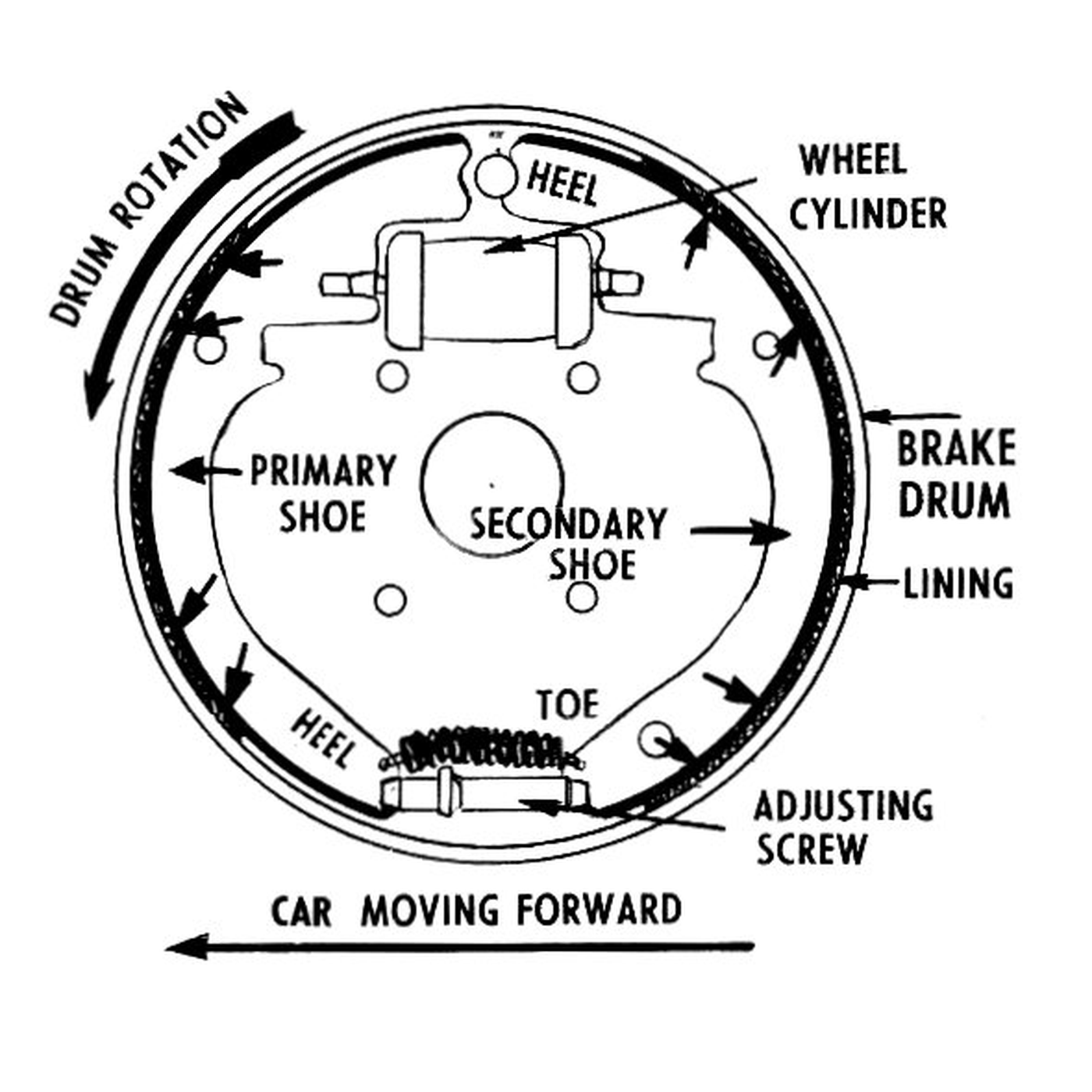
Early cars stopped with blocks pressed on the tyres or with a band tightened round a drum on the outside. In 1902 Louis Renault put the friction INSIDE the drum: two curved shoes pivoted on a fixed plate, pushed outward against the drum's inner surface. The drum keeps dirt and water off the linings, and one of the shoes is dragged by the drum's own rotation into firmer contact — it helps to apply itself.
That self-servo gives a lot of braking for a small push. It also makes the brake sensitive to the friction of its linings, which is why drum brakes fade when hot.
This rung works out leading and trailing shoe torques and builds a plywood drum with one shoe to measure the difference by spinning it each way.
Hagati
About 4 hours
Amabwiriza
1
1
Leading and trailing shoes
Leading and trailing shoes
Gupakira ikaye ya Jupyter…
2
2
Build a drum and one shoe
Build a drum and one shoe
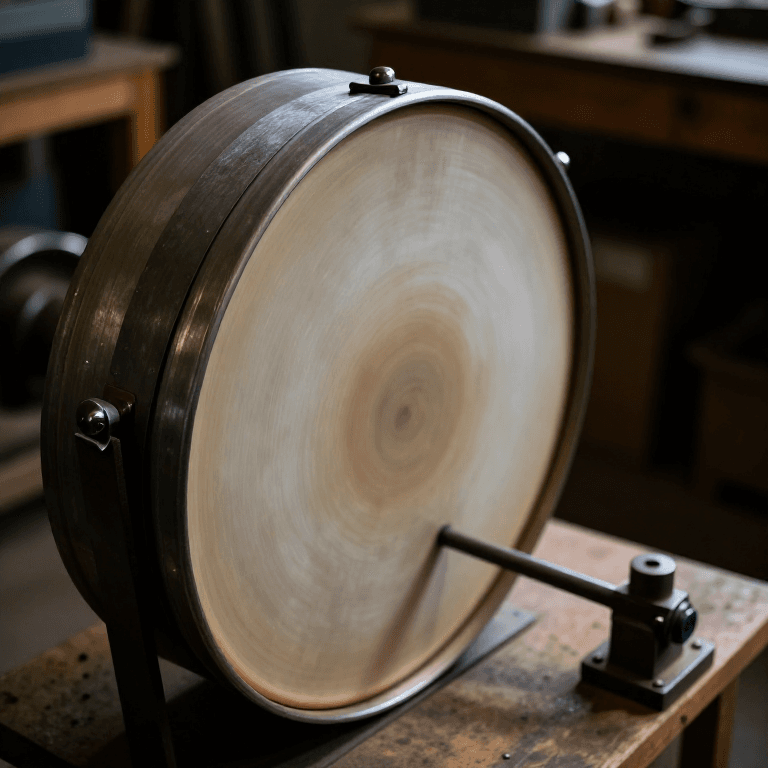
Make a drum: a plywood disc 200 mm across with a 30 mm rim of cardboard strip glued round it, on a bolt axle through a plywood backplate. Line the inside of the rim with sandpaper, rough side in, as a repeatable friction surface for the drum.
Make one shoe: a plywood arc that fits inside the drum, pivoted near one end on the backplate, with a piece of brake-pad friction material glued on its face. At the free end, hang the spring scale to pull the shoe out against the drum with a fixed force.
Wrap string round the drum's hub, hang a weight on it, and find the smallest weight that turns the drum against the shoe — with the drum turning towards the pivot (trailing), then away (leading). The leading direction needs far more weight.
Ibikoresho by'iyi ntambwe:
 Urupapuro rw'ibiti byometse1 urupapuro
 Amabati y'Ikarito Afite Imikanda1 agapaki
 Ibibaho bya feri1 ikirundo
 Ibitorezo by'imashini4 ibice
Ibikoresho bikenewe:
 Icyuma Cyivumbura Kidafite Insinga
 Ibyuma Byinshi byo Gucukura
 Igipima Imbaraga (Iminzani y'Umuzingo)
 Umurongo w'ipima
 Ikusanyirizo ry'urupapuro rwo kunoza
3
3
History and context
History and context
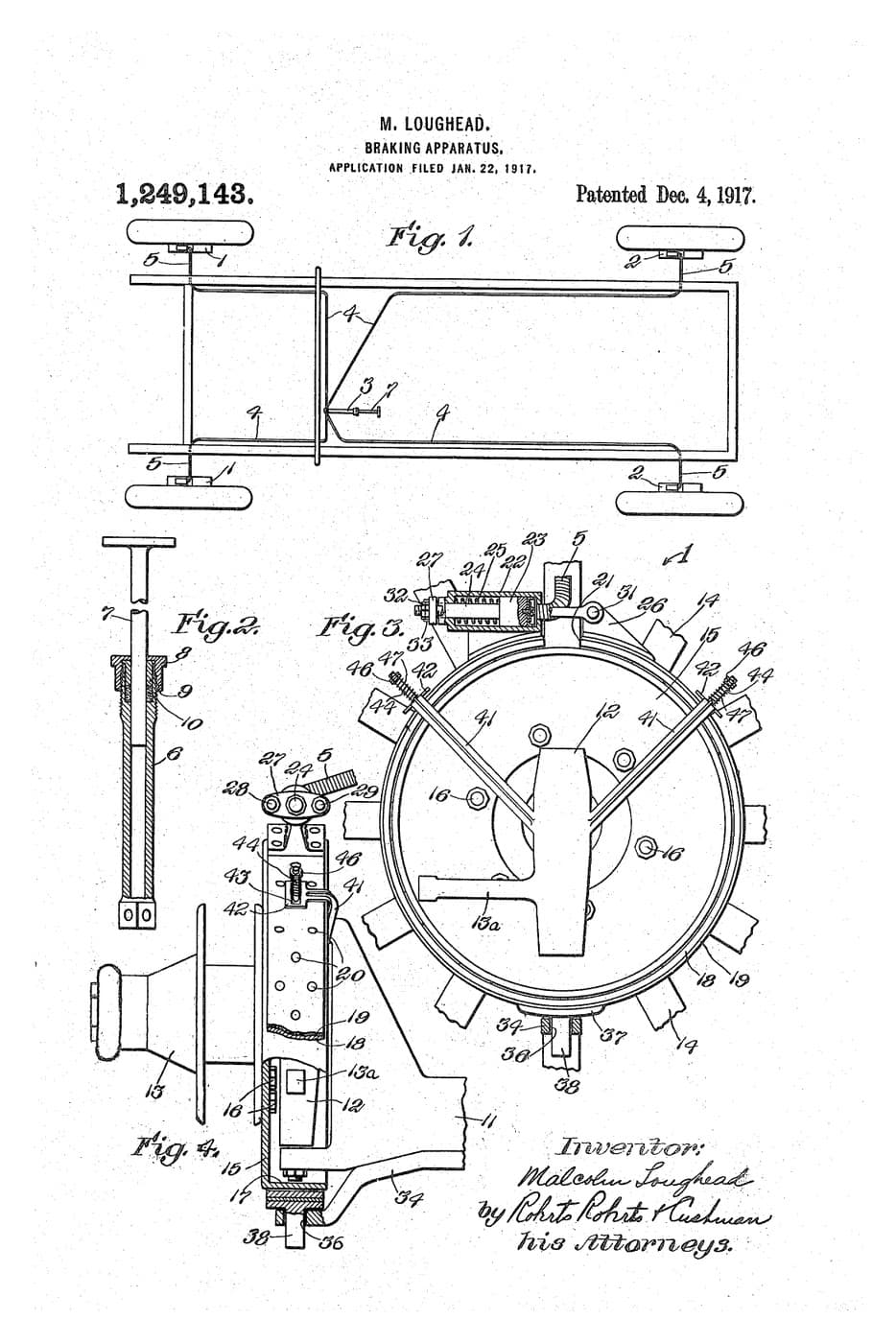
**Louis Renault, 1902** — the internal expanding shoe brake. No patent number is asserted here. Mechanical rods and cables worked the shoes until hydraulic operation (Loughead, in this catalogue) spread in the 1920s; twin-leading-shoe drums put the self-servo on both shoes for stronger front brakes.
**Honest limits.** The self-servo makes the torque sensitive to lining friction, so a hot drum fades and a wet one grabs. The drum expands away from the shoes when hot, lengthening the pedal. And the enclosed drum sheds heat poorly — the reason disc brakes (the next rung) took over at the front of cars.
Ibikoresho
4- 1 urupapuroUmwanya
- 1 agapakiUmwanya
- 1 ikirundoUmwanya
- 4 ibiceUmwanya
Ibikoresho bikenewe
5- 1 vendor sell this, none ship to you yetUmwanya
- Umwanya
- Umwanya
Blueprint zijyanye
Izi blueprint zisangira ubumenyi — uburyo, ibikoresho cyangwa amahame



CC0 Umurenge rusange
Iyi blueprint yasohowe munsi ya CC0. Ushobora gukoporora, guhindura, gukwirakwiza no gukoresha nta kwemererwa.
Shyigikira Umuremyi ugura ibicuruzwa binyuze muri Blueprint ye Komisiyo y'Umuremyi byashyizweho n'Abacuruzi, cyangwa kora verisiyo nshya y'iyi Blueprint ukayinjiza nk'isano muri Blueprint yawe kugira ngo musangire inyungu.