UBUHANZI
UBWIZA N'UBUZIMA
UBUKORIKORI
UMUCO N'AMATEKA
IMYIDAGADURO
IBIDUKIKIJE
IBIRIBWA N'IBINYOBWA
UBWUBATSI BUSUBIRA INYUMA
UBUMENYI
SIPORO
IKORANABUHANGA
IBYAMBARWA


The Flour Sifter: A Crank That Breaks the Lumps
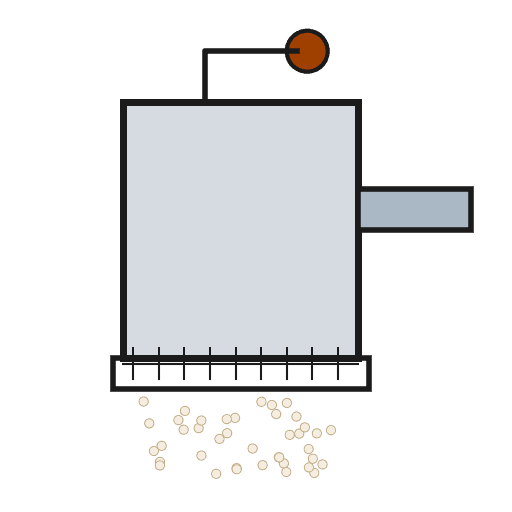
Flour that has sat in a bin packs into lumps, and a lump will not go through a sieve by shaking. A crank sifter is a tin cup with a sieve for a bottom and a wire arm that sweeps the sieve as the handle turns.
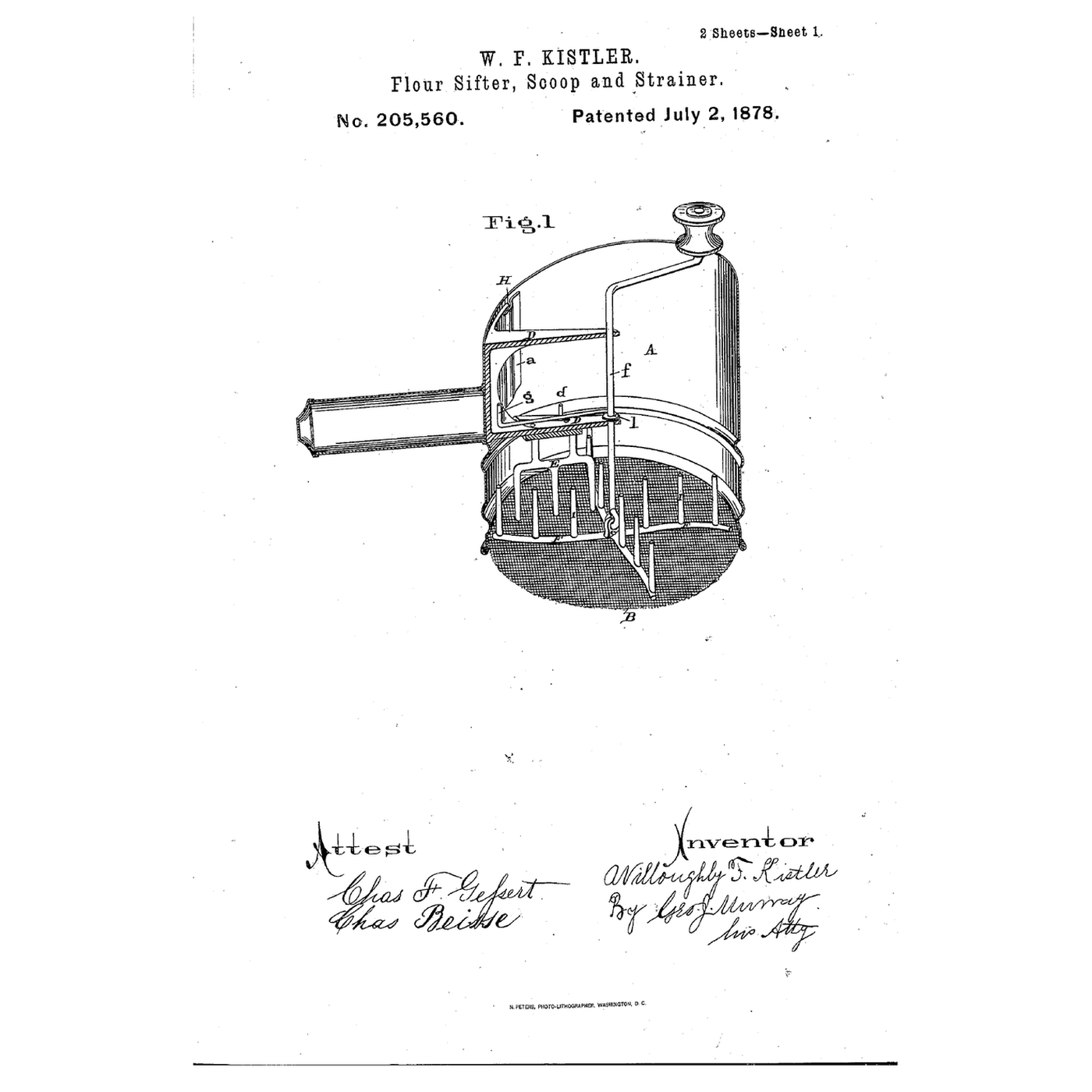
Willoughbay F. Kistler of Cincinnati, Ohio, received US 205,560, dated 2 July 1878 (filed 14 May 1878), for a "Flour Sifter, Scoop, and Strainer". The scoop-shaped cup "is held by the left hand, while the right hand operates a rotary agitator". Its object was "to prevent the formation of lumps in the flour ... and to break any lumps": teeth on the agitator's arms pass between the teeth of a fixed breaker, and a spring keeps the agitator pressed on the sieve.
This rung sizes sieve openings, models why a breaker speeds sifting, and weighs a cup of flour before and after sifting.
Utangiye
About 1 hour
Amabwiriza
1
1
Openings, lumps and the breaker
Openings, lumps and the breaker
Gupakira ikaye ya Jupyter…
2
2
Where the flour comes from
Where the flour comes from
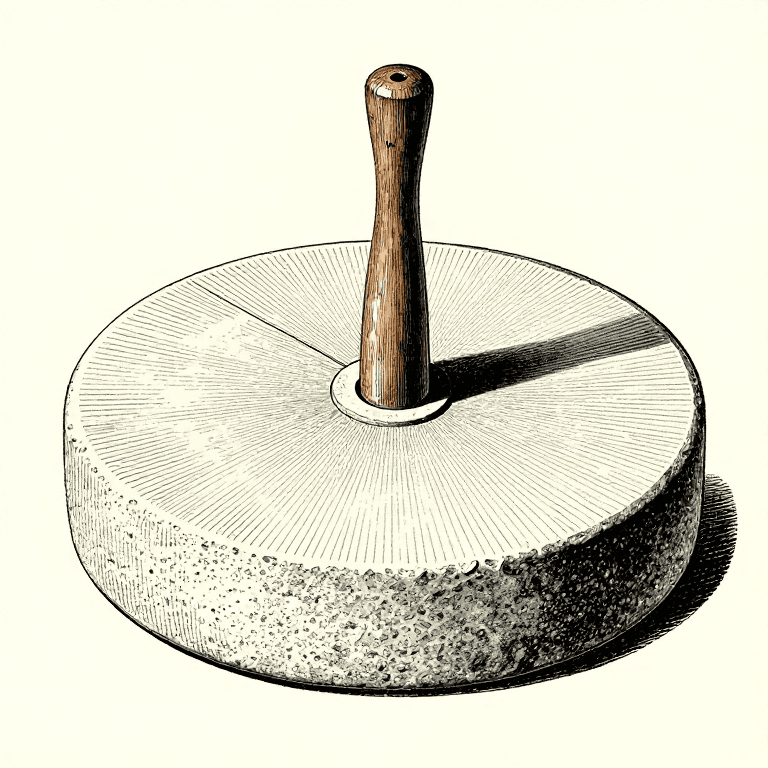
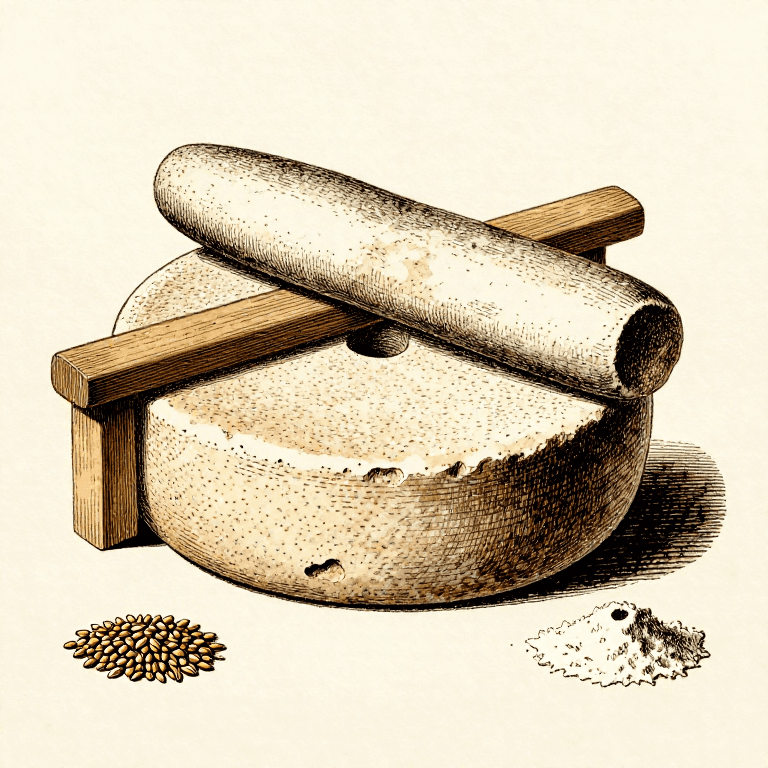
Flour from a hand quern comes out mixed with bran and grit, and sifting separates them. The embedded blueprint carves the quern.
3
3
Read US 205,560
Read US 205,560
"This invention relates to that class of flour and meal sifters which consist of a scoop-shaped tube provided with a handle, with which it is held by the left hand, while the right hand operates a rotary agitator to facilitate the operation of sifting."
"A is a cylinder, fitted with a flat sieve at the bottom, and having the top end inclined, scoop-shaped". "The arms of the agitator F are curved in the direction of rotation, so as to evenly distribute the flour over the surface of the sieve B by overcoming the tendency to throw it to the outer circumference". "Teeth or pins I project up from the arms at intervals, to pass between spaces formed by corresponding teeth of the stationary breaker E".
A collar "prevents the agitator from rubbing too hard upon the sieve, while the spring g, which is secured at one end in the bracket, has its free end pressing upon the collar, to keep the agitator down with the requisite pressure upon the sieve." The shaft is looped through a lug "so as to form a universal joint, to permit the agitator to adjust itself to any inequalities in the sieve." "To use my sifter, the bracket and its connections are withdrawn, a sufficient quantity of flour or meal scooped, and the parts returned, as seen in the drawings. The vessel is now held in the left hand, while with the right the crank-shaft is revolved."
4
4
Weigh a cup, sift it, weigh a cup again
Weigh a cup, sift it, weigh a cup again
Scoop a measuring cup straight into a bag of flour, level it with a knife and weigh it. Do it three times and average.
Sift about twice that much through a crank sifter onto paper, counting the turns. Spoon the sifted flour lightly into the cup, level it and weigh it, three times. The difference is air the sifter put in, which is why old recipes say "sifted" or not.
Squeeze a handful of flour into a few firm lumps and add them to the next sifting. Count the turns until they are gone. Put what stays behind through the graded sieves and weigh each fraction to see how coarse it is.
Ibikoresho by'iyi ntambwe:
 Ifu y'ingano yera1 kg
Ibikoresho bikenewe:
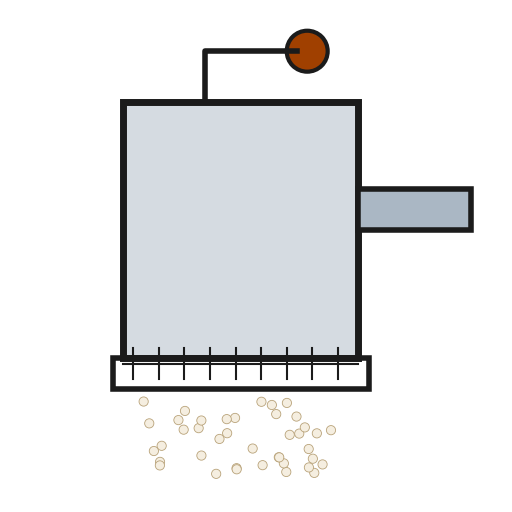 Akayunguruzo k'ifu
 Igikombe cyo kugereranya
 Iminzani ya Digitale
 Agatsiko k'utuyungurizo (imyobo itandukanye)
5
5
A sifter that clogs or leaves lumps
A sifter that clogs or leaves lumps
Flour sifter troubleshooting.
Flow
Loading...
6
6
History and honest limits
History and honest limits
**Willoughbay F. Kistler** of Cincinnati, Ohio, filed US 205,560 on 14 May 1878; it is dated 2 July 1878. The patent's preferred form has a cast agitator, bearings and breaker; a cheaper form uses tin and wire.
**Honest limits.** The patent gives no mesh or sizes. The wire diameters, lump sizes and chances in the notebook are assumptions, so only the comparison is meaningful. Your weighings are the measurement.
Ibikoresho
1- Umwanya
Ibikoresho bikenewe
4- Umwanya
- Umwanya
- Umwanya
Iki gishushanyo gikora
Blueprint zijyanye
Izi blueprint zisangira ubumenyi — uburyo, ibikoresho cyangwa amahame


CC0 Umurenge rusange
Iyi blueprint yasohowe munsi ya CC0. Ushobora gukoporora, guhindura, gukwirakwiza no gukoresha nta kwemererwa.
Shyigikira Umuremyi ugura ibicuruzwa binyuze muri Blueprint ye Komisiyo y'Umuremyi byashyizweho n'Abacuruzi, cyangwa kora verisiyo nshya y'iyi Blueprint ukayinjiza nk'isano muri Blueprint yawe kugira ngo musangire inyungu.